

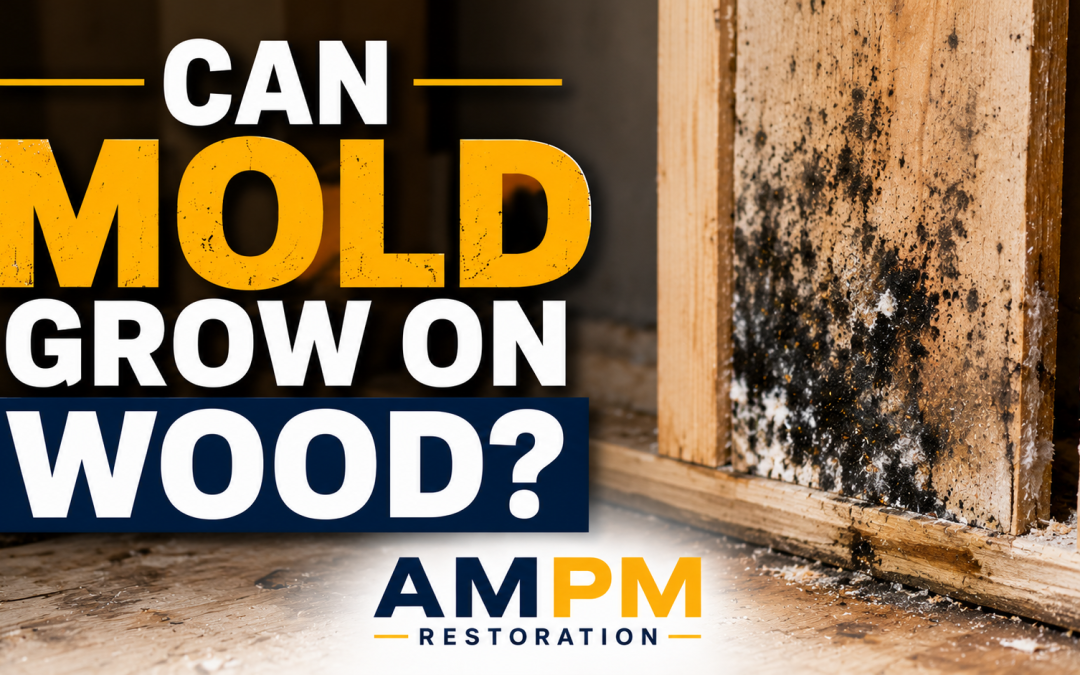
Can Mold Grow on Wood?
Yes, mold can grow on wood when the wood stays above 19% moisture content for about a week, or when indoor humidity sits in the 75% to 80% range long enough for growth to start. On Florida’s Gulf Coast, that can happen after one stormy week, a slow plumbing leak, or a crawlspace that never really dries out.
A Bradenton homeowner often notices it first as a musty smell near a baseboard, a dark patch on a cabinet toe-kick, or a fuzzy spot on wood trim after summer rain. The good news is that wood mold isn’t mysterious, and it isn’t always structural failure. The bad news is that if moisture keeps feeding it, the problem can spread behind finishes, inside wall cavities, and across untreated lumber before anyone realizes what’s happening.
Can Mold Grow on Wood: A Florida Homeowner’s Guide
Why Florida Homeowners Ask Whether Mold Can Grow on Wood
A Gulf Coast homeowner usually asks this after a stormy afternoon, when the house smells damp and a dark mark shows up on the baseboard near the laundry room. The direct answer is yes, mold can grow on wood, and in Florida that question comes up often because humidity, leaks, and repeat wetting events are part of everyday life, not rare exceptions.
The practical part is knowing what kind of problem you’re looking at. Surface mold on wood is a moisture issue first, while structural decay is a separate biological problem, and consumer content often blurs the two. A little discoloration on a cabinet face may be cleanable, but it still tells you the wood sat in the growth zone long enough for spores to establish.
If you live in Bradenton, Sarasota, Tampa Bay, or nearby coastal neighborhoods, indoor humidity can stay high for long stretches, especially when AC runs hard, doors open often, or storms push damp air into the building envelope. That’s why the question isn’t just whether mold can grow on wood, it’s whether the wood has stayed wet long enough for colonization to take hold.
For a deeper look at how humidity drives this cycle, see how humidity causes mold in Florida homes. If you catch the problem early, you can usually make a better decision about cleaning, drying, or calling for help instead of guessing while the damage keeps spreading.
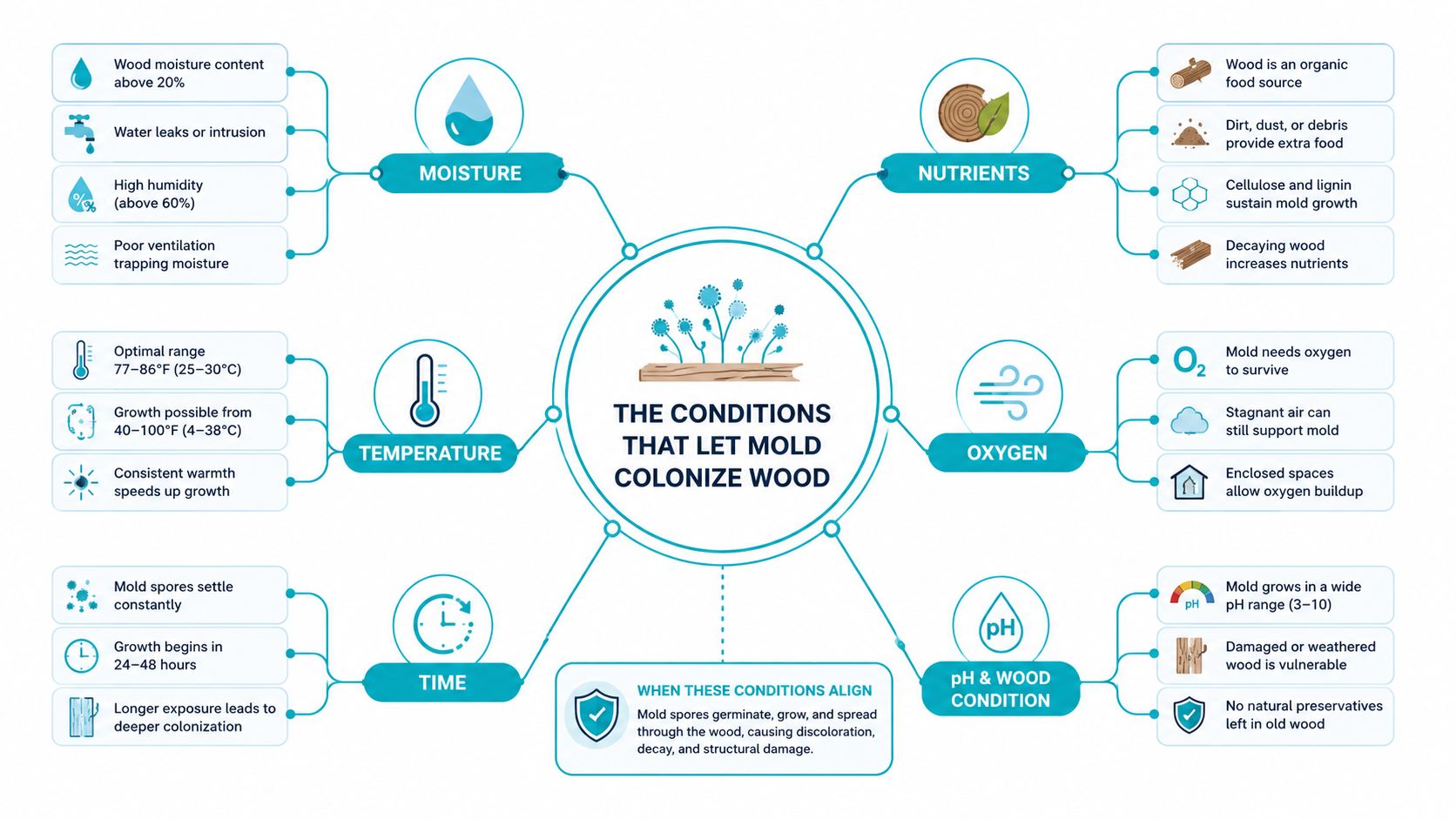
The Conditions That Let Mold Colonize Wood
Mold doesn’t need soaked lumber to get started. It needs a narrow set of conditions that line up at the same time, and wood is vulnerable because it already holds nutrients and traps moisture inside its fibers. A sponge that never quite dries out, once that happens, the surface becomes a place spores can use.
Moisture content is the first gate
A structural-building-components guide notes that moisture content above 19% for about one week is enough for significant surface mold growth on lumber, and that many species show surface mold when moisture content reaches 20% to 28% by weight. A USDA Forest Service publication also says mold and mildew readily grow on wood under damp conditions, and prolonged humidity above 70% can allow growth on wood. Those thresholds matter because wood can look dry on the outside and still hold enough moisture inside to support growth.
Humidity and temperature keep the process going
Laboratory research on pine sapwood at 23 °C found that the lowest reported ambient relative humidity for onset was around 75% to 80%, and visible mold often developed over weeks rather than days under stable favorable conditions. Another wood-deterioration model shows that long-term humidity above about 80% is a major risk for pine and spruce sapwood across a wide temperature band. That’s the part homeowners underestimate, because one dry afternoon doesn’t cancel a week of muggy air.
If you want a plain-language look at how non-porous and porous materials behave differently around moisture, The Cabinet Coach material guide is a useful reference point for understanding why some surfaces resist buildup better than others.
For homeowners dealing with repeated leaks, the timeline matters as much as the leak itself. How long mold growth takes after water damage explains why a short delay in drying can be enough to turn a cleanup into a remediation job.
Practical rule: if the wood and the surrounding air stay in the growth zone long enough, mold doesn’t need standing water to appear. That’s why Florida attics, crawlspaces, and wall cavities are so often involved.
Which Types of Wood Are Most Vulnerable
I’ve seen homeowners assume one piece of wood is “safe” because it’s painted, while another looks worse just because it’s darker. Species, cut, and moisture history all affect how fast mold shows up, and some woods are more susceptible than others when conditions turn damp.
Some species colonize faster than others
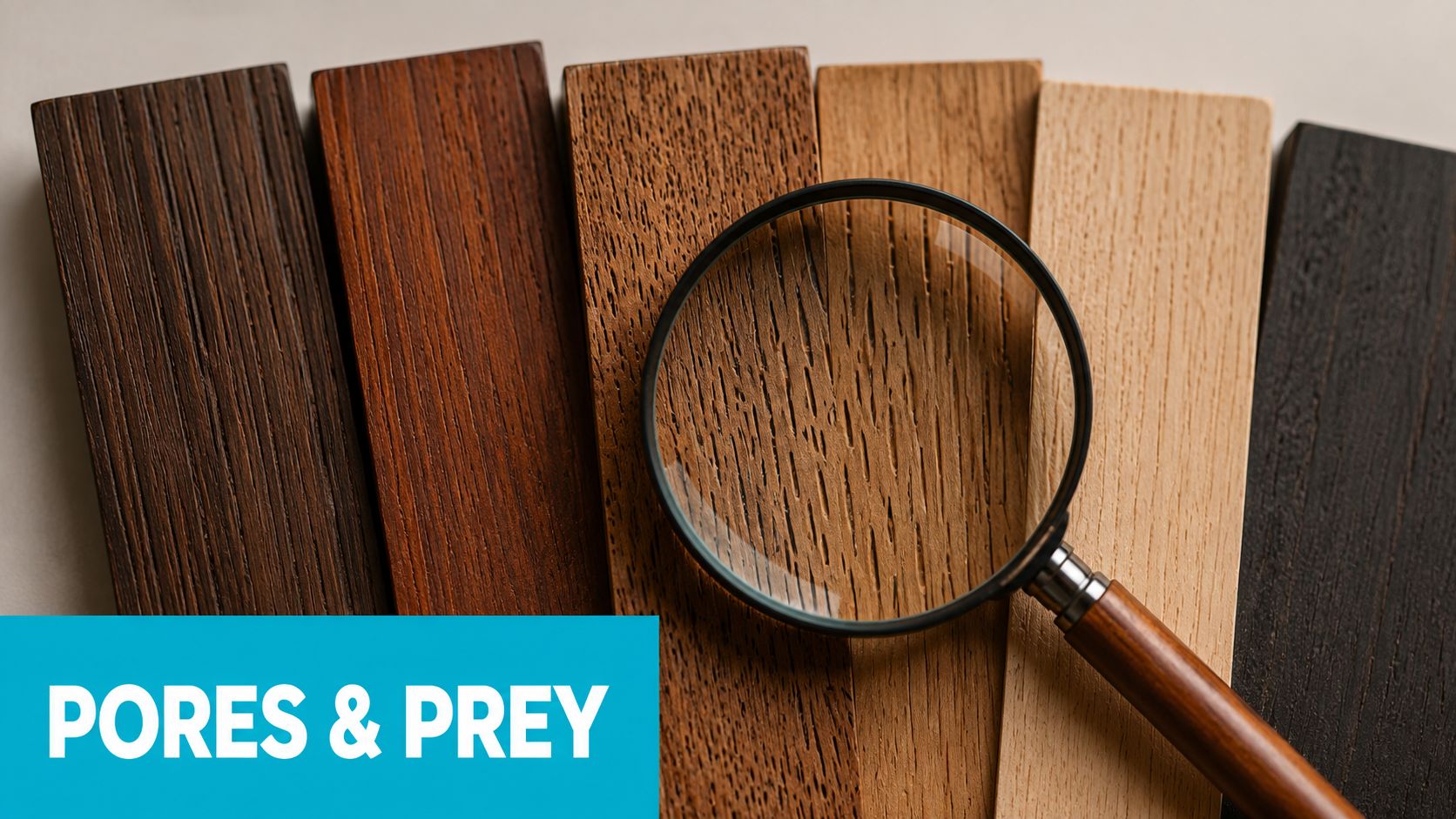
A USDA Forest Service study found that hickory, red oak sapwood, hard maple, white ash, and white oak sapwood were highly susceptible to mold growth, while aspen, cottonwood, and soft maple were less consistent. That doesn’t mean the less consistent species are immune, it means they don’t all respond the same way once moisture gets into the material.
Another wood-science source reports that Douglas fir sapwood was colonized by more than 45 fungal species within six weeks of sawing, which is a good reminder that fresh, untreated wood is biologically active almost immediately. In other words, wood isn’t an inert surface waiting for a problem later. It’s a food source with structure.
Why Florida framing still gets hit hard
Softwoods like pine and spruce sapwood are common in building assemblies, and they can support growth quickly because of how they hold moisture and nutrients near the surface. Heartwood tends to resist colonization better than sapwood, but that advantage disappears fast when a leak keeps the material wet.
In a typical Suncoast home, that means pine framing, plywood subfloors, and other common wood products can become mold-vulnerable after roof leaks, supply line failures, or storm intrusion. If you need a practical cleanup reference for finished surfaces, how to treat mold on wood helps frame the difference between a surface wipe-down and a deeper moisture problem.
Wood species changes how fast mold appears, but moisture still decides whether the growth keeps going.
Signs of Mold on Wood and the Risks It Carries
Mold on wood rarely starts with a dramatic failure. More often, you notice a smell first, then a stain, then a texture change that doesn’t look like ordinary dirt. The pattern matters because a small patch can be the visible edge of a bigger moisture issue behind the finish.
What to look and smell for
Common signs include black, green, white, or orange spotting, a fuzzy or powdery texture, and paint that starts to blister or lose adhesion. A musty, earthy odor coming from cabinets, closets, baseboards, or HVAC vents is another clue that moisture has been hanging around long enough for colonization to establish.
If the odor is stronger near a wall or cabinet bank, don’t just clean the visible spot and move on. Mold on wood often shows up where air movement is poor and moisture lingers, which is why kitchens, baths, laundry rooms, and sink cabinets are repeat trouble zones.
Health risk and structural risk aren’t the same thing
The health side can include allergic reactions, respiratory irritation, asthma flare-ups, headaches, fatigue, and skin irritation, especially for children, older adults, and people with compromised immune systems. For a symptom-focused overview, see symptoms of mold exposure in a home.
The structural side is where many homeowners get misled. A wood-industry FAQ points out that surface mold commonly colonizes wood under moisture, but it does not necessarily damage the wood’s structure the way decay fungi do. That distinction matters because a wipeable stain can still be a serious indoor-air issue, while true decay can mean the wood is losing strength.
| Indicator | Surface Mold | Structural Decay |
|---|---|---|
| Appearance | Spotting, fuzz, powder, discoloration | Softening, crumbling, loss of shape |
| Smell | Musty, earthy odor | Often damp, rotting, or stale |
| Main concern | Indoor air quality, cleanup, moisture source | Strength loss, rot, replacement |
| Wood fibers | Usually not the main target | Wood fibers are actively broken down |
| Immediate response | Clean, dry, find moisture source | Inspect, document, repair, replace if needed |
For roof-related staining that may look like mold but starts elsewhere, black streaks on roof explained is a useful comparison point, especially when exterior algae or roof growth gets mistaken for an indoor wood problem.
When You Can Clean It Yourself and When to Call a Pro
DIY works best when the problem is small, recent, and clearly on the surface. If you catch a spot under a sink within about 48 hours on finished wood, and the area is limited, HEPA vacuuming, detergent cleaning, and thorough drying can be reasonable. The key is proving the wood dries back down below the growth-supporting range, not just making it look better.
Three decision points that change the answer
If the leak lasted days, if the affected area is larger than a small spot, or if the growth is behind walls, under floors, or inside HVAC components, the job has moved beyond a simple cleanup. Hidden moisture and hidden spore spread make professional containment, negative air pressure, and moisture mapping worth paying for.
Floodwater, sewage, and storm surge are a different category altogether. Porous wood exposed to contaminated water often can't be saved safely, and IICRC-certified remediation becomes important for both health and insurance documentation.
A quick wipe can remove the visible film, but it won't fix the water path that created it.
That's why the research emphasis on cumulative time above critical humidity matters. Mold-growth models don't care about one clean-looking reading if the material spent days or weeks in the growth zone before anyone found it. For commercial settings and larger losses, a commercial mold removal guide can also help owners understand why the scope of work changes fast once building systems are involved.

If the wood is in a wall cavity, crawlspace, or attic, professional work usually saves time because the problem is moisture tracing, not scrubbing. A DIY approach can still make sense for a tiny surface spot, but it stops making sense once you're guessing about what's behind the finish.
Florida-Specific Prevention That Actually Works
Florida prevention has to assume hot air, wet seasons, and sudden water intrusion will happen again. The goal is not perfect dryness, because that's unrealistic on the Gulf Coast, it's keeping wood and surrounding air out of the growth zone long enough that mold never gets established.
Five habits that actually change outcomes
- Track indoor humidity: Use a hygrometer and keep indoor relative humidity roughly between 30% and 50%.
- Run exhaust fans long enough: Bathrooms and kitchens need ventilation that continues until surfaces are dry, not just until the shower ends.
- Inspect plumbing twice a year: Look under sinks and around water heaters for staining, swelling, or slow drips before they become hidden wood problems.
- Respond quickly to roof and window leaks: Get them handled within 24 to 48 hours so wood moisture doesn't keep climbing toward the mold-supporting range.
- Use dehumidifiers where needed: Crawlspaces and attics that regularly test above 60% deserve extra attention, because they can stay damp long after the rest of the house feels comfortable.
The USDA Forest Products guidance says mold grows on wood when exposed to water or prolonged humidity above 70%, and growth isn't supported once wood dries below 20% moisture content. That makes storm prep more than a checklist item. After a hurricane or tropical storm, any intrusion should be dried and assessed quickly, especially if salt and organic debris are involved.

A simple routine for Gulf Coast homes
- Before storm season: Check seals, clear gutters, and test bathroom fans.
- After heavy rain: Open vulnerable cabinets and inspect wood surfaces early.
- During humid stretches: Keep AC working steadily and watch for condensation around ducts and returns.
- After any leak: Dry the area immediately and verify the wood, not just the room, is out of the danger zone.
If that sounds repetitive, it should. Repetition is what keeps wood from crossing into the growth range in Florida's climate.
How AMPM Restoration Handles Mold on Wood in Florida
AMPM Restoration is a 24/7 emergency restoration company based at 4301 32nd St W b18, Bradenton, FL 34205, serving Bradenton, Sarasota, Tampa Bay, Saint Petersburg, Lakewood Ranch, and surrounding Gulf Coast communities. For wood mold, the useful part is the process, moisture mapping with meters and infrared cameras, containment, HEPA-filtered removal when affected wood can be saved, controlled demolition when it can't, then drying the structure below 20% moisture content and confirming the work afterward. See mold remediation and testing for the broader inspection and verification approach.
That matters because the decision isn't just “clean or replace.” It's whether the wood is still structurally sound, whether hidden moisture remains, and whether the source has been stopped. AMPM also provides insurance claim assistance and financing options, which helps when storm damage or a plumbing leak turns into a bigger repair than expected.
If you're seeing mold on wood right now, the safest move is to get it inspected before the damage spreads deeper into the wall or subfloor. Call 941-946-7807 for a free inspection and estimate, and let a local Gulf Coast restoration team handle the moisture source, the cleanup, and the documentation the right way.
If you're dealing with mold on wood in a Bradenton, Sarasota, Tampa Bay, or Saint Petersburg property, AMPM Restoration Services can assess the moisture source, inspect the affected wood, and explain whether cleaning, drying, or replacement is the right call. Reach out today for a free inspection and estimate, and ask about insurance claim assistance and financing options before the problem has another humid day to spread.