

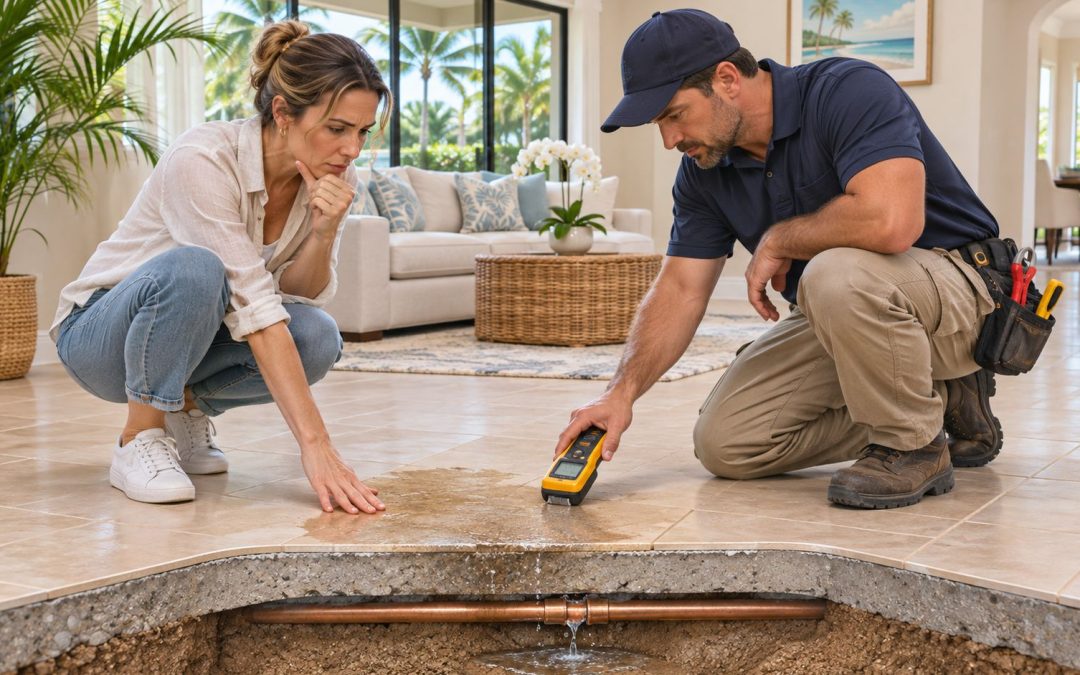
A quiet evening in Bradenton. The water bill looked normal last month. Then you cross the kitchen tile in bare feet and one patch feels warmer than the rest of the floor. A week later the guest bathroom smells faintly of damp earth, and no amount of cleaning makes it go away.
That is how most slab leaks introduce themselves in Florida homes. A pipe under the concrete fails slowly, and the house reports it through secondary clues: a bill that creeps, a warm tile, a hiss at midnight, grout that keeps cracking. Because the leak is buried, the first evidence is almost never water you can see.
This guide covers seven signs of a slab leak in the order a technician checks them, with a home test for each one, the look-alike problems that fool most homeowners (irrigation overspray, a running toilet, Florida humidity, ordinary settling), and the point where a professional inspection costs less than waiting.
1. Unexplained Spike in Your Water Bill
The water bill is the least dramatic clue and the one that solves the most cases. A pressurized supply line under the slab runs all day at full line pressure, so a crack or pinhole keeps losing water while the house sits empty. Your meter records every gallon of it.
The scale is easy to underestimate. USGS water science guidance calculates that a water-line leak of 1 gallon every 10 minutes wastes 144 gallons per day, or approximately 52,560 gallons per year. That number explains how a hidden pipe produces a bill jump with no puddle in sight. The same guidance estimates a continuously leaking toilet wastes about 22 gallons per day, which is why fixtures get ruled out first.

Run the Meter Test Before You Call Anyone
- Shut off everything: Close every faucet, the ice maker, the pool fill, and the irrigation timer. Irrigation overspray is the biggest false alarm on the Suncoast.
- Check the toilets: A leaking flapper moves the meter exactly like a slab leak. A dye tablet in the tank answers it in five minutes.
- Watch the dial: If the low-flow indicator moves with everything off, water is escaping. If it doesn't budge, note the reading, wait 30 minutes, and read again to catch a slow loss.
The EPA WaterSense leak guidance reports that the average household's leaks waste more than 9,300 gallons annually, and that 9% of homes have leaks wasting at least 50 gallons per day. Use those figures as context, not as a verdict.
Say a Manatee County homeowner saw a bill nearly double across two billing cycles with no change in habits. A meter check with all fixtures off confirmed continuous flow, and the damaged line was traced beneath the living room slab.
2. Warm or Hot Spots on Floors
A warm patch in a tile floor can point to a leaking hot-water line beneath the slab. First rule out simpler causes: direct sunlight, a warm appliance, or radiant floor heating. Heat alone does not confirm a slab leak, but a spot that persists in the same place deserves a closer check.
Tile makes temperature differences easier to notice. Vinyl and laminate can mute them, while hardwood and carpet may hide them. Check whether the warm area lines up with a hot-water pipe route, rather than assuming every warm floor patch comes from plumbing.
How to Check It Without Tearing Anything Up
Before sunlight warms the room, compare the suspected spot with nearby floor areas using an infrared thermometer. Record the readings at the patch and at three cooler reference points. Mark the warm area with painter's tape, then check whether its boundary changes over the next week.
Look for other clues, too. If the water heater keeps cycling when no one is using hot water, it may be replacing water lost from a hot-water line. A warm band on the exterior foundation wall near the indoor patch can also help narrow down where the line runs. Neither clue proves a leak on its own.
Air conditioning and Florida heat can confuse the picture. In slab-on-grade homes, ductwork typically runs through the attic, so a warm floor patch is unlikely to come from under-floor ductwork. Still, rule out sunlight and nearby appliances before treating warmth as a plumbing sign.
For a professional check, leak detection under slab can help locate a suspected line before opening the floor. Thermal imaging is one general way to look for temperature patterns, but the method used should fit the signs in the home. Persistent warmth combined with water-heater cycling is a good reason to request an inspection.
3. Wet, Soft, or Damp Floor Spots
A carpet can stay damp through a dry spell, even when no spill or appliance leak explains it. In Florida, humidity, tracked-in rain, sprinkler overspray, and irrigation can all leave moisture near a floor. Check whether the spot is close to an exterior door, window, appliance, or sprinkler line. If it dries after the source is removed, a slab leak is less likely. A damp area that persists or returns needs closer inspection.
Press a dry paper towel firmly into the carpet. Check nearby flooring, too. Swollen laminate seams, lifted vinyl edges, or grout that remains dark can show moisture affecting different materials. A single wet patch near a refrigerator or washing machine may point to an appliance leak instead. Look for a source before assuming water is coming through the slab.
Read the Moisture, Not the Theory
A pin-type or pinless meter helps compare readings across the damp area and nearby dry flooring. The ASHRAE Handbook moisture guidance identifies persistent water activity above 0.85 at surfaces of organic materials or coatings, and persistent moisture content above 15% wood-moisture-equivalent in wood, coatings, and untreated paper-faced gypsum board, as meaningful dampness indicators. These readings can help document secondary damage and guide drying. They do not identify the leak's source or confirm a slab leak on their own.
The handbook also advises repairing plumbing leaks promptly and drying accumulated water within 24 to 48 hours to reduce material damage and microbial-growth risk. Persistent dampness deserves prompt attention, particularly if the wet area is spreading.
- Log every reading: Record the date, time, exact location, meter model, and scale. Compare readings across the damp spot and nearby flooring.
- Photograph before moving furniture: Wet padding, dark baseboards, and swollen cabinet toe kicks help document where moisture has reached.
- Find the entry point: Floor water damage repair starts with confirming where water enters the room.
If the area stays damp after you rule out spills, appliances, and outdoor water, arrange a professional leak inspection. A moisture meter can show where materials are wet, but it cannot locate a pipe leak by itself.
4. Cracks, Buckling, or Lifting Tile and Flooring
Grout cracks appear in every Florida home. The pattern is what matters. A crack that returns after regrouting, tile that lifts across one field, or a hollow sound underfoot along a strip of floor all point at movement below. Water saturating the soil under a slab changes its support, and the flooring above reports the change.
Old cracks near a doorway or an expansion joint are usually settling. New cracks that widen over weeks, especially with a bill creep or a warm patch nearby, deserve a professional look.
What to Document and Why It Matters
- Measure the width: A crack gauge or caliper, checked on the same date each month, tells you whether it's active.
- Photograph with a date stamp: Insurance decisions turn on when damage began, not when you noticed.
- Keep the failed pieces: If flooring comes up, save a section before it goes in the dumpster.
That last step isn't fussiness. Allstate's water damage guidance explains that homeowners policies generally cover water damage from sudden and accidental events, such as a burst pipe or ruptured appliance, while typically excluding damage from neglect, poor maintenance, or an unresolved leak. A pipe that let go on a Tuesday reads very differently to an adjuster than seepage that ran for a season.
In a Bradenton hallway, tile began lifting along a single grout line. A slab leak was confirmed, and a documented timeline supported the claim for both the pipe repair and the flooring replacement.
Wood floors telegraph the problem differently. Boards cup at the edges, then crown in the middle of the room, and the finish dulls in a wide band rather than a single spot. Hardwood floor damage from below rarely looks like a spill.
5. The Sound of Running Water With No Fixtures On
A faint hiss or low rush under the floor can point to water escaping from a pressurized line. Listen when the house is quiet, then check whether the sound is localized or carries through several rooms. Sound alone does not confirm a slab leak. Irrigation lines, appliance leaks, and other plumbing can create similar noise.
For a simple check, turn off faucets and appliances that use water, then listen near the floor where the sound seems loudest. You can place a stethoscope or the handle of a long screwdriver against the floor to help pick up vibration. First rule out an appliance cycling or a sprinkler system running nearby. If the noise continues with those sources off, note its location and timing and arrange a professional inspection.
A hot-water leak may become more noticeable when the water heater is operating, while a cold-water leak may sound more consistent. These patterns can help narrow the investigation, but they do not identify the pipe on their own. A technician can use leak detection services and advanced diagnostic equipment to assess the suspected area.
A quiet meter does not rule out every leak. A leak that occurs only when a fixture runs, or one on a drain line rather than a supply line, may not keep the meter moving.
The EPA leak detection product guide explains the limits of different detection products. A moisture sensor alerts only when water reaches its monitored location, so placement matters. Whole-home flow monitoring can flag unusual or continuous water use, but it cannot identify the exact pipe or room. These tools can help narrow the problem, while a professional inspection is needed to locate a suspected hidden leak.
Keep a brief log of when the sound occurs, how long it lasts, and which rooms it reaches. That information gives the inspector a clearer starting point.
6. Musty Odor, Mold, and Mildew Growth
Mold has a smell before it has a shape. If the air near the floor in one hallway or bedroom smells like damp earth and cleaning doesn't touch it, moisture is feeding something you can't see. Follow the smell. It's usually strongest at the baseboard, under carpet, or where a wall meets the slab.
Florida humidity makes this sign easy to misread. A musty smell that shows up in July and fades in November can be seasonal. A smell that survives a week of air conditioning with a dehumidifier running is a moisture source, and it's worth finding.
What Not to Do
Don't spray bleach on a baseboard and call it handled. Don't set a box fan blowing across visible mold, which spreads spores into rooms that were clean. Don't pull up more than a couple of square feet of carpet without containment.
Buy a cheap hygrometer and hold indoor humidity between 30 and 50 percent through summer. A room that stays above that with the AC running has water entering somewhere.
In a Tampa Bay condominium, a musty odor and mold along the baseboards led to a moisture inspection that traced the source to a leak beneath the bathroom slab. Remediation followed the pipe repair, not the other way around. Order matters, because mold returns within weeks if the water source stays active. Mold under hardwood floors is the version most owners discover last.
Our technicians treat the moisture cause as part of the mold job, which may mean repairing the leak, improving ventilation, or adjusting humidity levels, and mold removal starts with detection tools that find affected areas you can't see.
7. Low Water Pressure and Foundation or Floor Changes
A shower that has gradually lost pressure can point to a leak, but a clogged showerhead or faulty pressure regulator can cause the same problem. Check more than one fixture. If several taps have weakened and the change persists, note whether the water meter moves when all fixtures are off. That combination is more concerning than low pressure at a single tap.
A pressure gauge on an outdoor spigot can help track changes. Record the reading and compare it later. A falling reading, with no plumbing changes, may mean water is escaping before it reaches the fixtures. It does not identify the leak's location, so avoid treating the gauge as a diagnosis.
Check doors and floors for changes too. A door that has started rubbing, a new slope in the floor, or a widening gap between the baseboard and slab can indicate movement beneath the foundation. Normal settling can also cause changes, and irrigation or sprinkler overspray may leave nearby soil wet. Look for whether the symptoms occur together, and whether the meter or pressure readings support a plumbing problem.
Why Florida Code Cares About the Soil
The Florida Building Code plumbing supplement describes plumbing, hangers, and supports beneath slab foundations, or framing over an under-floor space, as needing suspension and isolation by a void space from the effects of expansive-soil swelling and shrinking. This is a construction requirement, not a homeowner test. Its application depends on building design and the code edition in force. The underlying concern is that shifting soil can stress pipes and their supports.
In one scenario, a home has both weak shower pressure and a bedroom door that no longer closes properly. If the meter also moves with all water turned off, a slab leak becomes more plausible than ordinary settling alone. A professional inspection can check the plumbing and assess whether foundation or floor changes have another cause.
When to stop investigating: New sticking doors combined with falling pressure and a moving meter warrant professional assessment. Contact a leak detection specialist, and have a foundation specialist or structural engineer assess significant structural changes before concrete is cut.
How each slab leak sign compares with look-alike problems
A single symptom rarely identifies a slab leak. Use the comparisons below to rule out common moisture and plumbing sources before arranging an inspection.
| Sign | Look-alike to rule out | Distinguishing check |
|---|---|---|
| Unexplained spike in your water bill | Irrigation use, pool filling, or a rate change | Compare the timing of the increase with irrigation schedules, pool use, and prior bills. A spike that persists without a change in use deserves a plumbing check. |
| Warm or hot spots on floors | Sunlight or heat from a nearby appliance | Check whether the spot follows the sun or sits beside an operating appliance. A warm area that remains after those heat sources are ruled out may come from a hot-water line. |
| Wet, soft, or damp floor spots | Humidity, rain, or an appliance leak | Check nearby appliances and exterior walls for a more direct source. Moisture that returns after the area dries, without recent rain or a nearby leak, is more concerning. |
| Cracks, buckling, or lifting tile and flooring | Normal settling or installation problems | Compare the damage with nearby moisture, new floor gaps, or changes in doors. A crack alone does not establish a leak; spreading changes alongside moisture warrant assessment. |
| Running or hissing sound with no fixtures on | An appliance or plumbing beyond the home | Listen at different times and note whether the sound is localized near the floor or wall. If it continues when household water sources are off, have the plumbing checked. |
| Musty odor, mold, or mildew | Humidity or moisture from another source | Look for a nearby appliance, exterior wall, or ventilation issue that could explain the dampness. Odor or growth concentrated near the floor, especially with recurring moisture, calls for inspection. |
| Low pressure with floor or foundation changes | Municipal supply issues, clogged aerators, or unrelated foundation movement | Check whether the pressure problem affects one fixture or several. A single weak tap points more toward a fixture; pressure changes across the home combined with new floor or door changes need professional assessment. |
These checks help narrow the cause, but they cannot confirm where a hidden pipe is leaking. If signs recur or several appear together, arrange a professional inspection rather than opening the floor yourself.
Booking a Free Slab Leak Inspection in Bradenton and Beyond
Arrange an inspection if a possible slab leak persists or several warning signs appear together. Damp flooring, a musty odor, or unexplained floor changes can also come from appliances, humidity, irrigation, or normal settling, so the source needs to be identified before repairs begin.
AMPM Restoration offers leak detection, water damage restoration, free inspections, and estimates. Its water damage assessment uses advanced diagnostic equipment to evaluate water penetration and affected areas. The team can also coordinate directly with your insurance carrier. AMPM serves Bradenton, Sarasota, Palmetto, St. Petersburg, and the greater Tampa Bay area.
How Do You Tell a Slab Leak From Humidity or Irrigation?
Look at where moisture appears and whether it returns after the surface dries. Humidity often affects broader areas, while sprinkler overspray is more likely near exterior walls or doors. If dampness stays concentrated over the floor or keeps returning, arrange an inspection to check for a hidden plumbing leak.
How Long Can a Slab Leak Go Unnoticed?
A small leak may go unnoticed while its signs remain subtle. Flooring damage, persistent dampness, and mold can become more apparent as moisture continues to affect nearby materials. Do not wait for several symptoms to appear if one problem persists.
What Happens During a Professional Slab Leak Inspection?
AMPM begins water damage work with an assessment using advanced diagnostic equipment to evaluate the extent of water penetration and the areas most affected. Structural inspections can also identify secondary damage, such as weakened supports, compromised drywall, or damaged insulation. Ask what the inspection found and which next steps address the confirmed source.
Does Homeowners Insurance Cover Slab Leak Damage?
Coverage depends on the policy and the circumstances. Document visible damage and contact your carrier to ask what information it needs before authorizing repairs beyond stopping the water. AMPM can coordinate directly with insurance carriers during restoration.
When Is a Slab Leak an Emergency?
Treat water spreading into walls, cabinets, or flooring as urgent, especially if damage is worsening. If you can safely shut off the home's water supply, do so, then contact a restoration professional for an assessment.
How Is Mold Risk Handled After the Repair?
Water damage work includes sanitizing affected areas and applying mold-prevention treatments. If mold is present, AMPM offers mold removal and remediation, including attention to moisture causes such as leaks. Drying and repairs should address affected materials, not just the visible surface.
AMPM Restoration Services offers leak detection, water damage restoration, mold removal and remediation, and free inspections and estimates. Visit AMPM Restoration Services to request an inspection.
