

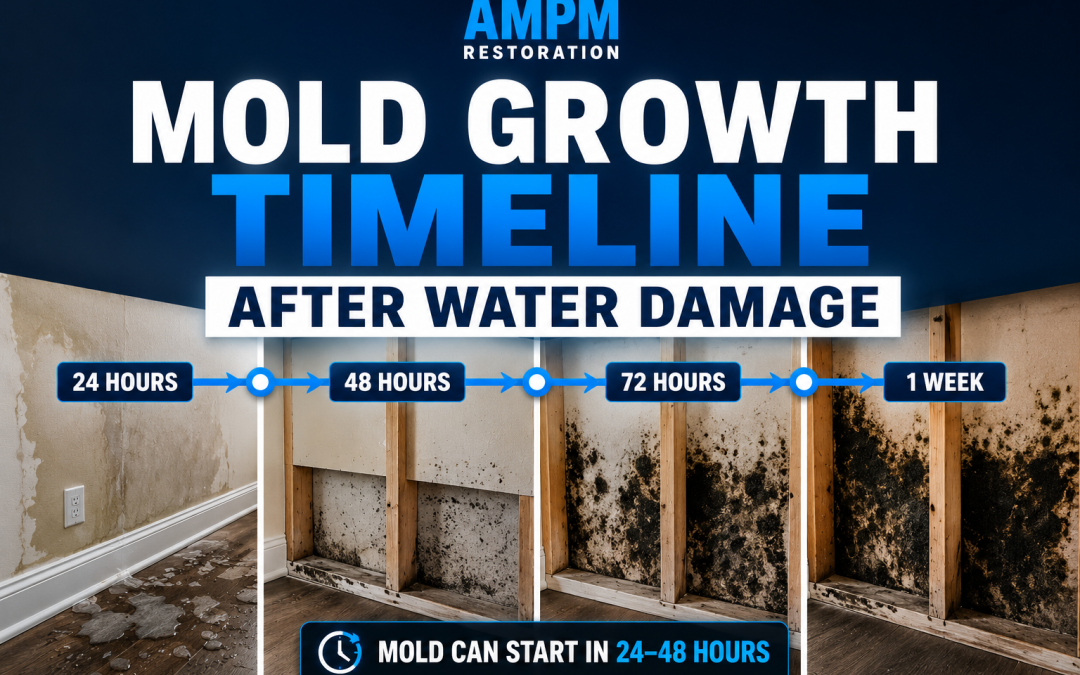
Mold Growth Timeline After Water Damage
When a pipe bursts or a storm floods your Bradenton home, your first thought is probably about the water itself. But the real race is against something you can’t even see yet. The mold growth timeline after water damage is shockingly fast, with spores beginning to colonize damp drywall and insulation in as little as 24 to 48 hours. What starts as a straightforward water problem can quickly spiral into a complex, hazardous, and costly mold issue. Understanding this timeline is the first step in protecting your property and health.
The First 48 Hours: The Critical Window
Those first two days after water gets into your property are absolutely decisive. This is the critical window that determines whether you’re looking at a simple drying job or a major mold remediation project. For homeowners across Sarasota, Tampa Bay, and the Gulf Coast, understanding this immediate mold growth timeline after water damage is the key to protecting your home.
Think of it this way: our humid Florida air is already full of microscopic mold spores, like tiny, dormant seeds just waiting for the right conditions. They’re harmless on their own. But a roof leak or a busted appliance gives them exactly what they need to sprout: moisture.
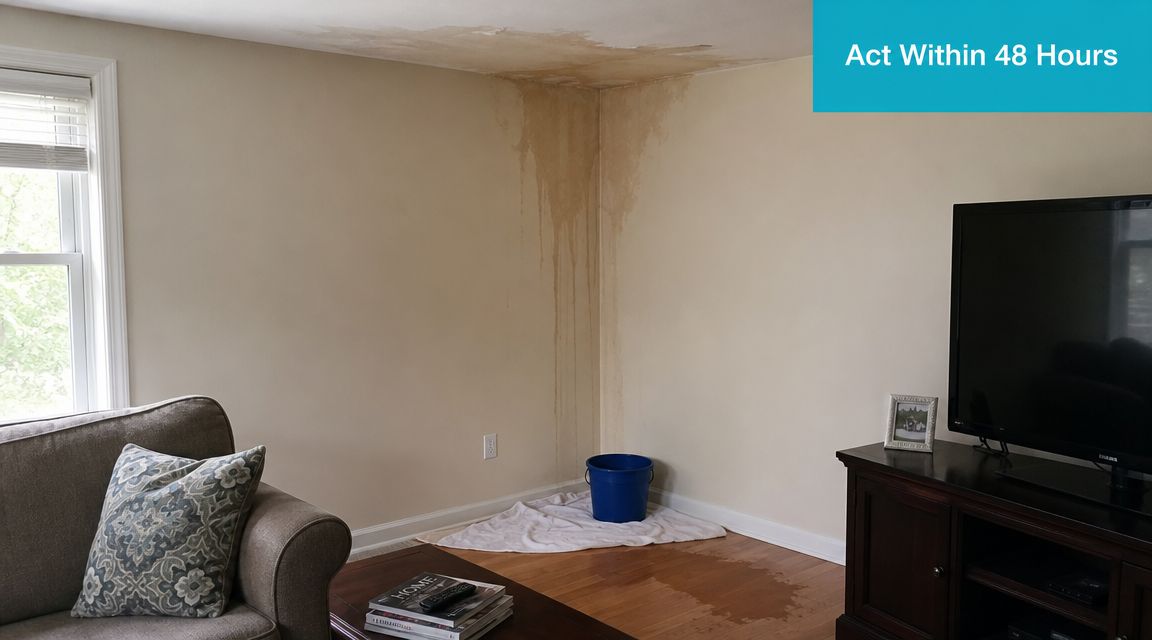
The Invisible Countdown Begins
In the first few hours, the real damage is invisible. Water is quietly soaking into porous materials like your drywall, the wood studs inside your walls, and the padding under your carpet. Long before you’ll ever see a single spot of fuzzy growth, this is creating the perfect breeding ground for mold.
This is why we say immediate action isn’t just a good idea; it’s a necessity. We know from years of serving the Bradenton community that mold can take hold of wet materials in just 24 to 48 hours if the moisture isn’t professionally removed. If you’re wondering what to do first, check out our guide on tackling emergency water damage in the first 24 hours.
The most crucial thing to remember is that the clock starts the second things get wet. Waiting even a single day gives mold a chance to root itself deep into your home’s structure, turning a manageable problem into a major headache.
Of course, the first step is always stopping the water at its source. Taking control within that 48-hour window is your single best defense against a widespread mold invasion.
Week by Week: Understanding the Mold Growth Timeline After Water Damage
Once that initial 48-hour window closes, the mold growth timeline after water damage shifts into a much more aggressive phase. Everything that was happening invisibly now starts to show up in ways you can see and smell. For any Bradenton homeowner, understanding this progression is critical, as a delay of just a few days can completely change the scope and cost of the necessary repairs.
Think of how ink bleeds across a piece of paper. It starts as a small, contained wet spot. But give it time, and it silently spreads, saturating everything it touches. Mold acts the exact same way inside your walls and floors.
The First Few Days: The Visible Transformation
This is the period where the consequences of waiting become impossible to ignore. The timeline isn’t just about hours anymore; it’s about clear, worsening stages that turn a simple water issue into a serious contamination problem.
- Saturation (0-24 Hours): Your home’s materials like drywall, insulation, and wood are busy absorbing water like a sponge. The mold spores are still dormant, but they have all the fuel they need to get started.
- Germination (24-48 Hours): At a microscopic level, spores begin to activate and root themselves into the damp surfaces. You won’t see anything yet, but a faint, musty smell might start to appear in closets or closed-off rooms.
- Visible Growth (48-72 Hours): You might start seeing small clusters of mold, often appearing as black or greenish specks on walls and baseboards. At this stage, the problem has officially graduated from “water damage” to a mold issue that needs professional attention.
Experts agree that after water intrusion, spores can begin germinating in as little as 24–48 hours. You may see visible spotting within 48–72 hours, and colonies can spread far beyond the original wet spot in just 3–7 days. If you’re noticing discoloration or strange odors, it’s vital to understand the five signs of mold damage in homes. When damage is left untreated for a week or more, structural weakness and serious air quality problems become much more likely.
From One Week to Two Weeks: Colony Expansion
If the moisture still hasn’t been dealt with by the one-week mark, you are no longer dealing with a few isolated spots. You’re now facing established mold colonies.
By this stage, mold isn’t just on the surface; it’s deep in the material. It has worked its way through drywall, crawled along the wooden studs, and set down roots in your insulation, quietly compromising your home’s structure and the air you breathe.
This is the tipping point where what might have been a straightforward drying job a week ago now requires demolition. Technicians will likely need to cut out sections of drywall, pull up baseboards, and tear out carpeting just to get to and eliminate the growth. The repair costs and project timeline expand right along with the mold, turning a contained problem into a cross-contamination risk that threatens your entire property.
Florida’s Climate: A Perfect Storm for Mold
Not all water damage is created equal, a fact we know all too well here in the Sunshine State. The mold growth timeline after water damage can be alarmingly fast in a Bradenton home, far quicker than in drier parts of the country. Florida, unfortunately, serves up the perfect recipe for rapid mold development.
Mold only needs three things to get started: moisture, a food source, and the right temperature. A storm or leaky pipe hands it the moisture. Your home’s own building materials like drywall paper, wood, and carpet are the perfect food. And our state’s famous year-round warmth, especially temperatures between 77–86°F, creates the ideal incubator.
This infographic shows just how quickly a simple leak can turn into a serious problem.
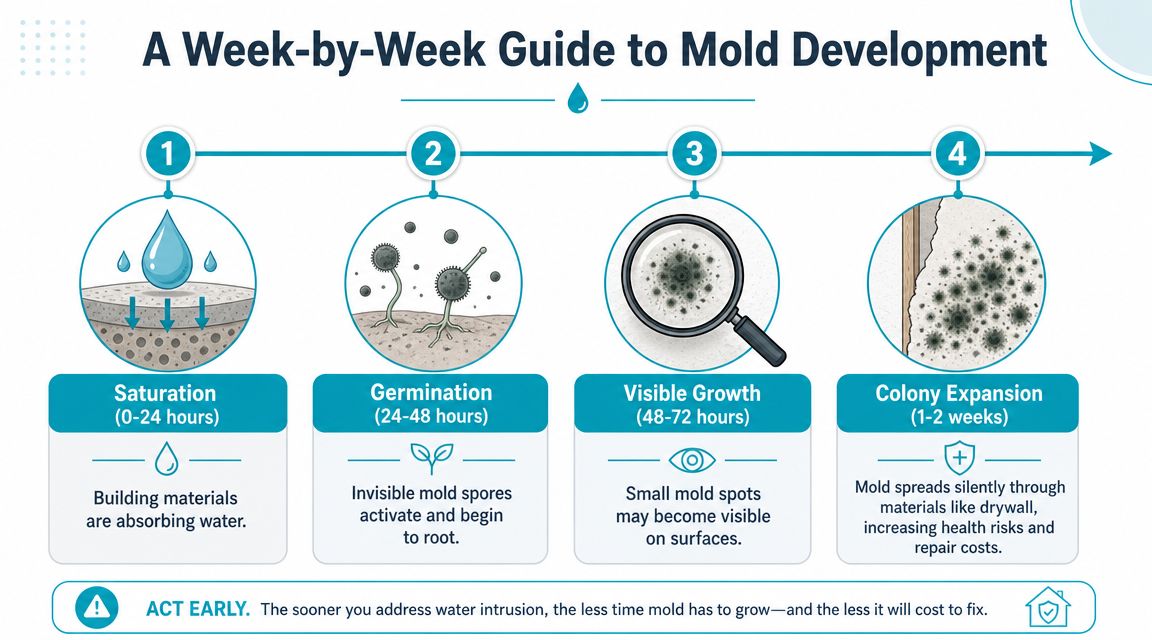
As you can see, it takes only 48 to 72 hours for a water issue to produce visible mold spots. That’s a very small window to act.
The Role of Humidity and Porous Materials
What really puts mold growth into overdrive here is our relentless humidity. High ambient moisture in the air means wet materials simply don’t dry out on their own, giving mold spores all the time they need to settle in and germinate. It’s a constant battle our IICRC-certified technicians are trained to win with specialized drying equipment.
Porous materials like insulation, particleboard, and drywall act like sponges, trapping moisture deep inside. This hidden dampness allows mold to take root and flourish long before any signs are visible on the surface, making professional moisture detection essential.
With our high humidity and frequent downpours, having strong Florida All Risk flood coverage is something every homeowner should consider, as major flooding is a primary trigger for rapid mold growth. Understanding these local risks is the first step in protecting your Gulf Coast property.
When to Call AMPM Restoration for Water Damage
You’ve got a water problem. Is it a few-towels-and-a-fan kind of job, or is it time to call in the pros? For homeowners in Sarasota and Bradenton, knowing the difference can be stressful. Luckily, there are a few clear signs that tell you when a situation has gone far beyond a simple DIY fix.
The easiest benchmark to remember is the size of the spill. As a rule of thumb, if the water has affected an area larger than 10 square feet about the size of a dinner table, it’s time to bring in certified technicians. A small puddle on tile is one thing, but widespread saturation is a different beast entirely and requires specialized equipment to handle properly. Acting fast can reduce your total repair costs by up to 40%, since damage gets exponentially worse the longer materials stay wet.
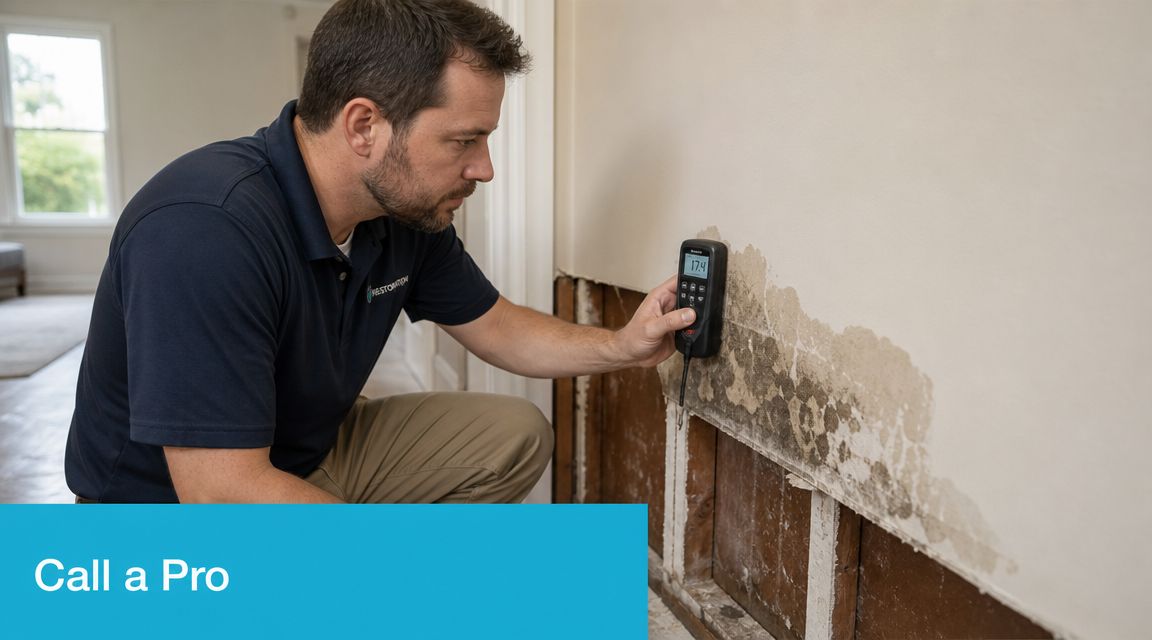
Critical Scenarios Requiring Professional Help
Beyond sheer size, some situations are automatic red flags. You should always call a professional if you’re dealing with any of these:
- Porous Materials Are Soaked: Water loves to hide. Once it soaks into drywall, insulation, wood floors, or carpet padding, it gets trapped where you can’t see or reach it. This is exactly what kicks the mold growth timeline after water damage into high gear, and only professional-grade drying gear can pull that hidden moisture out.
- Contaminated “Black Water” Is Present: If the water is from a toilet overflow, sewer backup, or overland flooding, it’s considered Category 3 “black water.” This water is dangerously contaminated with bacteria and pathogens that pose a serious health risk. Never, ever try to clean this up yourself.
- The Water Source Is Unknown: You can smell that damp, musty odor, but you have no idea where it’s coming from. Hidden leaks are ticking time bombs, and you need a professional inspection to track down the source and figure out just how much damage has been done.
Your Best Investment for Peace of Mind
Don’t think of a professional inspection as an expense. It’s an investment in your home’s value and your family’s health. Trying to handle a major water issue on your own often leads to even bigger problems down the road, like hidden structural rot and secondary mold blooms. It’s a common mistake we see all the time, which we cover in our guide on why you shouldn’t DIY water damage restoration.
At AMPM Restoration, our free, no-obligation inspection gives homeowners in the Tampa Bay area the clarity they need to make the right call. We’ll give you an honest, expert assessment of the situation so you can act with confidence.
Navigating Your Insurance Claim for Mold Damage
Finding water damage in your home is stressful enough. The last thing you want to deal with is the complicated, often confusing process of filing an insurance claim. When the mold growth timeline after water damage has already started, that stress can feel completely overwhelming. Let’s walk through the essential steps to document your damage and show you how having a professional partner can make all the difference.
The second you spot water damage, your first priority (after making sure everyone is safe) is to start documenting. This isn’t just about taking a few quick snaps on your phone; you need to build a solid visual record for your insurance company.
Building Your Case for Coverage
Think of it this way: your insurance adjuster needs clear, undeniable proof of the damage and where it came from. You have to provide that evidence.
Here’s how to get it right:
- Take Detailed Photos and Videos: Get shots of everything from every angle. You’ll want wide views of the rooms affected, plus close-ups of soaked furniture, wet drywall, and the source of the leak if you can find it.
- Keep a Detailed Log: Grab a notebook and start a timeline. Write down when you first noticed the damage, what you believe caused it, and a record of every single action you’ve taken since.
- Don’t Discard Damaged Items: It’s so tempting to start dragging soggy carpets and ruined furniture to the curb. But never throw away anything until your adjuster has seen it in person. These items are critical evidence for your claim.
The most significant role we play is as your advocate. We work directly with all major insurance carriers, providing the precise, IICRC-standard documentation they require to process claims for water and subsequent mold damage efficiently.
We take the headache of complex paperwork and endless phone calls off your plate. For our clients in Bradenton and Sarasota, our goal is to handle the entire claims process so you receive the full coverage you’re entitled to under your policy. For more great advice, you can learn about essential water damage insurance claim tips in our dedicated guide.
Let us manage the details so you can focus on what really matters: getting your home and your life back to normal.
Take Control of the Timeline with AMPM Restoration
As you’ve seen, the mold growth timeline after water damage doesn’t wait for anyone. From the moment water gets in, a clock starts ticking against your property and your peace of mind. For homeowners and businesses here in Bradenton, Sarasota, and across Florida’s Gulf Coast, that means acting fast is everything.
Don’t let a small leak spiral into a hazardous and expensive mold problem. AMPM Restoration is on call 24/7 and ready to be at your door, often in as little as 60 minutes. Our IICRC-certified technicians have the experience to stop mold growth in its tracks before it ever gets a real foothold.
We know unexpected disasters are stressful, so we make getting help easy. It all starts with a free, no-obligation inspection to give you a clear picture of the situation and a solid plan of action. To help with the financial strain, we also offer direct insurance billing and flexible financing options.
Your home and health are far too important to put on the back burner. A quick response is the single most effective way to prevent long-term damage and keep your repair costs from getting out of hand. Take control of the situation before mold does.
For immediate help in Tampa Bay, Saint Petersburg, Lakewood Ranch, and our surrounding communities, call AMPM Restoration now. We’re here to protect your property, handle the insurance headaches, and get your life back to normal.
Call 941-946-7807 for your free inspection and estimate today. We’re here to help you recover, every step of the way.
Frequently Asked Questions About Mold After Water Damage
After you’ve dealt with the initial shock of water damage, a wave of questions usually follows. We get calls every day from concerned homeowners across Bradenton and the Gulf Coast, and we’ve put together clear, straightforward answers to the most common ones.
1. How quickly does mold grow after water damage in Florida?
Here in Florida, the combination of warmth and humidity is a perfect recipe for mold. Spores can activate and start to grow on damp surfaces like drywall or carpeting within just 24 to 48 hours. You might not see visible spots right away, but on a microscopic level, the growth process has already kicked off. This is precisely why immediate, professional drying from a company like AMPM Restoration is the only way to stop that mold growth timeline after water damage in its tracks.
2. What does a musty smell mean if I don’t see any mold?
That distinct earthy or musty odor is one of the most reliable early warnings of a hidden mold problem. As mold colonies grow, they release microbial volatile organic compounds (MVOCs), which create that tell-tale smell. If you notice this odor after a leak or flood in your Bradenton home, it’s a huge red flag. It strongly suggests that mold is thriving somewhere you can’t see it, behind walls, under your flooring, or deep within your HVAC system. A professional inspection is the only way to pinpoint the source.
3. Will my Florida homeowners insurance cover mold removal?
This is a big one, and the answer usually comes down to the source of the water. Most standard Florida homeowners policies will cover mold remediation if it’s the direct result of a “covered peril,” like a sudden and accidental pipe burst. However, if the damage is from a slow, gradual leak or a lack of maintenance, coverage can be limited or even denied. At AMPM Restoration, we specialize in this. We work directly with your insurance provider, documenting everything properly to help maximize your claim and offer assistance with the entire process.
4. Can I just use bleach to clean mold myself?
While it’s a common myth, bleach is the wrong tool for the job. Bleach might kill surface mold on non-porous materials like tile or glass, but it is not effective on porous surfaces like drywall, wood, or carpet. The chlorine in bleach simply can’t penetrate these materials to kill the mold’s “roots.” Worse yet, the water in the bleach can actually feed the leftover mold, making the problem come back even stronger. We use specialized, EPA-approved antimicrobial agents that ensure complete removal. For general tips, you might find articles on cleaning mold from home siding useful for exterior surfaces only.
5. How does AMPM Restoration ensure the mold is completely gone?
A true professional doesn’t just guess. A reputable company like AMPM Restoration follows a strict protocol that leaves no doubt. After we’ve removed all contaminated materials and thoroughly cleaned the area, we conduct post-remediation verification. This often includes a final visual inspection and third-party air quality testing. This independent verification gives you documented proof that your home’s air quality has returned to a normal, safe state. It’s the peace of mind every homeowner deserves.
6. What should I do right now if I have water damage?
If you are in Bradenton, Sarasota, Tampa Bay, or the surrounding Gulf Coast communities, your first step is to call AMPM Restoration at 941-946-7807. We are available 24/7 for emergency service. While you wait for our team, if it is safe to do so, stop the source of the water and remove any excess water with mops or towels. Do not use household vacuums to remove water. Our rapid response is the key to minimizing damage and stopping the mold growth timeline after water damage.