


You're standing in a bathroom or bedroom in Bradenton, Sarasota, or Tampa Bay, and there it is again, a ceiling stain with fuzzy edges that keeps coming back no matter how many times you wipe it. That's usually not a cleaning failure, it's a moisture failure. If you want to know how to get mold off the ceiling and keep it from returning, start with the water source, because the EPA's mold guidance makes one thing clear, cleanup isn't finished until the moisture problem is completely fixed. EPA mold and moisture guidance
In Florida homes, ceiling mold often shows up where warm, damp air lingers, especially above showers, in top-floor bedrooms, and in rooms with weak ventilation. I've pulled apart enough ceiling repairs to know the pattern, the visible spot is usually only the symptom. When the leak or condensation problem stays active, the patch returns, the stain spreads, and porous ceiling materials start acting like a sponge instead of a surface.
Why Ceiling Mold Keeps Coming Back in Florida Homes
A bathroom ceiling in a Gulf Coast house can look fine one week and speckled the next. That usually means the ceiling is getting wet again from a roof leak, a plumbing issue, or humid indoor air that never fully dries out. Florida makes that cycle worse because warm, damp air lingers, so the job is moisture control first. The EPA says moisture control is the key to mold control. EPA mold and moisture guidance
What the stain is actually telling you
A ceiling stain is a warning sign. If the ceiling feels cool or damp, if mold keeps returning in the same corner, or if the room still smells musty after cleaning, something above the surface is still feeding growth. The EPA also says visible mold and moldy odors should not remain after remediation, and the area should be checked again for water damage or regrowth.
That is why the first question is, “Why is this ceiling wet in the first place?” In a single-story home, I look hard at roof flashing, attic leaks, and bath exhaust. In a top-floor room, condensation on a cold ceiling or weak attic insulation can create the same patch without any active drip.
Practical rule: If the ceiling stain comes back after cleaning, treat it as a moisture problem until proven otherwise.
Homeowners in Bradenton, Sarasota, and Tampa Bay also see repeat growth when damp air gets trapped day after day. A quick read on how humidity causes mold in Florida homes helps explain why the same ceiling spot can keep returning, even when the surface looks clean.
Is Your Ceiling Mold a Leak or Condensation Problem
The fastest way to waste time is to clean a ceiling before you know what wet it. A leak leaves different clues than condensation, and the fix changes completely depending on which one you're dealing with. When homeowners compare ceiling water damage and mold cleanup options, it becomes obvious that source identification matters as much as the surface work, which is why compare water damage restoration options before deciding on a repair path.
Start with the clues above and below the stain
Leak-driven mold usually follows a clear path. You may see a yellow-brown ring, paint that bubbles, a soft spot in drywall, or growth that lines up with a bathroom above, a roof penetration, or an AC line. Condensation is different, it often shows up in corners, over exterior walls, or in bathrooms where steam hangs in the air and the fan barely moves it out.
If you want a quick screen, check whether the problem gets worse after showers, after rain, or during long humid stretches. In Florida, indoor humidity that lingers above 60% is a familiar mold-friendly condition, and bathrooms are especially vulnerable when exhaust fans are weak or never run long enough. A ceiling that repeatedly fogs, stains, or smells damp after use usually points to airflow and humidity control, not just a dirty surface.

Know what you're cleaning before you start
Hard, nonporous ceiling surfaces can often be cleaned and dried. Porous materials are a different story. Ceiling tiles, drywall paper facing, and similar materials can let mold get into crevices and empty spaces where removal becomes difficult or impossible, which is why a “small spot” on the face of the ceiling can hide a much bigger problem above it.
If the ceiling is soft, swollen, warped, or crumbly, don't assume it's a surface stain.
That's the point where a homeowner should stop treating it like a weekend project and start treating it like a building-envelope issue. The internal guide on water-damaged ceiling leaks is useful for understanding how hidden moisture travels above the line you can see.
Safety Gear and Room Prep Before You Touch the Ceiling
Ceiling mold work starts with the air, not the sponge. A small job can send spores, dust, and debris into your eyes and lungs if you open it up too fast, especially in a tight bathroom where air movement is poor and humidity already lingers. The CDC mold cleanup guidance calls for a NIOSH-approved N95 respirator, gloves, and fully protective goggles, and that is the baseline I'd use before touching a ceiling.
Set the room up before you open the surface
Close off the room so you are not dragging dust into the hallway or the rest of the house. Cover floors and fixtures with plastic sheeting or drop cloths, and shut down supply vents if they can spread contaminated air through the HVAC system. In a bathroom, keep the exhaust fan from moving debris into an attic or another damp cavity.
Use the right cleaner for the job. The EPA guidance on bleach and mold cleanup warns against mixing bleach with ammonia-based cleaners because toxic fumes can form, and any disinfectant work should happen with ventilation that sends exhaust air outdoors. If you want a basic reference on ceiling surfaces that can be treated and those that should be removed, how to safely remove mold from drywall lays out the same practical approach I use in the field, containment first, then cleanup.
Prepare for fast drying, not just cleaning
A ceiling that stays damp after cleanup will usually give you the same problem again. Drying has to happen fast enough to stop mold from settling into the material, and wet building materials that cannot be dried promptly often need to come out instead of being patched over. The EPA's remediation guide for schools and commercial buildings gives the same direction for wetted materials, and the EPA remediation guide for schools and commercial buildings makes clear that drying or removal comes before any finish work.
That is where moisture diagnosis matters. A stained spot can be a surface problem, or it can be the visible edge of damage above the ceiling line, where a leak or repeated condensation has already been working for a while. If the material is soft, swollen, warped, or crumbly, I do not treat it like a normal cleaning job.

How to Clean Mold Off the Ceiling Without Spreading It
Start with the moisture source. A ceiling that keeps getting wet will keep growing mold, so cleaning alone just buys time if the leak or condensation issue is still active. Once the source is corrected, hard ceiling surfaces can usually be cleaned with detergent and water, then dried all the way through. EPA basic mold cleanup steps
Hard surfaces can be cleaned, porous ones often can't
Painted, nonporous ceiling surfaces give you the best chance for cleanup. Use a mild detergent solution, a sponge, or a soft brush, and work gently so you do not push growth deeper into the finish. The aim is to remove the mold, staining, and odor, not just move the problem around.
Do not paint or caulk over active mold. That usually fails because the moisture problem is still there, and the new finish tends to peel. If the cleaned area still smells musty, still looks discolored, or still shows water damage, the repair is not done yet.
Porous ceiling materials are different. The EPA notes that ceiling tiles and similar absorbent materials may need to be thrown out because mold can work into crevices and become difficult or impossible to remove completely. Drywall paper facing, acoustic tile, and other porous finishes often move from “clean” to “replace” once contamination has taken hold. EPA mold cleanup in your home
Match the response to the size of the problem
EPA remediation guidance treats visible mold under 10 square feet differently from larger losses, and that is a useful line for homeowners too. A small patch on a hard surface may be reasonable to clean if the moisture source is solved and the area dries fast. Larger patches, repeat growth, or anything involving soft drywall, sagging tile, or hidden wet insulation point toward removal and containment rather than another scrubbing session. EPA remediation guide for schools and commercial buildings
When materials cannot be salvaged, the EPA recommends double-bagging contaminated waste in 6-mil or thicker polyethylene bags. I have seen plenty of ceiling jobs where the fix was a clean cut, proper bagging, and a new section of material. Hard ceilings can often be wiped down. Porous materials are often a replacement job.
Keep Mold From Returning to Your Ceiling for Good
If you only remove the visible growth, the ceiling will eventually remind you why it got moldy in the first place. The durable fix is moisture control, not endless cleaning, and in Florida that means balancing ventilation, insulation, and indoor humidity so the ceiling stays dry long enough to stay clean. Building-science literature commonly places the lowest mold-growth threshold for many common materials around 75% to 80% relative humidity, which is why sustained damp air is such a problem in organic ceiling finishes. Building-science humidity threshold literature
Build the room so it dries faster
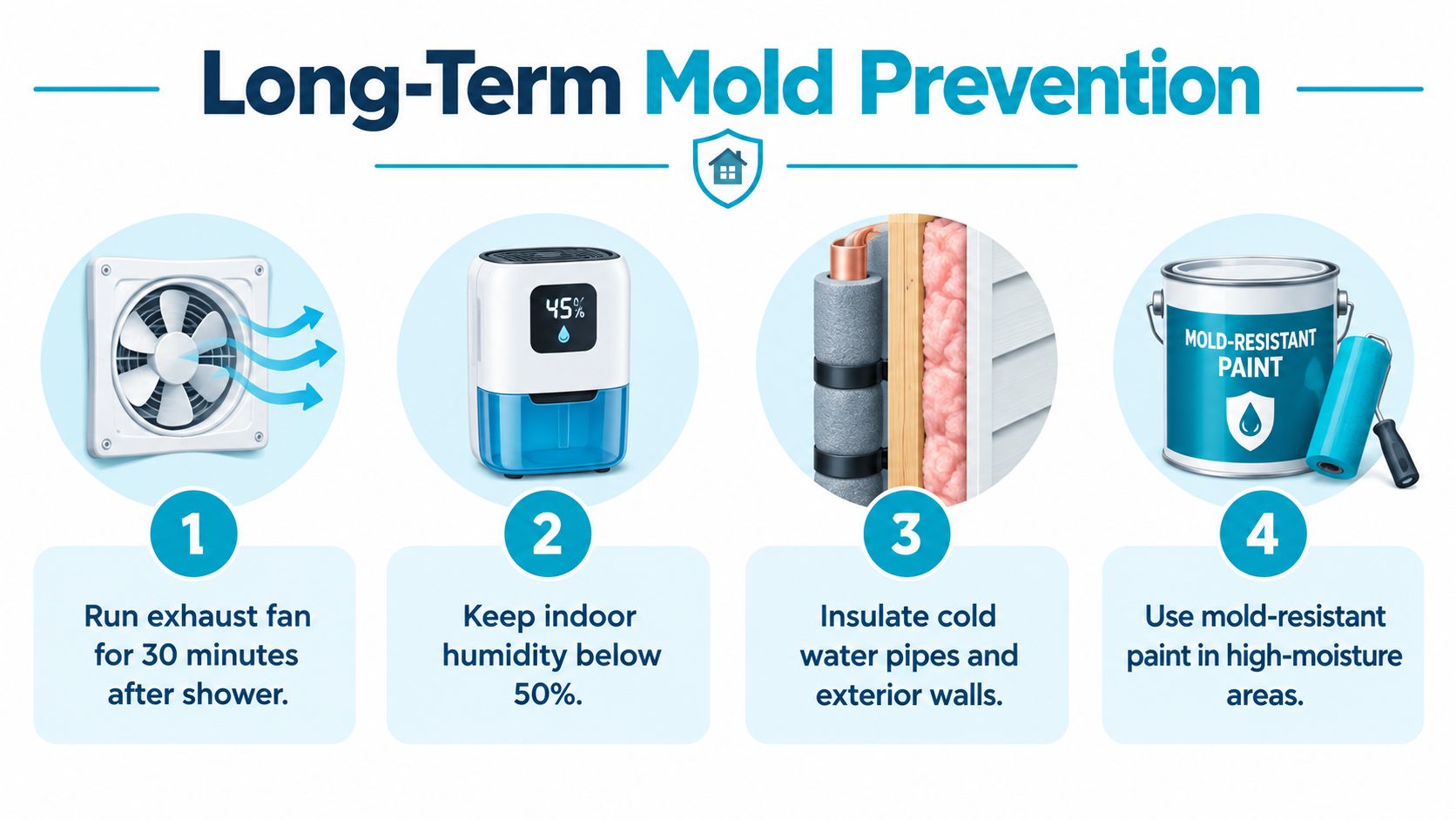
Bathroom exhaust fans need to move moist air out, not just make noise. Run the fan during showers and keep it running afterward so steam doesn't settle back onto the ceiling. In top-floor rooms, insulation and air-sealing above the ceiling help prevent warm indoor moisture from condensing on a cold surface, which is a common hidden cause of recurring mold.
Humidity control matters just as much. A simple hygrometer tells you whether the room is staying in a safe range, and a dehumidifier can help in stubborn spaces where the air stays heavy even after ventilation runs. If you're in a humid Florida market, especially around Bradenton or Sarasota, regular checks for roof leaks, plumbing drips, and staining around penetrations should become routine maintenance, not emergency response.
Practical rule: If the ceiling keeps getting damp, the room still has a moisture path.
Use materials and maintenance that match Florida conditions
Mold-resistant paint can help on repaired surfaces, but it doesn't solve a wet ceiling. The defense is a dry assembly above and below the finish, plus regular inspection of the bathroom fan, attic insulation, and roof flashings. For a more detailed maintenance mindset, the guide on how to stop mold from coming back is a solid companion to the cleanup work.

When to Call AMPM Restoration for Ceiling Mold Help
Knowing how to get mold off the ceiling also means knowing when to stop and look at the moisture problem first. If the patch is large, the drywall feels soft, the stain keeps coming back, or the ceiling material is already damaged, surface cleaning is not enough. The fix is to find the water source, dry the area fast, and replace material that cannot be cleaned well.
In Florida homes, recurring ceiling mold often points to a leak, condensation, or hidden damage above the ceiling line. A small spot can be the first sign that insulation, framing, or a roof penetration is holding moisture you cannot see from the room below.
For homeowners and property managers in Bradenton, Sarasota, Tampa Bay, Saint Petersburg, and Lakewood Ranch, AMPM Restoration handles ceiling mold as part of a moisture and remediation response, including inspection, containment, removal, and restoration. If the ceiling is sagging, the stain keeps returning, or you suspect hidden water damage, that is the point for a professional assessment. when professional mold removal is the right call
If you need a same-day look at a ceiling stain, call 941-946-7807 for a free inspection and estimate. AMPM Restoration offers 24/7 emergency response, insurance claim assistance, and financing options.