

The lab report is on the kitchen table, two pages of numbers you didn't expect to be reading this week. Maybe a plumber pulled back a vanity panel and found dark staining, maybe the hallway has smelled faintly musty since the last storm, or maybe a buyer's inspector flagged something three days before closing. However the envelope got opened, the page in front of you lists spore counts, a column of Latin genus names, and no verdict at the top.
That missing verdict is the part that surprises most homeowners. Mold testing results are not a pass or fail certificate. A report describes what was in one sample, taken at one address, during a window of minutes. It can't tell you whether a house is safe to live in, and no federal agency publishes a number that would make that judgment possible. What a report can do is steer your next decision, especially when you read it beside the moisture evidence that usually decides the outcome.
What a Mold Testing Result Can and Cannot Tell You
Each sample type answers a different question, so the sampling plan carries as much weight as the numbers. An air sample captures what was airborne while the pump ran, which might be twenty minutes on a Tuesday afternoon. A surface or bulk sample shows what has grown on a specific material, such as the paper face of drywall or the inside of a duct. A water sample checks a building system, not the air in one room.
Treat a report like this as evidence from one moment in time. A single cassette cannot prove mold is absent in the rest of the house. It only records what passed through the sampler during that run. In Florida, indoor humidity can change what is floating in a room between morning and evening, the way one rain-gauge reading does not describe a whole wet season.
A fair reading also needs four inputs the laboratory can't supply: where the sample was taken, what moisture source was suspected, what the indoor and outdoor conditions were that day, and which species showed up. Strip those away and a figure like 1,200 spores per cubic meter is just a figure.
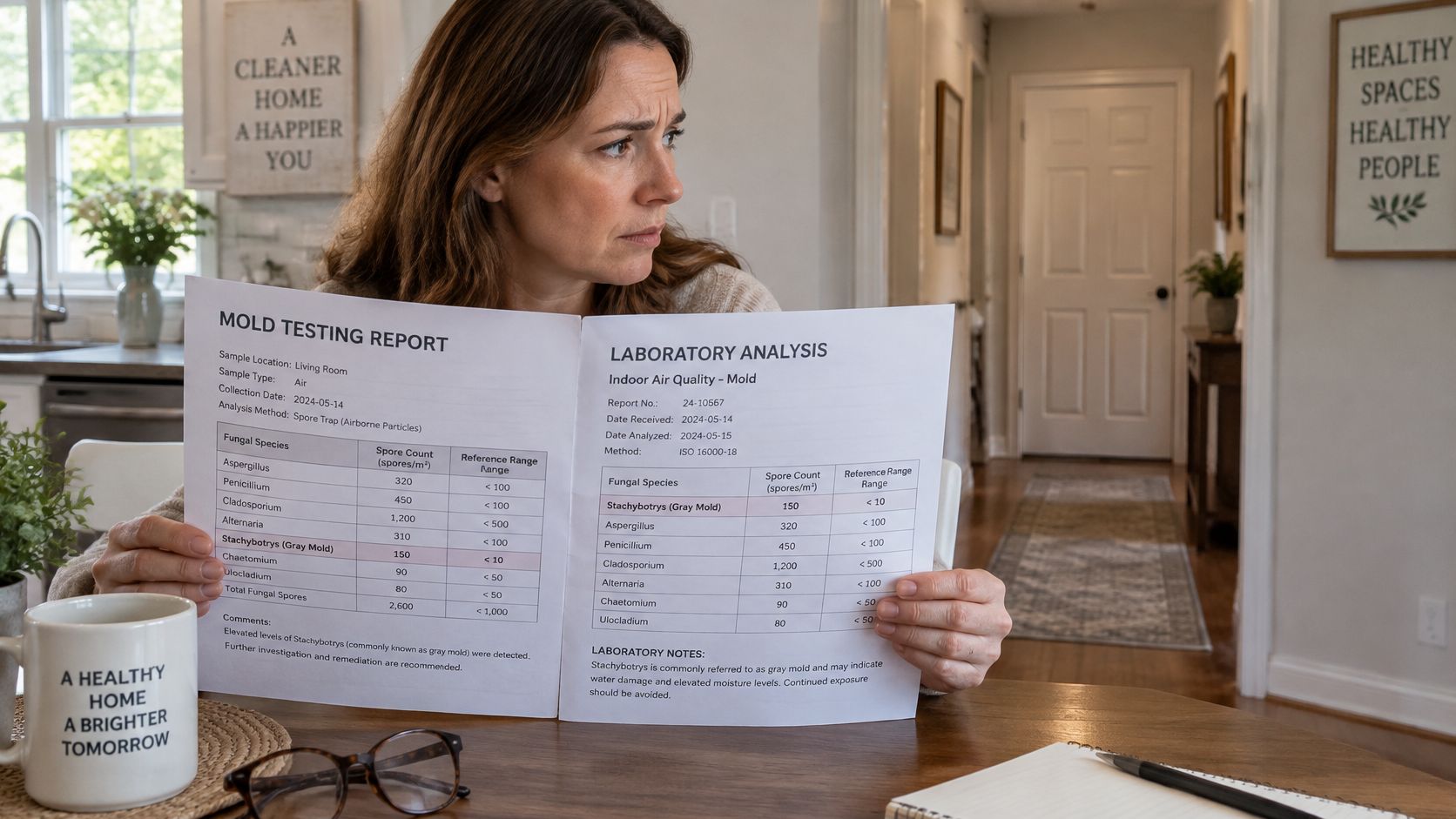
The report comes without a rating because there's nothing to rate it against. The EPA's brief guide to mold, moisture and your home explains that, as of December 2000 and in guidance issued since, no federal regulation or standard sets an acceptable indoor airborne mold spore concentration. An air sample has no federal mold limit to be measured against.
Visible growth changes the math. EPA's Brief Guide to Mold, Moisture, and Your Home advises that routine sampling is generally unnecessary once mold is visible, because the growth itself establishes a remediation concern. Testing earns its cost in narrower cases: the moisture source isn't clear, a health or legal question needs documentation, or a cleanup needs verification. Before you pay for air sampling, read how much a mold air quality test can actually prove on its own.
The test that matters: Look at your report and ask what decision changes because of it. If the answer is nothing, the sampling didn't add information.
How to Read Each Section of a Mold Lab Report
Read the packet in the order it was printed, not in the order of your anxiety. The cover page comes first, where the lab names its accreditation and the analyst who signed off. An accredited lab running a recognized industrial-hygiene method is the baseline expectation, and a report with no accreditation listed deserves a question before you rely on it.
Next comes the chain of custody, a paper trail of who held the sample and when. Signed transfer times are what let an insurer or a court treat the result as unaltered. After that, the sample IDs and locations, the type of sample, the volume of air or area sampled, the counts and their units, the genus list, the outdoor control, and finally the analyst's notes.
Units decide what you can compare
Air results are reported as a count per cubic meter of air. Surface results usually come back per tape lift or per square centimeter, and colony forming units from a cultured swab aren't interchangeable with spore counts from a direct-read cassette. Stacking a surface number next to an air number is like comparing a rainfall total to a humidity reading. Different units, different meaning, no side-by-side.
Read the analyst notes before the numbers
The notes typically describe what the sampler saw: staining, odor, a cold exterior wall, a bathroom exhaust that vents into the attic. Those observations frequently explain what the counts can't, and they're where a careful inspector records the room conditions that shaped the result.
| Report element | What to check | Why it matters | Red flag |
|---|---|---|---|
| Lab and analyst | Accreditation and a named analyst | Shows the method was run by a recognized lab | No accreditation listed |
| Chain of custody | Signed transfer dates and times | Confirms the sample wasn't altered in transit | Missing signatures or time gaps |
| Sample type | Air, surface, bulk or water | Each type answers a different question | Air samples only, with no stated reason |
| Sample location | Room, height and distance from the suspected source | Places the result in context | Every sample taken from one room |
| Sampling volume and duration | Volume in liters or cubic meters, plus sampling time | Lets counts be compared fairly between samples | Volume not stated |
| Outdoor control | An outdoor sample taken the same day | Provides the reference for comparison | No outdoor sample |
| Species list | Genera and relative abundance | Shows which types are present | Only the word mold, with no genus named |
| Moisture readings | Material moisture and indoor humidity | Points toward the cause | No moisture data included |
| Analyst notes | Visible growth, odor and room conditions | Adds the context that counts lack | Notes absent or generic |
A report that names only mold with no genus, leaves out the sample volume, skips the outdoor control, or shows gaps in the custody chain isn't solid enough to make a decision on. Send it back to the lab for correction before you act on it or hand it to an adjuster.
Comparing Indoor and Outdoor Spore Results
A living room sample shows 2,000 spores per cubic meter, mostly including Chaetomium. The outdoor sample from the same day shows 500 spores per cubic meter, mostly Cladosporium and other genera associated with leaf litter and soil. Those figures give you a comparison, not a pass-or-fail result.
Check both the counts and the genera. The indoor count is higher in this example, and Chaetomium appears among the leading indoor genera but not in the outdoor sample. That pattern can point toward a moisture problem, since Chaetomium can grow on persistently wet cellulose. It does not, by itself, locate the source or prove that mold is growing inside a wall.

Compare whether the indoor genera match the outdoor ones. When the genera and counts are similar, the indoor sample may reflect ordinary outdoor spores entering the building. When indoor counts are higher but the genera are similar, consider how outdoor air may be entering or circulating indoors. When a genus appears indoors but not in the outdoor sample, investigate possible indoor sources, especially where moisture is present. Each sample is a snapshot of one time and place, so the pattern needs to be read alongside the room conditions.
Outdoor counts change with season, rain, and wind. A same-day outdoor sample, taken close in time to the indoor samples, gives the most useful comparison. In Florida's Gulf Coast humidity and frequent summer storms, outdoor spore levels can shift, making moisture findings especially useful for interpreting a result.
A World Health Organization review of dampness and mold reported that at least 20% of buildings in studies from several European countries, Canada, and the United States had one or more signs of dampness. Building type also matters: a home and a daycare can have different indoor fungal communities. For more on planning paired samples, see AMPM Restoration's guide to air quality testing for mold.
Moisture Control and Clearance Checks
A clean spore count can sit on the same page as a wet wall. The lab report is a snapshot of one sampler, one minute, and one location. The moisture record is what shows whether the job is finished, because every pattern in that report traces back to water. Drying is the intervention that changes what grows next. Spore counts only describe what was floating before or after the fans ran.
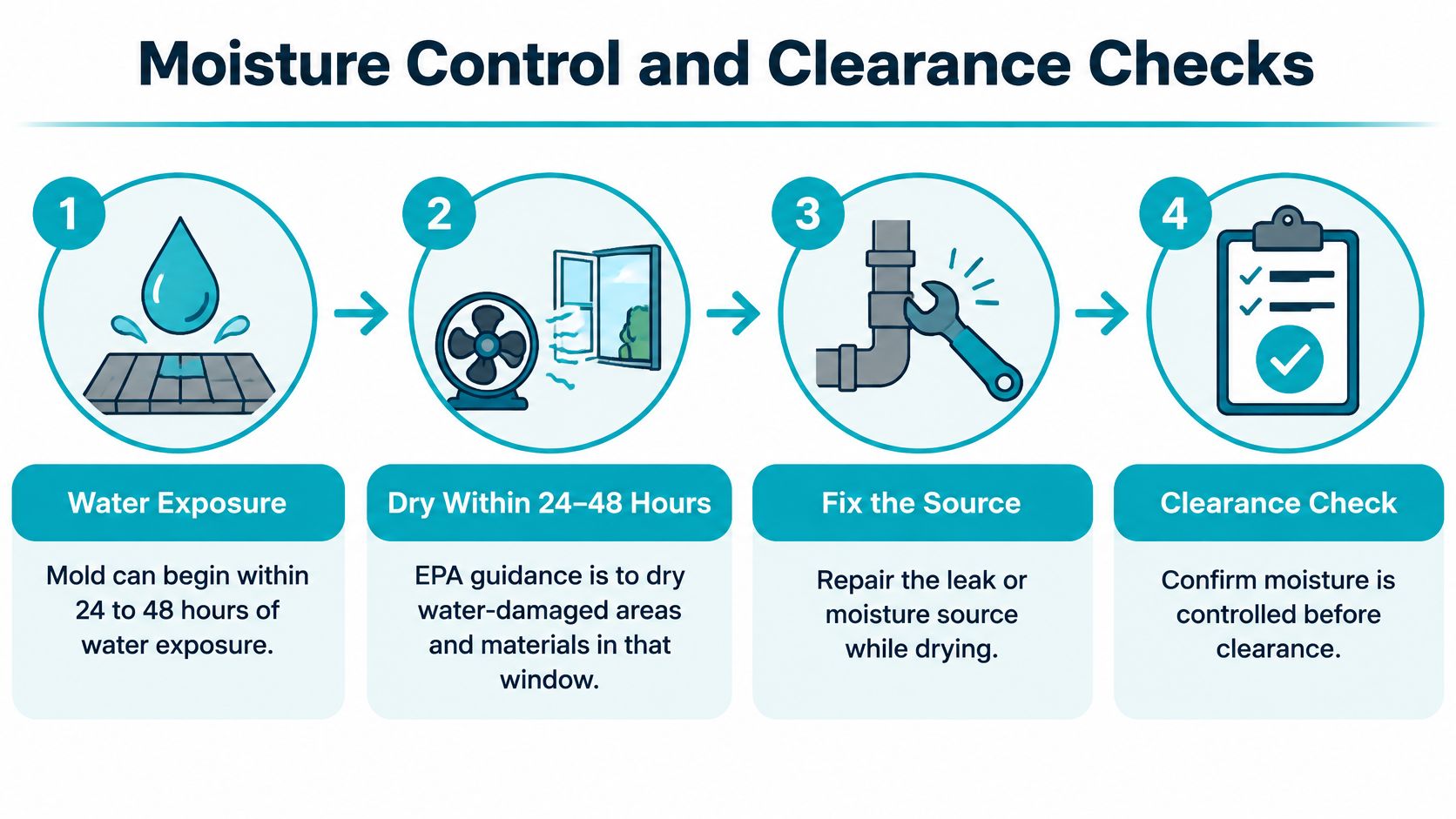
Water damage has a clock on it. Mold can begin growing within 24 to 48 hours of water exposure. In Florida, where indoor air often stays muggy after even a small leak, that window is short enough that waiting on another lab sample is the wrong first move. Drying means pulling standing water, running fans and dehumidifiers, and ventilating when the outside air is drier than the inside air, while the leak or other source is fixed. The EPA's guidance on mold and moisture puts indoor relative humidity below 60%, with an ideal range of 30% to 50%, as the target that makes surfaces less hospitable to growth.
Porous materials are the hard call. Carpet, ceiling tile, and absorbent contents sometimes cannot be cleaned and dried all the way through, and disposal is the honest answer when they cannot. Wiping a stain while a leak keeps running leaves a reservoir that shows up again in the next sample. Surface treatment alone rarely holds if the material underneath stays damp. A stain on drywall works like a watermark on paper: the mark you see is smaller than the wet area that made it.
Clearance compares indoor air with outdoor air
After cleanup, the EPA's remediation guidance for schools and commercial buildings sets a comparative benchmark: indoor mold types and concentrations should be similar to those in local outdoor air. The same guidance states that air sampling represents only the moment it was collected and cannot replace visual and sensory inspection. Surface sampling helps evaluate cleaning, and a negative lab report on its own cannot establish that remediation succeeded.
Run the acceptance checklist in order
- Confirm the moisture source is controlled. The leak, the condensation, the failed pan, or the humidity problem has to be fixed before the room is treated as done.
- Document what was removed or cleaned. Photos, material lists, and disposal records for anything that came out.
- Confirm the area is dry, free of visible dust or growth, and free of persistent musty odor. A moisture-meter reading beats a visual guess.
- Sample only to answer a defined question. Hidden contamination, a disputed clearance, or a legal file. Qualified professionals design that sampling because flow rate, sample duration, location, weather, and HVAC operation all change the result.
A bathroom can return a clean air sample while the drywall face looks spotless. A pin meter pushed into the framing behind it reads wet, because the shower valve has been dripping since spring. The air sample was clean because the growth sat inside the wall cavity, where the sampler never reached. A checklist that starts with the moisture source catches that case. A spore count alone walks right past it.
A complete clearance file holds the final inspection record, daily drying logs, photos of the affected area before and after, and the sample results with their locations. When mold removal is finished, the work ends with a final inspection that verifies the remediation worked, and the space is sanitized and prepared for occupancy. If you're weighing household cleaning products for the surfaces you can reach yourself, Canes Cleaners has a plain explanation of what vinegar and baking soda can and can't do to mold before you spend a weekend scrubbing. For the documentation side, our page on mold remediation clearance testing explains what gets recorded and reviewed.
Common Result Scenarios and What They Mean
A result that looks reassuring can still be misread. Indoor and outdoor counts, sample locations, visible conditions, and moisture findings all affect what a report means. Use the table to connect a result pattern with a practical next step.
| Result pattern | Usual meaning | Next step |
|---|---|---|
| Low indoor count, no visible growth, no odor | No clear sign of an indoor source in the areas checked | Keep humidity controlled and investigate if new signs appear |
| Indoor counts well above outdoor, indoor-only genera | A possible indoor source, often associated with water-damaged material | Find and address the moisture source, then plan remediation |
| Indoor and outdoor types match, counts modestly higher | Outdoor air entering, or ordinary variation in the samples | Check seals, ventilation, and HVAC filters |
| Negative air sample but musty smell or stains | Conditions may point to growth on a surface or inside a concealed area | Inspect surfaces and moisture before deciding what the result means |
| Positive surface sample, negative air sample | Mold was found on the sampled material, without a positive air result | Clean or remove the affected material |
| Visible mold with no sampling | Visible growth already identifies an area needing attention | Address the moisture source and remediate; sample if the source or clearance is unclear |
The result that is most often misread is a negative air sample alongside a musty smell or stain. An air test measures what was collected at the sampling location, while a surface sample checks the material itself. Read both alongside the site conditions described in how to interpret mold testing results, rather than treating either result as a stand-alone answer.
A lab result also cannot predict whether someone will develop symptoms. The CDC/NIOSH guidance on mold testing and remediation explains that indoor mold has no health-based standards and that short-term spore counts or culture results cannot be reliably converted into illness risk. The EPA's overview of mold and health describes possible allergic and irritation symptoms, which vary from person to person.
For landlords and property managers, a tenant report deserves prompt attention to the conditions in the home. The guide to handling tenant mold complaints explains how to approach complaints involving drywall. Start by locating and correcting the moisture source; moisture control steps for preventing mold can help clarify what to address before considering a retest.
Mold Testing Results Questions Answered
Can I ask for a different kind of lab report? Yes. Ask whether the lab can identify mold by genus, which is the broad group named in a report. If a report lists only total spores, ask the lab whether the sample can be analyzed or explained at a more specific level.
What does it mean if the report lists no genus? It means the lab did not identify the mold at that level in the sample. The result can still show a spore count, but it offers less detail about which types were present.
How should I read a sample taken after cleanup? Treat it as a record of the sampled conditions after the work, not as a stand-alone verdict. Read the sampling location and method alongside the inspection findings and any remaining moisture concerns.
Do I need a lab test if I can already see mold? Visible growth gives you a reason to address the affected material and its moisture source. Testing may add information, but whether it changes the next step depends on the questions the inspection needs to answer.
Does insurance cover testing? Coverage depends on your policy and the cause of loss, and your adjuster makes that determination. Keep records of the moisture source, affected materials, and corrective work to support the claim.
Confirm Your Next Step With a Free Inspection
Four checks take you from a confusing packet to a decision. Verify the report elements first: accreditation, custody, volume, outdoor control, genus names, moisture readings. Then compare indoor counts and genera against the outdoor sample. Next, match your result pattern to its next step. Finally, fix the moisture before you accept any clearance, because a dry building is the only thing that keeps a clean report clean.
Bring three things to that conversation: your mold testing results, the sample location map or inspector's sketch, and any drying logs if work has already been done. A specialist can then tell you which finding points to a live moisture problem and which is background air. If you'd like to line up that visit now, you can book a free mold inspection and bring the paperwork with you.
AMPM Restoration is a 24/7 emergency restoration company based at 4301 32nd St W b18, Bradenton, FL 34205, serving Bradenton, Sarasota, Tampa Bay, Saint Petersburg, Lakewood Ranch, and the surrounding Gulf Coast communities. Our free mold inspection and estimate pairs a room-by-room examination using detection tools that find growth you can't see with a review of your lab findings, and mold removal closes with a final inspection that verifies the remediation. We also assist with insurance claims so you can coordinate directly with your carrier, and financing options are available for projects that need payment flexibility.
Call 941-946-7807 today for a free inspection and estimate, and keep the lab report ready for the visit.
When your mold testing results raise more questions than they answer, AMPM Restoration Services can read the report against the building itself, from the outdoor control sample to the moisture readings inside the wall cavity, and give you a straight answer about what needs fixing. Our team handles inspection, mold removal, and the final verification that the work is done, with insurance claim assistance and financing options to keep the project moving. Visit AMPM Restoration Services or call 941-946-7807 to book your free inspection and estimate.