


House Smells of Smoke? We Can Help!
You notice it when you come home from the grocery store, after the air conditioner starts, or when the afternoon humidity settles over the Gulf Coast. The house smells of smoke, but there’s no active fire and no obvious pile of ash. Maybe a cooking flare-up caused it. Maybe a nearby brush fire sent smoke through the neighborhood. Maybe the source is hiding inside a wall, attic, appliance, or air return.
That smell deserves more than air freshener. In Florida, heat, humidity, closed-up vacation homes, and nearly constant air-conditioning can keep smoke residue active and move it from room to room. The right response is to identify the source, protect indoor air, clean contaminated materials, and document damage before deciding whether you need professional restoration.
What That Lingering Smoke Smell Really Means
A Bradenton homeowner may wipe down the kitchen after a pan overheats, wash the curtains, and still notice smoke when the house warms up the next day. That doesn’t mean the cleaning failed completely. It often means smoke compounds have settled into materials that weren’t visibly dirty.
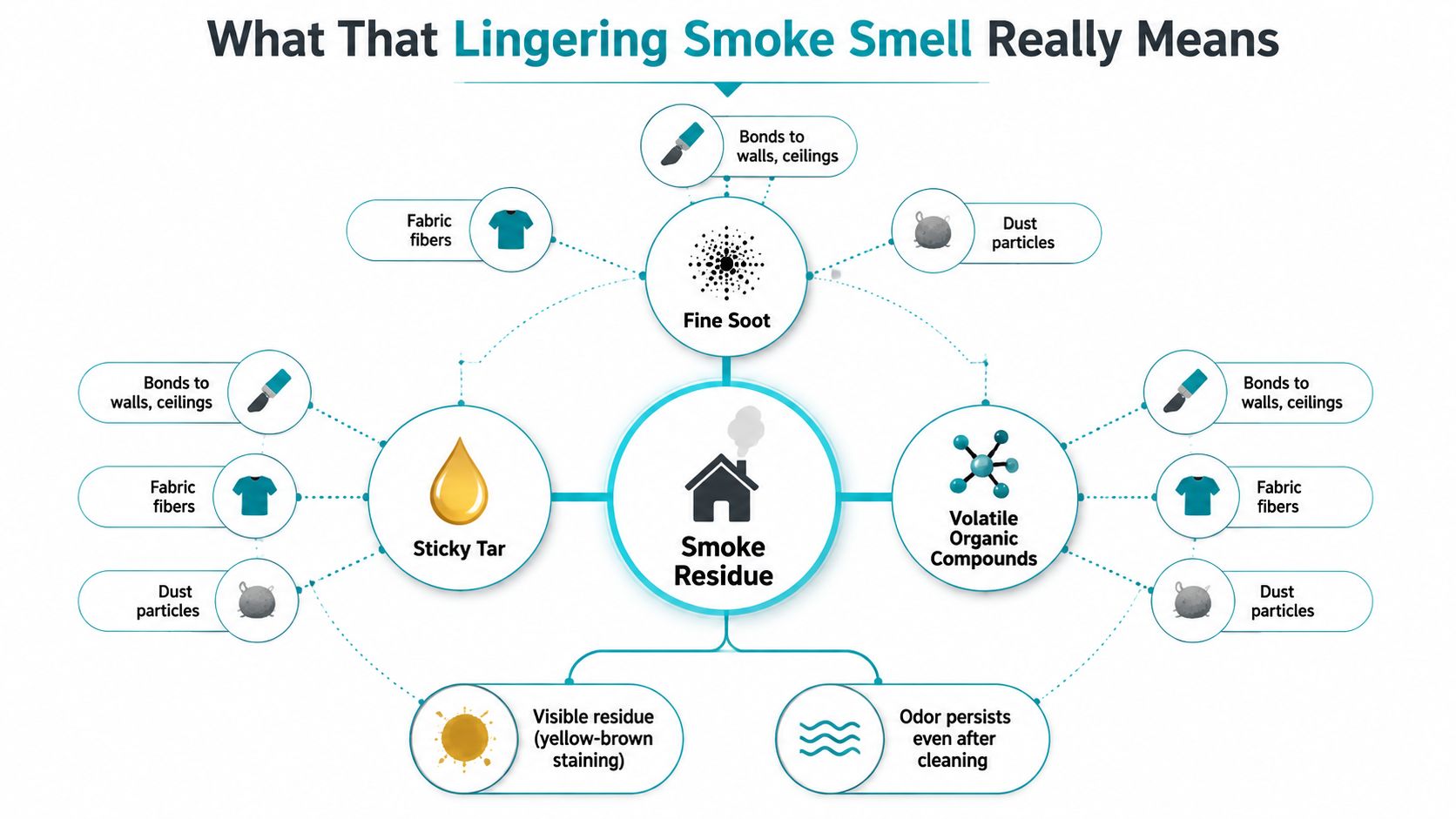
Smoke carries fine soot, sticky tar, and volatile organic compounds, or VOCs. Those materials can bond to painted walls, ceilings, upholstery, carpets, wood, drywall, dust, and light fixtures. As temperatures rise, the surfaces can release trapped compounds back into the air. A 2023 NIST and Science Advances study found that smoke VOCs can remain in indoor environments for days after a smoke event, while surface reservoirs may create exposure routes lasting months to years for some compounds without intervention. The NIST study explains why smoke odor returns after surfaces re-emit stored VOCs.
Florida’s climate makes that cycle especially frustrating. Warm, damp air can encourage contaminated materials to off-gas, so a room may smell worse on a humid Gulf Coast afternoon than it did immediately after the smoke cleared. If wildfire drift reaches Bradenton, Sarasota, Tampa Bay, or Saint Petersburg, smoke can also enter through door gaps, window leaks, and HVAC returns even when the home appears sealed.
Odor character can offer clues
A recent cooking incident often smells sharp, greasy, or food-specific near the kitchen. Fireplace residue may smell heavy and ashy, particularly around the hearth, chimney, or ash dump. Cigarette smoke tends to remain stale in fabrics and around furniture where smoking occurred.
A sharp, acrid or ozone-like odor near an outlet, appliance, breaker panel, or attic wiring deserves caution. A heavy, sweet, tar-like smell that spreads across several rooms points more toward structural soot, soft goods, or HVAC contamination. If the odor is strongest only when the air conditioner runs, inspect the return path before assuming the whole house needs repainting.
For a useful visual guide to less obvious odor reservoirs, review these hidden smoke smell sources. If you’re dealing with broader fire, smoke, or reconstruction concerns, AMPM’s overview of what a restoration company does can help you understand where inspection ends and remediation begins.
Odor alone doesn’t prove that every room contains hazardous concentrations. It does tell you that smoke-related material may still be present, so treat the air and the surfaces rather than covering the smell with fragrance.
How to Track Down the Smoke Source
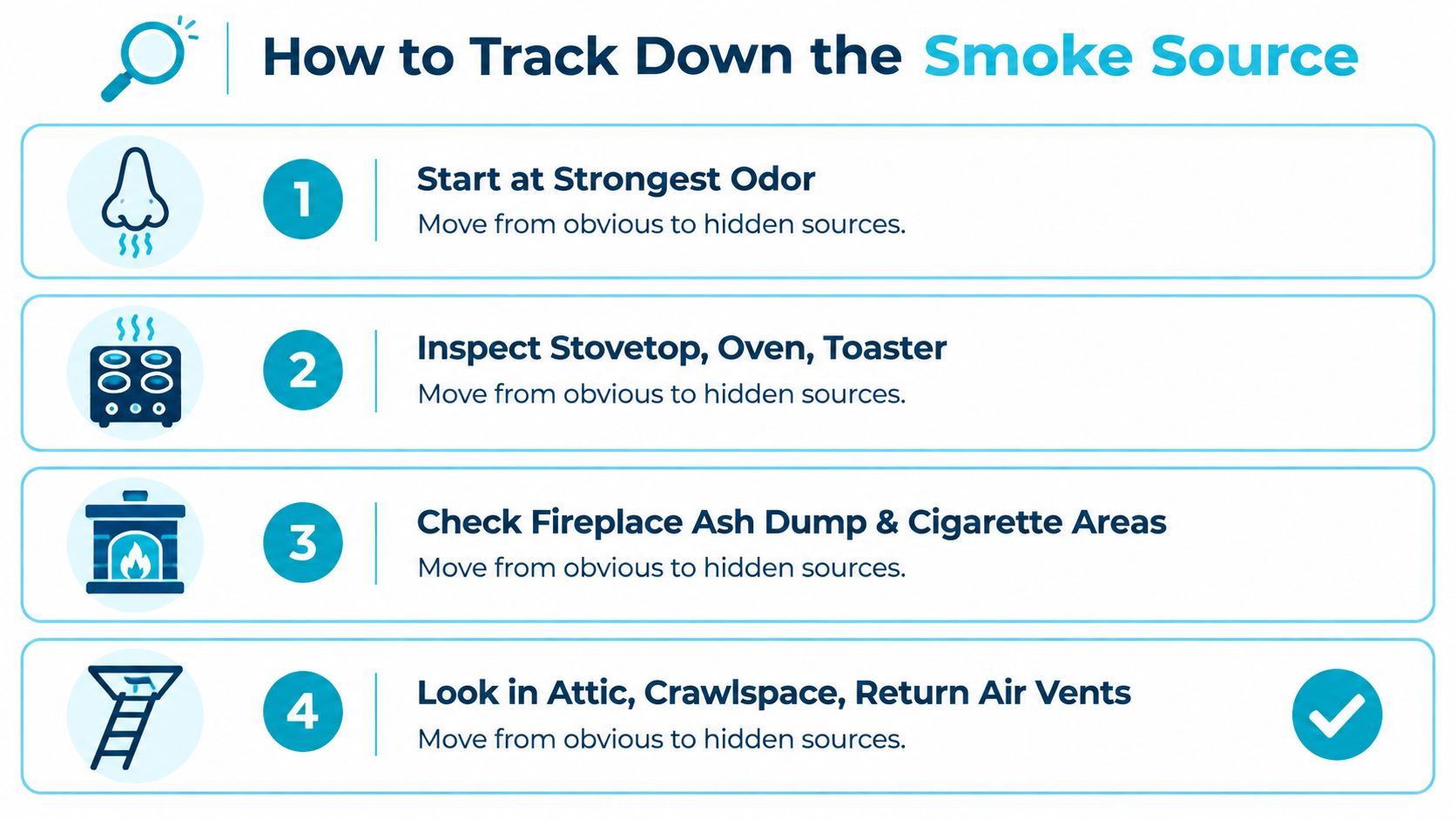
Start where the odor is strongest, not where the stain is most obvious. Close interior doors, wait briefly, and move from room to room with the HVAC off if conditions are safe. Your nose can help narrow the search, but it shouldn’t replace electrical or fire-safety precautions.
Begin with the ordinary sources
Inspect the stovetop, oven, toaster, microwave, range hood, and nearby cabinets. Look for cooked-on grease, melted plastic, scorched food, or residue above the hood. Don’t forget the drip pan beneath a burner or the space behind a countertop appliance. A small amount of burned food can leave a persistent odor when the kitchen heats up again.
Check fireplace grates, ash dumps, chimney openings, and nearby rugs. Ash can remain in concealed areas, while a partially closed damper can allow odor back into the living space. Cigarette areas need a wider search than the ashtray. Examine curtains, sofa cushions, carpet edges, wall surfaces, and the ceiling near the smoking location.
Then inspect the sources homeowners often miss
Electrical problems require a different response. A scorched outlet behind furniture, a warm switch plate, blackened wiring, or a sharp ozone smell is not a cleaning project. Shut off the appropriate breaker if you can do so safely, keep away from charred wiring, and call a qualified electrician or emergency service.
In the attic, inspect only from a safe, stable location. Lightning strikes, overheated equipment, damaged wiring, and smoke from an exterior event can leave odor around trusses, insulation, roof penetrations, and air-handler pathways. Don’t disturb charred material or crawl through contaminated insulation without proper protective equipment.
Other overlooked points include:
- Baseboard heaters: Dust or debris can burn when the unit cycles, producing a dry, hot odor.
- Dryer systems: Check the lint screen, cabinet area, exhaust connection, and exterior termination for scorching or accumulated lint.
- Condos and apartments: Smoke can enter through shared chases, corridor doors, plumbing penetrations, or neighboring units.
- HVAC returns: A return grille that smells stronger than the room suggests the system may be collecting or redistributing contamination.
Safety rule: If you find charred wiring, active heat, sparking, a damaged breaker, or smoke from a wall or ceiling, leave the area and call emergency services. Don’t touch the suspected source.
Use the right Florida ventilation strategy
During a regional wildfire or brush-fire event, opening windows can make indoor air worse. If outdoor smoke or particulate levels are high, close windows and doors, set the HVAC system to recirculate, and use suitable filtration. FEMA’s light-smoke sequence recommends aerating when conditions allow, installing a new HVAC filter rated MERV 11 or higher, running the fan continuously, placing activated charcoal throughout the home, and cleaning affected linens and fabrics. FEMA’s smoke-remediation guidance explains the sequence and warns against masking products.
After the outdoor smoke clears and the source is controlled, ventilate strategically. Create a cross-breeze during the driest practical hours, place a box fan in a window to exhaust air outward, and run a dehumidifier while monitoring indoor humidity. Keep humidity below 50 percent to reduce the chance of soot and odor reactivation.
Isolate the strongest-smelling room. Close the door, use plastic sheeting over supply vents when appropriate, and avoid pushing contaminated air into clean rooms. In Tampa Bay and South Florida, mornings may carry heavier moisture, while afternoon heat can increase off-gassing. Judge conditions by outdoor smoke, rain, humidity, and indoor comfort rather than following a rigid clock.
If multiple rooms smell smoky but no local source appears, suspect the HVAC loop, attic pathway, shared building chase, or recent wildfire infiltration. For broader fire-loss precautions, use AMPM’s guide to what to do after a fire before moving damaged contents or making repairs.
Cleaning Hard Surfaces, Soft Goods, and Porous Materials
Smoke odor persists when residue remains in surface pores, fabrics, insulation, or unfinished wood. Clean in the right order. Dry removal comes before wet cleaning because moisture can turn loose soot into a greasy film across paint, trim, and cabinets.

Hard surfaces need controlled abrasion
For light soot, use a dry chemical sponge or clean microfiber cloth. Work from the least affected area toward heavier residue, replacing the sponge or cloth as it loads. ICON recommends a variable-speed HEPA-filtered vacuum held just above the surface, rather than brushed against it, because direct contact can smear or embed soot. ICON’s smoke-affected-surface guidance covers HEPA vacuuming and soot handling.
Once dry residue is removed, damp-wipe washable surfaces with a compatible degreasing cleaner. Cabinets, trim, and painted walls may respond to a mild alkaline product followed by a clean-water wipe. Test any cleaner in an inconspicuous area first. Glass and metal may tolerate a commercial soot remover or carefully prepared vinegar-water solution. Never combine cleaning chemicals.
Florida’s humidity can keep oily residue active and slow drying, particularly in enclosed rooms or during wet Gulf Coast weather. Use ventilation only when outdoor air is cleaner, and run a dehumidifier if indoor moisture remains high.
Fabrics and porous materials hold the smell
Launder washable curtains, linens, slipcovers, and clothing according to their care labels. Choose the warmest safe cycle with detergent, then repeat if odor remains. Send wool, silk, specialty rugs, and dry-clean-only upholstery to a qualified textile cleaner. Bag removable items loosely for transport. Tight stacks can trap contaminated air and transfer soot.
Carpets, mattresses, and upholstered furniture can be HEPA-vacuumed carefully. Perfumed sprays may cover the smell while residue remains underneath. For small or fragile objects, carbon, baking soda, unscented clay cat litter, and zeolites can support odor-absorbing containment. This practical smoke-odor guide explains containment and absorbent materials.
Insulation, ceiling tiles, unsealed drywall, and unfinished wood can become long-term odor reservoirs. Keep lightly affected materials only if cleaning stops the odor from returning. Plan disposal or replacement for materials that are visibly saturated, charred, crumbling, or impossible to clean without spreading contamination. For wood, use a targeted method for getting smoke odor out of wood instead of applying fragrance or a heavy coating.
If wildfire drift during Florida’s dry season or hurricane-related smoke exposure affected several rooms, document conditions before discarding contents. Photos, cleaning invoices, and itemized damage notes can support an insurance claim, though coverage depends on the policy and loss circumstances. For multiple rooms, contents, or vendors, attendance tracking for cleaning firms can record who entered each area and when.
Treating the HVAC System and Ductwork
Your air conditioner can either help filter smoke or redistribute it. The blower pulls air through return grilles, across the filter and equipment, and back through supply lines. If soot reached the return plenum, coil area, insulation, or duct trunks, every cycle can carry odor into rooms that were never near the original event.
Start by switching the system off while you inspect. Look for soot on return grilles, inside the filter slot, around the blower compartment, and near accessible duct connections. Photograph the old filter before disposal, then replace it with a pleated filter rated MERV 11 to MERV 13, provided the rating is compatible with the equipment’s airflow requirements. An overly restrictive filter can strain some systems, so confirm the specification with an HVAC professional.
Remove return grilles only if you can do so safely. A HEPA shop vacuum can remove accessible debris from the grille and nearby plenum, but don’t force the nozzle deep into ductwork. Pushing residue farther into the system creates a larger cleanup problem.
Call a NADCA-certified duct cleaner when soot is visible at registers, contamination appears inside the return, or odor continues after the source has been controlled and basic filtration has had time to work. If smoke entered an attic chase, the crew may also need to evaluate duct insulation, air leaks, and sealing. AMPM’s duct cleaning services are relevant when odor follows the HVAC cycle rather than staying confined to one room.
Ozone versus hydroxyl treatment for smoke odor
| Factor | Ozone Generator | Hydroxyl Generator |
|---|---|---|
| Occupancy | Requires full evacuation during treatment | Designed for a more occupant-tolerant approach, subject to professional safety controls |
| Pets and plants | Remove pets, plants, and people | Follow the technician's restrictions for sensitive occupants and animals |
| Speed | Can act quickly on some airborne odors | Usually slower when residue is heavy |
| Surface residue | Doesn't remove soot or contaminated materials | Doesn't replace cleaning or material removal |
| Ventilation | Requires thorough post-treatment ventilation | Still requires controlled ventilation and monitoring |
| Best use | Specialized treatment in an empty, prepared structure | Lower-disruption deodorization when conditions permit |
Ozone isn't a substitute for source removal. Hydroxyl equipment may be safer around occupants, but it still needs correct sizing, placement, and professional judgment.
Health Risks, Deodorizing Methods, and Damage Assessment
A Florida home can still smell smoky after the visible source is gone. Residue settles into paint, drywall, flooring, upholstery, and insulation, then releases odor as Gulf Coast humidity rises. Thirdhand smoke describes nicotine and other chemicals left behind after active smoking stops. That residue keeps indoor smoke relevant to health, particularly for children, people with asthma or COPD, pregnant household members, and pets. Cleveland Clinic's overview explains why residue remains relevant after smoking ends.
The WHO's household air-pollution fact sheet provides the global context. Its figures concern household air pollution worldwide, not the risk from every smoky home, but they reinforce why persistent indoor smoke deserves attention. During Florida's hurricane season, wildfire drift can also enter through windows, doors, attic vents, and HVAC systems, leaving fine particles behind even when the fire is far away.
Keep sensitive occupants and pets out of visibly contaminated rooms until cleaning and ventilation are complete. For interim air treatment, use a purifier with HEPA and activated-carbon stages. Activated charcoal or baking soda containers may help after residue removal, but neither replaces cleaning or source control.
Fill out a damage checklist
Record conditions before discarding materials:
- Structural framing: Photograph soot, staining, charring, or heat damage on attic members and exposed framing.
- Electrical components: Document scorched outlets, switches, fixtures, and breaker-area damage without touching them.
- Flooring: Note warping, discoloration, or softened materials near kitchens, fireplaces, and electrical sources.
- HVAC equipment: Check the filter, return, registers, and air-handler compartment for residue or odor.
- Finishes: Mark yellow-brown staining, peeling paint, and spots where odor returns after cleaning.
Cleaned drywall may require stain-blocking primer before repainting. Remove residue first. Paint applied over contaminated material can trap the odor temporarily, complicate later repairs, and create insurance documentation problems if the original condition was not recorded.
A fading odor over two to four weeks may indicate that cleaning and ventilation are working. A strong smell at eight weeks points toward an embedded reservoir in drywall, insulation, flooring, contents, or ductwork. Florida humidity can reactivate that reservoir, while HVAC cycling can carry it into rooms that were not near the original source. For a practical smoke-odor removal workflow, document rooms, contents, filters, soot patterns, and receipts before disposal, then review the records with your insurer or restoration contractor.
When to Call a Smoke Damage Restoration Professional
DIY cleanup makes sense for a small, isolated cooking incident with no soot, no electrical concern, and no odor outside the kitchen. It becomes a poor bet when the smell keeps returning, contamination crosses rooms, or the HVAC system spreads it.
Call a restoration professional when you find:
- Soot films: Walls, ceilings, trim, or contents have a visible gray, yellow, or brown film.
- Persistent odor: The smell remains after careful cleaning and controlled ventilation.
- HVAC contamination: Returns or registers smell smoky or show residue.
- Fire or electrical damage: Any charring, melted material, heat damage, or suspected wiring fault is present.
- Breathing concerns: Occupants develop irritation or symptoms that improve away from the home.
- Hidden-space involvement: Smoke reached an attic, wall cavity, insulation, crawlspace, or shared building chase.
A trained Florida restoration crew can inspect air pathways and concealed surfaces, use HEPA air scrubbers, perform controlled thermal fogging or hydroxyl treatment, clean contents, seal smoke-affected materials, and coordinate repairs. Heavily damaged drywall, insulation, duct lining, or structural components may need removal rather than deodorization.
Insurance documentation should begin before disposal. Photograph each room, damaged contents, filters, soot patterns, and the suspected source. Save receipts, record when the odor began, and request a written scope of work. Wildfire drift, cooking incidents, and electrical fires may be handled differently depending on the policy, cause, exclusions, and resulting damage. Don't assume coverage or deny yourself a claim before speaking with your insurer.
Florida homeowners should also ask how the contractor handles an assignment of benefits, or AOB. Ask who controls payment, what work is authorized, whether the agreement limits your options, and whether the scope is itemized. A reputable contractor won't pressure you into signing immediately after a regional smoke event.
Choose an IICRC-certified contractor, verify licensing and insurance, and compare written scopes instead of choosing based on a door-to-door promise. AMPM Restoration Services operates from 4301 32nd St W b18, Bradenton, FL 34205, serving Bradenton, Sarasota, Tampa Bay, Saint Petersburg, Lakewood Ranch, and surrounding Gulf Coast communities with fire and smoke restoration, water damage restoration, mold services, storm recovery, commercial restoration, and reconstruction.
Smoke Odor FAQs Florida Homeowners Ask Most
How long should smoke odor take to fade?
Light exposure can improve after source removal, ventilation, filtration, and fabric cleaning. A steady decline over two to four weeks is encouraging. If odor remains strong at eight weeks, ask for an inspection of concealed materials and HVAC pathways rather than repeating surface sprays.
Why does the smell return on humid Florida days?
Smoke VOCs can partition into surfaces and later re-enter the air. Heat, moisture, and air movement can increase that release, which is why a house may smell smoky after rain, during a humid afternoon, or when the air conditioner starts. Focus on the reservoir, not the weather symptom.
Are children and pets at greater risk?
Children, people with respiratory conditions, pregnant household members, and pets can be more sensitive to contaminated indoor air. Keep them out of visibly affected rooms, avoid fragrance masking, and arrange professional assessment if symptoms appear or improve away from the home.
Is ozone safe around an aquarium or HVAC system?
No one should remain in an ozone-treated space, and pets, plants, and aquariums require removal or specific professional safeguards. Ozone also doesn't remove soot from ducts or surfaces. Ask about hydroxyl treatment and source cleaning when the home can't be fully evacuated.
What should I do after a neighbor's yard burn?
Close windows and doors while smoke is present, set the HVAC to recirculate, and use filtration. Once outdoor conditions improve, ventilate without bringing smoke back inside. If the odor returns whenever the AC runs, inspect the filter and return system.
Why does a closed vacation home smell smoky?
A closed home can retain odor in fabrics, dust, carpets, and porous finishes while heat and humidity cycle through the building. Air it out only when outdoor air is suitable, clean absorbent contents, control humidity, and inspect the HVAC if the odor spreads after startup.
If your house smells of smoke after cleaning, don't keep adding fragrance or guessing at the source. Call AMPM Restoration Services at 941-946-7807 for a free inspection and estimate, with insurance claim assistance and financing options available. AMPM provides smoke and fire damage restoration, odor treatment, air-quality support, and reconstruction throughout Bradenton, Sarasota, Tampa Bay, Saint Petersburg, Lakewood Ranch, and nearby Gulf Coast communities, so visit AMPM Restoration Services to request help.