

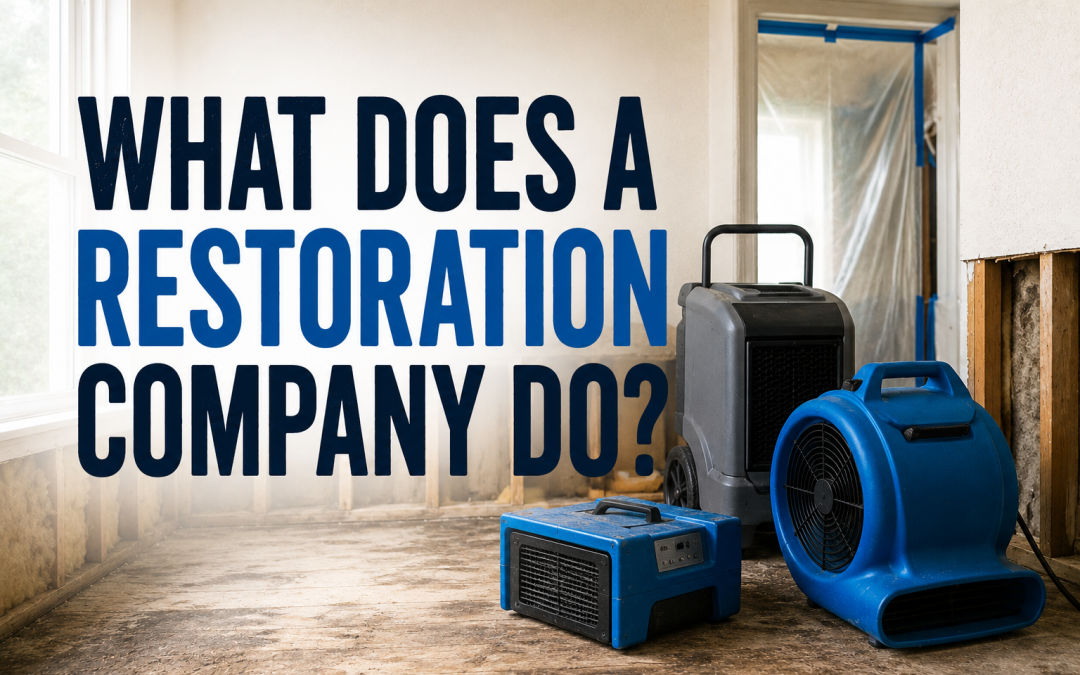
What Does a Restoration Company Do?
Water is on the floor. The AC closet smells musty. A supply line under the sink let go while you were at work, or a Gulf Coast storm pushed water where it never should have gone. In that moment, most homeowners ask the same thing: what does a restoration company do, and do I need one right now?
A restoration company handles the emergency side of property damage. The job is to stabilize the structure, stop further damage, remove hazards, dry what can be saved, document the loss, and restore the property to its pre-loss condition. This is not simple cleanup. It is a controlled, science-based response. Unchecked moisture can lead to mold growth within 24 to 48 hours, which is why speed matters from the first phone call.
On Florida’s Suncoast, that timeline gets tighter in real life. Humidity works against you. Salt air, older plumbing, slab leaks, roof failures, and storm intrusion all make hidden moisture a real threat. If you’ve also been trying to understand drainage problems after heavy rain, this breakdown of why your basement floods is a useful companion resource because exterior water entry often starts long before you see staining inside.
Your Guide to Property Restoration After a Disaster
A proper restoration response starts with triage. The first goal is stabilization, not cosmetics. That means stopping active water, securing unsafe areas, checking for contamination, and creating a drying or cleaning plan that matches the actual damage.
A lot of people expect a restoration crew to look like a remodel crew. That’s the wrong comparison. A remodeler improves a space. A restoration company responds to loss conditions, often the same day, with moisture meters, thermal imaging, extraction equipment, air movers, dehumidifiers, containment materials, HEPA filtration, and documentation built for insurance review.
Practical rule: If the structure is still wet, reconstruction is premature.
That distinction matters because many expensive mistakes happen when a company jumps from demolition straight into repairs. Paint, flooring, cabinets, drywall, and trim can all hide moisture. If those materials get closed back up too early, the homeowner pays twice. Once for the visible repair, and again later when odor, microbial growth, or material failure shows up behind the new finish.
On jobs across Bradenton, Sarasota, Lakewood Ranch, and Saint Petersburg, the best outcomes usually come from the same sequence. Secure first. Measure second. Dry completely. Rebuild last.
The First 24 Hours What To Do and What to Expect
When damage happens, the first day decides whether the loss stays contained or spreads into flooring, wall cavities, insulation, cabinetry, and indoor air.

What you should do immediately
- Shut off the source if you can: Close the local valve, main water supply, or breaker only if it’s safe to access.
- Call your insurance carrier quickly: Under Florida guidance, homeowners should notify their carrier as soon as possible after discovering damage to help avoid claim problems tied to delay or secondary damage (Florida water damage restoration guide).
- Keep people out of unsafe areas: Wet floors, sagging ceilings, soot, and contaminated water all create risks.
- Photograph visible damage: Capture standing water, damaged contents, affected rooms, and any obvious source.
- Use outside help for the plumbing cause: If the loss started with a failed line, this primer on dealing with burst pipes gives a practical overview of how these failures start and why quick shutoff matters.
What not to do
Household fans won’t replace professional drying. A shop vacuum isn’t enough for widespread extraction. Bleach is not a cure-all. And if there’s any chance water contacted outlets, appliances, or wiring, don’t walk into that area assuming it’s safe.
Technicians have to isolate electrical power in affected areas before entry under OSHA 29 CFR 1926.416, which is one reason experienced crews move methodically at the start of a job, not casually.
Wet drywall and live power are a bad combination. If the area hasn’t been made electrically safe, stay out.
What a restoration company does on arrival
The first visit is usually fast and practical. A crew identifies the source, checks safety, determines how far the damage traveled, and decides what can be saved.
Typical first-day actions include:
- Site safety check: Electrical hazards, slip risks, structural concerns, and contamination.
- Moisture inspection: Mapping floors, walls, cabinets, and adjacent rooms for hidden spread.
- Emergency mitigation: Water extraction, board-up, roof tarp, or containment depending on the event.
- Documentation: Photos, readings, damaged materials, and notes for claim support.
- Drying setup: Equipment placement based on material type and moisture load.
For homeowners who want a more detailed breakdown of the emergency timeline, this guide on the first 24 hours after water damage is worth reviewing while the claim and mitigation plan are getting started.
Core Restoration Services Your Home May Need
A restoration company doesn’t do one thing. It handles a range of loss conditions, each with its own safety rules, cleaning methods, and rebuild needs.
Water damage restoration
Water losses are the most common calls on the Suncoast, but not all water is treated the same. Restoration professionals classify water damage under the IICRC S500 standard as Category 1, Category 2, or Category 3, and that classification drives the safety and antimicrobial protocol.
| Water Damage Categories and Risks | ||
|---|---|---|
| Category | Source Examples | Potential Health Risk |
| Category 1 | Broken supply line, fresh water line leak | Lower contamination risk at the source, but it can worsen if left untreated |
| Category 2 | Dishwasher overflow, washing machine discharge | Significant chemical or biological contamination risk |
| Category 3 | Sewage backup, floodwater, toilet overflow with waste | Pathogenic contamination and high biohazard concern |
That’s why “it’s just water” is rarely a safe assumption. Category changes affect demolition decisions, PPE, containment, disposal, and the way contents are handled.
If you’re comparing service options, water damage restoration services should include extraction, moisture mapping, monitored drying, sanitation where needed, and documentation rather than only tear-out and fan placement.
Fire and smoke damage restoration
Fire jobs are often more complex than they look. Flames may affect one area, but smoke travels. Soot settles inside cabinets, HVAC pathways, closets, electronics, and porous materials. The issue isn’t only staining. Smoke residues can be acidic, and if they aren’t neutralized quickly, they can continue damaging metals, finishes, and wiring.
A proper fire response usually includes debris removal, odor control, content cleaning, soot-specific cleaning methods, and targeted demolition where heat or contamination made materials unsalvageable.
Mold inspection and mold removal
Mold work starts with the right question. Is this an active moisture problem, or old staining from a past event? Good mold remediation addresses both the visible growth and the moisture source feeding it.
Homeowners often confuse mold inspection with mold removal. Inspection identifies scope, affected materials, and moisture conditions. Removal involves containment, filtration, material removal where required, cleaning, and post-remediation verification steps when appropriate. If the moisture source stays in place, the mold comes back.
Storm and flood damage repair
Storm losses on the Gulf Coast can involve several trades and damage types at once. Wind-driven rain, roof breaches, window failure, rising water, wet insulation, ceiling collapse, and soaked contents often happen together.
A restoration team may start with tarp and board-up, then move into extraction, dehumidification, selective demolition, cleaning, and reconstruction planning. Commercial properties add another layer because downtime, tenant communication, and after-hours work all become part of the response.
The Full Restoration Process From Mitigation to Reconstruction
A complete project follows a sequence. When that sequence is respected, the property has a real chance of being restored correctly the first time.

Initial assessment and emergency control
Say a second-floor bathroom supply line leaks overnight in a Bradenton home. Water moves through the bathroom floor, down a wall cavity, across the ceiling below, and into adjacent flooring. The visible damage may be one stained ceiling and some wet baseboard. The actual damage is usually larger.
The first step is inspection and containment. Technicians document affected areas, identify materials at risk, and stop the spread. That may mean extraction, removing saturated pad, opening wall sections, or setting containment to keep affected air from moving through the house.
Drying is the real turning point
Professional structural drying is where experienced restoration work separates itself from basic cleanup. The goal isn’t to make the room feel dry. The goal is to return materials to acceptable moisture conditions.
That process requires reducing relative humidity below 45%, using infrared moisture mapping to locate hidden water, and deploying industrial equipment to reach drying targets that are then validated through clearance testing (structural drying overview).
In practical terms, technicians track wet framing, subfloors, drywall, insulation, and cabinetry over time. Equipment gets adjusted as the structure responds. Some materials dry in place. Others don’t.
If a contractor says the room is dry because the surface feels dry to the touch, that isn’t a drying plan. That’s guesswork.
For homeowners trying to set expectations, how long water damage restoration takes depends on material type, how long the water sat, contamination level, and whether moisture migrated into closed cavities.
Reconstruction and final inspection
Reconstruction starts after mitigation is complete, not while the structure is still carrying hidden moisture. This phase can include insulation replacement, drywall, texture, paint, trim, cabinetry, flooring, and finish carpentry.
The final inspection confirms that repairs match the scope, the site is clean, and the restored space is safe to occupy. The strongest projects are the ones where mitigation records and reconstruction decisions line up cleanly from start to finish.
How Insurance Coordination and Costs Are Managed
Insurance coordination starts with documentation, not promises. In a Florida water loss, the company you hire needs to prove what was wet, what was removed, what was dried, and why each step was necessary. If that file is weak, the claim gets harder to support, and the homeowner often pays for the confusion later.
That problem shows up all the time in the gap between mitigation and reconstruction. A room can look ready for repairs while framing, sill plates, or cabinet voids still hold moisture. If a non-certified company skips proper drying records and the home develops mold weeks later, the carrier may treat that mold as secondary damage instead of part of the original loss. In plain terms, poor mitigation can turn into a denied claim during reconstruction.
What a restoration company should manage on the claim side
A qualified restoration contractor builds a claim file an adjuster can review. That usually includes photos, moisture readings, demolition notes, daily equipment logs, affected material lists, and a line-item estimate, often prepared in Xactimate.
Good documentation does two jobs. It supports the emergency work already performed, and it shows why the structure was or was not ready for rebuild.
The contractor should also keep scope separation clear. Mitigation, contents work, mold remediation if needed, and reconstruction may be approved on different timelines. That is normal. It only becomes a mess when the paperwork is vague or the contractor mixes drying work with repair work before the first phase is documented and closed.
Where costs and approvals usually get sideways
Homeowners usually run into trouble in three places:
- Mitigation versus rebuild: Dry-out, demolition, and cleaning are often handled separately from drywall, flooring, cabinets, and finishes.
- Pre-loss condition versus betterment: Insurance usually pays to restore what was there before, not upgrade the room.
- Supplements and payment timing: Extra damage inside walls or under floors often changes the scope after the initial estimate.
Payment flow can also surprise people. Depending on the policy, mortgage company, and stage of the claim, checks may go to the insured, the contractor, or both. For a plain-English look at understanding contractor payments from insurers, that resource explains why approvals and disbursements rarely happen in one clean sequence.
If you want a local breakdown of how estimates, photos, drying records, and carrier communication fit together, this guide to insurance restoration services for homeowners lays out the process clearly.
What an honest cost discussion sounds like
No competent contractor can price a loss from a few phone photos. Category of water, how far moisture traveled, contamination, access, demolition needs, drying days, and finish material availability all affect cost. In older Florida homes, one opened wall often reveals another problem that was impossible to see on day one.
Clear cost management is still possible.
Look for a written scope, clear exclusions, documented change orders, and regular updates tied to site conditions. Ask one direct question early: are you billing for mitigation only, or are you also pricing reconstruction? That single answer prevents a lot of disputes, especially on jobs where the house looks dry before the structure is verified dry.
The Importance of Hiring a Local, IICRC-Certified Company
A lot of expensive restoration problems start after the water stops. The house looks dry, a handyman or general contractor closes the walls, and six weeks later there is odor, swelling, or mold inside the same cavity. In Florida, that mistake can turn one covered water loss into a second problem the carrier treats very differently.

The mitigation versus reconstruction trap
Mitigation and reconstruction are not the same job, and homeowners pay for that confusion all the time.
Mitigation is the emergency side. Stop the source, remove contaminated materials where needed, dry the structure, clean, verify moisture levels, and document every step. Reconstruction is the rebuild side. Drywall, trim, cabinets, paint, flooring, and final finishes come after the structure is proven dry.
That order matters even more on the Suncoast. Our humidity keeps materials damp longer than they appear. A wall can feel dry at the surface while the bottom plate is still wet. A cabinet face can look fine while the cavity behind it is holding moisture. If a company skips proper moisture mapping and drying records, secondary mold growth becomes much more likely, and a future claim can get harder to defend because there is no proof the original drying was done correctly.
Why IICRC certification changes the outcome
IICRC certification means the crew is trained to follow an accepted standard instead of guessing based on appearance. That changes how the job is handled in practical ways:
- Moisture is verified with instruments. Materials are tested and tracked until drying goals are met.
- Equipment is set for the structure. Air movers, dehumidifiers, and containment are placed based on the materials, affected areas, and current conditions.
- The file is documented. Daily readings, photos, and drying logs help support the insurance file and the rebuild decision.
- Safety is handled correctly. Category of water, contamination, filtration, PPE, and cleanup procedures affect what can be saved and what has to go.
- Reconstruction starts at the right time. The rebuild begins after the structure is dry, not when it looks ready.
Local experience matters too. Bradenton, Sarasota, Lakewood Ranch, and the rest of the Gulf Coast have their own patterns. Wind-driven rain around windows and doors, slab moisture, older homes with layered repairs, and HVAC systems that keep circulating humid air can all hide damage from an inexperienced crew. A local company that works these losses every week is less likely to miss trapped moisture and less likely to send a rebuild crew in too early.
Homeowners who want a plain-English list of what to ask before hiring help can review these water damage restoration FAQs for Florida property owners.
One company homeowners in Bradenton and nearby Gulf Coast communities may consider is AMPM Restoration Services, based at 4301 32nd St W b18, Bradenton, FL 34205. The company handles emergency mitigation, structural drying, mold remediation, fire and smoke restoration, commercial losses, and reconstruction.
Good-looking repairs are easy to spot. Proper mitigation is what protects those repairs from failing later.
Frequently Asked Questions About Property Restoration
Some questions come up on almost every loss, especially when a homeowner is deciding whether to stay, file, dry in place, or tear out.
Quick answers homeowners actually need
| FAQs about Property Damage Restoration | |
|---|---|
| Question | Answer |
| How quickly should I call after discovering damage? | Immediately if the damage is active, spreading, or affects safe occupancy. Fast action protects materials, supports documentation, and reduces secondary damage risk. |
| Can I stay in the house during restoration? | Sometimes. It depends on contamination, electrical safety, demolition scope, odor, airflow, and whether drying equipment or containment makes the area unsafe or impractical to occupy. |
| Is DIY drying enough after a leak? | Small, very limited spills may be manageable. Structural water intrusion usually is not. Hidden moisture in walls, subfloors, insulation, and cabinetry often requires professional testing and drying. |
| Does insurance cover restoration? | Coverage depends on cause of loss, policy language, exclusions, and how quickly the damage was reported. The best first step is to document the loss and notify the carrier promptly. |
| What should I ask before hiring a restoration company? | Ask who performs the moisture inspection, how drying is documented, whether the team follows IICRC standards, what part of the job is mitigation versus reconstruction, and who communicates with the adjuster. |
| Where can I read more about common water damage concerns? | A good starting point is this set of water damage restoration FAQs, especially if you’re sorting out drying, mold risk, and insurance timing. |
A few final practical points
If the company can't explain its drying plan in plain English, slow down before signing. If there are no moisture readings, no category assessment, and no drying logs, there's no reliable record of what happened inside the structure.
If a contractor talks only about replacing finishes, ask what proves the framing, subfloor, wall cavity, or cabinet base is ready for closure. That one question prevents a lot of bad outcomes in Florida homes.
If you're dealing with water, mold, smoke, storm, or flood damage and need a clear answer on what does a restoration company do, the next step is a professional inspection. AMPM Restoration Services is available 24/7 across Bradenton, Sarasota, Tampa Bay, Saint Petersburg, Lakewood Ranch, and nearby Gulf Coast communities for water damage restoration, mold inspection and mold removal, fire and smoke damage restoration, storm and flood damage restoration, commercial restoration services, and full reconstruction solutions. Call 941-946-7807 for a free inspection and estimate. The team also provides insurance claim assistance and financing options so you can move quickly without guessing through the process alone.