


You step out of the shower, look up, and notice dark speckles above the showerhead or a brown stain beside the exhaust fan. Finding mold on ceiling of bathroom surfaces is unsettling, especially when you've already cleaned the same spot. For Florida homeowners, the useful first question isn't which cleaner to buy. It's where the moisture came from, and whether it's still getting into the ceiling.
Why Bathroom Ceiling Mold Is a Moisture Problem
Consider a Bradenton bathroom where dark spots appear above the shower. The paint looks intact, so the homeowner assumes a quick wipe and fresh paint will finish the job. But if shower moisture keeps collecting there, the discoloration is only the visible part of an unresolved problem.
Visible growth, wet materials, and the moisture source are different things. A painted surface may show mold while the drywall behind it remains sound. In another bathroom, a similar-looking patch may sit beneath wet insulation or a leaking pipe.
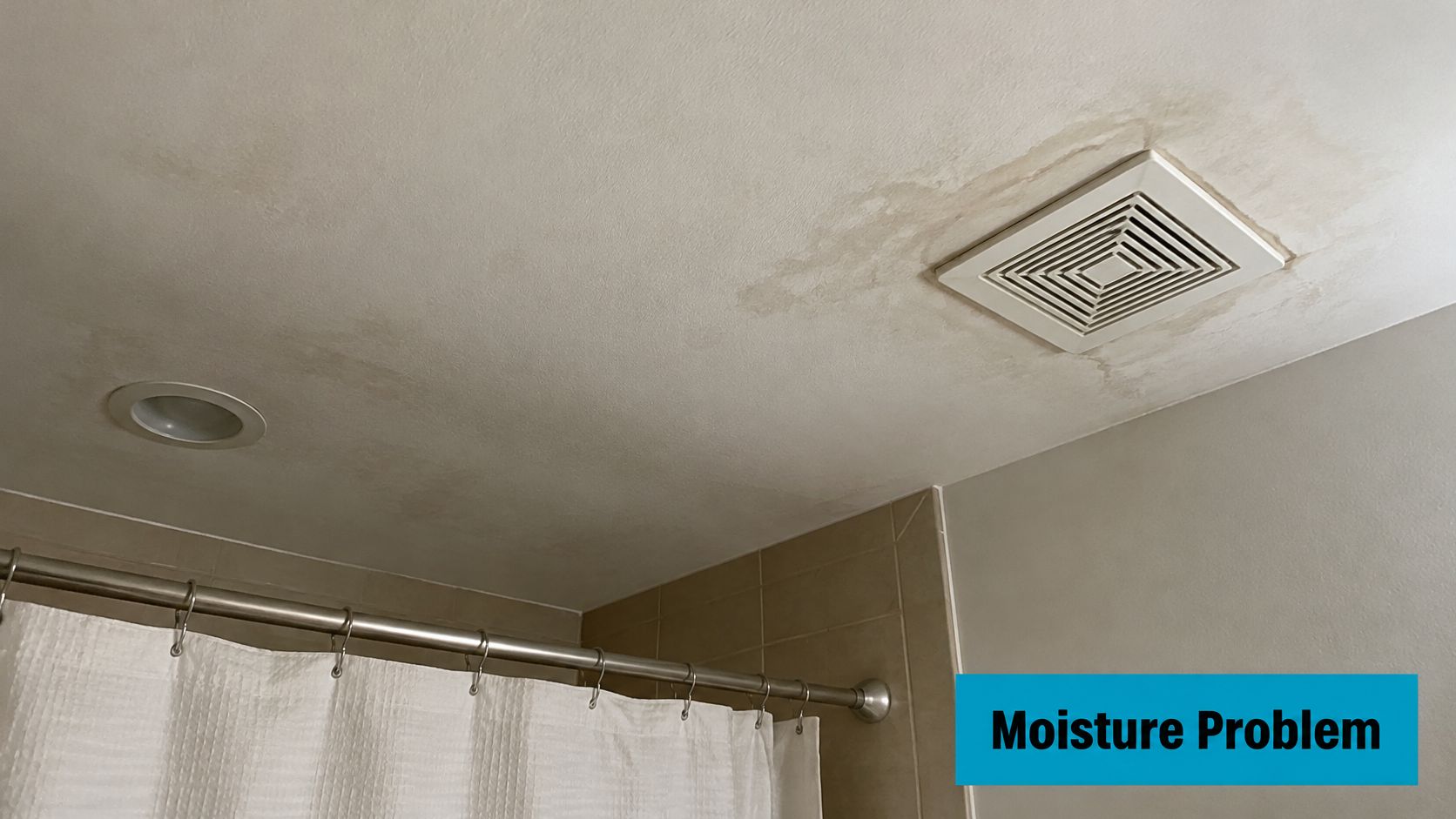
Trace mold on ceiling of bathroom surfaces to its source
Think of a cooler ceiling as a catch surface for moisture from warm shower air. That helps explain why growth can concentrate above the shower without appearing across the entire room. A plumbing leak, roof intrusion, or ventilation defect can create a different moisture pathway that requires a different repair.
The EPA's guide to mold, moisture, and your home advises generally drying wet or damp materials within 24–48 hours after a leak or spill to help prevent mold growth. That's a reason to investigate promptly, not a reason to assume every stain needs demolition.
Use this inspection-first sequence:
- Observe the pattern: Record where the discoloration appears and when it changes.
- Locate the water: Separate shower-related moisture from possible concealed leakage.
- Assess the materials: Determine whether the ceiling is intact or water-damaged.
- Complete the response: Correct the source, remediate, dry, and verify before refinishing.
How Humidity and Condensation Create Ceiling Mold
Warm shower air carries moisture toward the ceiling. When it meets a sufficiently cool surface, water can collect there as condensation. The ceiling doesn't have to feel soaked for repeated dampness to become a concern.
A handheld hygrometer measures relative humidity in the surrounding air, not the moisture condition inside every ceiling surface. A reading taken away from the shower after the bathroom has cooled may miss what happened overhead during bathing.

Read the room and the surface together
Look at conditions during ordinary bathroom use, not just when everything appears dry. Note whether moisture beads on the ceiling, whether the fan operates, and whether the room remains damp afterward.
- Compare locations: A patch near a cool air-conditioning surface deserves a different investigation from widespread moisture above the shower.
- Track changing conditions: Record humidity before bathing and afterward rather than relying on an isolated reading.
- Check the exhaust pathway: A fan that moves air around the bathroom isn't equivalent to one that discharges moisture outdoors.
In Sarasota or Lakewood Ranch, opening a window may not solve the problem if the incoming air adds moisture. Air-conditioning or dedicated dehumidification may need to support bathroom ventilation. The explanation of how humidity causes mold in Florida homes can help connect bathroom observations with conditions elsewhere in the house.
Practical rule: Use a humidity reading as a clue, not as proof that every ceiling surface is dry.
If the room reading looks reasonable but the same ceiling patch stays damp, investigate that location. Ask what makes it colder, what delivers moisture there, and whether water might be entering from above.
Identify the Source Before Cleaning the Ceiling
Location, appearance, timing, and material condition make a useful starting point for diagnosis. None proves the cause alone, but together they can help you choose the next inspection rather than the next cleaning product.
For example, speckles above a shower that become noticeable after bathing suggest a condensation investigation. A brown ring that expands after rain calls for a different response. Treat these as working hypotheses, not confirmed diagnoses.
Bathroom Ceiling Mold Warning Patterns
| Visible Pattern | Likely Clue | Next Action |
|---|---|---|
| Speckling concentrated above the shower | Repeated surface condensation | Observe shower conditions and evaluate moisture removal |
| Growth around the fan with lingering dampness | Inadequate exhaust or a duct problem | Have the fan, duct connections, and outdoor termination checked |
| Localized staining below upstairs plumbing | Possible plumbing intrusion | Arrange leak investigation before cosmetic repairs |
| Brown rings that change after rainfall | Possible roof-related intrusion | Request an assessment of the roof and affected ceiling area |
| Dampness beside an air-conditioning vent | Possible localized condensation or HVAC moisture | Have the nearby HVAC components evaluated |
| Bubbling paint, sagging panels, or wet insulation | Possible damage beyond the painted surface | Stop household cleaning and obtain professional assessment |
Timing helps narrow the investigation
A Tampa Bay homeowner might notice a stain after showers and assume the shower caused it. But if plumbing above the ceiling also operates during that period, timing alone won't settle the question. Similarly, mold near an exhaust fan doesn't prove that the fan motor has failed.
Document whether the patch changes after rainfall, fixture use, or long periods without bathing. The guide to investigating a leak in a bathroom provides additional context for separating visible symptoms from their possible sources.
Recurrence is evidence that the response needs review. If a stain or patch returns, ask whether the original moisture source was corrected and whether concealed materials were assessed. Don't interpret repeated cleaning as successful moisture control.
When the ceiling cavity is concealed or the damage appears consequential, professional inspection is more appropriate than opening the assembly to satisfy a guess.
Inspect the Bathroom Ceiling Safely
Start from a stable position with good lighting. A flashlight can help you document patch edges, paint changes, and nearby discoloration without scraping the ceiling.
Record the location, approximate area, color, odor, and history. Include the patch's relationship to the shower, fan, walls, and plumbing fixtures. Photographs taken from the same position make later comparisons easier.

Observe without opening the ceiling
Don't poke suspect drywall to find out whether it's soft. Visible sagging, swelling, peeling, or expanding stains already justify caution. Accessing wet insulation or cutting through a contaminated ceiling changes the task from observation to potentially disruptive work.
- Keep the surface undisturbed: Scraping or cutting moldy porous materials can spread particles.
- Document suspected hidden damage: Note musty odors or staining beyond the main patch without removing finishes.
- Request controlled moisture checks: Ask an inspector to assess the ceiling and adjacent materials, not just photograph the discoloration.
A moisture meter can support an investigation, but interpreting readings requires attention to the material and surrounding conditions. Ask what was checked, what remains uncertain, and whether further access is necessary.
Recognize the limit of a household inspection
The CDC's household mold guidance directs homeowners to consult EPA remediation guidance when contamination exceeds 10 square feet. That's a scope-of-work threshold, not a guarantee that a smaller patch is harmless.
The visible stain is a starting point for inspection, not a reliable boundary for hidden damage.
Extensive contamination, sewage involvement, concealed water, wet insulation, vulnerable occupants, or uncertain scope warrant professional evaluation. Don't disturb a sagging ceiling or enter the cavity above it to investigate further.
Choose a Safe Mold Remediation Approach
The correct response depends on the source, material, extent, and occupants. A small amount of surface contamination on an intact cleanable finish is a different job from mold affecting drywall backing or insulation.
The EPA's mold and moisture guidance emphasizes correcting the water or humidity source, drying affected materials, and adapting the remediation plan when removal reveals additional damage. Cleaning should fit that plan, not replace it.
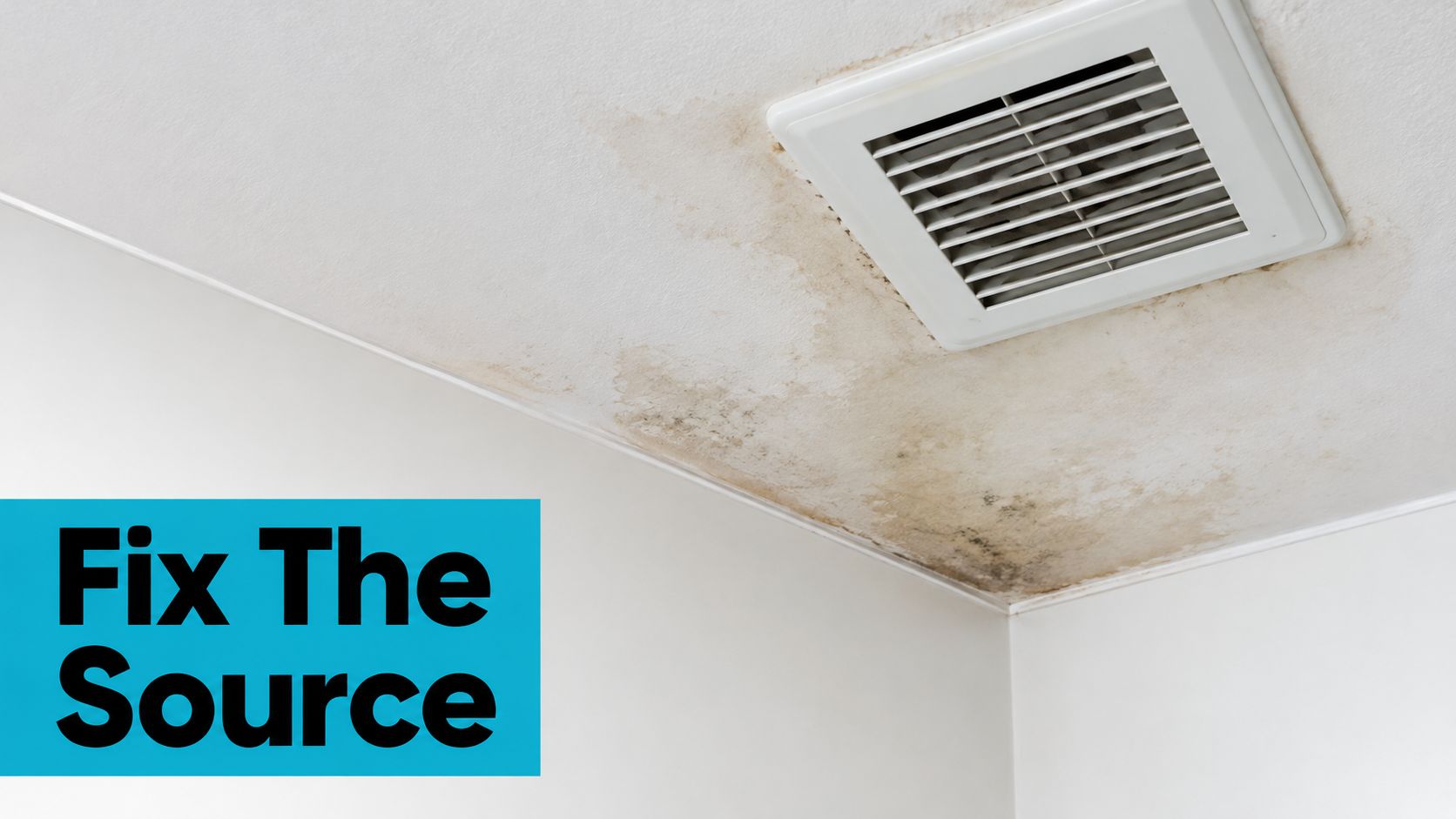
Match the method to the material
For a limited, intact hard-surface area, careful cleaning may be appropriate after the moisture source is understood and correctable. Follow applicable public-health guidance and product directions rather than improvising an overhead chemical treatment.
Porous ceiling materials need closer judgment. A painted face doesn't establish that the drywall behind it is clean or dry. Materials that can't be fully cleaned and dried may require controlled removal and replacement.
A useful work plan should address:
- Source correction: Identify who will repair the plumbing, roof, exhaust, or humidity problem.
- Exposure control: Decide how occupants and nearby spaces will be protected during disturbance.
- Material decisions: Explain what can remain and what requires removal.
- Drying and verification: Establish how remaining materials will be checked before repairs.
Verify before rebuilding
Controlled drying should address affected materials, including accessible adjacent areas, rather than just making the room feel less humid. Ask for documented moisture observations and a clear explanation of any remaining uncertainty.
The overview of how to remediate mold can help homeowners understand why cleaning, removal, drying, and repair are separate decisions.
Before closing the ceiling, confirm that the source repair is complete and the remaining assembly is suitable for reconstruction. Fresh texture and paint belong at the end of that process.
Avoid Common DIY Mold Removal Mistakes
A dark patch doesn't tell you the mold species or establish how dangerous an exposure will be. Color isn't a reliable risk assessment, and waiting for a species name shouldn't delay attention to visible dampness.
Likewise, buying bleach or stain-blocking paint doesn't answer whether water is trapped above the finish. Judge the proposed response by what it corrects and removes, not by how quickly it changes the ceiling's appearance.
Choose exposure decisions over color-based guesses
The CDC's overview of mold and health identifies possible symptoms including stuffy nose, sore throat, coughing, wheezing, burning eyes, and skin rash. People with asthma, chronic lung disease, or weakened immune systems may have more serious reactions.
Households with these vulnerabilities, or severe mold allergies, should reduce exposure and seek professional advice rather than treat DIY cleanup as the default. Seek medical advice for health concerns instead of using a ceiling inspection to diagnose symptoms.
Avoid these shortcuts:
- Repainting first: A new finish doesn't establish that contamination or hidden dampness has been addressed.
- Testing instead of repairing: A test result can't fix a leak or failed exhaust pathway.
- Treating drywall like tile: Surface wiping isn't an adequate assumption for damaged porous materials.
- Expanding the job impulsively: Discovering more damage is a reason to reassess, not keep cutting.
Understand Florida's DIY distinction
Under Florida Statutes section 468.841, a residential owner may remediate the owner's own property without complying with the statute's mold-remediation provisions. The owner-related exemption doesn't extend to engaging in the business of performing remediation for the public.
That legal distinction isn't a finding that personal cleanup is safe or technically appropriate.
Stop-work boundary: Sewage, extensive damage, vulnerable occupants, or uncertain containment call for professional guidance before further disturbance.
Prevent Bathroom Ceiling Mold After Remediation
Prevention means checking whether the corrected bathroom stays dry during normal use. A clean ceiling on the day of repair isn't enough to demonstrate that the original conditions have changed.
The EPA's guidance on biological contaminants and indoor air quality recommends indoor relative humidity below 60%, ideally between 30% and 50%, and using an exhaust fan that vents outdoors or opening a window when conditions permit during and after showers. In Florida's humid climate, choose the approach that removes moisture rather than automatically opening the window.
Build verification into your routine
Use the bathroom normally and observe the repaired location afterward. Keep a simple record if the original problem was intermittent, especially when it seemed related to storms or heavy shower use.
- Confirm exhaust operation: Have questionable airflow, duct routing, or outdoor discharge evaluated.
- Watch the finish: Investigate new rings, bubbling, peeling, or recurring speckles.
- Check accessible plumbing: Look for visible drips and signs of moisture around nearby fixtures.
- Review humidity patterns: Assess whether the room dries after bathing and whether supplemental humidity control is needed.
For additional maintenance guidance, review how to stop mold from coming back.
Treat recurrence as a reason to investigate
If the same location changes again, compare it with your original photographs and notes. Tell the inspecting professional whether the change followed rainfall, shower use, or an HVAC issue.
Don't automatically assume the previous cleaning failed. The source repair, drying scope, or diagnosis may need another look. Successful prevention means the assembly remains dry over time, not merely that the stain stays hidden beneath paint.
Get a Professional Ceiling Mold Inspection
Repeated staining, soft or sagging drywall, concealed moisture, and uncertain contamination boundaries justify more than another cleaning attempt. A useful inspection should connect the visible evidence to a moisture pathway and explain what needs repair, drying, removal, or further investigation.
Ask for a written scope that distinguishes confirmed findings from suspected causes. When comparing professional mold inspection services, look for attention to adjacent materials, occupant concerns, and verification before reconstruction.
Local restoration support
AMPM Restoration is a 24/7 emergency restoration company based at 4301 32nd St W b18, Bradenton, FL 34205. It serves Bradenton, Sarasota, Tampa Bay, Saint Petersburg, Lakewood Ranch, and surrounding Gulf Coast communities.
Available services include professional water damage restoration, mold inspection and mold removal, fire and smoke damage restoration, storm and flood damage restoration, commercial restoration services, and full reconstruction solutions. For a ceiling problem involving both contamination and damaged materials, coordinating those tasks can help clarify responsibility from assessment through repairs.
What causes mold on a bathroom ceiling?
Persistent moisture is the central issue. The inspection should distinguish shower condensation from plumbing, roof, ventilation, or HVAC-related moisture.
Is black mold on a bathroom ceiling dangerous?
Appearance alone doesn't establish species or health risk. Consider the extent, exposure, material condition, and occupants' medical vulnerabilities.
Can I remove bathroom ceiling mold myself?
Limited cleaning may be appropriate for a small, intact cleanable surface. Hidden water, damaged porous materials, or uncertain scope warrant professional guidance.
Can I paint over bathroom ceiling mold?
Painting isn't a substitute for remediation. Refinish only after the moisture source and affected materials have been addressed.
Do I need mold testing before fixing the ceiling?
Testing can't replace moisture diagnosis or repairs. Ask what decision a proposed test would change before commissioning it.
Why does bathroom ceiling mold keep coming back?
Recurrence calls for reassessment of the source, affected materials, and drying. Don't assume the visible patch defines the entire problem.
For mold on ceiling of bathroom surfaces, AMPM Restoration Services offers inspection, mold removal, water damage restoration, and reconstruction support focused on tracing the moisture pathway before repairing the finish. Call 941-946-7807 for a free inspection and estimate, and ask about insurance claim assistance and financing options for a fast, reliable, insurance-friendly response from a community-focused local team. Visit AMPM Restoration Services to arrange help restoring your property and peace of mind.