

You're dealing with a smell that won't quit. The room has aired out, the soot is gone, maybe you've wiped the dresser twice already, but the smoke odor in wood keeps coming back every time the house closes up or the humidity rises. In Bradenton, Sarasota, Tampa Bay, Saint Petersburg, and Lakewood Ranch, that's a familiar callout, because wood doesn't just hold odor on the surface, it can trap it in the grain, the finish, and the cavities behind the piece.
How to get smoke odor out of wood starts with one hard truth, surface washing alone rarely finishes the job. Restoration guidance for fire- or smoke-damaged lumber uses a layered sequence, source removal, containment and air filtration, surface dislodging, odor counteractants, then sealing or encapsulation, followed by verification before decontainment, because odor can stay embedded even after visible residue is gone. That's the framework that separates a real remediation plan from a quick wipe-down.
If you're trying to decide whether a chair, cabinet, floor, or antique needs cleaning, deodorizing, or sealing, the key question is how deep the odor has gone. The next step is to sort it by level, because the right method changes fast once the smell gets past the finish.
Why Smoke Odor in Wood Is Harder to Remove Than It Looks
A recent kitchen flare-up can leave a den smelling smoky for weeks, even after the visible soot is gone. The same thing happens with a grandmother's dresser that sat around years of cigarette smoke, it may look fine, but the wood has been carrying odor in the pores and finish all along.
Why a quick wipe fails
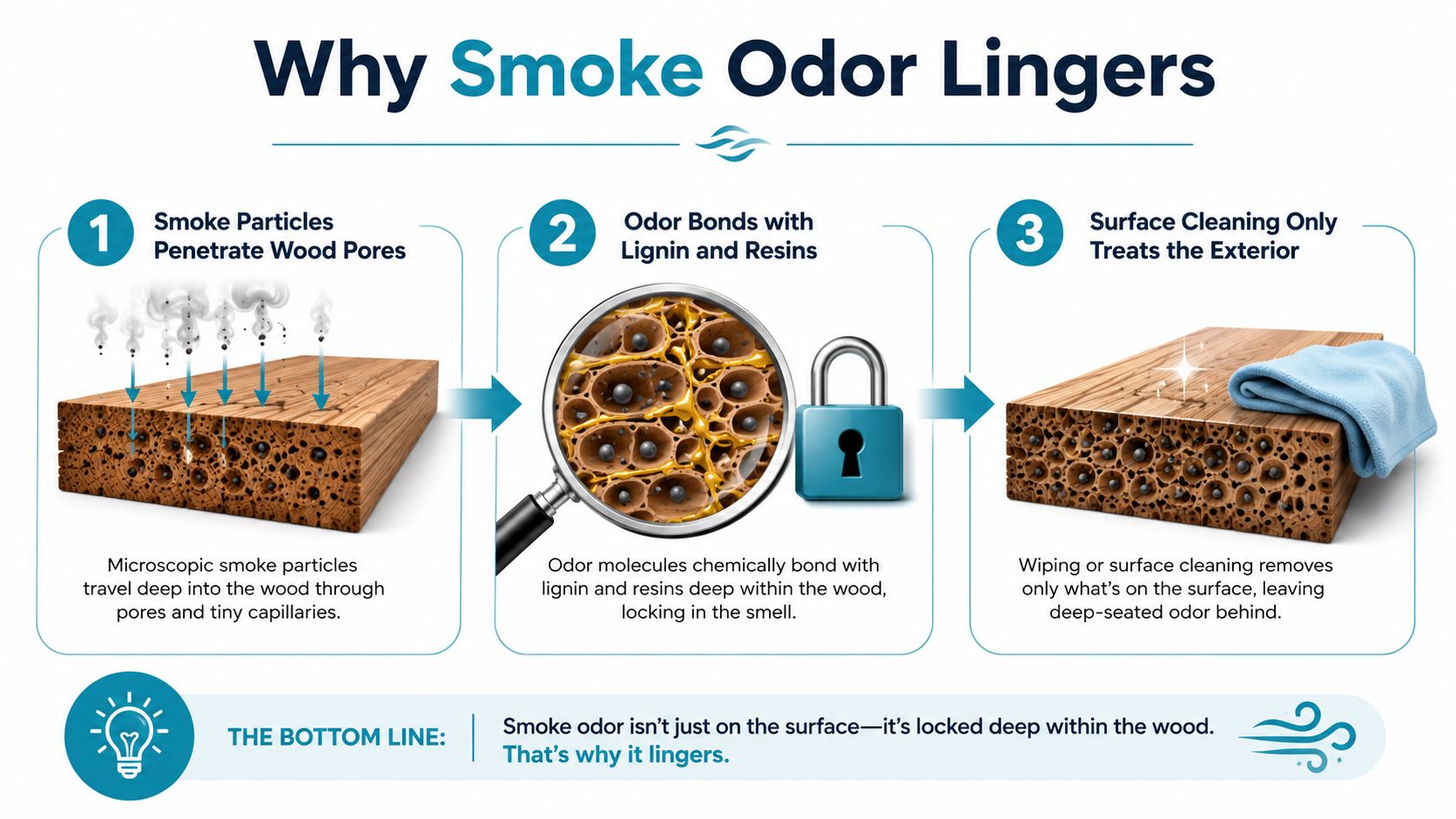
Smoke residue is not a neat surface film. It settles into microscopic cavities, collects in unfinished edges, and lingers under older coatings, especially where the finish has worn thin. That's why air fresheners only cover the problem for a while, and one pass with a rag usually just moves odor-bearing residue around.
The practical model is simple. First remove the source, then contain the air, then dislodge the residue, then neutralize what's left, then seal what still won't leave. That sequence mirrors fire-damage restoration guidance for smoke-damaged lumber and is the reason a clean-looking piece can still stink after the room is aired out.
Practical rule: if the smell returns after the furniture warms up, the odor is still inside the wood or finish, not just sitting on the surface.
That's the reason a technician treats this as a layered remediation job, not housekeeping. In older Florida homes, especially where humidity keeps materials from drying fully, odor can reappear when the piece closes up or the weather changes.
What fire-damage restoration work includes helps frame that broader process in plain terms. The same logic applies here, because smoke odor removal from wood follows the same principle, remove what's loose first, then deal with what's embedded.
The four odor depths to look for
You can usually sort the problem into four buckets. Light surface film responds to careful cleaning. Embedded odor in worn finish needs more attention. Odor trapped in the coating itself pushes you toward sealing. Structural odor in framing or cabinetry after a major fire usually belongs to a restoration crew.
A fast sniff test helps. Open drawers, smell the inside edges, run a hand along the grain, and check whether the odor returns a few hours after airing out. If nearby glass has a yellowed film or the smell gets stronger when the room closes up, you're likely dealing with more than a surface issue.
Assessing How Deep the Smoke Odor Has Gone
A good diagnosis saves time and prevents damage. A bad one sends people scrubbing antiques with the wrong cleaner, soaking veneer, or chasing a smell that's already inside the finish.
A four-level odor ladder
Level 1 is a light surface film from a recent, contained smoke event. You'll notice a stale smell on the outside, but the piece still feels clean and the odor fades after a thorough wipe and drying.
Level 2 means the odor has worked into unsealed or worn finish, often from months of cigarette smoke or a moderate fire. Drawers, undersides, and the back panel usually smell worse than the front.
Level 3 is the hard one, odor trapped in cured finish layers. The wood may look polished and intact, but the smell comes back after airing out because the coating itself is holding it.
Level 4 is structural contamination in framing, subfloor, or cabinetry after a major fire. That's where smoke has migrated into wall cavities or enclosed spaces, and furniture-only cleaning won't solve the room.
Quick checks that tell you where you are
Smell the inside of drawers first, not the open room. The room air can fool you, but enclosed spaces tell the truth. If the odor is stronger inside a cabinet, on the underside of a table, or along a drawer joint, the contamination has moved beyond the obvious surface.
Look for a residue film on nearby glass and decorative items. That's often a sign the smoke traveled widely and settled where airflow was low. If the smell comes back after the piece sits closed for a few hours, you're probably past Level 1.
What restoration companies do on a smoke job becomes clearer once you see the difference between surface odor and structural contamination. The call on a Florida Gulf Coast property is usually this simple, the deeper the odor, the more the fix shifts from cleaning to containment and sealing.
If the smell is strongest in enclosed joints, the finish matters as much as the wood.
That's the point where DIY has to get more disciplined. You're not just removing dirt anymore, you're matching the treatment to the material and the depth of the odor.
Surface Cleaning Methods That Work
For Level 1 and some Level 2 pieces, start with dry removal before any liquid touches the wood. A HEPA vacuum clears loose soot without grinding it deeper into grain lines, joints, or carved details.
Clean lightly, then dry fully
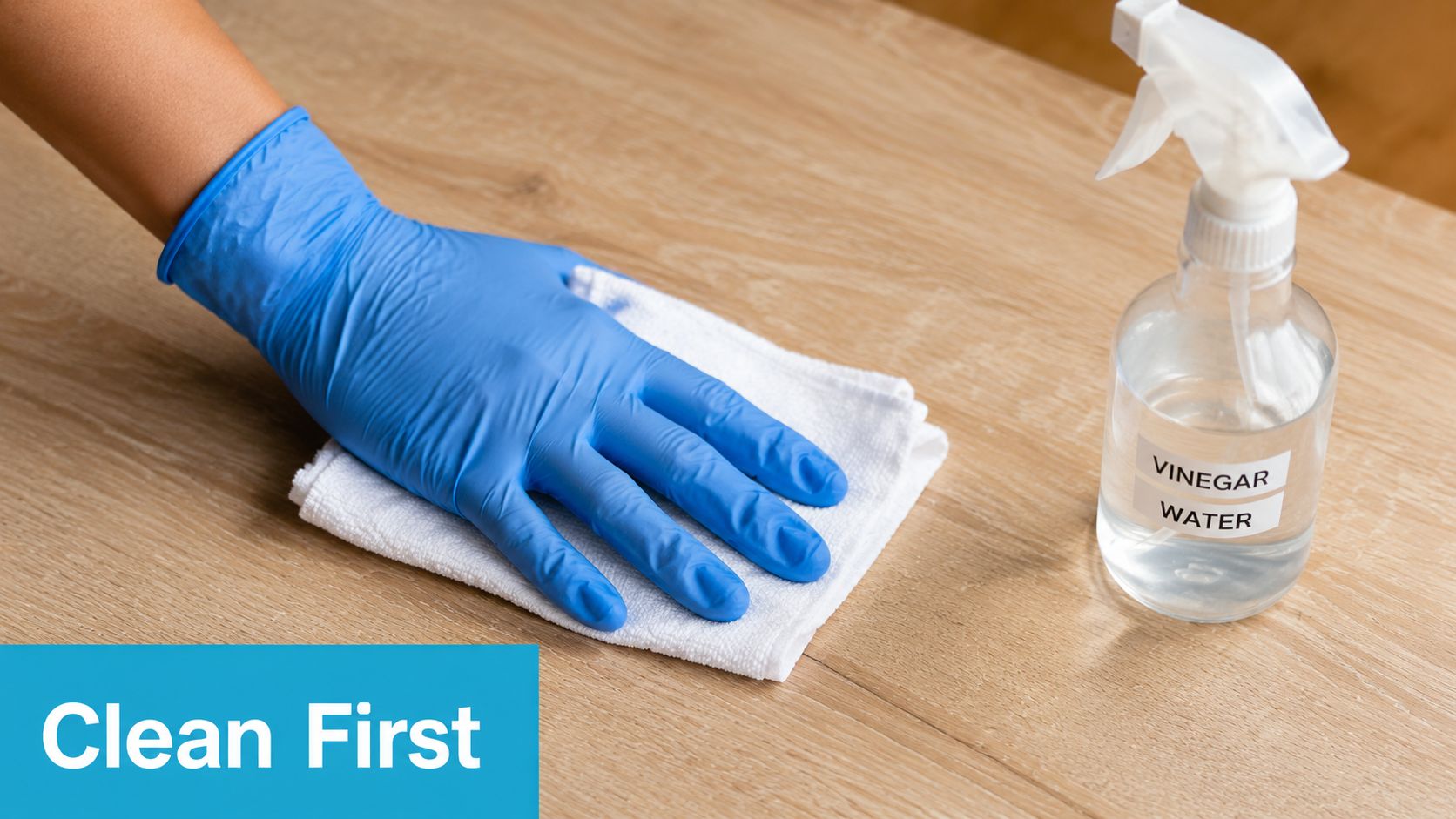
After vacuuming, use a lightly damp cloth with a mild detergent or a 50/50 vinegar-water mix. The key word is lightly. Don't soak the cloth, don't spray directly onto the furniture, and don't keep re-wetting the same spot, because too much moisture can swell wood, haze finish, or leave a ring.
For finished furniture, a low-residue option is a warm-water wash with about 1 teaspoon of Murphy Oil Soap per 1 cup of water, applied section by section and dried between passes. That approach works because it removes odor-bearing residue without flooding the surface or leaving a heavy film behind. If you want the broader sequence for how to get rid of smoke smells, start here and only move deeper if the smell stays after drying.
Use the right tool for the residue
Dry-cleaning sponges, also called chemical sponges, are useful when soot would smear with a wet cloth. They pick up loose particulate from trim, drawer faces, and other finished surfaces before any liquid cleaning starts.
For tougher film on flooring or trim, TSP alternatives can help, but they need the same moisture discipline as everything else. Too much cleaner can strip shellac, dull a varnish, or leave residue that holds smell longer.
Material warning: vinegar can haze waxed or oiled antiques, harsh detergents can damage shellac, and over-wetting can raise grain or cause swelling.
That is why the drying step matters as much as the washing step. Use fans, run dehumidification if the space is damp, and reassess the odor after the piece has dried for a full day. If the smell is still there, stop repeating the same wipe-down and move to absorbents or sealing.
For broader indoor odor cleanup, removing home odors in Miami-Dade is a useful adjacent resource because the same moisture and residue issues show up in other odor jobs too. On wood, though, the material risk is higher, so the method has to stay controlled.
Smoke smell removal and air system cleaning matters when the room itself keeps feeding odor back into the furniture. If the piece sits in a contaminated space, the wood can pick up smell again even after a decent surface clean.
Deep Deodorization Options Compared
Once the surface is clean and the odor still lingers, the job shifts to what air can pull out of the wood and what needs active treatment. At that point, absorbents, machine-based deodorization, and professional neutralization each have a different role.

What each method does
Baking soda and activated charcoal are slow absorbents. They work best when the wood piece can sit in an enclosed space with the absorbent nearby for a day or two, because they pull odor from the air around the piece, not from deep inside a sealed finish.
Ozone generators act faster and hit harder. They can reach into porous materials through whole-room treatment, but they require evacuation and careful operation, which is why they are usually not a casual DIY choice around children, pets, or occupied spaces.
Hydroxyl generators are the safer machine option for occupied environments, though they work more slowly. They help when a room cannot be shut down completely but the odor is still persistent.
Thermal fogging or wet-spray odor counteractants are the professional move when smoke has reached cabinetry, flooring, or other enclosed surfaces. The goal is to drive a neutralizing agent into the same cavities the smoke used, which is why this method often makes sense for Level 3 contamination.
How to choose without wasting time
Start with charcoal or baking soda if the smell is mild and you have already cleaned the surface. Move to hydroxyl or ozone if the odor is still obvious after that. Bring in a pro for fogging when the furniture is built-in, the room has cabinetry, or the odor keeps circulating through the space.
For broader context on home odor cleanup, removing home odors in Miami-Dade shows the same moisture and residue problems that come up in other odor jobs. On smoke-damaged wood, the limitation is still the same, absorbents help with air, but they do not replace sealing when the finish is holding the smell.
AMPM Restoration's fire restoration and smoke odor removal work fits that deeper end of the spectrum when the odor has spread through the room, not just the furniture. In practice, that marks the line between a piece you can treat at home and a structure that needs professional deodorization.
Smoke smell removal and air system cleaning matters when the room itself keeps feeding odor back into the furniture. If the piece sits in a contaminated space, the wood can pick up smell again even after a solid surface clean.
Sanding and Sealing When Odor Is Trapped in the Finish
Once the smell lives in the finish, the right move isn't more deodorizer. The job becomes odor blocking, because the coating itself is holding the problem in place.
The sanding-and-sealing sequence
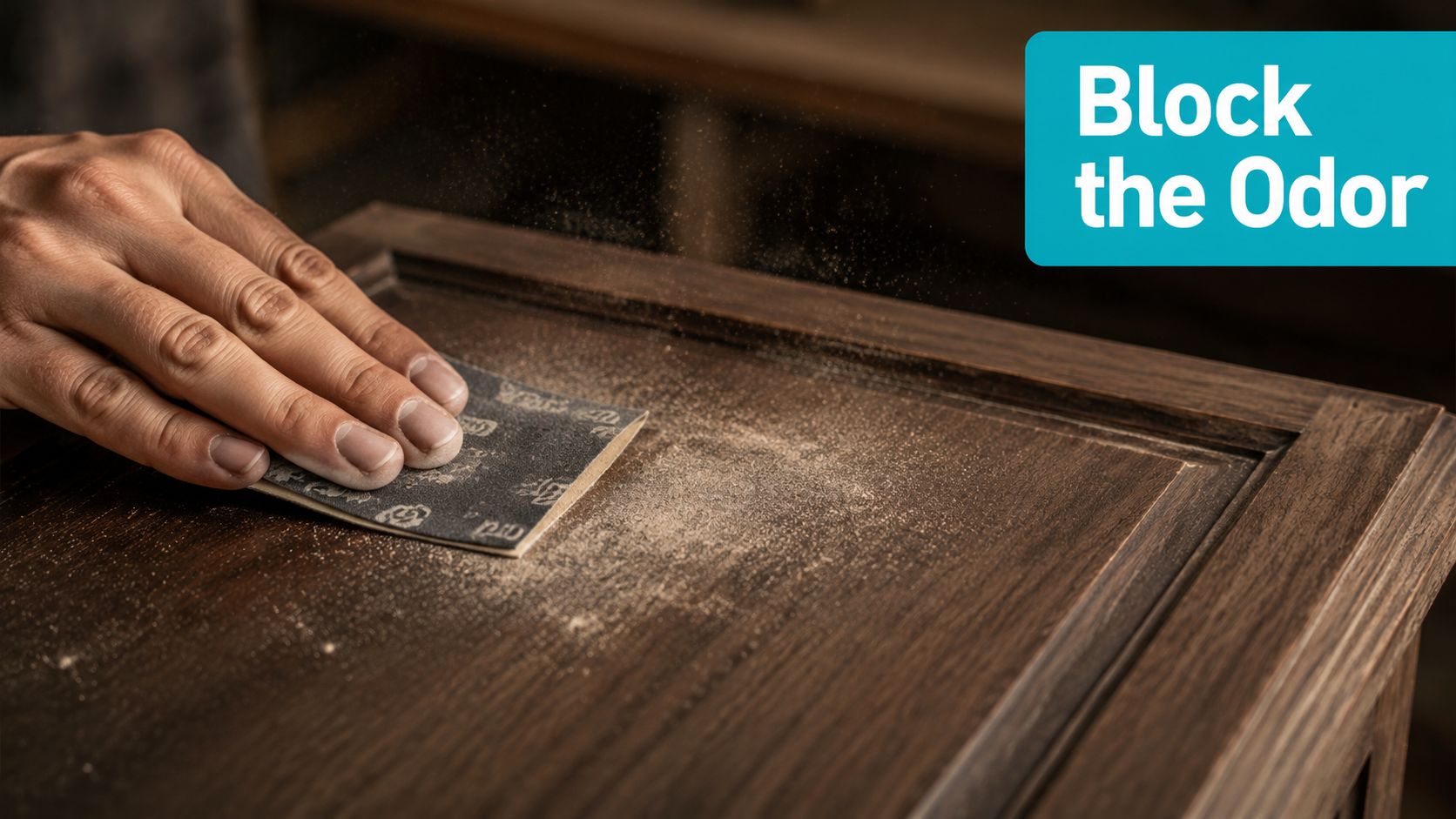
Start by scuff-sanding the cured finish with a fine grit in the 220 to 320 range. The goal isn't to strip the piece to bare wood unless the damage demands it, the goal is to open the surface enough for the sealer to bond.
A practical product reference is using 200 grit sandpaper, but on smoke jobs I usually stay in the fine-grit neighborhood and keep the cut controlled. After sanding, remove every bit of dust with a tack cloth, because dust nibs can break the seal and let odor leak through weak spots.
Then apply two thin coats of dewaxed shellac primer as a smoke-blocking sealer. Shellac works because it locks residual odor in rather than masking it, and it dries in under an hour between coats, which keeps the timeline tight.
Where people go wrong
The biggest mistake is putting the coats on too heavy. Thick application runs, slows curing, and can trap uneven pockets that telegraph through the topcoat. Skipping full drying between coats causes the same problem, because the bond never gets solid.
A second mistake is treating sealing like a final finish. It isn't. Seal-and-topcoat works when the underlying wood is sound, but if sanding exposes veneer failure, stain damage, or soft spots, that piece needs a refinisher or restorer instead.
What to expect from professional fire-damage restoration services is a good fit when the finish is already compromised and the odor is part of a bigger restoration problem. In those cases, the decision isn't just about smell, it's about preserving the piece safely.
After sealing, let it sit, then do a re-sniff test after a day. Don't add wax or polish too early, because extra surface products can reopen the seal or interfere with the bond.
When to Stop DIY and Call a Professional Restoration Company
There are four clear signs that DIY has reached its limit. The soot film returns after cleaning, the odor is still there after absorbents and sealing, the wood is part of framing or subfloor, or the loss is tied to an insurance claim.
What a certified crew does differently
A restoration team starts with source removal and air control, using HEPA and ULPA filtration to manage particulates while the job is underway. For whole-room deodorization, they may use hydroxyl or thermal fogging, which is a different level of treatment than wiping a chair in the garage.
When soot has settled on structural framing, crews may use soda blasting or dry-ice blasting to clean the surface without relying on hand scrubbing alone. That matters when the odor is tied to a hidden cavity, not a piece of furniture that can be moved outside.
In Florida, humidity can keep cavities damp long after the visible cleanup is done, and that keeps odor active.
That's the part a lot of owners underestimate on the Gulf Coast. Salt air, damp air, and closed-up interiors can keep finishes from curing cleanly and can let odor return after a short-term improvement.
Insurance and reconstruction realities
If the loss is part of an insurance claim, documentation matters as much as deodorization. AMPM Restoration can help with the claim process, and financing options are available when a property needs work before the budget is comfortable. Reconstruction often can't begin until verification clears the space, because deodorization has to be confirmed before the rebuild starts.
That's where a local company earns its keep. For Bradenton, Sarasota, Tampa Bay, Saint Petersburg, and Lakewood Ranch properties, a fast inspection can tell you whether the problem is a surface issue, a finish issue, or a structural loss that needs a full smoke-damage plan.
Florida Homeowner Questions and Your Next Step
How long does smoke odor take to fade on its own?
Sometimes a light odor fades after aggressive airing and cleaning, but if the smell keeps returning in a closed-up Bradenton or Sarasota home, the wood is usually still holding residue. When that happens, waiting rarely fixes it.
Is ozone safe around children and pets?
Not during treatment. Ozone jobs require evacuation, which is why they're usually handled by trained operators rather than left to guesswork in an occupied home.
What's the difference between smoke sealing and repainting?
Sealing blocks odor inside the finish or coating. Repainting covers the surface, but if the odor isn't sealed first, the smell can come back through the new finish.
Should antiques ever be sanded?
Only with care and only when the finish and value justify it. Veneer, patina, and original coatings can be damaged quickly, so antiques often need cleaning, absorbents, or professional sealing instead of aggressive sanding.
Will insurance cover deodorization costs?
It depends on the loss and the policy, but smoke-damage deodorization is commonly handled as part of a fire claim when the damage is covered. Documentation and verification help the claim move more cleanly.
What does a one-hour response actually cover?
It means a fast first look, damage assessment, and a plan for next steps, not an instant full restoration. For smoke odor in wood, that first visit tells you whether cleaning, sealing, or professional deodorization is the correct answer.
If the odor keeps returning, the cavity or finish still holds residue. Call AMPM Restoration at 941-946-7807 for a free inspection and estimate, and ask about insurance claim assistance and financing options so you can decide quickly whether a deep clean is enough or whether sealing and professional deodorization are needed.
If you want smoke odor in wood handled the right way the first time, AMPM Restoration Services can inspect the damage, explain whether cleaning or sealing is the correct fix, and build a plan around your property and timeline. Visit AMPM Restoration Services to request help for smoke-damaged furniture, cabinetry, and rooms across Florida's Suncoast.