

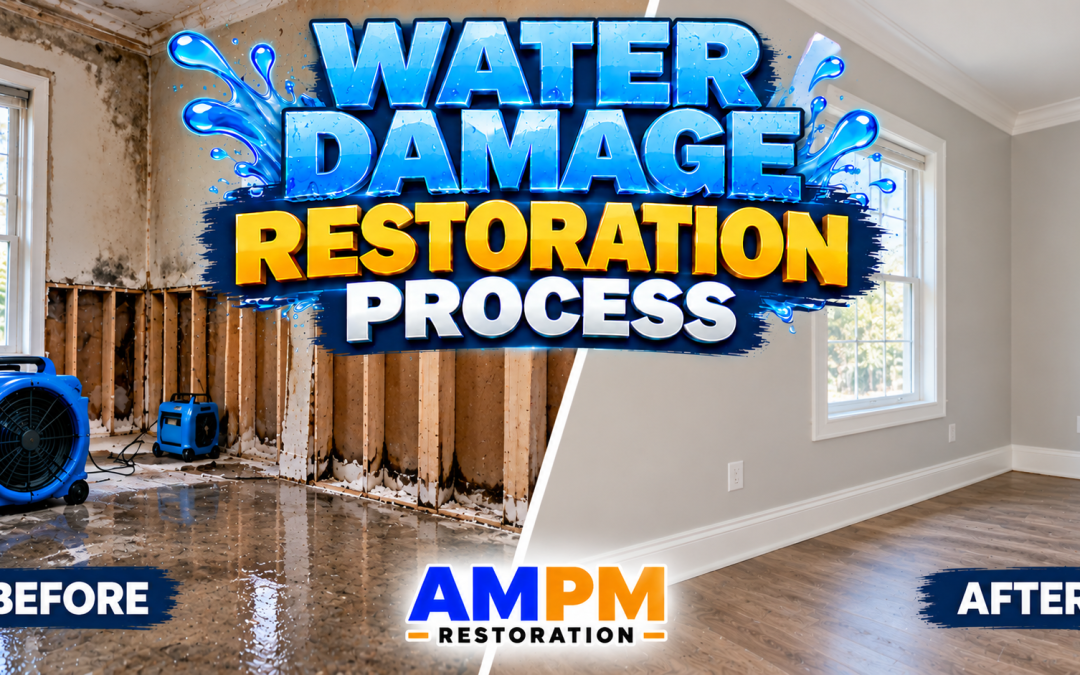
Water Damage Restoration Process Explained
You’re standing in a Bradenton kitchen with water spreading from a failed supply line, or watching storm-driven rain collect beneath a window in Sarasota. The visible puddle is easy to notice, but the water behind baseboards, under flooring, and inside drywall is harder to judge. That’s why the water damage restoration process needs to begin with a measured response, not a rushed cleanup that leaves hidden moisture behind.
Introduction to the Water Damage Restoration Process in Florida
Florida’s Gulf Coast brings a mix of heavy rain, tropical weather, high indoor humidity, aging plumbing, air-conditioning condensation, and occasional storm flooding. A small leak in Lakewood Ranch can affect more than the room where it started. Water can travel through flooring, wall cavities, insulation, and ceiling assemblies before the surface looks seriously damaged.
The reassuring part is that professional restoration follows a recognizable sequence. Technicians identify the source, assess safety and contamination, remove standing water, dry affected materials, verify moisture readings, clean or remove unsalvageable materials, and then complete repairs or reconstruction. Each stage answers a different question, so skipping one can create problems later.
The first two days matter especially. The U.S. Environmental Protection Agency’s guidance for commercial and school buildings says carpet and backing should dry within 24–48 hours. Materials that remain wet for more than 48 hours should be treated as high risk for mold growth, although mold may still have developed even when drying occurs within that window.
Florida perspective: In a humid coastal climate, surface dryness doesn’t prove that the wall cavity or subfloor is dry.
A restoration visit in Bradenton, Sarasota, Tampa Bay, or Saint Petersburg may therefore look less dramatic than a homeowner expects. The team might spend substantial time taking readings, moving contents, opening small inspection areas, adjusting equipment, and recording conditions. That measured work is what turns an emergency into a controlled project.
AMPM Restoration is a 24/7 emergency restoration company based at 4301 32nd St W b18, Bradenton, FL 34205. Its services include water damage restoration, mold inspection and mold removal, fire and smoke damage restoration, storm and flood damage restoration, commercial restoration, and reconstruction solutions throughout the surrounding Gulf Coast communities.
What to Do Immediately and How Emergency Response Works
Your first responsibility is safety. If water is near electrical outlets, appliances, panels, or damaged ceilings, stay clear and contact the appropriate emergency professionals. Don’t walk through potentially contaminated water, and don’t operate electrical equipment in a wet area.
If it can be done safely, stop the water source. Shut off a nearby fixture valve or the main water supply for a plumbing failure. If the intrusion comes from a roof, storm opening, or exterior wall, avoid climbing into unsafe areas. Move furniture and valuables away from the water only when doing so won’t expose you to electrical or structural hazards.
The homeowner handoff
A few simple actions help preserve information for both restoration and insurance purposes:
- Document the scene: Take photos or video of affected rooms, damaged materials, appliances, and the apparent source before major cleanup.
- Protect belongings: Move dry items to a safe area, place foil or plastic blocks beneath furniture legs when appropriate, and avoid spreading wet contents through the home.
- Make a notification: Contact your insurance carrier according to your policy and keep notes about calls, dates, and instructions.
- Avoid shortcuts: Don’t use household fans to blow air through visibly contaminated water, remove large sections of drywall without an assessment, or apply household chemicals before the water type is understood.
Once you call a 24/7 restoration company, the professional handoff begins. AMPM Restoration describes its emergency service as available around the clock with a one-hour response time. The arriving team should inspect the source, identify immediate hazards, determine the affected areas, and establish a plan for extraction and drying.
The first visit commonly includes moisture readings, visual inspection, documentation, containment where needed, and removal of standing water. Rapid extraction matters because water continues to move into porous materials while it remains present. The first 24 hours after water damage can shape whether the project remains focused on drying or expands into material removal and reconstruction.
What emergency mitigation accomplishes
Emergency mitigation stabilizes the property. It doesn’t automatically mean every damaged item will be removed or that repairs can begin immediately. Technicians may place extraction equipment, air movers, and dehumidifiers while documenting the condition of floors, walls, ceilings, cabinets, and contents.
That record gives the homeowner and insurer a shared starting point. It also helps technicians decide where to concentrate equipment rather than treating every room as though it has the same moisture profile.

Inspection Assessment and Moisture Mapping Explained
A wet floor is only the beginning of an assessment. Technicians need to determine where the water went, what materials absorbed it, how contaminated the water may be, and which areas remain affected after extraction.
Moisture meters help identify excess moisture in materials such as drywall, wood, and flooring. Infrared cameras can show temperature differences that suggest moisture patterns, although technicians use thermal imaging alongside physical moisture readings rather than treating a camera image as proof by itself. If the source is unclear or water keeps returning, a specialized resource such as Stultz Plumbing leak detection can help locate hidden plumbing problems.
Classification shapes the plan
Water classification affects the safety procedures and the likely scope of cleaning or removal. A clean supply-line leak may be handled differently from water associated with a drain backup, toilet overflow, or exterior flooding. The longer contaminated water contacts porous materials, the more carefully technicians must evaluate whether those materials can be restored.
Restoration professionals also classify the extent and material saturation into four classes, as described in the available IICRC S500 water damage standard document:
- Class 1: Minimal absorption in a limited area.
- Class 2: A significant amount of water has affected materials, with wicking up walls and into more absorbent contents.
- Class 3: Most of an area is saturated, and the water may have arrived from overhead.
- Class 4: Specialty drying is required for materials such as hardwood, plaster, brick, concrete, or stone.
These classes don’t function as a simple calendar. A Class 4 loss may require a different drying strategy from a smaller loss involving readily accessible carpet and drywall.
Dry standards make the assessment measurable
A technician needs a comparison point. The ANSI/IICRC S500 standard describes establishing a dry standard from unaffected materials, then continuing mitigation until affected materials return to pre-loss moisture content or a comparable dry standard. In practical terms, a technician may compare a wet section of wood flooring with an unaffected section of the same or similar material elsewhere in the property.
That approach prevents a common mistake: removing equipment because the surface feels dry. Moisture can remain beneath flooring, inside framing, or behind wall finishes. A documented map records readings by room and material, giving the drying crew a basis for equipment placement and later verification.
The thermal imaging and leak detection service information provides useful context for why hidden moisture requires specialized inspection rather than visual judgment.

Water Extraction Drying and Dehumidification in Action
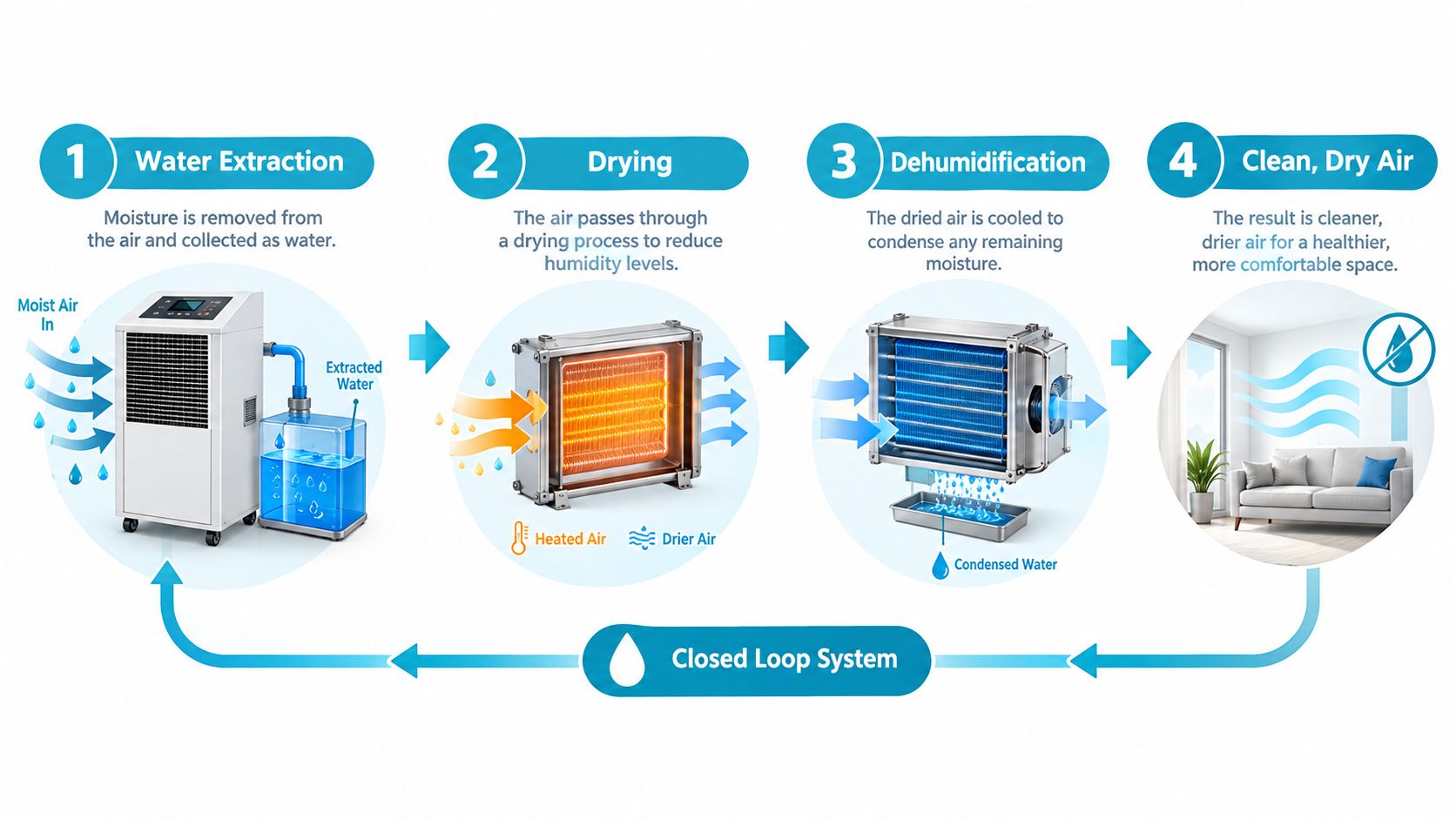
Extraction removes liquid water. Drying removes the moisture that has entered materials and the air. Dehumidification controls the moisture released into the room. These actions work together, and one can’t reliably replace the others.
Extraction comes first
Technicians may use pumps, truck-mounted extraction systems, portable extractors, or wet vacuums, depending on the amount and location of water. They remove standing water from floors and accessible surfaces before placing drying equipment. The team may also move contents, lift carpet where appropriate, or create access to affected areas so air can reach trapped moisture.
Extraction reduces the amount of water that must evaporate. That matters because evaporation without humidity control can transfer moisture from the floor into the indoor air.
Air movement and dehumidification form a system
Air movers direct airflow across wet surfaces. The moving air encourages evaporation, while dehumidifiers remove water vapor from the air so materials can continue releasing moisture. In a Florida home, technicians must pay close attention to indoor relative humidity because opening windows isn’t always helpful when outdoor air is already humid.
The equipment plan depends on the material, affected area, water class, temperature, and readings. A room with wet carpet and a room with saturated plaster won’t respond in the same way. Equipment should be positioned to promote evaporation without pushing potentially contaminated air into unaffected areas.
The water damage drying equipment guide offers additional context on the role of air movers and dehumidifiers during mitigation.
Why the 24–48 hour window matters
The EPA identifies 24–48 hours as the target window for drying carpet and backing, and states that materials wet for more than 48 hours should be treated as high risk for mold growth. The EPA’s mold and moisture guidance also explains that mold can begin growing on damp building materials within about 24–48 hours under favorable indoor conditions.
That window isn’t a promise that every property will be dry within two days. It’s a reason to begin extraction and drying immediately. A heavily saturated wall assembly, dense flooring, or specialty material may need longer, and the equipment should remain in place until measurements support removal.
Monitoring controls the next decision
Technicians typically log:
- Material readings: Moisture levels in affected flooring, drywall, framing, cabinets, and other assemblies.
- Ambient conditions: Temperature and relative humidity in affected and unaffected areas.
- Equipment performance: Whether air movers and dehumidifiers are producing the intended drying environment.
- Progress by location: Which rooms and materials are improving, stable, or still high.
A room can look dramatically better while a subfloor remains wet. Daily readings show whether the plan is working and whether the team needs to reposition equipment, increase access, remove saturated material, or continue the existing setup.
How Technicians Know Drying Is Complete and Mold Is Prevented
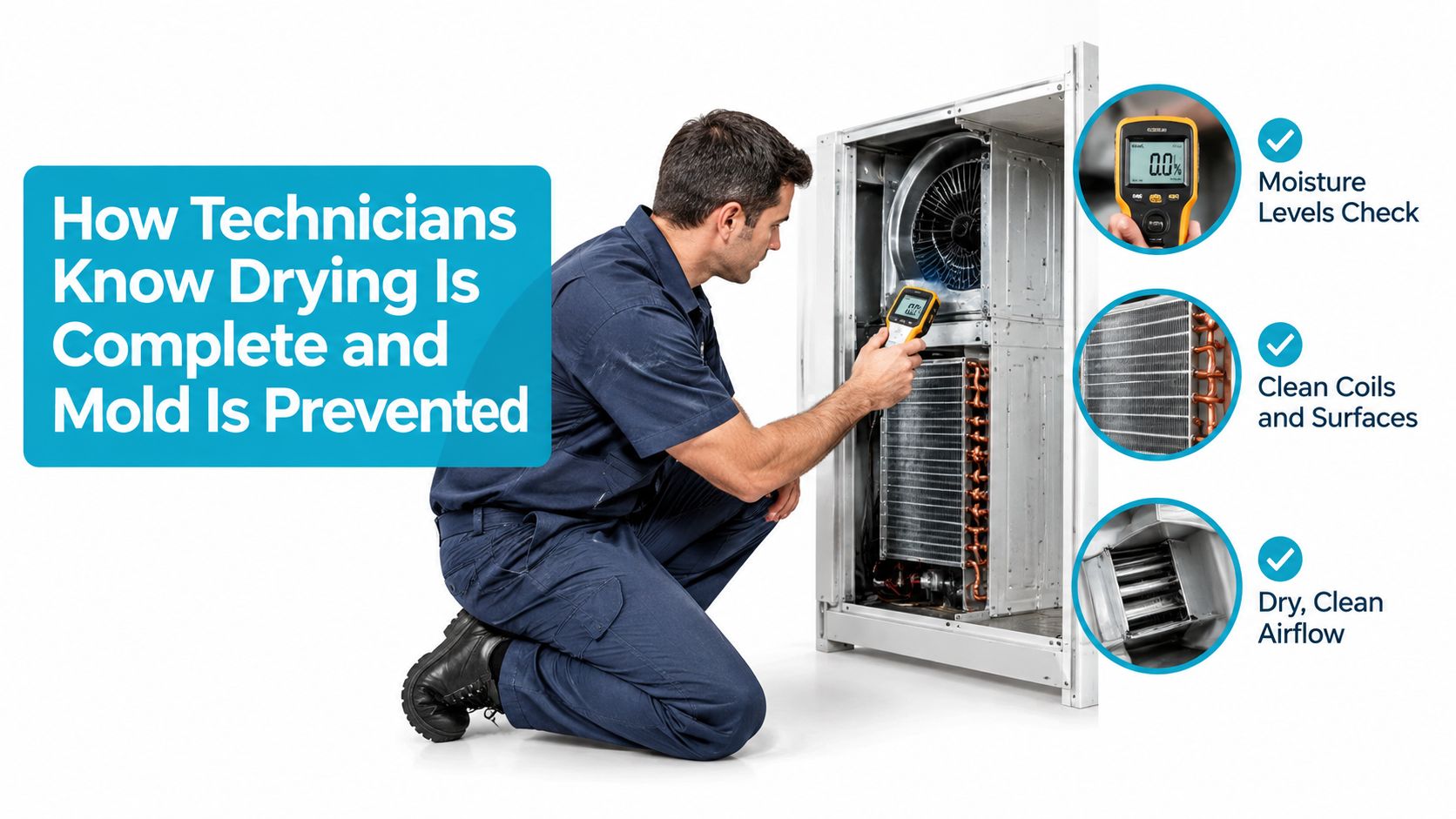
Drying is complete when measurements support completion, not when a wall feels dry to the hand. The ANSI/IICRC S500 framework uses a material-specific dry standard. Technicians compare affected materials with unaffected materials or another appropriate pre-loss reference, then verify that readings have returned to that standard or to comparable pre-loss moisture content.
That distinction protects against hidden secondary damage. A dry-looking baseboard can conceal damp drywall. A clean-looking floor can sit over a wet subfloor. Removing equipment too early may leave moisture inside an assembly where it continues to affect materials.
The drying log is part of the work
A professional drying record should show how conditions changed over time. It may include room locations, material types, moisture readings, temperature, relative humidity, equipment placement, and notes about access or material removal.
Practical rule: Ask how the team will verify dryness before equipment is removed. A final moisture check is more meaningful than a fixed number of drying days.
The completion decision should answer several questions:
- Are affected materials at the established dry standard?
- Do readings show a consistent trend rather than a temporary surface improvement?
- Has moisture been checked in concealed or difficult-to-access areas?
- Did the water type require cleaning, removal, or additional containment?
- Are there materials that cannot be safely restored through drying alone?
Drying, selective demolition, and remediation
The correct path depends on water category, material type, saturation, and the time materials remained wet. Technicians may continue structural drying when materials are accessible and readings are improving. They may recommend selective demolition when saturated drywall, insulation, carpet padding, or other porous materials can’t be dried effectively in place.
Mold remediation is a separate decision when visible growth, confirmed growth, or prolonged moisture conditions require it. Drying prevents ongoing moisture from feeding the problem, but drying alone doesn’t remove established contamination. Readers who want background on specialized products can review information about industrial mould killer chemicals, although product selection and application should follow the material, contamination, and safety requirements of the project.
An HVAC system also deserves careful attention when water or mold concerns involve air-handling equipment. Technicians inspect the unit and surrounding materials rather than assuming that cleaning one visible surface resolves every concern.
For properties requiring more specialized evaluation, mold remediation clearance testing can help document whether remediation objectives have been met. The important point is that mold prevention and drying decisions rely on evidence, not a reassuring appearance.
Repairs Reconstruction Costs and Insurance Claims in Florida
Mitigation and repair are related but distinct. Mitigation stabilizes the property, removes water, and controls further damage. Repairs restore finishes and function after the structure and materials have been evaluated.
Insurance-industry information cited by the Insurance Information Institute places water damage and freezing at about 22.6% of homeowners insurance losses in 2023, with average U.S. claim severity over 2019–2023 of about $15,400. A separate industry summary reports about 1.61 of every 100 insured homes per year affected by water damage and freezing claims, with an average loss of about $13,954. These figures are cited in the water damage and mold timing guide, and they help explain why insurers and restoration teams rely on detailed records.
Restoration path by damage extent
| Damage Scenario | Typical Scope | What to Expect |
|---|---|---|
| Drying-only loss | Extraction, air movement, dehumidification, cleaning, and verification | Finishes may remain in place when readings return to the dry standard and materials are serviceable |
| Selective replacement | Drying plus removal of affected drywall, insulation, padding, trim, or other unsalvageable materials | The crew isolates the damaged areas, documents removal, and repairs opened sections after drying |
| Full rebuild | Extensive removal, structural repairs, finish replacement, and reconstruction | The project may involve several trades, a broader scope, and continuing communication with the insurer |
Costs vary with the water source, affected materials, access, contamination, contents, and reconstruction scope. A reliable estimate should connect observed damage to documented readings and proposed work rather than relying on a room count alone.
Documentation reduces confusion
Keep the moisture map, equipment records, photographs, drying logs, invoices, and communications together. These documents show what technicians found, what they did, and why the scope changed if concealed damage appeared.
Homeowners can review guidance on filing an insurance claim for water damage while also following their own policy requirements. AMPM Restoration can coordinate with insurance carriers, assist with claim documentation, offer free inspections and estimates, and discuss financing options. Coverage decisions still belong to the insurer and depend on the policy and loss circumstances.
Choosing a Certified Restoration Partner and Next Steps for Your Home
A dependable restoration partner should explain the water damage restoration process in terms you can follow. Look for a team that documents the source, water classification, affected materials, moisture readings, equipment, drying progress, and final verification. IICRC-aligned procedures matter because they treat drying as a measurable process rather than a visual cleanup.
Local experience also helps. A Gulf Coast team understands that Bradenton, Sarasota, Tampa Bay, Saint Petersburg, and Lakewood Ranch properties may face high humidity, storm exposure, slab construction, tile, wood flooring, air-conditioning concerns, and fast-moving plumbing losses. The company should be able to manage mitigation, drying, sanitization, mold services, repairs, and reconstruction without losing track of the original moisture evidence.
AMPM Restoration is available 24/7 and serves Bradenton, Sarasota, Tampa Bay, Saint Petersburg, Lakewood Ranch, and surrounding Gulf Coast communities. Its IICRC-certified team handles water, mold, fire, storm, flood, commercial, and reconstruction work, with insurance claim assistance, financing options, free inspections and estimates, and a 100% satisfaction guarantee.
If water is affecting your home now, call 941-946-7807 for a free inspection and estimate. AMPM Restoration can begin the assessment, explain the next safe step, and help you move from emergency mitigation toward a documented, complete restoration.
AMPM Restoration Services provides 24/7 water extraction, structural drying, moisture verification, mold services, repairs, and reconstruction for homes and businesses across Florida's Gulf Coast. Call 941-946-7807 for a free inspection and estimate, ask about insurance claim assistance and financing options, and visit AMPM Restoration Services to request help.