


Water Damage from AC Units in Florida Homes: Fixes & Tips
A faint yellow ring on the ceiling. A musty smell near the hallway return. A drip that shows up only after the AC has been running all afternoon. That’s how water damage from AC units in Florida homes often starts.
On the Suncoast, homeowners in Bradenton, Sarasota, Lakewood Ranch, and nearby Gulf Coast communities usually don’t see a dramatic burst pipe. They see a stain, a soft spot, or damp trim and wonder if the roof is leaking. In many cases, the air conditioner is the actual source. Florida’s humidity keeps cooling systems working hard for long stretches, and when the drainage side of that system fails, water can move into drywall, insulation, cabinetry, and flooring before anyone realizes what’s happening.
The good news is that this is a manageable problem if you respond fast and document it correctly. The bad news is that delays create two separate problems at once. One is the physical damage inside the house. The other is the insurance question, especially when the carrier starts asking whether the leak was sudden and accidental or a sign of gradual seepage or poor maintenance.
If you’re dealing with active leaking or a growing ceiling stain, start with a practical response plan like this guide on what to do after water damage in a Florida home. Then focus on the cause, the moisture spread, and the paperwork. That’s the order that protects both the structure and the claim.
Introduction
A lot of Florida homeowners call only after the stain spreads. By then, the drywall is soft, the insulation is wet, and the closet or attic above the damage smells stale. The AC may still be cooling, which confuses people. They assume that if the system is blowing cold air, it can’t be the source.
It can.
Water damage from AC units in Florida homes usually comes from the condensation side of the system, not the refrigerant cycle itself. The unit pulls moisture from indoor air, and that water has to drain properly. If the drain line clogs, the pan overflows, or condensation forms where it shouldn’t, the home starts absorbing that water.
Why this catches people off guard
Most leaks from an AC system don’t announce themselves with a loud failure. They show up as:
- Ceiling discoloration under an attic air handler
- Warped baseboards near a closet unit
- A damp smell around vents or returns
- Paint bubbling near a chase, soffit, or wall cavity
In Florida, that timeline matters because hidden moisture doesn’t stay harmless for long. A small leak above a ceiling cavity can move sideways, soak insulation, and create conditions that are much harder and more expensive to correct once materials start breaking down.
Practical rule: If the stain is growing while the AC is running, treat it like an active water intrusion until proven otherwise.
What homeowners need most in the first hour
Panic leads people to make the same mistakes over and over. They keep the system running, wipe up visible water, throw away damaged materials, and call insurance before they’ve preserved evidence. That sequence weakens both the diagnosis and the claim.
A better approach is calm and deliberate. Stop the system, protect the area, document what you see, and get the source confirmed quickly. That’s where the key advantage lies.
Why Florida AC Units Are Prone to Leaking
Florida AC systems deal with a moisture load that homeowners in drier states don’t face. The cooling equipment isn’t just lowering temperature. It’s also removing water from the air, all day, for much of the year.
A typical AC unit can generate 20 to 50 gallons of condensation per day in Florida’s climate, and industry guidance describes a clogged condensate drain line as the most common reason an air conditioner leaks into a house, according to JT Restoration’s HVAC water damage overview. That’s the core reason these leaks become serious so fast. Even a short blockage can overflow a pan and push water into ceilings, walls, or floors.
The real problem is drainage failure under heavy moisture load
Homeowners often think of an AC leak as a mechanical breakdown. More often, it’s a drainage problem under constant demand.
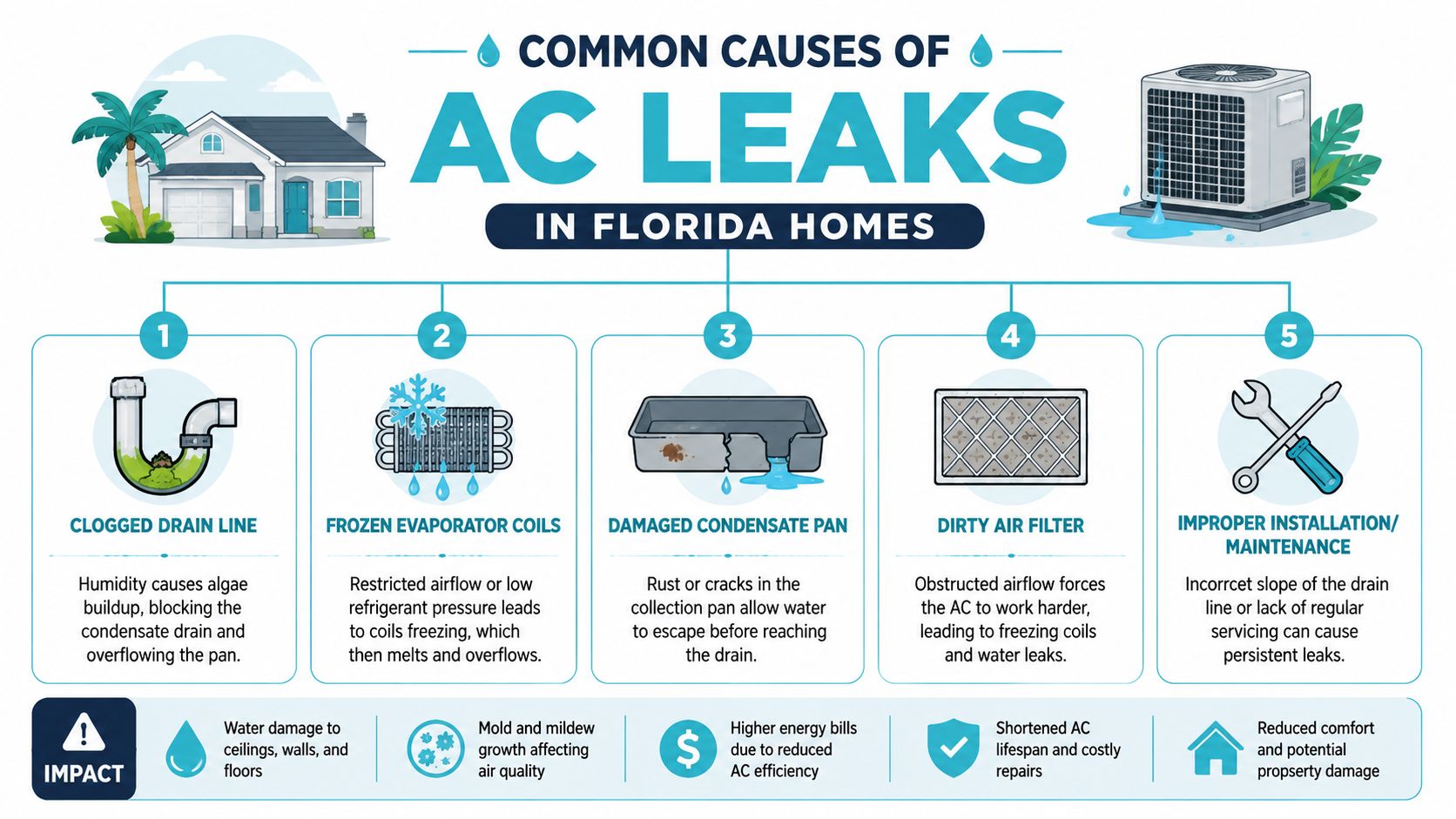
Common causes include:
- Clogged condensate line caused by algae, sludge, or debris
- Cracked or rusted drain pan that lets water escape before it reaches the line
- Dirty filter or airflow restriction that contributes to icing and excess meltwater
- Frozen evaporator coil that later thaws and overwhelms the drain path
- Improper installation details such as poor drain slope or recurring service errors
If you manage rental property or want a clean maintenance checklist, VerticalRent’s HVAC schedule guide gives a practical framework for routine HVAC upkeep.
Hidden condensation is the issue many guides miss
Not every damaging AC leak comes from an obvious clog. In Florida homes, high indoor humidity, oversized systems, short-cycling, and poor airflow can create condensation problems that look like harmless sweating until materials behind the wall or ceiling start getting wet.
That’s why homeowners should pay attention to moisture patterns, not just puddles. A system can be cooling the house while still creating chronic wetting in a duct chase, attic platform, plenum area, or return cavity. That kind of hidden dampness is exactly how mold problems begin in this climate, especially in enclosed spaces like closets and garages. If you want a deeper look at that relationship, this guide on how humidity causes mold in Florida homes explains the building science behind it.
| Florida AC leak driver | Why it matters inside the home |
|---|---|
| Heavy humidity load | Produces large amounts of condensate that must drain correctly |
| Continuous AC use | Gives clogs and pan failures more time to cause damage |
| Short cycling or oversizing | Can leave humidity high and create abnormal condensation behavior |
| Hidden equipment locations | Attics and closets allow leaks to spread before they’re noticed |
Recognizing the Telltale Signs of an AC Leak
Most homeowners don't find AC leaks by seeing water drip out of the unit. They find them by noticing that something feels off in one part of the house.
The smell changes first in many homes. A return closet smells musty. A hallway near the air handler feels damp. A bedroom cools, but it never feels dry. Those are useful clues because AC-related moisture often starts in concealed spaces.
What to look for inside the house
Watch for these signs when the system has been running heavily:
- Faint ceiling staining below an attic unit or duct run
- Bubbling paint or peeling texture on ceilings and upper walls
- Soft drywall around the air handler closet
- Persistent musty odor near vents, returns, or closed rooms
- Sweating ductwork or visible condensation on nearby surfaces
- Indoor humidity that feels wrong even though the thermostat reading looks normal
A lot of people dismiss these symptoms one at a time. That's the mistake. A ceiling stain by itself might suggest one issue. A stain plus musty odor plus damp air points much more strongly to concealed moisture.
What signs call for immediate shutdown
Some conditions justify turning the system off right away and investigating before more damage occurs.
| Sign | What it usually means |
|---|---|
| Active dripping from vent, ceiling, or unit area | Water is moving now, not just left over from an old event |
| Stain grows during AC run cycles | The HVAC system is likely feeding the problem |
| New sagging drywall | Materials may be saturated and weakening |
| Wet flooring near the air handler | Drainage failure is already affecting finish materials |
If the affected area is overhead, don't stand directly under sagging drywall or wet ceiling texture while inspecting it.
If you're not sure whether what you're seeing qualifies as structural water intrusion, this page on signs of ceiling water damage helps distinguish cosmetic staining from active moisture spread.
Immediate Actions to Minimize AC Water Damage
When a Florida homeowner discovers an AC leak, the first hour matters. Not because every leak turns catastrophic instantly, but because the decisions made in that hour affect safety, moisture spread, and claim support.
A residential AC can remove roughly 5 to 20 gallons of moisture per day, depending on humidity and system size, and the immediate triage workflow is to shut off the system, document the leak with dated photos or video, and obtain a licensed HVAC assessment, according to Triumph's AC leak insurance claim guidance. That same guidance emphasizes why this matters. It helps distinguish a sudden blockage from gradual neglect.

Shut down the system and stabilize the area
Turn the thermostat off first. Then shut off power at the breaker if you can do that safely. The goal is simple. Stop the production of additional condensate and reduce electrical risk around wet materials.
After that, contain what you can reach safely. Use towels, buckets, or a wet vacuum on exposed water. Move furniture, rugs, electronics, paper items, and anything absorbent away from the wet area.
- Protect wood and fabric items because they absorb moisture quickly
- Get airflow moving with room fans if the area is safe and power is stable
- Avoid opening wet ceilings unless a professional tells you to, because collapse risk and contamination questions need to be assessed first
Document like the claim will depend on it
Because it often does.
Take clear photos and video of:
- The water source area around the unit, pan, drain line, or stain
- Affected building materials such as ceiling texture, drywall, flooring, trim, and insulation access points
- Damaged contents including furniture, boxes, electronics, or stored items
- Thermostat and breaker position after shutdown if relevant to the timeline
Try to capture date context on your device and keep any service records you already have. If a technician has worked on the system recently, save invoices, text messages, emails, and appointment confirmations.
Do this before cleanup gets aggressive. Once materials are torn out or moved, the original cause-and-effect picture gets harder to prove.
Don't make these common mistakes
People often create avoidable problems while trying to help.
- Continuing to run the AC usually adds water to the same failure point
- Throwing away wet materials immediately can destroy evidence of scope and cause
- Calling for repair without asking for written findings leaves you short on claim documentation
- Focusing only on visible moisture ignores what may already be inside the ceiling or wall cavity
If the leak has spread beyond a small visible area, use a first-response checklist like this guide to emergency water damage repair in the first 24 hours. It helps keep the situation controlled while you wait for the right professionals.
Navigating Insurance Claims for AC Water Damage
The first insurance question is almost always the same. Is this covered?
In Florida, the answer often turns on one distinction: sudden and accidental discharge versus gradual leakage, continuous seepage, or poor maintenance. Industry guidance tied to Florida AC claims notes that sudden and accidental AC water damage is often covered under standard homeowners policies, while gradual leaks and maintenance-related conditions are commonly excluded. That difference matters because many AC leaks start subtly but are still tied to a single blockage or failure event if documented correctly.
Why documentation changes the outcome
Water damage is a major claim category nationally. It accounts for 29.4% of all home insurance claims, with an average payout of $11,605, and Florida AC leak claims often range from $3,500 to $18,000 per event, according to Krapf Legal's water damage insurance statistics summary. Those figures explain why carriers examine these files closely.
What helps a claim:
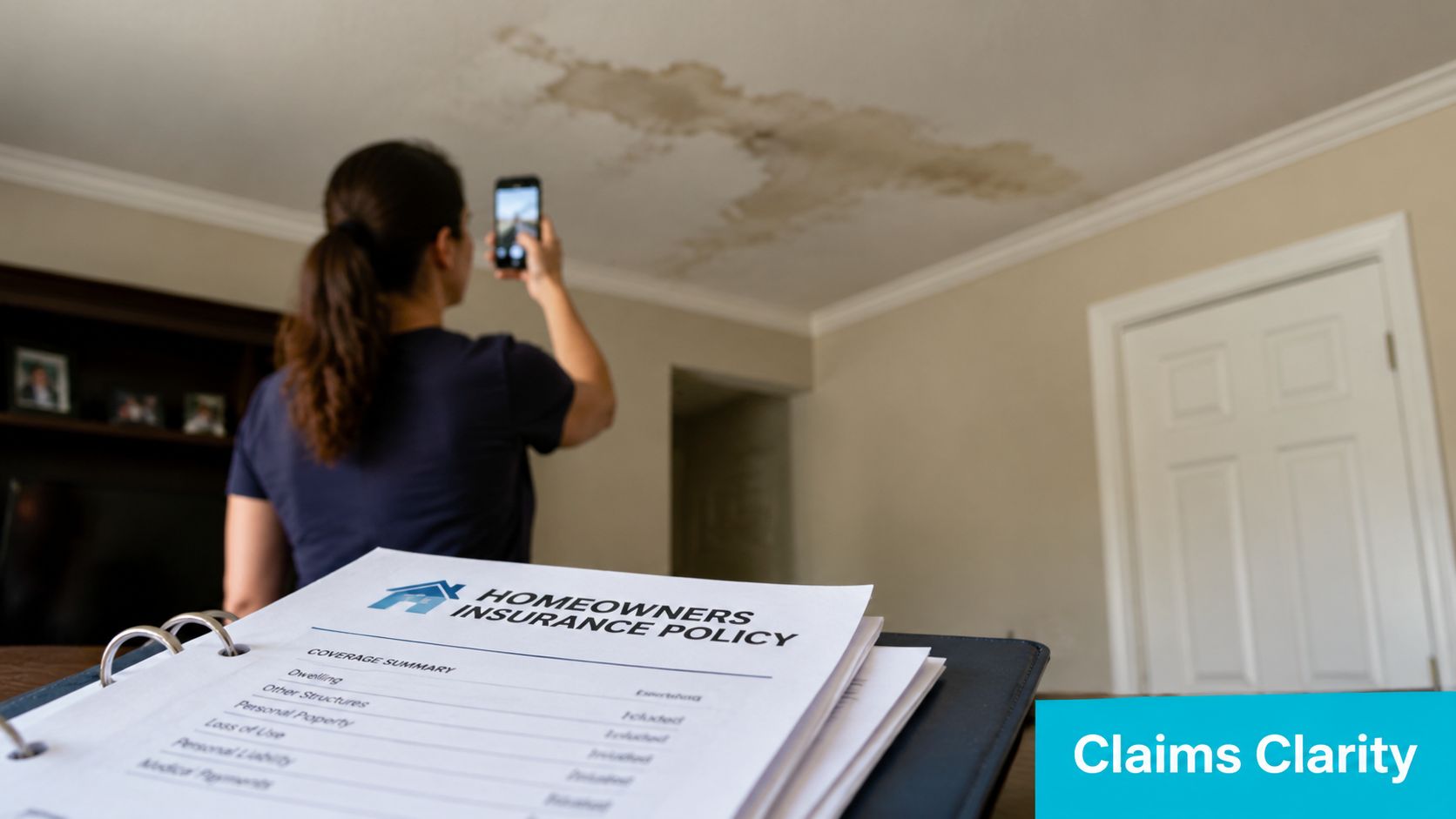
- Dated photos and video taken before major cleanup
- A written HVAC diagnosis that identifies the likely failure point
- Service history showing whether the system was being maintained
- Separate invoices for HVAC repair, dry-out, and reconstruction
- Fast reporting once the problem is discovered
What weakens a claim:
- No technician notes
- No timeline
- Discarded materials before inspection
- Visible long-term staining with no explanation
- A homeowner statement that suggests the problem had been ongoing for a while
When installer liability enters the picture
Some leaks aren't really maintenance cases. They're installation or workmanship cases.
If a recently installed AC system keeps leaking, or if repeated service visits failed to correct an obvious drainage issue, contractor fault may be part of the picture. Florida legal guidance indicates homeowners may have breach-of-contract and negligence claims when improper installation or defective work causes ceiling or wall damage. In those cases, preserve evidence, keep every invoice, and avoid blending HVAC repair costs with mitigation bills.
If a carrier denies or underpays the loss, a practical overview of the next step is this guide to a Florida insurance claim appeal. For the filing stage itself, homeowners can also review this breakdown of how to file an insurance claim for water damage.
A good claim file tells a simple story. What failed, when you discovered it, what got wet, and what you did immediately to prevent further damage.
The Professional Restoration Process with AMPM
After an AC leak, the restoration phase has two jobs. Dry the structure correctly, and preserve a clear record of what happened. In Florida, those two tracks matter because hidden moisture can keep spreading after the drip stops, and poor documentation can make a covered loss harder to prove.
What happens on arrival
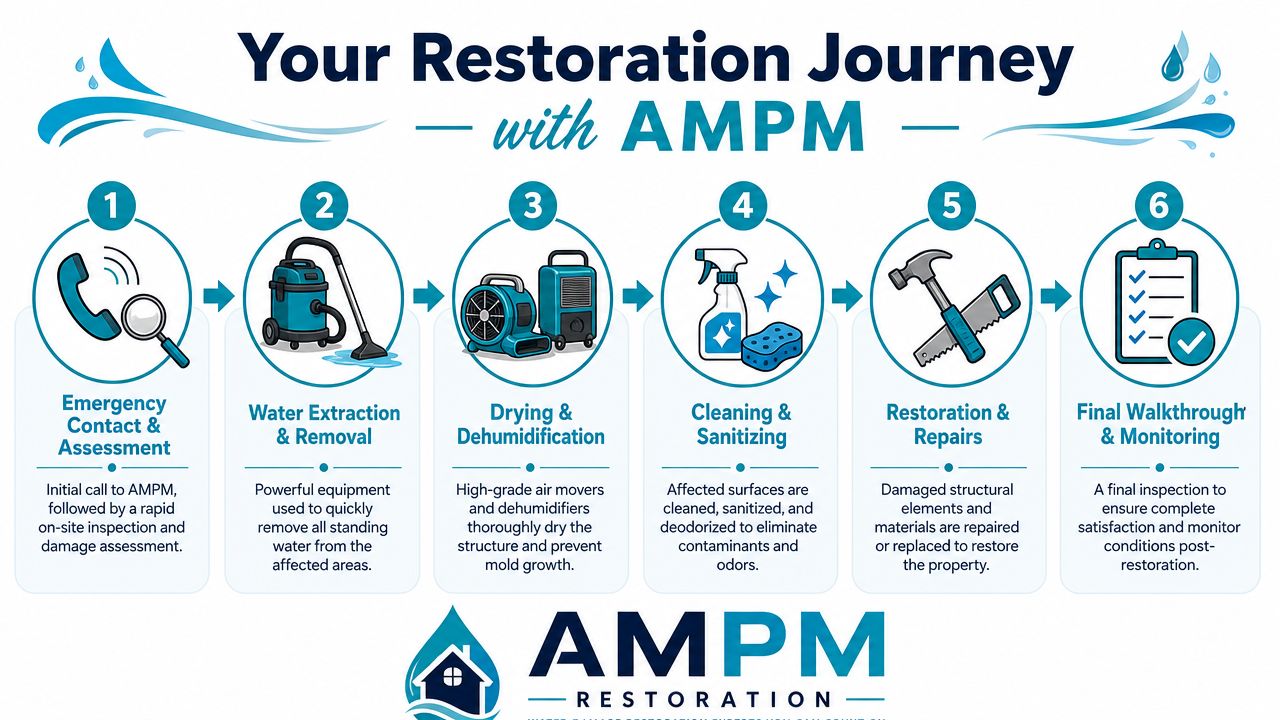
The first visit starts with inspection and mapping. Tearing out materials too early can destroy evidence that helps explain whether the loss was sudden, how far the water traveled, and which materials can still be saved.
Technicians check the visible damage and the places AC leaks commonly spread in Florida homes. That includes insulation above ceilings, framing near attic air handlers, base plates in utility closets, laminate underlayment, and wall cavities beside the primary leak area. Water rarely stays where the stain shows up.
A proper initial assessment usually includes:
- Moisture meter readings on drywall, trim, flooring, and structural materials
- Infrared scanning to trace hidden moisture patterns
- Source review coordination so the drying scope matches the HVAC findings
- Material evaluation to separate dry-in-place items from materials that have lost integrity
Drying has to match the way the home got wet
Once the wet areas are mapped, extraction starts where water is trapped or pooled. Air movers and dehumidifiers are then set for the affected materials and room layout, not placed randomly. The goal is to remove moisture from inside the assembly, not just dry the surface enough to make it look better.
That matters with AC losses because they often soak layered materials. Drywall can read damp at the bottom while insulation above is saturated. Baseboards may look fine while moisture sits behind them. In my field experience, small AC leaks frequently lead to mold complaints and claim disputes because of these hidden issues. The visible damage looked minor, but the hidden moisture was never addressed.
AMPM Restoration Services handles water extraction, structural drying, moisture monitoring, and reconstruction under one roof. That helps keep the timeline organized when a homeowner is dealing with an HVAC contractor, an adjuster, and repair decisions at the same time.
What a complete job includes
A sound restoration process ends with documented drying and a clear repair plan.
| Phase | What the homeowner should expect |
|---|---|
| Assessment | Explanation of affected areas, probable moisture path, and what should be documented before removal |
| Mitigation | Extraction, controlled drying, and protection of materials that can remain in place |
| Monitoring | Repeat moisture checks with adjustments to equipment as readings improve or stall |
| Cleaning | Sanitizing and odor treatment where water affected enclosed or contaminated areas |
| Repairs | Replacement of damaged drywall, trim, flooring, insulation, or finishes after dry standards are met |
| Final review | Confirmation that materials are dry, stable, and ready for normal use, with records that support the file |
The right restoration plan protects the house and the claim file at the same time. That means preserving evidence, drying aggressively, and removing only what actually needs to come out.
Conclusion Your Partner in Restoration and Recovery
Water damage from AC units in Florida homes is common for one reason. Florida homes ask a lot from their cooling systems, and a small drainage failure can turn into a large interior water loss faster than most homeowners expect.
The right response is straightforward. Shut the system down, protect the area, document everything, and get both the HVAC cause and the moisture spread evaluated before the problem gets worse. That approach gives you the best chance of protecting the structure and supporting the insurance side of the loss.
If you're seeing stains, dripping, wet drywall, musty odor, or signs of hidden moisture in Bradenton, Sarasota, Tampa Bay, Saint Petersburg, Lakewood Ranch, or nearby Gulf Coast communities, act now. Call 941-946-7807 for a free inspection and estimate. Help is available for emergency mitigation, insurance claim assistance, and financing options so you can move from panic to a clear recovery plan.
Frequently Asked Questions About AC Water Damage
| Question | Answer |
|---|---|
| Can an air conditioner really cause serious water damage inside a Florida house? | Yes. Florida AC systems pull a lot of humidity out of the air, and all of that water has to drain correctly. When the condensate line backs up, the drain pan fails, or the unit ices up and melts, water can spread into drywall, insulation, cabinets, and flooring before the source is obvious. |
| Should I turn the AC off if I see a ceiling stain or dripping near a vent? | Yes, if you reasonably suspect the AC is feeding the leak. Running the system can keep adding water to the same area and increase the amount of demolition and drying needed later. If the ceiling is sagging or actively dripping, keep people clear of that area until it is inspected. |
| Will homeowners insurance cover AC water damage in Florida? | Sometimes. The key issue is usually whether the loss looks sudden and accidental, or whether the carrier views it as long-term seepage, deferred maintenance, or wear. In practice, that means the photos, timeline, service records, and HVAC findings matter almost as much as the damage itself. |
| What if the leak started after a recent installation or repair? | That can shift part of the problem from an insurance claim to a contractor liability issue. If a bad installation, loose drain connection, improper pitch, or other repair error caused the leak, you may also have a claim against the HVAC company or installer. Do not rely on verbal explanations alone. Keep invoices, technician reports, photos of the setup, and any text or email communication. It also helps to keep HVAC correction costs separate from mitigation and dry-out charges so the responsibility for each item is easier to sort out. |
| What should I save for the insurance company and for any contractor dispute? | Save dated photos, video, HVAC service records, recent repair invoices, technician notes, emails, text messages, and receipts for mitigation work. If furniture, rugs, or other contents were affected, photograph them before disposal if you can do so safely. Keep repair invoices separate from emergency mitigation, moisture mapping, and drying invoices. That makes the file cleaner for both the adjuster and any later dispute over who caused what. |
| How quickly should I call for professional help? | Call quickly. AC leaks often start in hidden spaces around the air handler, plenum, chase, or ceiling cavity, and visible staining usually shows up after moisture has already spread. Early inspection helps answer two questions fast: what failed, and how far the water traveled. Those two answers often shape both the drying plan and the insurance claim. |
If you're dealing with water damage from an AC unit, call AMPM Restoration Services at 941-946-7807 for a free inspection and estimate. We help homeowners across Bradenton, Sarasota, Tampa Bay, Saint Petersburg, Lakewood Ranch, and surrounding Gulf Coast communities with emergency water damage restoration, insurance claim assistance, and financing options so you can act quickly and protect both your property and your claim.