

You notice a dark ring spreading across the ceiling after an afternoon storm, or hear water dripping beneath the kitchen sink while the air conditioner runs. In a Florida home, water leaking into house isn’t a minor housekeeping problem. Suncoast heat, humidity, wind-driven rain, and hidden cavities can turn a small entry point into soaked drywall, damaged flooring, and microbial growth if the area stays wet.
The first priorities are simple: stop the source if it’s safe, protect people from electrical and structural hazards, document what happened, and begin drying immediately. The U.S. EPA recommends drying wet areas and belongings within 24–48 hours, because mold is much less likely to grow when materials dry in that window. AMPM Restoration provides 24/7 emergency restoration support from Bradenton to Sarasota, Tampa Bay, Saint Petersburg, Lakewood Ranch, and nearby Gulf Coast communities.
When Water Starts Leaking Into Your House in Florida
A homeowner in Bradenton may find water pooling below a window after wind-driven rain. In Sarasota, a roof flashing problem can send water along a rafter before it appears several feet away as a ceiling stain. In Lakewood Ranch, an overflowing air-conditioning condensate line can wet a hallway while the HVAC system continues running. The visible drip is often only the final stop in a longer moisture path.
That’s why water leaking into house should be treated as an active moisture emergency, not just a spot to mop. Water can move behind paint, insulation, baseboards, cabinets, and flooring. The longer those materials remain wet, the harder it becomes to dry the assembly without opening concealed areas.
Practical rule: Control the source first, then protect the structure, then document and dry. Rushing straight to cosmetic cleanup can hide the actual path of entry.
If you’re still trying to determine whether the sound or stain represents an active leak, this guide to water leak signs before calling a plumber can help you recognize clues such as unusual moisture, staining, and changes around fixtures. It shouldn’t replace a professional inspection when water is entering walls or ceilings, but it can help you describe what you’re seeing.
The next decision is timing. EPA guidance says wet materials should be dried within 24–48 hours because mold usually won’t grow when materials are dried during that period, while longer wetness makes mold growth much more likely. Florida’s indoor humidity makes disciplined drying especially important. A calm response today can prevent a much larger restoration problem later.
Stop the Water and Make Your Home Safe Right Now
Start with people, not property. Keep children and pets away from standing water, wet flooring, sagging ceilings, and areas where water may have reached outlets, switches, power strips, or appliances. Don’t walk through contaminated water, and don’t touch electrical equipment while standing on a wet surface.
If the ceiling is bulging, cracking, or sagging, leave the room. A water-loaded ceiling can release suddenly. Don’t puncture it unless a qualified professional directs you and you can confirm the area is safe. For active roof entry during a storm, avoid climbing onto the roof. Wind, slick surfaces, and hidden structural damage create a serious fall risk.
Shut off the likely source
Use the shortest safe route to control the water:
- Fixture leak: Close the shutoff valve beneath a sink or behind a toilet. Turn off the appliance valve for a dishwasher, washing machine, or refrigerator supply line.
- Burst pipe or hidden plumbing: Close the home’s main water shutoff if you can reach it safely. If you can’t locate it, call a plumber or restoration professional.
- Air-conditioning overflow: Turn off the HVAC system at the thermostat. Water from a clogged condensate drain can continue spreading while the unit operates.
- Roof or storm leak: Move people and valuables away from the affected area. Use containers to catch drips, but don’t climb into an unsafe attic or onto a wet roof.
Move furniture, electronics, artwork, and important papers away from the water. Place foil or wood blocks beneath furniture legs if safe, because wet flooring can transfer color and finish. Use towels only to control small amounts of surface water. They won’t solve moisture trapped under flooring or inside walls.
For a focused response during the first day, follow AMPM’s emergency water damage repair guidance for the first 24 hours. The EPA’s central standard remains clear: dry water-damaged areas and belongings within 24–48 hours whenever possible. EPA mold and moisture guidance explains why this window matters.
Remove Water and Dry Your Home Before Mold Takes Hold
Once the source is controlled, remove standing water quickly and create a drying plan. A household mop can handle a small clean spill on sealed tile, but it isn’t designed to extract water from carpet backing, subfloor seams, or wall cavities. For anything beyond a limited surface event, a wet vacuum, extraction machine, air movers, and dehumidification are more effective.

Match the method to the material
The EPA gives different instructions for carpet and hard flooring. For carpet and backing, remove water with a wet vacuum, lift the carpet and pad from the floor, and use fans to move air across the separated materials. For hard-surface flooring, vacuum or damp-wipe with a mild detergent, then allow the surface to dry. See the EPA material-specific mold remediation guidance for that approach.
Don’t seal wet materials behind plastic, paint, or replacement flooring. That traps moisture and can direct it into the subfloor or wall assembly. Open cabinet doors, remove wet contents, and provide airflow where it won’t blow contaminated debris through occupied rooms.
In a humid Florida house, air movement alone may not be enough. Air movers help evaporate water from surfaces, while a dehumidifier removes moisture from the air. Keep exterior doors and windows managed according to outdoor conditions, because bringing humid outdoor air inside can slow drying rather than improve it.
Confirm dryness instead of guessing
A surface can feel dry while insulation, drywall edges, carpet padding, or a cavity remains wet. Use a calibrated moisture meter at the affected material and compare readings with an unaffected control area made from the same or similar material. Re-test during drying and record the location, material, and result.
The practical decision point is the 24–48 hour window. If materials remain wet, if water has entered a wall or ceiling, or if you can’t separate carpet and padding safely, professional extraction and controlled drying are appropriate. AMPM’s step-by-step guide to drying a flooded home provides additional preparation guidance, but extensive or concealed moisture requires more than household fans.
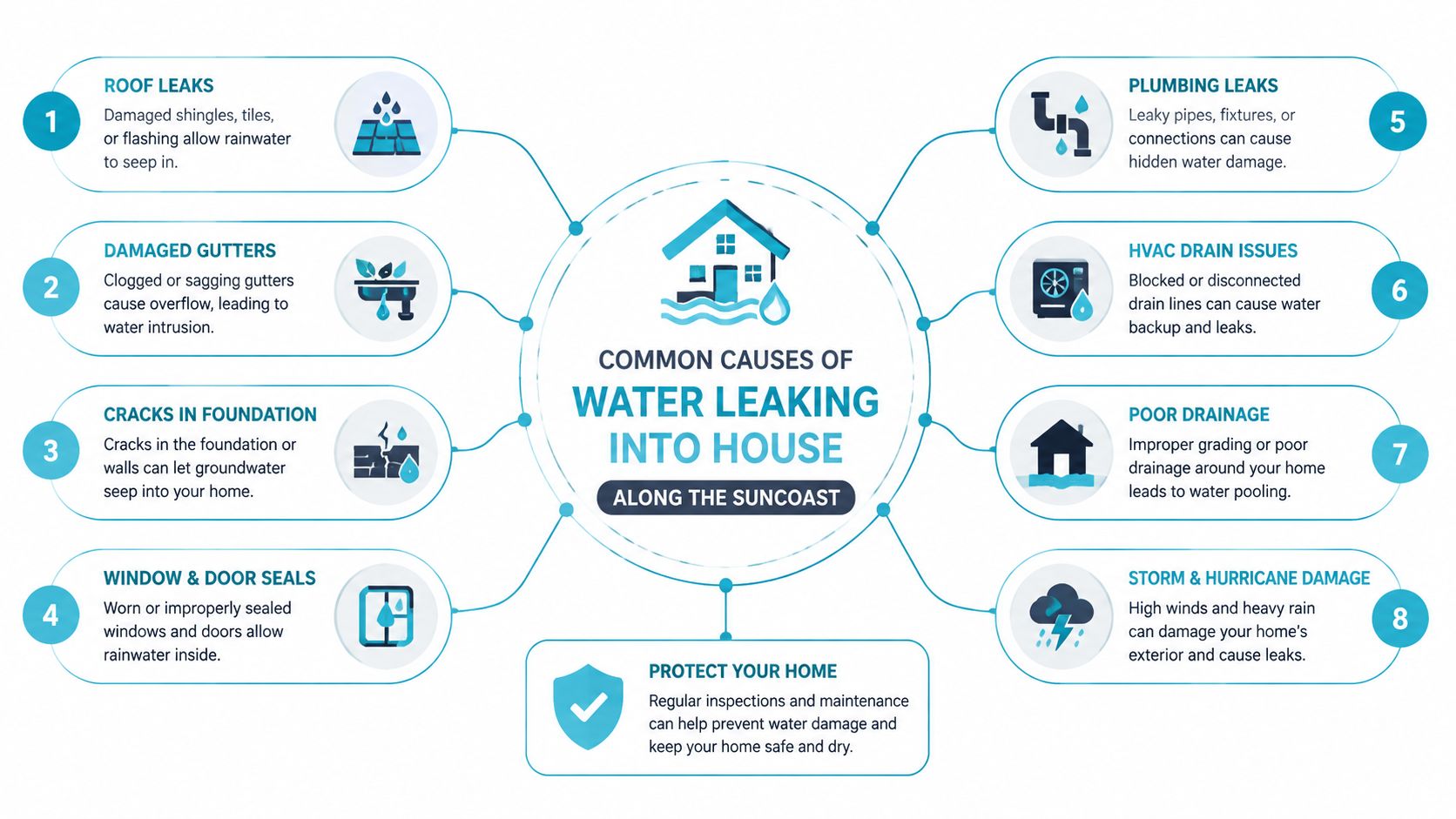
Common Causes of Water Leaking Into House Along the Suncoast
Suncoast homes face several distinct entry paths. Summer storms can drive rain beneath roof coverings, flashing, soffits, windows, and doors. Debris in gutters or downspouts can redirect runoff against exterior walls instead of carrying it away from the structure.
Plumbing failures are equally common sources of water leaking into house. Supply lines beneath sinks, washing machine hoses, refrigerator connections, water heaters, toilets, and drain assemblies can release water inside cabinets, walls, or flooring. A slow connection leak may remain unnoticed until swelling, staining, odor, or a high water bill points to the problem.
Air-conditioning systems create another Florida-specific risk. A clogged condensate drain or overflowing pan can wet ceilings, closets, walls, and flooring beneath an indoor unit. The guide to water damage from AC units in Florida homes covers why condensate problems deserve prompt attention.
Map the boundary, not just the stain
A reliable moisture investigation needs a comparison point. Establish a dry standard in an unaffected area, then take calibrated readings at the suspected location and at least two control locations. Massachusetts guidance recommends a minimum of three readings per investigated area, comparing them with an unaffected control to separate localized leakage from ordinary indoor humidity.
Expand outward in a grid and mark readings on a floor plan or photographs. This helps identify whether water traveled from a roof joint, window corner, plumbing chase, slab edge, or HVAC location. One “wet” reading isn’t enough. Similar readings across the room may reflect ambient humidity, while a clear gradient toward one wall or opening supports a localized moisture path.
Other possibilities include slab seepage after heavy rain, failed window seals, door thresholds, and foundation cracks. The source may be outside the room where damage appears, so diagnosis should follow the water path rather than the stain alone.
Document Damage Handle Insurance and Know When to Call Professionals
Before discarding damaged belongings, photograph and video the room from wide angles, then capture close views of stains, standing water, damaged materials, appliance connections, and the suspected source. Record when you discovered the problem, what was running, what you shut off, and any steps taken to limit damage. Save receipts for emergency supplies, temporary repairs, extraction, and accommodation if relocation becomes necessary.
Keep a materials list even when an item appears unsalvageable. Include furniture, electronics, flooring, cabinets, clothing, and personal property. Don’t make permanent repairs or remove large sections of material before documenting them unless immediate safety or sanitation requires action.
Sudden damage and gradual seepage are different
Insurance treatment often depends on how and when the water entered. A sudden accidental event, such as a burst pipe or failed appliance supply line, is generally treated differently from a gradual leak, long-term seepage, or damage connected to neglected maintenance. Official consumer guidance warns that homeowner insurance may cover sudden leaks but may not cover gradual leaks or neglect-related damage. Review your policy and notify your carrier promptly rather than assuming every water event has the same coverage.
Know when household cleanup has reached its limit
Professional restoration brings tools and controls that ordinary cleaning can’t replicate. Teams may use infrared imaging to locate temperature differences, electrical impedance scanning to identify moisture patterns, and pin-probe measurements to evaluate material-level conditions. Moisture maps can be placed over floor plans or photographs, then checked again after drying.
The handoff is especially important when water has entered cavities, when materials remain wet after 48 hours, when visible mold is present, or when sewage, floodwater, or storm-contaminated water is involved. A peer-reviewed study notes that moisture measurements can help evaluate fungal contamination during ongoing water damage, but moisture readings alone can’t estimate possible microbial growth in dry damage. That means a dry-looking surface isn’t proof that concealed conditions are safe.
Use AMPM’s water damage insurance claim guidance when organizing photos, notes, and communication with your carrier. AMPM Restoration can assist with water damage restoration, mold inspection and removal, storm and flood cleanup, fire and smoke damage restoration, commercial restoration, and reconstruction from its Bradenton location.
Prevent Future Leaks and Restore Peace of Mind With Help Nearby
Prevention on the Suncoast starts with the areas that face the most exposure. Inspect roof penetrations, flashing, windows, doors, gutters, and downspouts after severe weather. Keep the main water shutoff accessible, and learn which valves control the washing machine, water heater, toilets, sinks, refrigerator, and HVAC system.
Replace visibly worn appliance supply hoses before they fail. Have the air-conditioning condensate drain and pan checked when the system shows overflow, staining, or repeated shutdowns. Leak-detection devices can add an alert layer near water heaters, laundry areas, HVAC equipment, and under-sink plumbing, although they work best when someone responds to the warning.
Fix small leaks promptly. The EPA reports that the average home wastes more than 10,000 gallons of water annually from leaks, and 10% of homes have leaks large enough to waste 90 gallons or more per day. The agency also says repairing easy leaks can save about 10% on water bills, making early maintenance useful for both conservation and property protection. See the EPA leak repair fact sheet for those figures.
For homeowners comparing nearby providers, AMPM’s water damage restoration companies near me resource can help frame what to ask about response, moisture testing, drying, insurance coordination, and reconstruction. AMPM Restoration is available 24/7 from 4301 32nd St W b18, Bradenton, FL 34205, serving Bradenton, Sarasota, Tampa Bay, Saint Petersburg, Lakewood Ranch, and surrounding Gulf Coast communities.
Frequently asked questions
What should I do first when water is leaking into my house?
Protect people from electrical, ceiling, slip, and contamination hazards. Shut off the fixture, appliance, HVAC system, or main water supply if it’s safe, then move valuables and begin documentation.
How quickly should a Florida home be dried after a leak?
The EPA recommends drying water-damaged areas and belongings within 24–48 hours. Longer wetness increases the likelihood of mold growth, particularly when moisture remains inside walls, flooring, carpet padding, or cabinets.
Does homeowners insurance cover water leaking into a house?
Coverage depends on the cause and policy language. Sudden accidental leaks are generally treated more favorably than gradual seepage, neglected maintenance, or long-term leaks. Contact your carrier and preserve documentation before making assumptions.
Can I dry a ceiling leak myself?
You can contain a small active drip with a bucket and move belongings, but don’t enter an unsafe attic or stand beneath a sagging ceiling. Hidden insulation and framing may remain wet even after the visible stain dries, so professional moisture testing is often appropriate.
What are common Florida causes of indoor water leaks?
Roof and flashing failures, wind-driven rain, clogged gutters, failed window or door seals, plumbing connections, water heaters, slab seepage, and HVAC condensate problems are frequent possibilities. The visible damage may be away from the actual entry point.
When should I call a restoration company?
Call promptly when water has reached electrical areas, walls, ceilings, insulation, or multiple rooms, or when the source is sewage, floodwater, or storm contamination. Professional help is also appropriate when materials remain wet after the EPA’s 24–48 hour drying window or mold is visible.
AMPM Restoration Services provides 24/7 water extraction, leak detection, drying, mold remediation, storm and flood cleanup, repairs, and reconstruction for homes and businesses across Florida’s Suncoast. Call 941-946-7807 for a free inspection and estimate, with insurance claim assistance and financing options available, or visit AMPM Restoration Services to request help with water leaking into your house.