

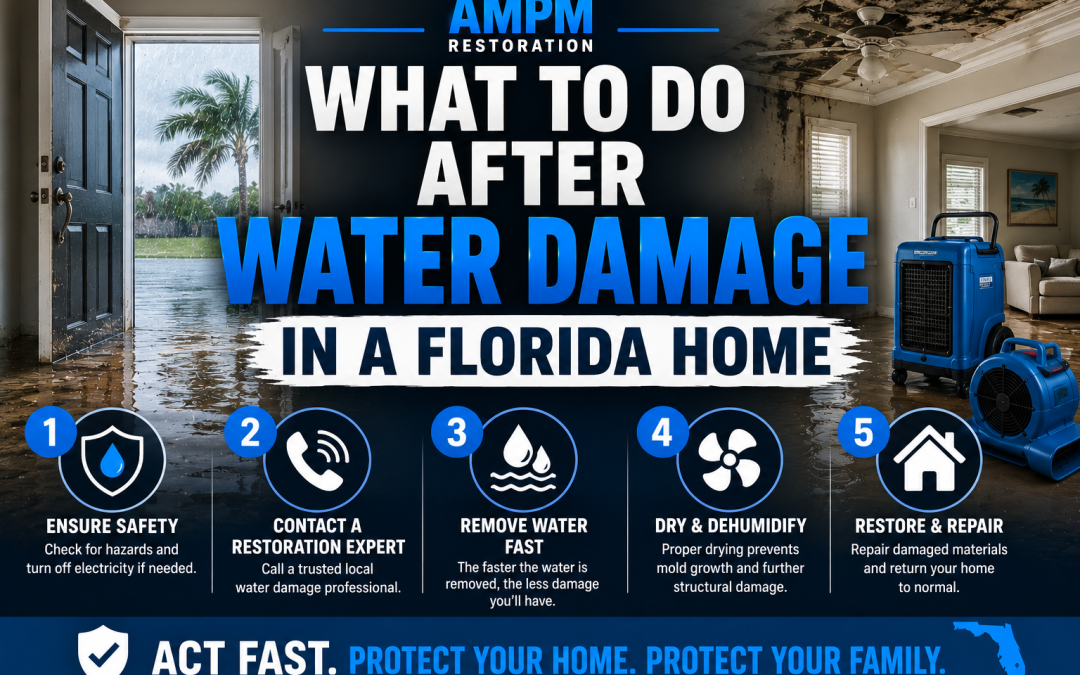
What to Do After Water Damage in a Florida Home
When you discover a burst pipe or a spreading leak, knowing what to do after water damage in a Florida home comes down to three things: ensuring safety, stopping the water at its source, and calling for professional help. For homeowners in Bradenton, Sarasota, and across the Gulf Coast, that mix of standing water and our state’s signature humidity creates a disaster-in-the-making for rapid property damage and mold growth. As a 24/7 emergency restoration company based in Bradenton, AMPM Restoration is dedicated to helping our community navigate these stressful events with fast, professional service.
First Actions After Finding Water in Your Florida Home
The moments right after you spot water damage are absolutely critical for protecting your family and your property. Here in Florida, the humid climate puts everything on a fast track to ruin, so every single minute counts. Your first moves should always be about safety, followed immediately by stopping the problem from getting any worse.
Safety is non-negotiable when you find standing water. If you’re dealing with a major situation, this homeowner’s guide to flood safety has some great insights on immediate hazards. Stay far away from any water that comes from a sewage backup or has been sitting for more than a day—it’s almost certainly contaminated and dangerous.
Protect Your Home and Your Claim
Once you’ve made sure the area is safe, your focus needs to shift to damage control and documentation. These next steps are vital, not just for the cleanup itself, but for making your insurance claim process go smoothly.
- Turn Off the Water Source: Find and shut off the main water valve to your house. If you can identify the specific appliance leaking, shut off its individual valve.
- Move Valuables: If it is completely safe, get furniture, area rugs, and personal belongings out of the water’s path to prevent them from being ruined.
- Document Everything: Before you touch a single thing, pull out your phone. Take photos and videos of the standing water, the source of the leak, and every single item that’s been affected. This visual proof is gold for your insurance claim.
This short infographic gives you a clear visual of the first steps every Florida homeowner should take.
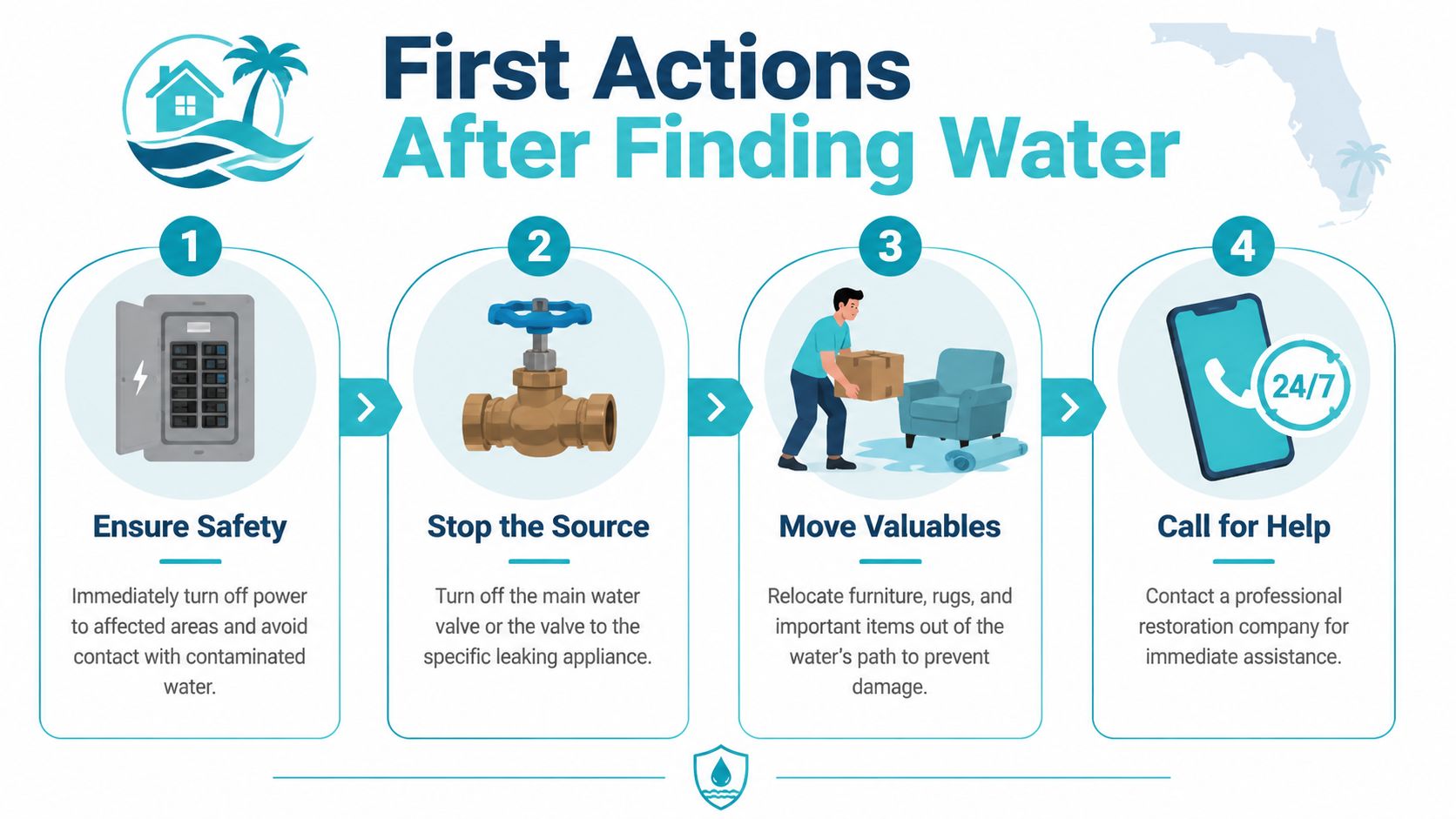
The takeaway here is simple: work through a clear sequence of safety, stopping the source, saving your belongings, and then calling in professional backup. Taking immediate action yourself while thoroughly documenting the scene is the best way to handle those first few moments. After all, even one inch of water can cause up to $25,000 in damage. Your quick thinking is the best defense for your home’s structure and your wallet.
We cover these initial actions in much greater detail in our guide to the first 24 hours of emergency water damage repair.
How to Document Damage and Navigate Your Florida Insurance Claim
Once you’ve stopped the source of the water and made sure the area is safe, your focus needs to shift immediately to your insurance claim. Solid, undeniable documentation is your single most powerful tool when dealing with water damage in your Florida home. This can feel like a huge task, but a methodical approach right now will save you countless headaches and protect your wallet later. Following these steps is a crucial part of what to do after water damage in a Florida home.
Before you touch, move, or throw out a single thing, grab your smartphone. Start by taking a wide, sweeping video of every affected room. As you record, narrate what you’re seeing—the standing water, the warped baseboards, the stain creeping up the drywall. After the video, switch to taking detailed, close-up photos of everything.

Create a Strong Visual Record
Your mission here is to build a “before and after” story that leaves no room for questions from the insurance adjuster. Get pictures of everything, no matter how minor it seems at the moment.
- Soaked Drywall: Snap photos of any paint that’s bubbling, areas of discoloration, or drywall that looks saggy or feels soft.
- Warped Flooring: Get clear shots of buckled hardwood floors, tiles that are lifting, or carpets that are completely saturated.
- Damaged Belongings: Create a visual inventory of every personal item that got wet, from your sofa and rugs to books and electronics.
Crucial Tip: Do not throw anything away. It’s tempting to start clearing out ruined items, but wait until your insurance adjuster has either seen the property in person or given you the green light. Tossing things out too soon can seriously hurt your claim.
Making the Right Calls
With your initial photos and videos secured, it’s time to make two very important phone calls. Your first call is to your insurance company. Report the loss right away and get a claim number. Most policies require you to give prompt notice, so don’t delay.
Your second call should be to a trusted, IICRC-certified restoration company like AMPM Restoration. We have spent years helping homeowners across Bradenton, Sarasota, and the Tampa Bay area navigate this exact process. As your advocate, we work directly with all insurance carriers, providing professional documentation to ensure your claim is handled fairly and completely. This expert coordination smooths out the entire claims process and helps secure a full settlement. For a deeper dive, check out our complete guide on how to file an insurance claim for water damage.
The Real Cost of Waiting to Remediate Water Damage in Florida
In Florida’s humid climate, discovering water damage starts a race against the clock. Every hour counts. What might seem like a simple leak from a burst pipe or a faulty appliance can quickly spiral into a major structural and health crisis. Hesitation is the single most expensive mistake a homeowner can make.
Within just 24 to 48 hours, even “clean” water from a supply line can turn nasty, becoming contaminated with bacteria as it soaks into drywall, flooring, and furniture. At the same time, the dormant mold spores that are always present in our Gulf Coast air find the moisture they need to come alive and colonize damp materials.
The Escalating Timeline of Damage
After that 48-hour mark, you’re no longer just dealing with a water problem. You’re facing a potential mold infestation, which requires a completely separate—and often more expensive—remediation process. The materials in your home, from attic insulation to the subflooring under your feet, act like giant sponges, wicking moisture into hidden areas that are impossible to see or dry with household fans.
This hidden moisture is the real threat. While a surface might feel dry to the touch, trapped water inside walls or under flooring continues to cause rot, compromise your home’s structural integrity, and feed mold growth for weeks or even months.
Acting fast isn’t just about cleanup; it’s about preventing tens of thousands of dollars in secondary damages. This is a critical factor in what to do after water damage in a Florida home. After a water event, the first few hours are absolutely crucial because moisture spreads so quickly into drywall, insulation, and cabinets. Industry guidance suggests a typical drying phase of 3 to 5 days with professional equipment, but this timeline extends dramatically with any delay.
Understanding the mold growth timeline after water damage further highlights why calling a professional right away is the most effective way to protect your property and your wallet.
Professional Restoration Versus a DIY Cleanup Attempt
When you find water damage, your first instinct is probably to grab a shop vac and a pile of towels. It feels proactive, but for Florida homeowners, this common DIY approach is a recipe for bigger problems down the road. Knowing the difference between what you can do and what a professional, scientific approach can achieve is critical when figuring out what to do after water damage in a Florida home.
A shop vac, for instance, only skims the surface. It can’t begin to pull out the water that has already soaked deep into your carpet padding, the subfloor, or the base of your drywall. This is where professional-grade equipment makes all the difference. Our industrial water extractors use immense suction to pull moisture from deep within those materials, a crucial first step in preventing structural rot and long-term decay.
The Science of Professional Drying
Proper water damage restoration isn’t just about removing visible water; it’s about controlling the entire environment. A few box fans might move some air around, but they do almost nothing to remove the heavy, moisture-laden air that fuels mold growth in our humid Gulf Coast climate.
A professional restoration process is a scientific one. It involves manipulating temperature, humidity, and airflow to create an environment where your home’s structure can dry completely and verifiably.
We use an arsenal of specialized equipment to get this done right:
- Commercial Dehumidifiers: These aren’t your standard home units. They are powerful machines that can pull gallons of water out of the air every day, starving mold of the humidity it needs to thrive.
- High-Velocity Air Movers: We strategically place these units to create a vortex of powerful airflow across wet surfaces. This dramatically speeds up evaporation, far beyond what any household fan could accomplish.
- Moisture Meters & Thermal Imaging: This is where the guesswork stops. We use advanced diagnostic tools to “see” inside your walls and under your floors, locating hidden pockets of moisture. Without this technology, you’re just hoping your home is dry—a risky gamble in communities from Palmetto to Lakewood Ranch.
DIY vs Professional Water Damage Mitigation
The difference in outcomes between a DIY attempt and professional service is stark. Here’s a quick breakdown of what to expect.
| Restoration Step | DIY Method | AMPM Professional Method | Likely Outcome |
|---|---|---|---|
| Water Extraction | Shop vac and towels | Industrial-grade truck-mounted extractors | DIY: Lingering moisture in padding and subfloor. Pro: Thorough extraction. |
| Drying | Household fans | High-velocity air movers and commercial dehumidifiers | DIY: Slow, uneven drying; high humidity. Pro: Fast, controlled drying. |
| Moisture Detection | Visual inspection (guesswork) | Digital moisture meters and thermal imaging cameras | DIY: Hidden moisture missed. Pro: All wet areas identified and dried. |
| Mold Prevention | Surface cleaning with household products | Application of EPA-approved antimicrobial agents and controlled drying environment | DIY: High risk of mold growth. Pro: Mold risk is properly mitigated. |
Ultimately, choosing a professional isn’t just about having better tools; it’s about getting a guaranteed, scientifically-backed result that protects your home’s value and your family’s health.
Want to see what can go wrong? Learn more about the pitfalls by reading our article that explores why you shouldn’t DIY water damage restoration.
Choosing the Right Restoration Company in the Bradenton-Sarasota Area
When your home is waterlogged, picking the right restoration company is the single most important decision you’ll make. This isn’t just about hiring a cleanup crew; it’s about finding a reliable partner to guide you through a stressful recovery. Your choice will have a huge impact on your finances, your stress levels, and the long-term safety of your home.
There are a few non-negotiable qualifications you should look for. The company absolutely must offer true 24/7 availability with a guaranteed rapid response. In our Gulf Coast humidity, every hour you wait means more damage and a higher risk of mold. They also must hold current IICRC certifications—this is the gold standard in our industry and proves they follow the highest professional standards for restoration.
Verifying Local Expertise and Comprehensive Service
Beyond certifications, you need a team with deep, local experience right here in the Bradenton, Sarasota, and Tampa Bay areas. A company that knows local building codes, weather patterns, and how insurance carriers operate in Florida is an invaluable asset. Ask if they handle everything from start to finish—from initial water extraction and drying all the way through full reconstruction solutions.
A truly professional restoration company handles it all, so you aren’t stuck trying to coordinate a dozen different contractors. Having that single point of contact is crucial for a smooth and efficient recovery. Sometimes, extensive water damage means you’ll need to rebuild or remodel parts of your home.
At AMPM Restoration, we meet all these criteria and more. We are a locally-owned company with our office at 4301 32nd St W b18, Bradenton, FL 34205, and we’re dedicated to restoring both your property and your peace of mind. As your trusted, insurance-friendly partner, we offer free inspections, transparent estimates, and direct assistance with insurance claims because our only goal is to get your life back to normal as quickly and smoothly as possible.
Florida Water Damage FAQs
When you’re staring at a flooded living room or a ceiling that’s suddenly sprung a leak, your mind starts racing with questions. We get it. For homeowners across Bradenton, Sarasota, and the Gulf Coast, knowing what to do after water damage in a Florida home can feel overwhelming. Here are answers to the most common questions we hear.
How much does water damage restoration cost in Florida?
The cost varies significantly based on the extent of damage, the type of water (clean, gray, or black), and the materials affected. A minor leak might cost a few hundred dollars, while major flooding can exceed $10,000. At AMPM Restoration, we provide a free, detailed inspection and estimate so you know the exact cost upfront. Most sudden and accidental water damage is covered by standard homeowner’s insurance.
How quickly does mold grow after a water leak in Florida?
In our humid climate, mold can begin to grow in as little as 24 to 48 hours. This is why our 24/7 rapid response is so critical. By starting the water extraction and drying process immediately, we can effectively prevent a small water issue from turning into a major mold contamination problem.
Will my homeowner’s insurance cover this damage?
Typically, yes, if the damage was “sudden and accidental,” such as from a burst pipe or appliance malfunction. Insurance usually doesn’t cover damage from gradual leaks, lack of maintenance, or flooding from storms (which requires a separate flood policy). We offer insurance claim assistance and work directly with all carriers to ensure your claim is processed smoothly.
How long will the restoration process take?
The active drying phase with our professional equipment usually takes 3 to 5 days. The full restoration timeline depends on the severity of the damage. If demolition and reconstruction are needed for materials like drywall or flooring, the project will take longer. We provide a clear, step-by-step timeline after our initial inspection.
Can I stay in my house during the restoration?
It depends on the scope of the project. For small, contained jobs, you can often remain in your home. However, for larger projects, cases involving contaminated water, or for your own comfort due to equipment noise, we may recommend temporarily relocating. Your safety is our top priority.
Do I have to use the restoration company my insurance recommends?
No. In Florida, you have the legal right to choose any licensed and certified restoration company you trust. It’s crucial to select a company that will act as your advocate. At AMPM Restoration, our primary loyalty is to you, the homeowner, ensuring you receive the best possible service and a fair outcome.
Don’t let water damage get worse by waiting. Knowing what to do after water damage in a Florida home starts with one simple phone call. For a free, no-obligation inspection and estimate, call the IICRC-certified experts at AMPM Restoration now. We are on call 24/7 to restore your property and your peace of mind. We offer direct insurance claim assistance and flexible financing options to make the recovery process easier. Call 941-946-7807 today.