

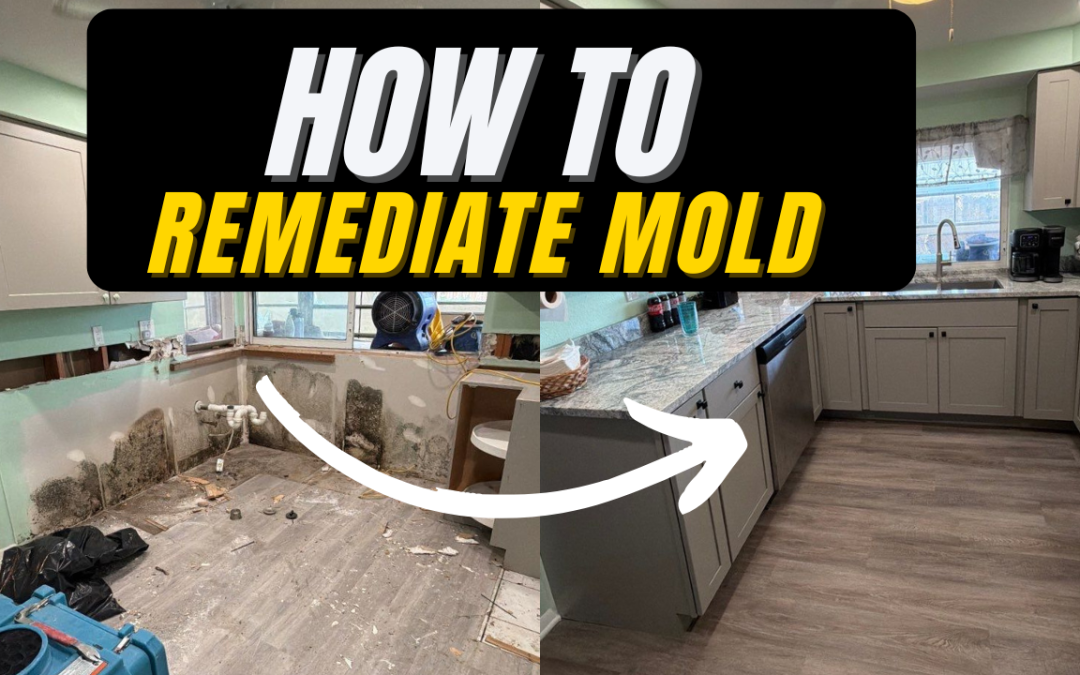
That sinking feeling you get when you find mold in your Bradenton home is something we see all the time. But knowing how to remediate mold starts with taking the right first steps, and acting quickly but cautiously is the key. Your immediate job is to stop the moisture source, isolate the area so spores can’t spread, and then call a professional for a safe assessment. Whatever you do, avoid touching the mold or trying to clean it yourself. This almost always worsens the problem and puts your health at risk. For homeowners in Bradenton, Sarasota, and across the Gulf Coast, the fast, reliable team at AMPM Restoration is here to help 24/7.
What to Do When You First Find Mold
The moment you see that tell-tale discoloration on a wall or catch that persistent musty smell, how you respond makes all the difference. In Florida’s humid climate, mold can explode from a small spot into a massive infestation in just 24 to 48 hours. Taking the right action right away is your best defense against a more complex and costly problem. Understanding how to remediate mold properly begins with these initial, critical moments.
Your first priority has to be safety and containment. Don’t disturb the visible mold. We’ve seen homeowners try scrubbing it, spraying it with bleach, or even running a fan nearby, but these actions can dislodge millions of spores. It sends them airborne, ready to contaminate other parts of your home and turn a localized issue into a house-wide nightmare.
Immediate Actions to Take
Instead of reaching for a scrub brush, focus on these critical first moves to protect your property and family. Getting these right sets the stage for a successful, permanent fix.
- Isolate the Area: Shut any doors leading into the affected room. If you can, grab some plastic sheeting and tape to cover the HVAC vents in that area. This one simple step helps keep spores from getting into your ductwork and spreading.
- Stop the Moisture Source: Mold can’t survive without moisture, period. Find the water source and shut it down, whether it’s a leaky pipe under a sink, a roof leak from a recent storm, or condensation dripping from an AC unit. This is the single most important thing you can do to stop more growth in its tracks.
These initial steps are crucial, but they aren’t a replacement for a professional evaluation. You need an expert opinion to understand the full scope of what you’re dealing with. You can get a clear picture of the situation with a free mold damage inspection to accurately assess what needs to be done.
The Dangers of DIY Mold Cleaning
Let’s be clear: in Florida’s Suncoast communities like Bradenton, Sarasota, and St. Petersburg, where humidity often stays above 70% year-round mold remediation isn’t just a simple cleaning job. It’s a battle to protect your health and your property. The CDC confirms that mold exposure can trigger stuffy noses, coughing, and skin rashes in up to 20% of the population who are sensitive to allergens.
After major storms like Hurricane Ian, we saw widespread mold outbreaks across the Tampa Bay area, making professional services that coordinate with insurance an absolute lifeline for homeowners.
The biggest mistake we see is homeowners trying to solve a mold problem with store-bought chemicals. This often only removes the surface stain while leaving the root system intact, allowing the mold to grow back stronger.
When you first find mold, especially in common trouble spots, it’s smart to learn how to properly fight mold in your bathrooms with solid moisture control tactics. But for any growth larger than a few square feet, calling a certified company like AMPM Restoration is always the safest and most effective choice. Our 24/7 emergency team serves the entire Gulf Coast, from our headquarters at 4301 32nd St W b18, Bradenton, FL 34205, ready to provide a fast, permanent solution.
Should You Handle Mold Removal Yourself?
When you spot a patch of mold, it’s tempting to grab some cleaner and tackle it yourself. After all, how hard can it be? Many homeowners think a DIY approach will save money, but the decision to clean mold yourself versus calling a professional involves risks that go way beyond your budget.
For a tiny spot on a hard, non-porous surface like bathroom tile, something smaller than your hand, a quick cleanup might seem fine. But the real danger is what you can’t see. Improperly scrubbing even a small mold colony can launch millions of spores into the air, turning a contained problem into a whole-house contamination nightmare. Suddenly, a small issue becomes far more dangerous and expensive to fix.
Understanding how to remediate mold the right way means knowing the limits of DIY. That bottle of bleach or store-bought spray often just cleans the surface, leaving the mold’s “roots” deep inside porous materials like drywall or wood. It’s only a matter of time before it grows right back.
The Real Risks of a Failed DIY Mold Project
Trying to remove mold without the right training, gear, and containment can backfire spectacularly. For homeowners in humid areas like Lakewood Ranch and the greater Tampa Bay region, where we see over 100 days of high humidity a year, these risks are even greater.
One of the biggest dangers is cross-contamination. As soon as you scrape, sand, or even wipe mold, you’re sending spores airborne. If your HVAC system kicks on, it can circulate those spores through every room in your house in minutes. This can lead to new mold colonies popping up where there were none before, seriously compromising your indoor air quality.
Another huge risk is not getting it all. Without professional-grade moisture meters and thermal imaging cameras, it’s nearly impossible to find and eliminate all the hidden moisture that feeds mold. If you don’t fix the underlying water problem, the mold is guaranteed to return, and it’s often worse the second time around.
Why Professional Remediation Is Different
A certified professional from a company like AMPM Restoration treats mold as a scientific problem, not just a cleaning chore. This difference is what protects your family’s health and your home’s value.
- Containment: We set up critical containment barriers with negative air pressure. This ensures mold spores are trapped and can’t escape the work area.
- Air Purification: We use industrial HEPA air scrubbers that capture airborne spores as small as 0.3 microns, purifying the air while we work.
- Proper Removal: Porous materials like drywall and insulation that are contaminated are carefully removed, bagged, and disposed of according to strict regulations.
- Verification: After cleanup, we take steps to verify that the mold is gone and spore counts have returned to safe, normal levels.
The difference between a DIY attempt and professional service often comes down to thoroughness. Professionals address the complete mold life cycle spores, growth, and the moisture source while a DIY fix often just temporarily hides the visible problem.
To help you weigh your options, let’s break down the key differences between tackling mold yourself and hiring a certified team.
DIY vs Professional Mold Remediation: A Head-to-Head Comparison
| Factor | DIY Approach | Professional Remediation (AMPM Restoration) |
|---|---|---|
| Containment | Typically none. High risk of spreading spores throughout the home. | Full containment with negative air pressure to isolate the work area. |
| Equipment | Store-bought chemicals, sponges, and basic masks. | HEPA vacuums, air scrubbers, commercial-grade antimicrobial agents. |
| Effectiveness | Often just surface-level cleaning. Mold roots left behind, leading to regrowth. | Complete removal of mold from surfaces and air, addressing the moisture source. |
| Safety | High risk of exposure to toxic mold spores without proper personal protective equipment (PPE). | Technicians use full PPE; containment protects the rest of the home and family. |
| Verification | No way to confirm if all airborne spores have been eliminated. | Post-remediation testing to verify spore counts are at a safe, normal level. |
Ultimately, the numbers don’t lie. Professional remediation services hold a dominant 63.4% of the market share for a reason: DIY efforts fail an estimated 70% of the time due to incomplete spore removal. For landlords in Manatee County or any Florida homeowner, a failed cleanup is a costly mistake. Untreated mold can slash property values by 15-20%, making a professional approach a sound investment in your property.
While a tiny spot of surface mold might seem manageable, the potential fallout from a botched job is severe. For a deeper look at specific scenarios that call for a pro, check out our guide on when you need professional mold removal. It will help you make the safest choice for your home and family.
A Look Inside a Professional Mold Remediation Project
When our IICRC-certified technicians arrive at your St. Petersburg or Bradenton home, we’re not just a cleanup crew. We’re specialists who know that how to remediate mold is a precise, scientific process. It’s about more than just wiping away the visible threat; it’s about making sure it never comes back.
This job is way more complex than just spraying some chemicals and calling it a day. From the moment we walk in with our advanced diagnostic tools, we’re focused on understanding the full scope of the problem both the mold you can see and the hidden moisture that’s letting it thrive.
Step 1: Pinpointing the Problem with a Damage Assessment
Before we tear out a single piece of drywall, we perform a detailed damage assessment. This isn’t just a quick look around. Our team uses specialized equipment to get the complete story.
- Thermal Imaging Cameras: These incredible tools let us see right through your walls. They show temperature differences that expose hidden pockets of moisture, which are almost always the root cause of a stubborn mold problem.
- Moisture Meters: We use both penetrating and non-penetrating meters to get exact moisture readings in materials like drywall, wood framing, and subflooring. This data is critical it tells us what can be saved and what’s too far gone.
Step 2: Critical Containment to Stop the Spread
Once we’ve mapped out the mold and moisture, we move to the most important step: containment. If you get this wrong, you risk sending millions of microscopic spores airborne, contaminating the rest of your house.
We build containment zones using heavy-duty plastic sheeting, completely sealing off the affected area. Then, we create negative air pressure inside the zone using powerful fans that vent air outside. This ensures air can only flow into the contaminated room, not out, effectively trapping the spores.
The difference between a professional and an amateur job often lies in containment. Without establishing negative air pressure, any attempt to remove mold is like trying to dust in a windstorm you just spread the problem around.
Step 3: Removing the Mold and Clearing the Air
With the area safely sealed off, the real work of how to remediate mold begins. The first thing we do is turn on our industrial-grade HEPA (High-Efficiency Particulate Air) air scrubbers. These machines run constantly, filtering the air inside the containment and capturing 99.97% of airborne particles as small as 0.3 microns, including those nasty mold spores.
Next, our team starts carefully removing contaminated materials. Mold is like an iceberg what you see on the surface is just a fraction of the actual problem. For porous materials like drywall, carpet, and insulation, the mold’s root-like structures (mycelia) have grown deep inside, so cleaning isn’t enough.
These materials are carefully cut out, double-bagged in thick poly sheeting, and removed from your home following strict EPA guidelines. For non-porous surfaces like wood studs, we use techniques like sanding, media blasting (using dry ice), or HEPA vacuuming to physically scrub away the growth. Knowing what to clean versus what to remove is key. If you’re trying to figure out your next steps, understanding the full process can make all the difference. You can learn more about the difference between a mold assessment and remediation in our detailed guide.
Step 4: Final Cleaning and Preparing for Rebuild
After all the contaminated materials are gone and the air is clean, we’re not done yet. We thoroughly clean and treat every remaining surface like wood framing and subfloors with an EPA-registered antimicrobial agent. This is a vital step to kill any leftover spores and prevent them from growing back.
Finally, we dry everything out with commercial dehumidifiers and high-velocity air movers until moisture levels are back to normal. Only when we can confirm the area is completely clean, dry, and free of contamination does the reconstruction phase begin. This transparent, step-by-step approach gives homeowners the peace of mind that the job was done right, from start to finish.
Finding and Fixing the Moisture Source
Simply cleaning up visible mold isn’t enough. It’s only half the battle. The real secret to permanent mold removal is finding and fixing the moisture source that’s fueling the growth in the first place. If you skip this step, I can guarantee the mold will be back, and often, it’s worse than before.
In Florida, the list of potential water sources is endless. Homes from Bradenton to Sarasota are constantly fighting high humidity, surprise downpours, and aging plumbing. The source of your mold problem could be something obvious, like a roof leak after a storm, or it could be something much sneakier a slow, hidden drip behind a shower wall.
This is where true professional mold remediation really starts: by getting to the root of the cause, not just treating the symptom.

This process shows how the pros tackle a mold job. It’s a structured system Assess, Contain, and Purify not just a simple wipe-down. Each phase is designed to make sure the mold is gone for good.
Common Moisture Culprits in Florida Homes
Let me give you a real-world scenario we see all the time in the Tampa Bay area. A homeowner calls us about a musty smell in their laundry room but can’t see any mold. The smell gets stronger for weeks until, finally, they notice a dark stain on the baseboard behind the washing machine. Turns out, a tiny pinhole leak in the water supply line had been dripping inside the wall for months, creating the perfect dark, damp hideout for mold.
That’s just one example. The most common moisture sources we find include:
- Plumbing Leaks: Slow drips under sinks, toilet overflows, and hidden pipe bursts inside walls are a top cause of major mold infestations.
- Roof Damage: A few missing shingles or bad flashing after a storm is all it takes for water to seep into your attic and ceilings.
- High Humidity: Sometimes, Florida’s own air is the problem, especially in poorly ventilated closets, bathrooms, and laundry rooms.
- HVAC Issues: Clogged AC condensation lines or poorly insulated ductwork can dump a surprising amount of water into your home.
For many properties, managing groundwater and storm runoff with effective drainage solutions for homes is also a critical part of a long-term fix.
The Critical Window for Water Damage
Water damage is the number one trigger for mold, and it’s something we deal with constantly across Florida’s Suncoast. Mold spores can start growing in as little as 24-48 hours once the relative humidity (RH) climbs above 60%. This is exactly why a fast response is so important.
Quick action can prevent 90% of mold growth by getting the water out before spores have a chance to activate. Statistics show that untreated mold can spread to 10 times its original size in just a few weeks, with remediation costs averaging between $2,200 and $6,000. Calling in professionals who can coordinate with your insurance can often cut these costs by 30-50%.
The most crucial takeaway is this: mold is a moisture problem. Without finding and permanently fixing the water source, any remediation effort is just a temporary cosmetic fix. The mold will always come back.
Our approach isn’t just about water removal. We use rapid dehumidification to get your home’s RH levels down to a safe 40-50% within 72 hours, stopping the mold life cycle cold. To see how we track down these hidden water sources, check out our guide on advanced leak detection services. Stopping moisture at its source is the only way to win the war against mold.
Navigating Mold Remediation Costs and Insurance
When you discover mold, two big questions immediately pop into your head: How much will this cost? And will my insurance even cover it? The financial side of mold removal can feel overwhelming, but understanding what drives the cost and how your insurance policy works is the first step to getting your home back in order.
There’s no single price tag for mold remediation. The final bill really depends on how widespread the contamination is, what kind of materials are affected, and if the mold has gotten into tricky spots like your HVAC system or behind drywall. A small, contained patch in a bathroom is a world away from a basement-wide infestation after a flood.
Understanding Florida Homeowners Insurance and Mold
For Florida homeowners, getting insurance to cover mold can feel like an uphill battle. Most standard policies will deny a claim if the mold grew because of a slow, gradual problem, like high humidity or a tiny leak you didn’t know about. This is exactly why staying on top of home maintenance is so important.
But there is some good news. Your policy is far more likely to kick in if the mold is a direct result of a “covered peril.” This is insurance-speak for a sudden and accidental event your policy is designed to cover, like:
- A pipe that suddenly bursts and floods your kitchen
- Water damage from firefighters putting out a fire
- A washing machine hose that fails and soaks the laundry room
- Water leaking in from a roof damaged during a storm
In these situations, your insurance will often pay for the remediation, but there’s usually a cap typically between $10,000 and $20,000. Figuring out your policy’s limits is one of the first things you need to do. For a deeper dive, check out our complete guide to understanding mold removal costs and what to expect.
Your Advocate in the Insurance Claims Process
Trying to deal with an insurance company is stressful enough without also worrying about a mold-infested home. This is where a professional restoration company becomes your most important partner. At AMPM Restoration, we do more than just get rid of the mold; we fight for you through the entire claims process.
We start by creating meticulous documentation photos, moisture readings, and a detailed plan of action. This is the evidence your adjuster needs. We know their language, and we know what it takes to get a claim approved without delays.
AMPM Restoration works with all insurance carriers and offers direct billing. This means we handle the paperwork and communicate directly with your adjuster, taking that burden completely off your shoulders so you can focus on your family.
This hands-on support is non-negotiable. We’ve seen too many homeowners in Bradenton and Sarasota have their claims rejected because of missing paperwork or because they couldn’t prove the mold was tied to a covered event. We make sure every “i” is dotted and “t” is crossed to get you the coverage you deserve.
What if Insurance Won’t Cover It?
If you find out your insurance won’t pay for the cleanup, you still have options. We know this is almost always an unexpected expense, but putting off remediation is never the answer. Mold doesn’t go away on its own; it just gets worse, creating bigger health risks and more expensive structural damage down the line.
To make sure every family on the Gulf Coast can live in a safe, healthy home, AMPM Restoration offers flexible financing options. We don’t believe a tight budget should ever force you to live with mold. Our team can walk you through different payment plans to find one that works for you, so you can solve the problem now and get your peace of mind back.
Partner with AMPM Restoration to Remediate Mold and Restore Your Peace of Mind
We’ve covered the risks, the costs, and the complex steps involved in getting mold out of your home for good. The only way to truly remediate mold correctly and permanently is by partnering with certified professionals who know Florida’s humid climate inside and out. Trying to handle it yourself often just leads to regrowth, hidden structural damage, and persistent health risks for your family. A professional, thorough approach is the only way to be certain you have a safe and lasting solution. For homeowners across Bradenton, Sarasota, Tampa, and St. Petersburg, AMPM Restoration is the local, community-driven team you can trust for complete peace of mind.
Don’t let mold compromise your family’s health or your home’s integrity. An incomplete cleanup only masks the problem, allowing it to grow back stronger and more dangerous.
We handle the entire project from the very beginning to the final handshake. It starts with a free inspection and leads to precise remediation and full reconstruction. Our team even works directly with your insurance carrier, managing the claim to take that stress off your plate. We also offer flexible financing options and insurance claim assistance to make sure a safe home is always within reach. Let us get to work restoring your property and your well-being. Call AMPM Restoration today at 941-946-7807 for your free, no-obligation inspection and estimate.
Frequently Asked Questions About How to Remediate Mold
1. How long does the mold remediation process take?
The timeline for mold remediation can range from 1 to 5 days, depending on the extent and location of the mold. A small, contained area might be handled in a day, while a larger infestation affecting structural elements or an HVAC system will take longer. We provide a clear, accurate timeline after our initial free inspection of your Bradenton or Sarasota area home.
2. Will my Florida homeowners’ insurance cover mold removal?
It depends on the cause. Most Florida policies provide coverage for mold if it’s the direct result of a “covered peril,” like a sudden pipe burst or storm damage, but they usually have a cap on the payout. Mold from gradual leaks, high humidity, or lack of maintenance is typically not covered. AMPM Restoration offers expert insurance claim assistance to help you navigate your policy and maximize your coverage.
3. Can I stay in my home during the mold remediation process?
For your safety, we strongly recommend you and your pets temporarily leave the home during active remediation. While we establish strict containment zones to prevent cross-contamination, vacating the property is the only way to ensure zero exposure to airborne mold spores and antimicrobial agents. Our priority is to work efficiently to restore your home and peace of mind as quickly as possible.
4. What is included in AMPM Restoration’s free mold inspection?
Our free mold inspection is a comprehensive visual assessment performed by an IICRC-certified technician. We identify all visible mold and use professional tools like moisture meters to pinpoint the underlying water source. Afterward, we provide a detailed, easy-to-understand report, a clear plan for remediation, and a no-obligation estimate, giving you the information you need to make the best decision for your home.
5. Why is post-remediation verification testing necessary?
Post-remediation verification, or clearance testing, is your guarantee that the job was done right. An independent third-party industrial hygienist takes air and surface samples to confirm that spore counts have returned to safe, normal levels. This unbiased, scientific proof ensures your home’s air quality is healthy again. AMPM Restoration stands behind our work and encourages this final step for your complete peace of mind.
6. What if my mold remediation isn’t covered by insurance?
We believe everyone deserves to live in a safe, mold-free home, regardless of their budget. If your insurance claim is denied, AMPM Restoration offers flexible financing options. We will work with you to find a manageable payment plan so you can address the mold problem immediately and prevent it from becoming a more dangerous and costly issue down the road.