


Professional Mold Inspection Services: A Florida Guide
A musty smell after a summer storm. A dark patch near an AC vent. Bubbling paint in a bathroom that never seems to dry out. That’s usually when Florida homeowners start searching for professional mold inspection services, and for good reason. In Bradenton, Sarasota, Lakewood Ranch, Saint Petersburg, and across Tampa Bay, heat, humidity, roof leaks, plumbing issues, and storm-driven moisture can turn a small water problem into a mold problem fast.
If you’re dealing with that kind of uncertainty right now, the right first move is calm investigation, not guesswork. A proper inspection tells you whether mold is present, where the moisture is coming from, how far the issue has spread, and what needs to happen next. It also helps you avoid a common mistake in Florida: hiring someone who jumps straight from “finding” mold to selling cleanup without giving you a clear, unbiased assessment first.
AMPM Restoration is a 24/7 emergency restoration company based at 4301 32nd St W b18, Bradenton, FL 34205, serving Bradenton, Sarasota, Tampa Bay, Saint Petersburg, Lakewood Ranch and surrounding Gulf Coast communities with professional water damage restoration, mold inspection and mold removal, fire and smoke damage restoration, storm and flood damage restoration, commercial restoration services, and full reconstruction solutions.
Suspect Mold in Your Florida Home What to Do First
If you think you have mold, start with three simple actions. Limit disturbance, control moisture, and schedule professional mold inspection services. Scrubbing, spraying bleach, or cutting into drywall before anyone identifies the source can spread contamination or hide the underlying problem.
Florida homes often show the first warning signs in ordinary places. Around air handlers. Behind baseboards after a slow leak. Inside closets on exterior walls. Around windows after wind-driven rain. If you recently had a roof issue, tracing the exact water path matters, and methods like using leak tracing dye can help explain how moisture sometimes travels far from the spot where you first notice staining.
Your first few steps at home
- Take clear photos: Document staining, discoloration, warped materials, or visible growth.
- Stop active water intrusion: Shut off the supply line, place containment under a leak, or protect the area from additional rain if you can do so safely.
- Avoid DIY test kits as your only answer: They rarely tell you the full story of where moisture is hiding.
- Check recent water history: A minor overflow or condensation issue from days ago may matter more than an old stain.
- Read how quickly mold can develop after water damage: This guide on mold growth after water damage helps connect timing to risk.
Practical rule: If something got wet and still feels damp, smells musty, or looks different than it did before, treat it like a moisture problem until proven otherwise.
Homeowners often feel pressure to decide too much too soon. You don’t need to know the species, the cleanup method, or whether drywall has to come out before the inspection. You need a reliable diagnosis first.
What Professional Mold Inspection Services Really Include
A real mold inspection is an investigative service. It’s not the same as a free glance from a contractor who’s already planning to sell removal work, and it’s not the same as setting out a home test plate on a countertop.
Professional mold inspection services focus on evidence. The inspector looks for visible growth, moisture conditions, hidden water intrusion, affected materials, and signs that mold may be present in places you can’t see. The result should be a written understanding of the problem, not a vague verbal opinion.
What a proper inspection is
The Florida Department of Health states that visual inspection and moisture detection are the primary criteria for determining the presence and severity of mold, because there are no established health-based standards for interpreting mold sampling results alone, according to the Florida Department of Health mold guidance. That matters because many homeowners assume air testing alone is the gold standard. It isn’t.
A proper inspection usually includes:
- Visual assessment of the structure: Walls, ceilings, trim, cabinets, flooring transitions, HVAC areas, and other likely moisture zones.
- Moisture detection: Tools such as hygrometers, moisture meters, and infrared cameras help identify damp building materials and hidden water movement.
- Targeted sampling when needed: Air or surface samples can add objective information, especially when contamination is concealed or documentation is needed.
- Written findings: You should get a report that explains conditions, not just a quote for cleanup.
What it is not
A true inspection is not:
- A sales shortcut: If someone spends a few minutes looking around and immediately prices remediation without documenting the cause, that’s not a full assessment.
- A guarantee based on smell alone: Musty odors are important clues, but they don’t replace moisture mapping.
- A substitute for fixing the water source: Mold returns when the moisture source remains.
An inspection should answer two questions before anything else. Where is the water coming from, and how far has the problem spread?
That distinction matters more in Florida than most homeowners realize. In a humid climate, condensation, roof leaks, wet drywall, duct sweating, and poor ventilation can all create similar symptoms. Different causes need different solutions.
The Step by Step Mold Inspection and Testing Process
When homeowners call for professional mold inspection services, they usually want to know what will happen at the house. The process is more methodical than expected, which is a good thing. It means decisions are based on conditions, measurements, and lab results when needed.
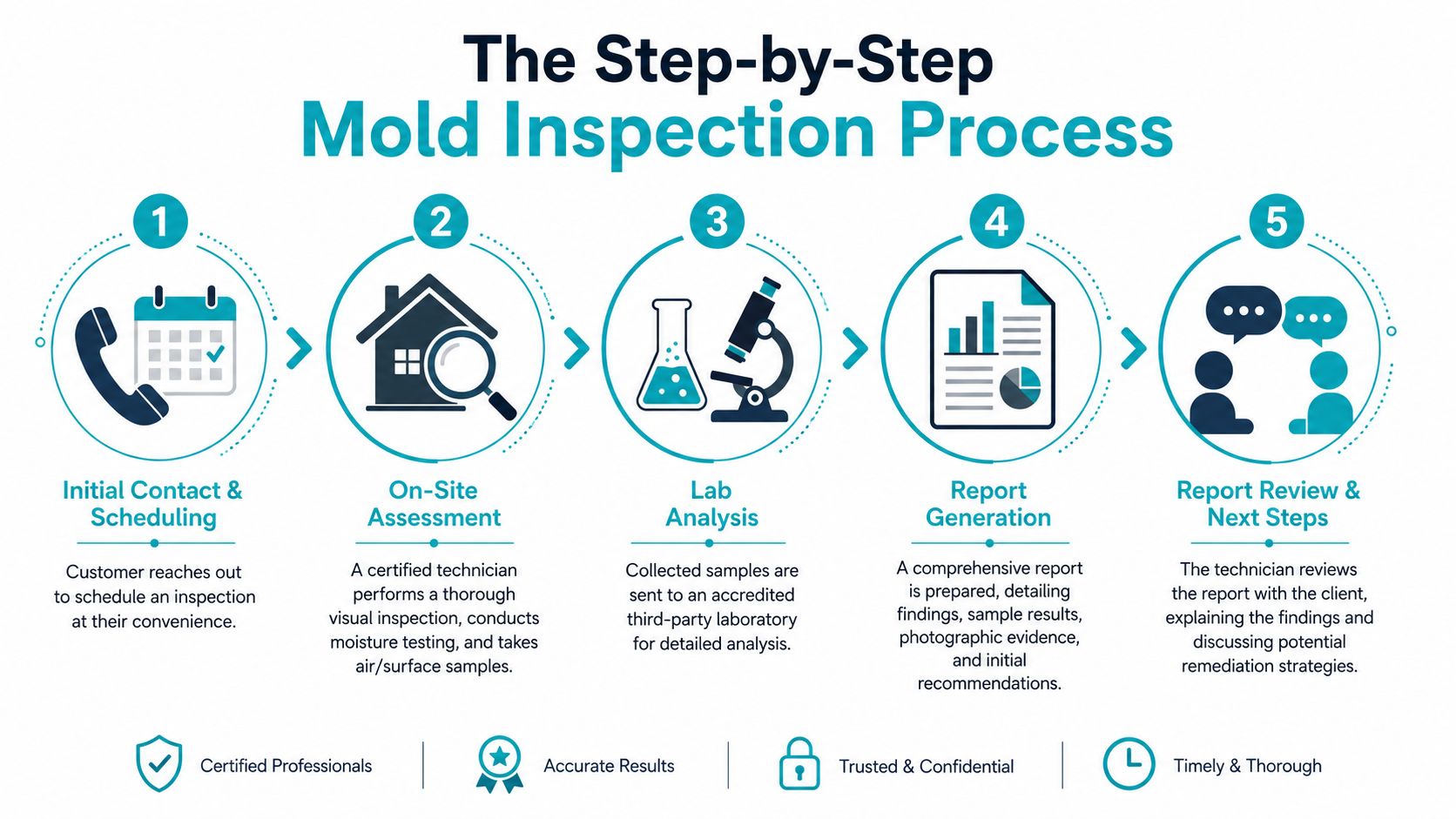
Stage one begins before anyone arrives
The first step is the phone call. The inspector will ask what you’ve seen, what the property has been through, and whether there was a recent leak, overflow, storm event, or AC issue. That background helps target the inspection.
A full professional inspection usually takes two to five hours for a standard home and combines visual evaluation with moisture readings, according to NIOSH guidance from the CDC. That timeline depends on conditions inside the home and whether samples need to be collected.
Stage two is the on site investigation
This is where the inspection earns its value. The technician doesn’t just look at the visible spot on the wall. They follow clues.
Typical on-site work includes:
- Walking the affected rooms first: The inspector looks for staining, warping, peeling paint, rusted fasteners, microbial growth, and odor patterns.
- Checking adjacent spaces: Mold doesn’t respect room boundaries. Water can move through framing, under flooring, and behind cabinets.
- Testing materials for moisture: Drywall, baseboards, subfloors, and wood framing can hold moisture long after surfaces appear dry.
- Using thermal imaging carefully: Infrared cameras can point to temperature differences that suggest moisture, but those findings still need confirmation with meters.
If your concern involves indoor air, this page on air quality testing for mold explains how testing fits into the larger inspection rather than replacing it.
Stage three is deciding whether sampling helps
Sampling confuses many homeowners because they hear two opposite messages. One company says you always need it. Another says you never do.
The better answer is that sampling should be purpose-driven. If visible damage and moisture are obvious, the inspector may already have enough information to define the problem area. In other situations, air or surface samples help document hidden contamination, compare indoor and outdoor conditions, or support the remediation plan with lab-confirmed findings.
Stage four happens at the laboratory
When samples are collected, they go to a certified laboratory for analysis. That’s how the report moves from suspicion to objective documentation. The lab identifies what was found and helps separate ordinary background conditions from an active indoor problem.
Wet materials need attention fast. NIOSH says wetted materials should be dried within 48 hours or removed to prevent mold growth, which is why waiting around after a leak is risky.
Stage five is the written report and review
The final report should be detailed enough that another qualified professional can understand the findings. It typically includes room-by-room observations, moisture readings, photographs, any lab results, and recommendations for next steps.
The best reports are easy to read without oversimplifying the issue. They tell you what was found, where it was found, what likely caused it, and what kind of response makes sense next.
Understanding Mold Inspection Costs and Timelines
Money is usually the next question. That’s reasonable, especially when you’re already worried about repairs. The key is understanding what you’re paying for and what influences the final cost.
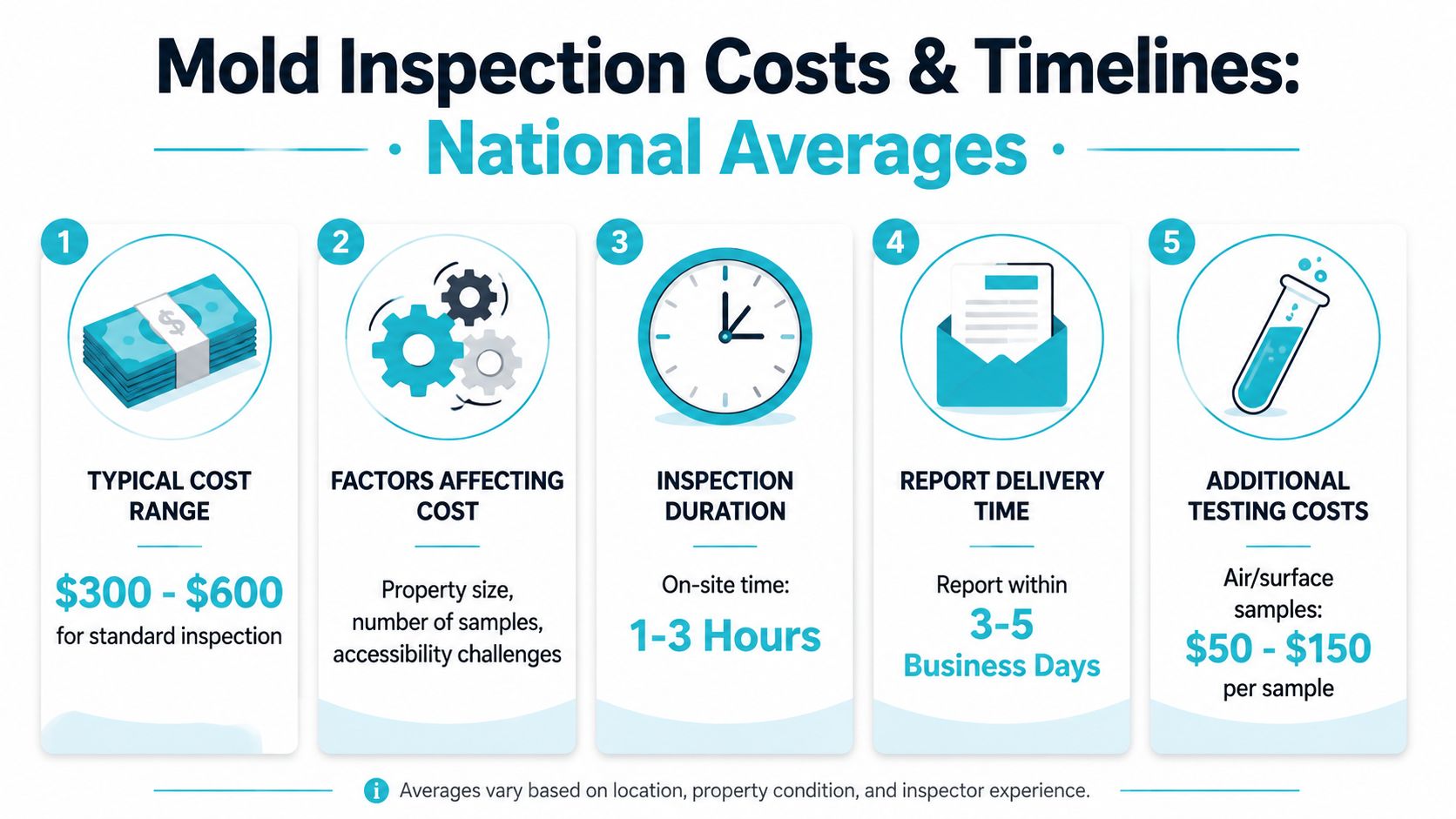
Nationally, professional mold inspection costs average around $904, with a typical range of $300 to $1,000 for a standard home, and the service is separate from remediation costs, according to Thumbtack’s mold inspection cost guide. Their data also notes that homeowners often pay $451 to $1,810 overall depending on scope, with smaller homes often falling between $300 and $400 and larger homes ranging from $700 to $1,000.
What changes the price
Three things usually drive the number:
| Cost factor | Why it matters |
|---|---|
| Property size | Larger homes take longer to inspect and may involve more affected areas |
| Accessibility | Crawlspaces, attics, wall cavities, and HVAC zones can add complexity |
| Sampling needs | Air and surface samples add lab work and documentation requirements |
Thumbtack also separates a basic visual inspection with moisture readings and thermal imaging at $150 to $500 from a more extensive evaluation with air and surface sampling plus laboratory analysis at $400 to $1,200. For commercial properties, isolated testing in one area can cost around $300, while full commercial building testing starts at $500, with each additional sample costing an additional $75.
How long the process takes
The on-site portion may be relatively quick compared with the full decision cycle. Inspection time depends on the number of rooms, whether the moisture source is obvious, and whether the inspector needs to collect and document samples. The report follows after the fieldwork and any lab analysis.
If you're trying to sort out whether you even need a paid diagnostic visit, this resource about a free mold inspection in Florida homes can help you understand what an initial assessment can and can't tell you.
A suspiciously cheap quote often means you're not getting a full investigation. A surprisingly high quote may include broad sampling that isn't necessary for your situation.
For homeowners dealing with a recent leak or visible growth, the practical goal isn't just price shopping. It's getting enough accurate information to avoid paying twice, once for the wrong fix and again for the correct one later.
How to Choose a Licensed Mold Inspector in Florida
Florida homeowners need to be more careful than many realize when hiring for mold work. The biggest issue isn't only competence. It's independence.
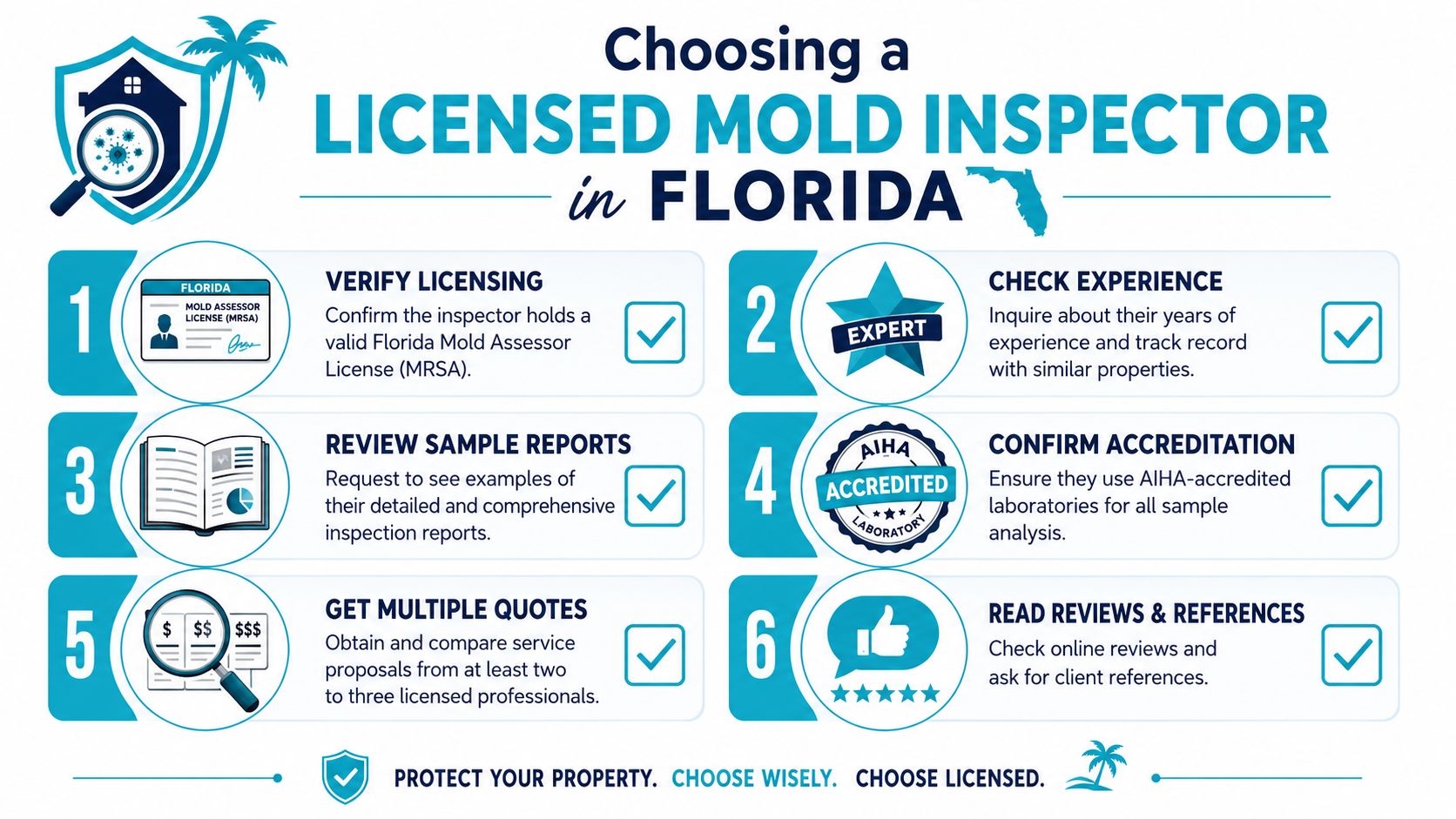
Under Florida law, mold assessment and remediation projects over 10 square feet legally require a professional holding a specific license from the Department of Business and Professional Regulation, with distinct licenses for assessors and remediators, as outlined in this explanation of Florida mold licensing requirements. That separation matters because the person diagnosing the problem and the person profiting from cleanup should not be blurred together.
Why separation matters
A homeowner calls about a musty smell. A company offers a “free inspection.” Someone walks through for a few minutes, points to staining, and immediately pushes a removal contract. That may feel efficient, but it can create a conflict of interest.
The inspection side of the work should answer factual questions. The remediation side should follow a defined scope. When the same conversation jumps straight from discovery to sales pressure, homeowners may never get a clear explanation of the moisture source, the extent of contamination, or whether the proposed work matches the actual conditions.
One option homeowners in this area look at is mold inspection in Tampa Florida, where licensing and process details can be compared before scheduling anyone.
Questions worth asking before you hire
Use a short checklist. If a company gets vague on any of these, slow down.
- What Florida license do you hold: Ask whether the person performing the assessment is licensed for mold assessment, not only general contracting or cleaning.
- Who analyzes the samples: Lab analysis should go through a qualified third-party lab when sampling is part of the job.
- What will the report include: Ask for moisture readings, photos, affected areas, and recommendations in writing.
- Do you carry insurance: Ask specifically about general liability and Errors and Omissions coverage.
- Are you also bidding the cleanup: If yes, ask how they prevent bias in the assessment.
- How do you determine scope: You want to hear about visual findings, moisture mapping, and condition-based decisions, not a one-size-fits-all package.
A separate consumer concern is insurance protection. A source discussing mold inspection risks notes that 70% of mold inspection firms in the U.S. do not carry Errors and Omissions insurance, which is one reason asking direct insurance questions matters when you evaluate credentials and risk exposure.
If the company can't explain the cause of the moisture, they're not ready to explain the cure.
This is also the point in the process where a full-service contractor may become relevant. AMPM Restoration Services handles mold inspection, mold removal, water damage restoration, reconstruction, and insurance coordination, but homeowners should still insist on clear documentation of findings, scope, and licensing before any remediation begins.
Your Inspection Report Is Ready Now What
Once the inspection report arrives, most homeowners want the same thing. A plain answer. Is this a small, contained issue, or is it a larger moisture problem that needs coordinated work?
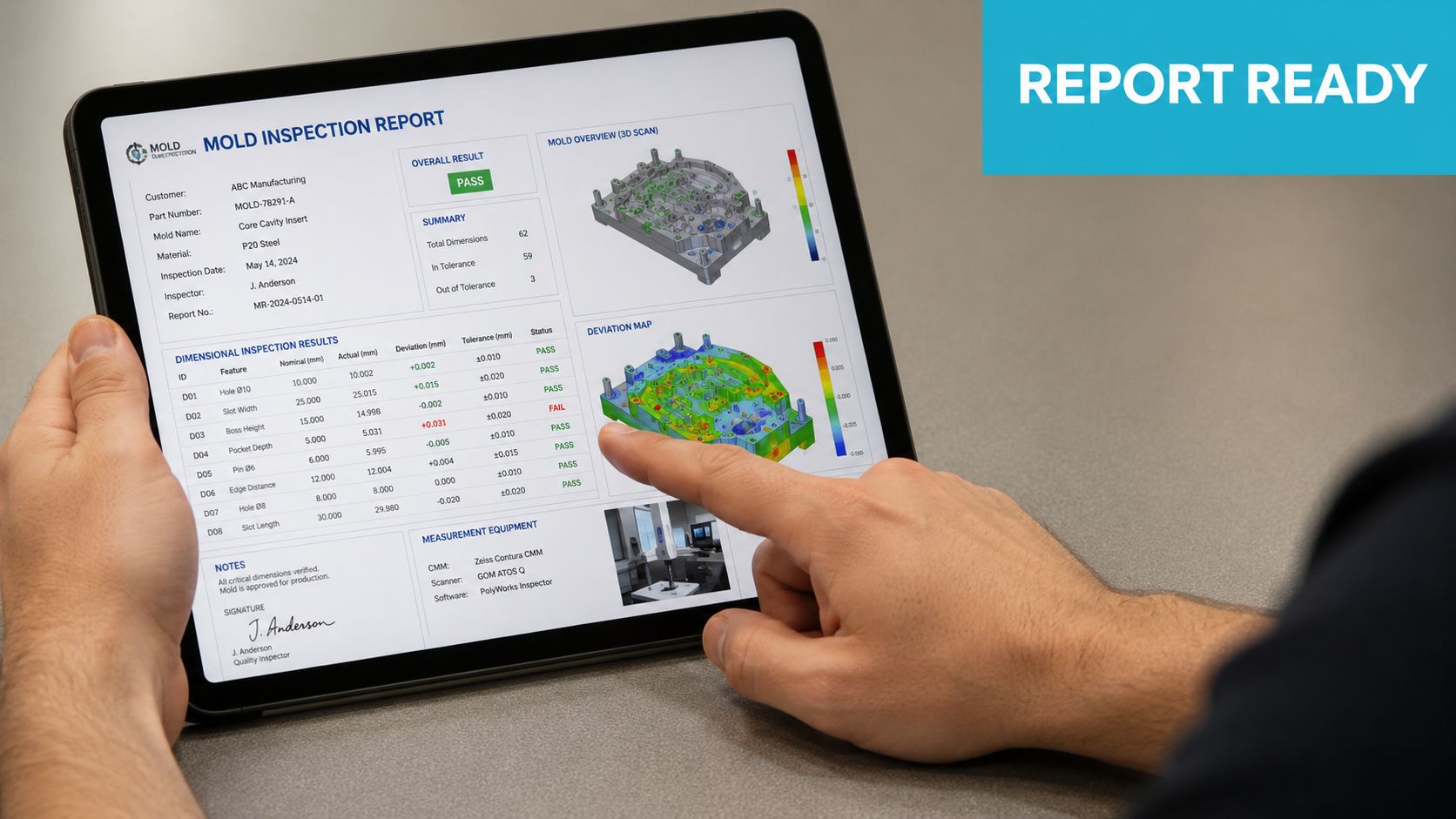
A useful report should include the affected locations, visual findings, moisture data, any sample results, photographs, and a recommended scope of action. If it doesn't connect the mold issue back to moisture, it's incomplete. Mold is the symptom. Water is the cause.
How to read the report without getting overwhelmed
Focus on these four parts first:
- Location of impact: Which rooms and materials are affected?
- Cause of moisture: Roof leak, plumbing issue, HVAC condensation, humidity, or another source?
- Extent of contamination: Is the issue limited, hidden, or likely spread through adjoining materials?
- Recommended next steps: Drying, removal, containment, cleaning, repairs, and follow-up verification
If you're unsure how assessment differs from cleanup, this page comparing mold assessment vs mold remediation helps separate diagnosis from corrective work.
What happens after cleanup
The report often becomes the blueprint for remediation. It guides containment, removal of damaged materials, cleaning steps, and the correction of the moisture source. If insurance is involved, that documentation may also support the claim file and help explain why certain work was necessary.
Industry standards also require a proper finish to the job. ANSI/IICRC S520 calls for post-remediation verification by an independent professional to confirm the site has been returned to a normal fungal ecology, according to the IAC2 summary of mold inspection standards of practice. In simple terms, cleanup isn't complete just because the area looks better.
A good report doesn't just describe damage. It gives the next qualified professional a roadmap to solve it correctly.
For Florida homeowners, that final verification step is often where peace of mind returns. The moisture issue has been corrected, the damaged materials addressed, and the work checked against an objective standard.
Frequently Asked Questions About Mold Inspections
Homeowners usually have a few lingering questions even after they understand the process. These are the ones that come up most often around Bradenton, Sarasota, St. Petersburg, and nearby Gulf Coast communities.
| Question | Answer |
|---|---|
| Do I need an inspection if I can already see mold? | Often, yes. Visible growth tells you there’s a problem, but it doesn’t tell you how far moisture has spread behind finishes or what caused it. |
| Is sampling still useful when mold is visible? | Yes, in many cases. Even with visible growth, sampling is often essential to confirm the mold species, assess the extent of airborne spores, and provide the objective data insurance carriers may require for claim approval, as explained by Mold Science on when samples are needed. |
| Can I stay in the house during the inspection? | Usually, yes. An inspection is a diagnostic visit, not demolition. The inspector may ask questions about odors, leaks, or occupancy patterns while they work. |
| Should I clean the area before the inspector arrives? | No. Lightly tidying the room is fine, but don’t scrub, paint over, spray chemicals, or tear out materials. That can destroy evidence and make diagnosis harder. |
| Will homeowners insurance cover mold inspection or remediation? | Coverage depends on the policy and the cause of loss. Carriers often pay closer attention when mold results from a covered water event rather than long-term neglect. Documentation from the inspection can help support the claim. |
| What if the report shows both mold damage and building repairs are needed? | That’s common. Many jobs involve more than one trade. You may need moisture correction, removal of damaged materials, cleaning, and then reconstruction to restore drywall, trim, flooring, or cabinets. |
A few practical clarifications
Some homeowners worry that an inspection locks them into immediate remediation. It doesn't. The purpose is to give you reliable information so you can make an informed decision.
Others ask whether the smell alone means they have a major problem. Not necessarily. A musty odor can point to hidden moisture, but the inspection determines whether the issue is active, where it's located, and how urgent the response needs to be.
When to move quickly
Don't wait if you've had a recent leak, flood, AC overflow, roof intrusion, or persistent indoor humidity problem. In Florida, moisture lingers where homeowners don't always look first, such as wall cavities, under vinyl plank flooring, inside closets, and around air handling equipment.
If you're hiring anyone for professional mold inspection services, ask for a clear explanation of findings, licensing, and next steps. Good inspectors make the process easier to understand, not harder.
If you suspect mold in your home or business, call AMPM Restoration Services at 941-946-7807 for a free inspection and estimate. We help property owners across Bradenton, Sarasota, Tampa Bay, Saint Petersburg, Lakewood Ranch, and nearby Gulf Coast communities understand the problem, document the damage, and move forward with the right solution. We also provide insurance claim assistance and financing options to make the process easier when fast action matters most.