

Professional Mold Inspection Cost
Professional mold inspections typically cost $300 to $1,000 nationally, but Florida homeowners can start with a free visual inspection from AMPM Restoration, with professional air quality mold testing available from $350.
You may be standing in your Bradenton kitchen looking at a damp cabinet, smelling something musty near the air handler, or noticing a dark patch beside a bathroom baseboard after a storm. The immediate question is usually simple: What will a professional mold inspection cost, and am I about to be upsold?
That concern is reasonable. A mold inspection can be a valuable first step, but homeowners should understand what they’re paying for, what sampling adds, and when a free visual assessment is enough to identify the next move. Florida’s humidity, heavy rain, hurricane-related water intrusion, aging roofs, plumbing leaks, and constantly working air-conditioning systems create conditions where moisture can remain hidden long after a surface appears dry.
AMPM Restoration is a 24/7 emergency restoration company based at 4301 32nd St W b18, Bradenton, FL 34205, serving Bradenton, Sarasota, Tampa Bay, Saint Petersburg, Lakewood Ranch, and surrounding Gulf Coast communities. Its services include water damage restoration, mold inspection and mold removal, fire and smoke damage restoration, storm and flood damage restoration, commercial restoration, and full reconstruction solutions.
When Suspicion Turns to a Professional Mold Inspection
A homeowner in Bradenton may wake up with a scratchy throat, notice a lingering musty odor, and find a faint dark mark near the bathroom trim. The mark might be mold, or it might be staining from an earlier leak. Either way, the combination of visible discoloration and possible moisture deserves attention, especially in a Florida home where humidity can keep building materials damp.
The first question shouldn’t be whether the problem looks large. Mold and moisture often extend beyond the area you can see. A slow plumbing leak, shower seepage, roof intrusion, or air-conditioning condensation can affect drywall, insulation, cabinets, flooring, or wall cavities before obvious growth appears.
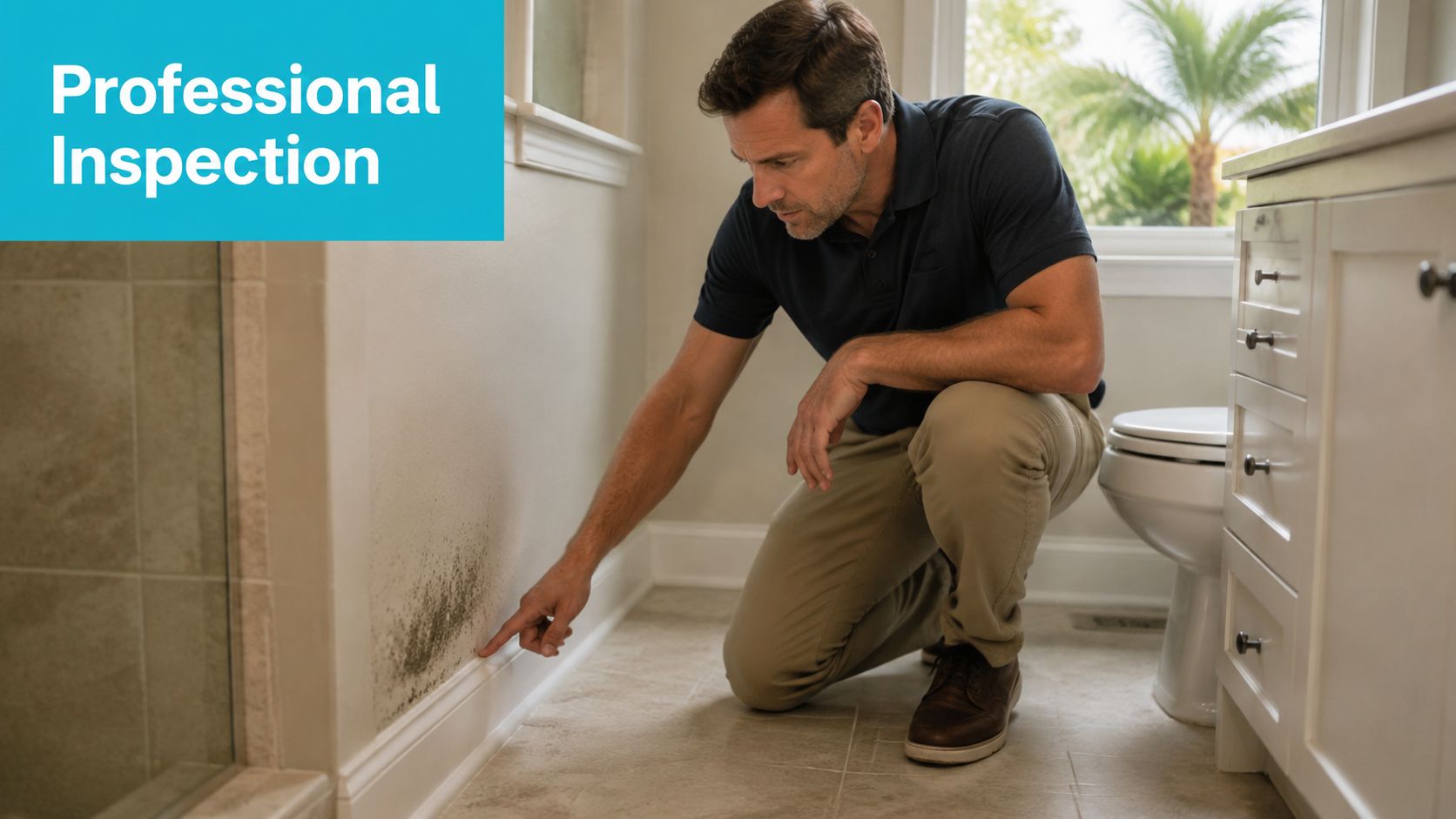
A visual assessment gives you a practical starting point. The technician should trace moisture sources, inspect vulnerable areas, check for signs of concealed water damage, and explain whether sampling would change the recommended action. That approach is more useful than ordering a laboratory test without first understanding where moisture is coming from.
Why waiting creates a bigger problem
Delaying an inspection can allow a small moisture issue to affect more materials. If a roof leak continues, a bathroom fan fails to control condensation, or an HVAC drain pan overflows, cleanup becomes more complicated. Repairs may involve not only surface cleaning, but also removal of damaged porous materials and correction of the source.
Health concerns also matter. Mold can aggravate symptoms for people with allergies or asthma, although an inspection can’t diagnose a medical condition. If anyone in the home is experiencing persistent symptoms, speak with a qualified healthcare professional while you address the building conditions.
Reviewing practical warning signs can help you decide whether to call immediately. This guide to five signs of mold damage in homes is useful when the evidence isn’t obvious.
Florida homeowners should also think about exposure
Water intrusion affects more than indoor comfort. It can complicate insurance questions, especially after flooding or storm damage. Homeowners comparing broader protection can review how much is flood insurance in Florida from Professional Insurance Advisors, LLC, while keeping in mind that insurance coverage depends on the policy, cause of loss, exclusions, and individual circumstances.
The responsible decision is to investigate early, but investigate intelligently. Start with the least expensive meaningful assessment, ask what the technician found, and add laboratory testing only when the results will help you make a better repair, remediation, insurance, or real-estate decision.
Understanding Professional Mold Inspection Cost Across the Market
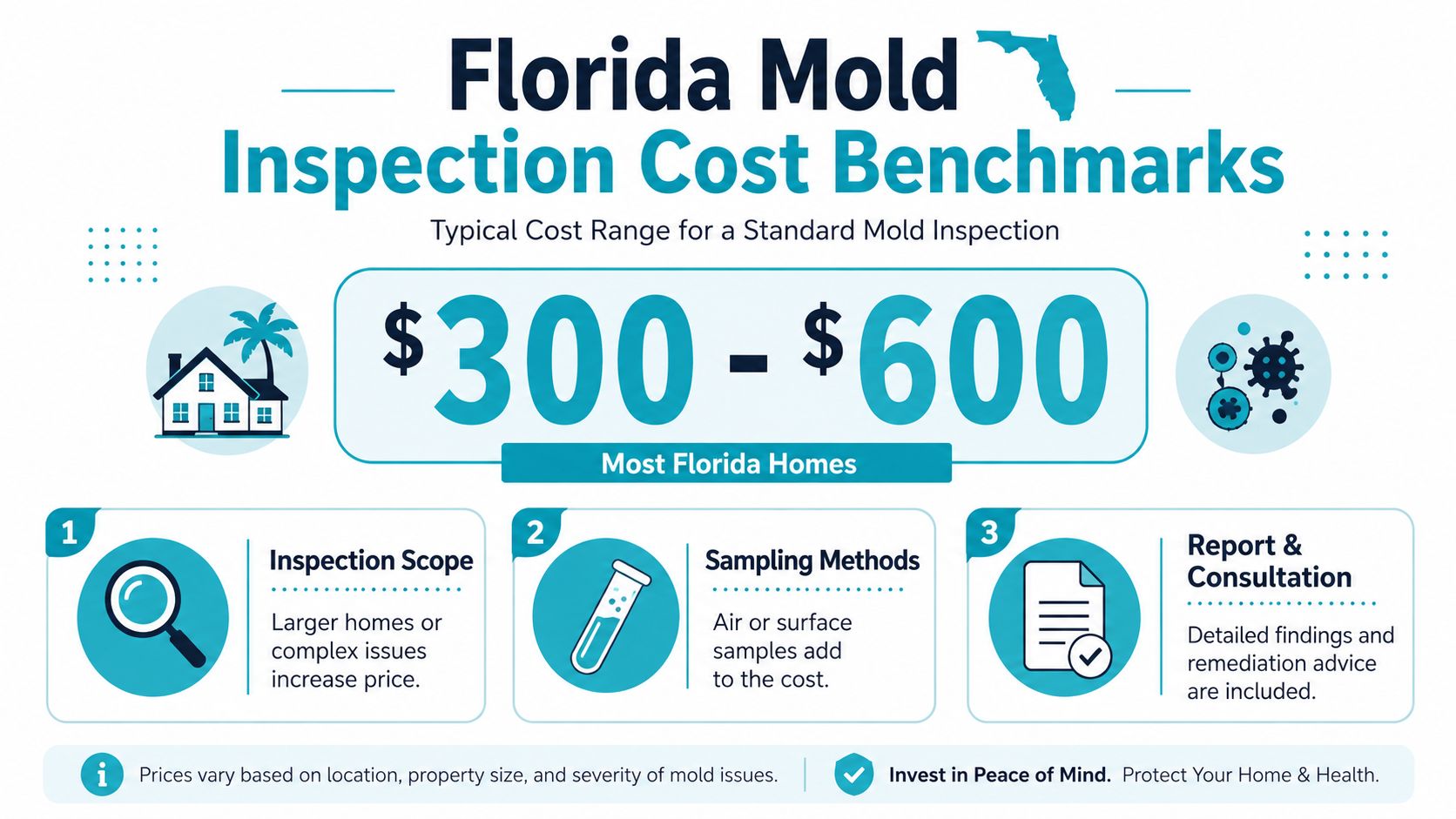
A quote for mold inspection should match the property and the work involved. National benchmarks provide a useful starting point. Angi’s mold inspection pricing data reports an average of $657, with a typical range of $300 to $1,000. HomeAdvisor’s cost guidance lists an average of $671, with a similar range of $303 to $1,045.
Those figures describe a broad market, not a fixed Florida price. A smaller home with visible moisture damage and no sampling may cost less than a large property requiring several samples, difficult access, detailed documentation, or post-remediation verification. Ask for a free visual inspection first when a restoration company offers one. It can clarify whether paid testing is justified before you commit to added services.
Scope changes the price
A detailed pricing breakdown from Mold Inspectors Near Me places a visual-only inspection at $175 to $325. A standard whole-home visual and moisture inspection commonly falls between $325 and $750. Adding two to three air samples raises the whole-home range to $550 to $1,100.
The same guide lists post-remediation verification at $325 to $650. This follow-up serves a different purpose from the initial inspection. The technician checks whether cleanup met the defined goal instead of investigating the original moisture problem.
| Inspection Type | Typical Cost Range | What It Includes |
|---|---|---|
| Visual-only inspection | $175 to $325 | Visual assessment and identification of visible concerns |
| Whole-home visual and moisture inspection | $325 to $750 | Visual review, moisture investigation, and written findings |
| Whole-home inspection with two to three air samples | $550 to $1,100 | Whole-home assessment plus laboratory air sampling |
| Post-remediation verification | $325 to $650 | Follow-up assessment after cleanup |
Property size can shift the quote substantially. Angi identifies a smaller-home band of about $300 to $400 for homes under 4,000 square feet, compared with about $700 to $1,000 for larger homes. Commercial properties can exceed $1,500 when multiple floors, larger systems, and broader sampling are involved, according to RestoreAdvisor's mold inspection cost guidance.
What the fee actually pays for
The fee may cover technician time, access difficulty, moisture mapping, equipment use, sample collection, chain-of-custody handling, laboratory analysis, and report preparation. HomeAdvisor's guidance notes that a visually focused inspection may take about two hours, while a full-structure evaluation can take up to six hours.
Compare the scope line by line. A low quote may exclude samples, the written report, difficult-access areas, or laboratory fees. A higher quote can be reasonable when those services are included. Ask for every added charge before scheduling, especially in Florida homes with crawl spaces, attics, storm-related moisture, or multiple affected rooms.
What a Professional Mold Inspection Actually Includes
A thorough inspection is more than a quick walk through the rooms. The technician should connect visible conditions with moisture behavior throughout the property, then explain what the evidence supports.
The visual and moisture assessment
The process typically begins with a conversation about leaks, flooding, roof damage, plumbing problems, HVAC condensation, prior remediation, and rooms where odors or discoloration appeared. The inspector then examines moisture-prone locations such as bathrooms, kitchens, laundry areas, attics, crawl spaces, closets, exterior walls, behind appliances, and accessible HVAC components.
Moisture meters help identify increased moisture in building materials. Thermal imaging cameras can reveal temperature patterns associated with hidden moisture, missing insulation, or air movement. Neither tool replaces professional judgment, and a thermal image isn't proof of mold by itself. It helps the technician decide where closer investigation makes sense.
The technician should document the condition with photographs and clear notes. If a wall cavity or another concealed area requires invasive access, the inspector should explain the reason and receive approval before opening materials.
Sampling should answer a question
Laboratory testing isn't automatically necessary. It becomes more useful when the homeowner needs information about indoor air conditions, hidden growth, a disputed source, a remediation decision, or post-remediation results.
Common sampling approaches include:
- Air sampling: Collects airborne material for laboratory analysis and can help evaluate air quality in selected areas.
- Surface sampling: Uses a swab or tape-lift approach to examine material from a specific location.
- Bulk sampling: Sends a piece of building material for analysis when the material itself needs evaluation.
AMPM Restoration provides a professional mold testing service for homeowners who need more than a visual assessment. Its visual inspections are completely free, while laboratory mold testing is a separate service.
The report is part of the service
A useful written report should identify inspected areas, moisture findings, photographs, sample locations when applicable, laboratory results when ordered, and practical recommendations. It should also distinguish confirmed observations from areas that couldn't be accessed or verified.
Practical rule: Don't pay for a report that only says “mold found.” You need to know where the moisture is, what materials are affected, what remains uncertain, and what action follows.
A competent inspector explains the findings in plain language. You should leave knowing whether the next step is drying, leak repair, targeted removal, remediation, additional investigation, or no further action.
How to Evaluate Any Mold Inspection Quote
A fair quote makes the scope visible before the technician arrives. It should state whether the service is visual only, whether moisture readings and thermal imaging are included, how many samples are covered, whether laboratory analysis is bundled, and what report you'll receive.
Use the following comparison as a screening tool rather than treating any range as a guaranteed local price.
| Quote Scenario | Cost Range | What to Expect | Red Flags |
|---|---|---|---|
| Visual assessment of a limited concern | $150 to $500 | Visual review, moisture readings, possible thermal imaging, and written findings, consistent with GPM Mold Inspection’s pricing guidance | Vague scope, no written findings, pressure to order samples |
| Residential inspection with a report and two mold tests | $400 to $450 | Inspection, two tests, and documentation, based on Mold Inspection and Test’s pricing guide | Unclear lab identity, unexplained per-sample charges, no chain-of-custody explanation |
| Commercial or full-building assessment | $400 to $650 for the listed commercial ranges | Isolated-area or full-building inspection with documentation and sampling as specified | One flat price despite major differences in building size and access |
Ask these questions before approving work:
- What exactly is included? Confirm rooms, equipment, report format, access limitations, and sample count.
- Are laboratory fees itemized? A transparent provider will explain whether the lab, handling, rush service, or additional samples cost extra.
- Who interprets the results? A laboratory printout without site context isn't a complete inspection.
- What credentials does the technician hold? Ask about IICRC training or certification and relevant Florida experience.
- Will the technician explain findings onsite? You shouldn't have to decode technical language after the visit.
A same-day appointment can be valuable after active water damage, but speed shouldn't replace documentation. The inspector should still explain the findings and provide a defensible scope.
Homeowners managing a broader property-risk picture may also want to review a Select Insurance Group, Inc. home quote while they organize repair and coverage records. Keep insurance planning separate from the inspection decision, and never assume a policy covers mold because a water loss occurred.
For help assessing vendors, compare the credentials, process, and documentation described by a qualified mold inspection company. The right provider won't use a low introductory price to conceal the actual cost of the work.
DIY Mold Testing vs Hiring a Professional Inspector
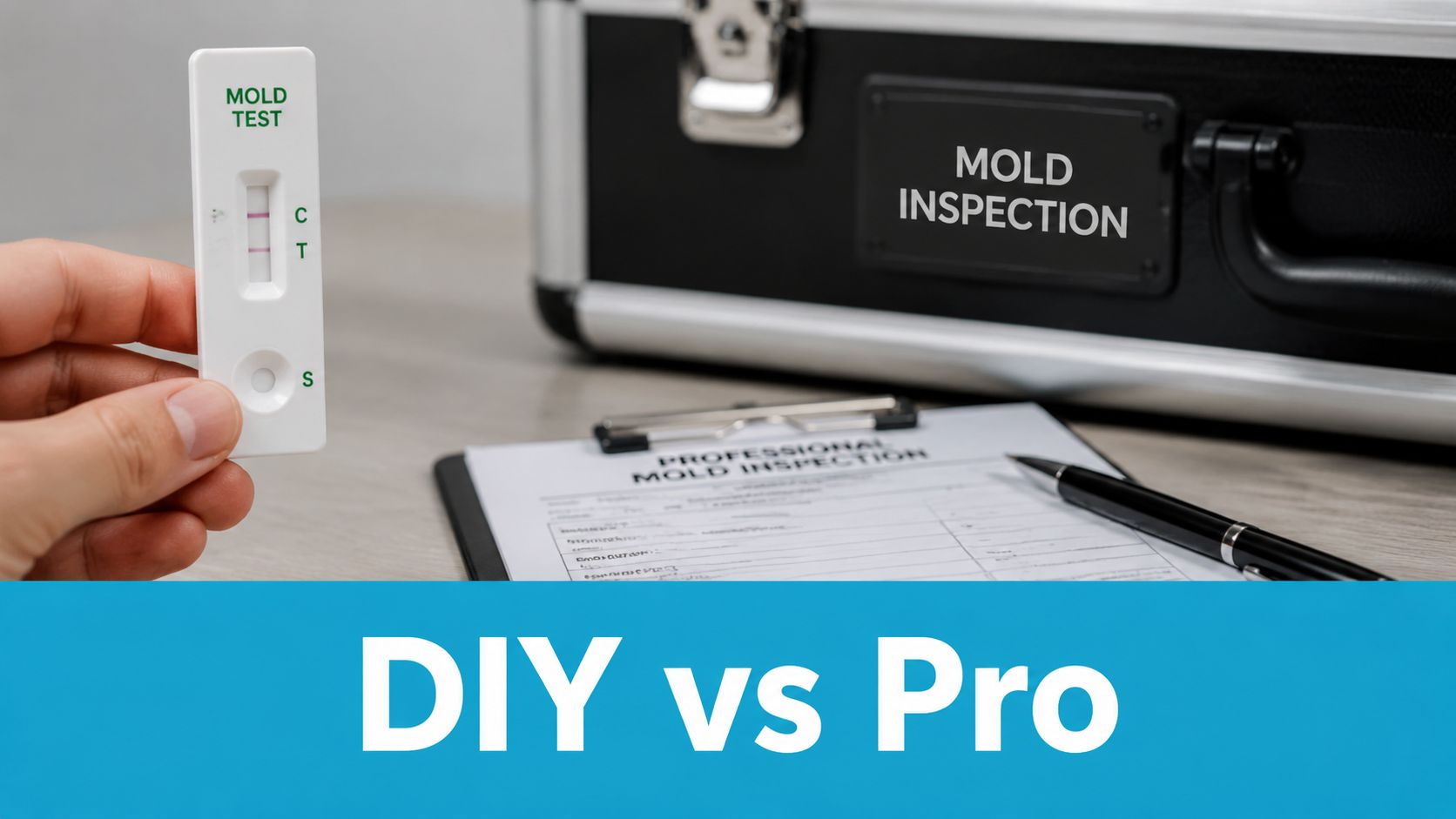
DIY kits appeal to homeowners because they appear inexpensive and easy. The problem is that a kit collects a sample. It doesn't inspect the building, identify the moisture source, assess concealed areas, interpret the result in context, or produce a remediation plan.
A plate or swab can tell you that material was collected from one location. It can't tell you whether growth exists behind a wall, inside a cabinet, below flooring, or near an HVAC system. A negative result may create false reassurance, while a positive result may cause unnecessary alarm if nobody explains what it means for the property.
Florida adds practical complications
Suncoast homes face moisture conditions that can be difficult to evaluate without proper equipment. Salt air can contribute to corrosion around exterior and mechanical components. Hurricane-driven rain can enter through roofs, windows, siding, and other openings. Persistent humidity can keep materials vulnerable even after a visible spill has dried.
An experienced inspector looks for patterns, not just spots. They may connect a musty closet to an exterior wall, an attic stain to roof flashing, or recurring bathroom growth to ventilation and condensation. That diagnostic connection is the value of professional work.
You can find useful general cleaning and maintenance information through the Arelli Cleaning blog, but routine cleaning advice isn't a substitute for moisture investigation when odors, recurring growth, or water damage are present.
When professional service is the clear choice
Choose a professional assessment when you see visible mold that keeps returning, smell a persistent musty odor, have experienced flooding or a significant leak, are preparing to buy or sell, or need documentation for an insurance or property-management decision.
Read the practical comparison in mold kit versus mold inspection before spending money on a kit. My recommendation is straightforward: use DIY cleaning only for a minor, clearly understood surface issue. If the source is uncertain or the affected area is connected to building systems, call a professional.
Why AMPM Restoration Offers a Smarter Starting Point
A worried Florida homeowner needs useful answers before paying for testing or remediation. The right first move is an assessment that identifies moisture concerns without committing you to services you may not need.
AMPM Restoration offers completely free visual inspections for property owners. Experienced technicians examine likely moisture and mold locations and use advanced equipment to check for hidden mold and water damage. The visit helps clarify whether laboratory sampling, drying, removal, or reconstruction has a reasonable basis.
Laboratory mold testing is not included with the free visual inspection. AMPM lists professional air quality mold testing starting at $350, while many companies charge $600 to $1,000 for comparable services. Treat those figures as pricing estimates, not a promise of identical scope. Request the current written quote and confirm the number of samples, laboratory analysis, reporting, and every added fee.
What homeowners should expect
A useful inspection should answer practical questions:
- Where is moisture present or suspected?
- Is the visible condition isolated or connected to a larger source?
- Does the HVAC system or another concealed area need attention?
- Would air or surface sampling change the next decision?
- Which work should happen first?
AMPM Restoration serves Bradenton, Sarasota, Tampa Bay, Saint Petersburg, Lakewood Ranch, and nearby Gulf Coast communities. The company operates 24/7 and advertises a one-hour response time for urgent restoration needs, including water, storm, flood, fire, and mold-related situations.
It also provides insurance claim assistance and financing options. These services do not change inspection findings, but they can help homeowners organize documentation, communicate with an insurance carrier, and plan necessary work.
A free visual inspection should guide a decision, not pressure you into a sale. Ask for the findings, the recommended next step, and the price of each optional service before authorizing work.
Homeowners can learn more about AMPM's free visual inspection process and use the visit to separate an actual moisture problem from a cosmetic concern. If laboratory testing is warranted, the evidence should determine the testing plan, not the other way around.
Your Complete Mold Inspection Decision Checklist
Before hiring any inspector, get clear answers to these questions:
- What credentials does the technician have? Ask about IICRC certification, insurance, and experience with Florida homes.
- What areas will be inspected? Confirm bathrooms, attics, crawl spaces, HVAC components, cabinets, and other accessible moisture-prone locations.
- What equipment will be used? Look for moisture meters, thermal imaging when appropriate, and careful visual documentation.
- What sampling method is recommended? Ask why air, surface, or bulk sampling would affect the decision.
- What does the report include? Request photographs, moisture findings, sample locations, laboratory results when applicable, and clear recommendations.
- Are lab fees included? Confirm sample counts, handling, analysis, and any additional charges in writing.
Use broad market benchmarks to frame your conversation, but don't force your home into a generic price bracket.
- Small Bradenton condo with suspected bathroom mold: Start with a free visual inspection. If sampling is necessary, a limited-scope service may fit the lower end of the published visual and sampling ranges.
- Mid-size Sarasota home with previous water damage: Request a whole-home visual and moisture assessment. Add targeted samples only if hidden moisture or an insurance decision makes them useful.
- Larger Tampa Bay property needing whole-home assessment and air sampling: Expect the quote to reflect square footage, inspection time, access, sample count, laboratory work, and reporting depth. Larger and more complex properties can move well above standard residential pricing.
The smart question isn't, “How cheap can I get this?” It's, “Does this inspection give me enough reliable information to protect the property and choose the right repair?”
Call 941-946-7807 to request a free inspection and estimate from AMPM Restoration for mold, water, storm, fire, or flood damage across Bradenton, Sarasota, Tampa Bay, Saint Petersburg, Lakewood Ranch, and nearby Gulf Coast communities. AMPM can also assist with insurance claims and financing options, and you can learn more by visiting AMPM Restoration Services.