


Expert Water Removal Explained
You wake up to a dripping ceiling, step onto wet carpet, and realize the water has traveled farther than you thought. Expert water removal starts with making the situation safe, identifying the source, and finding out what’s wet beneath the surfaces you can see. For a worried Florida homeowner, the next step isn’t to solve everything at once. It’s to stop further exposure safely and get a documented plan for drying the property.
When Water Enters a Florida Home in the Middle of the Night
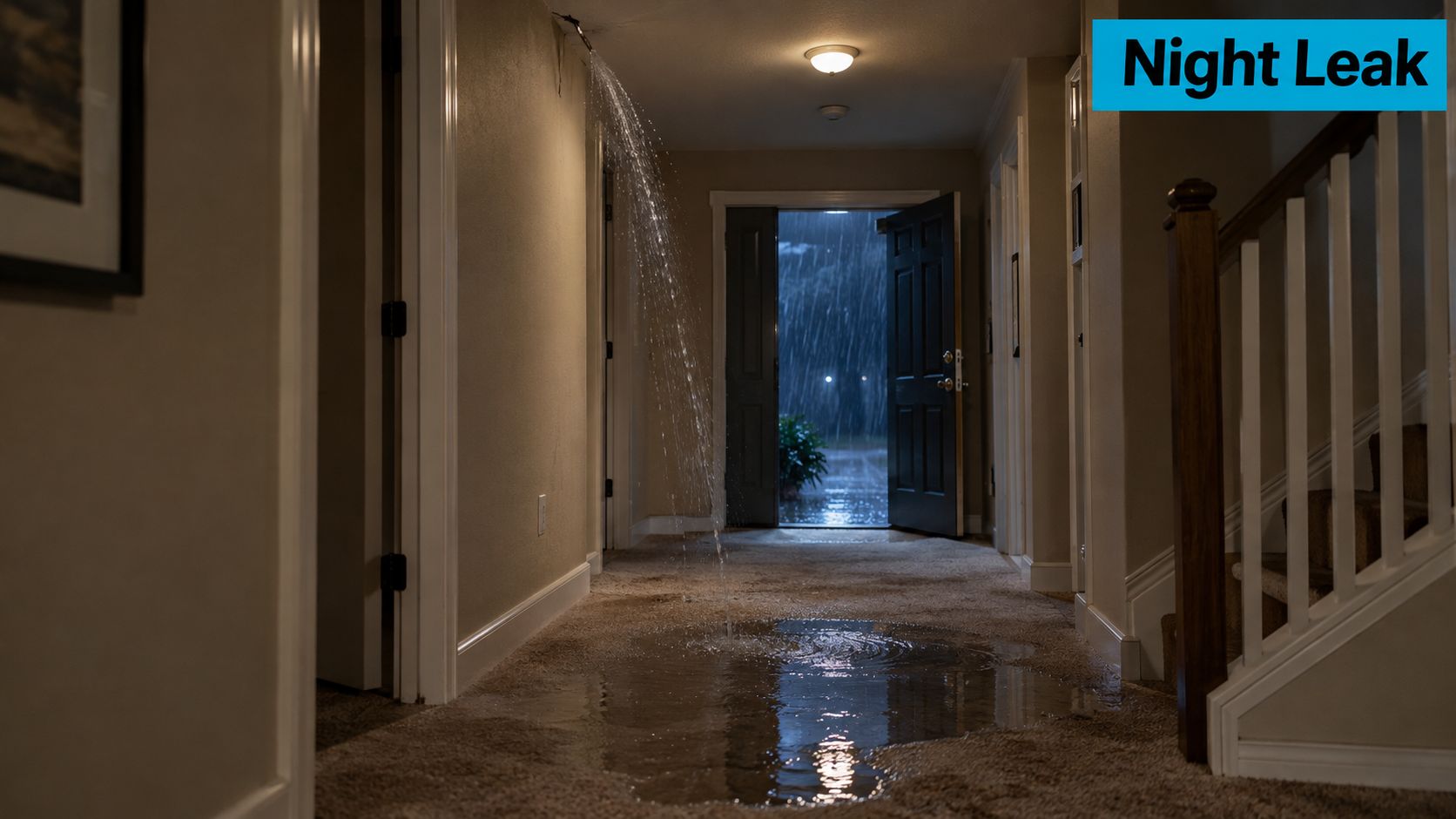
Suppose a supply line develops a leak above your upstairs bathroom in Bradenton. By the time you notice it, water is dripping through the hallway ceiling and spreading across the carpet below. You don’t know whether it’s confined to that room or has reached the wall cavities.
That’s a plausible scenario, not a customer case study. It illustrates why a professional response begins with questions rather than immediately switching on equipment: Where did the water originate? Is it still entering? Can anyone safely access the affected area?
Your first decisions should protect people
If you can reach the plumbing shutoff without entering water or approaching damaged electrical equipment, stop the supply. Keep people away from sagging ceilings, wet outlets, and affected appliances. Don’t walk through water to reach an electrical panel.
Before moving belongings, take photographs from a safe position. Capture the apparent source, the affected room, and the route the water seems to have taken. A short written note about when you discovered the problem is more useful than trying to reconstruct events later.
- Describe the source: Tell the responder whether you suspect plumbing, an appliance, roof entry, or outdoor water.
- Describe access hazards: Mention ceiling movement, electrical exposure, or water near mechanical equipment.
- Ask what happens next: Request an arrival estimate and instructions for staying safely outside the affected area.
For practical preparation while help is being arranged, review this guide to emergency water damage repair during the first day.
Separate emergency response from future prevention
After a coastal weather event, window and door protection may become part of your repair discussion. The Black Badge Doors coastal window guide is a resource to review when considering those future improvements, not a substitute for assessing the current water intrusion.
Expert water removal is a coordinated response, not a vacuum service. You don’t need to diagnose concealed damage before calling. You need to explain what you’ve observed and let the team establish the next safe step.
What Expert Water Removal Actually Is and Why Timing Matters
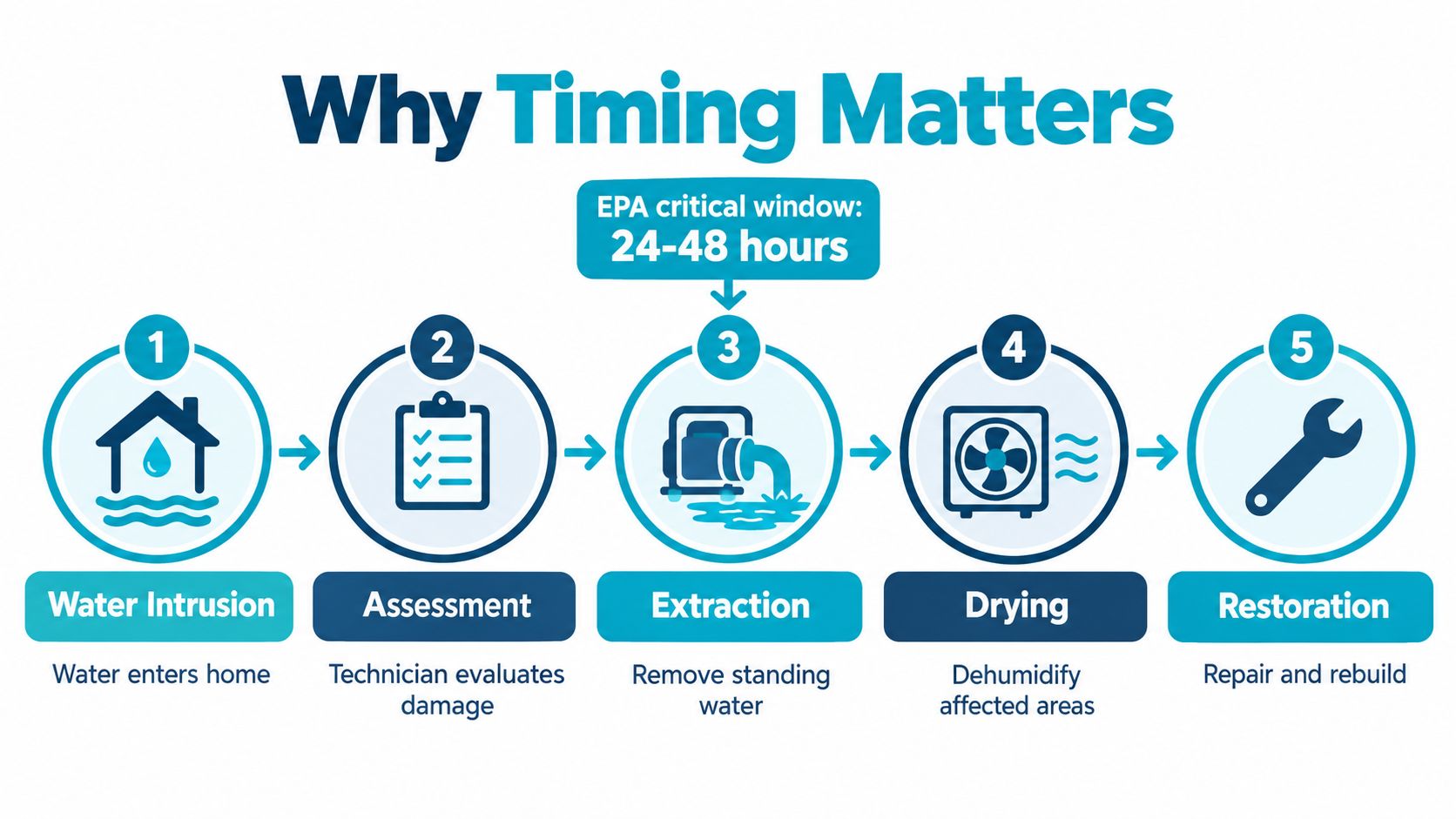
Expert water removal is time-sensitive mitigation: professionals remove water, stabilize moisture conditions, and assess affected materials before deciding what can be saved. The immediate objective is to limit further damage. Rebuilding comes afterward.
The EPA recommends drying water-damaged areas and items within 24–48 hours and explains that mold generally won’t grow in most cases when wet materials are dried within that period after a leak or spill, according to its homeowner guide to mold and moisture. That recommendation concerns thorough drying, not merely making the puddle disappear, and it isn’t a guarantee against mold.
Extraction and drying solve different problems
Think of extraction as removing water from a soaked sponge without assuming the sponge is now dry. A water-extraction vacuum collects liquid from accessible surfaces and materials. The remaining moisture requires a controlled drying process.
Carpet can stop feeling squishy while its backing or the floor beneath it remains damp. On the humid Gulf Coast, don’t use the room’s comfort level as your completion test. Ask how the team will manage indoor humidity and evaluate concealed materials.
Timing takeaway: Start mitigation promptly, but judge completion by the condition of the materials, not the disappearance of standing water.
A useful emergency plan follows a clear sequence:
- Assess and control the source: Establish where water entered and whether the cause has been stopped.
- Extract accessible water: Remove liquid without overlooking contamination or electrical hazards.
- Create appropriate drying conditions: Select air movement and dehumidification for the affected space.
- Verify and plan repairs: Determine what can remain and what needs replacement before finishes are restored.
Mitigation isn’t the same as reconstruction
Emergency water removal may include lifting affected flooring or removing material that can’t be safely retained. Those actions belong to stabilization, even though they can look like demolition.
Full restoration is the subsequent work of repairing assemblies, replacing finishes, and returning rooms to use. Ask for separate explanations of emergency work and reconstruction so you understand what you’re authorizing.
Calling early gives the team an opportunity to assess materials before more extensive intervention becomes necessary. It doesn’t guarantee that every floor, cabinet, or wall can be saved.
Inside the Extraction and Drying Phase
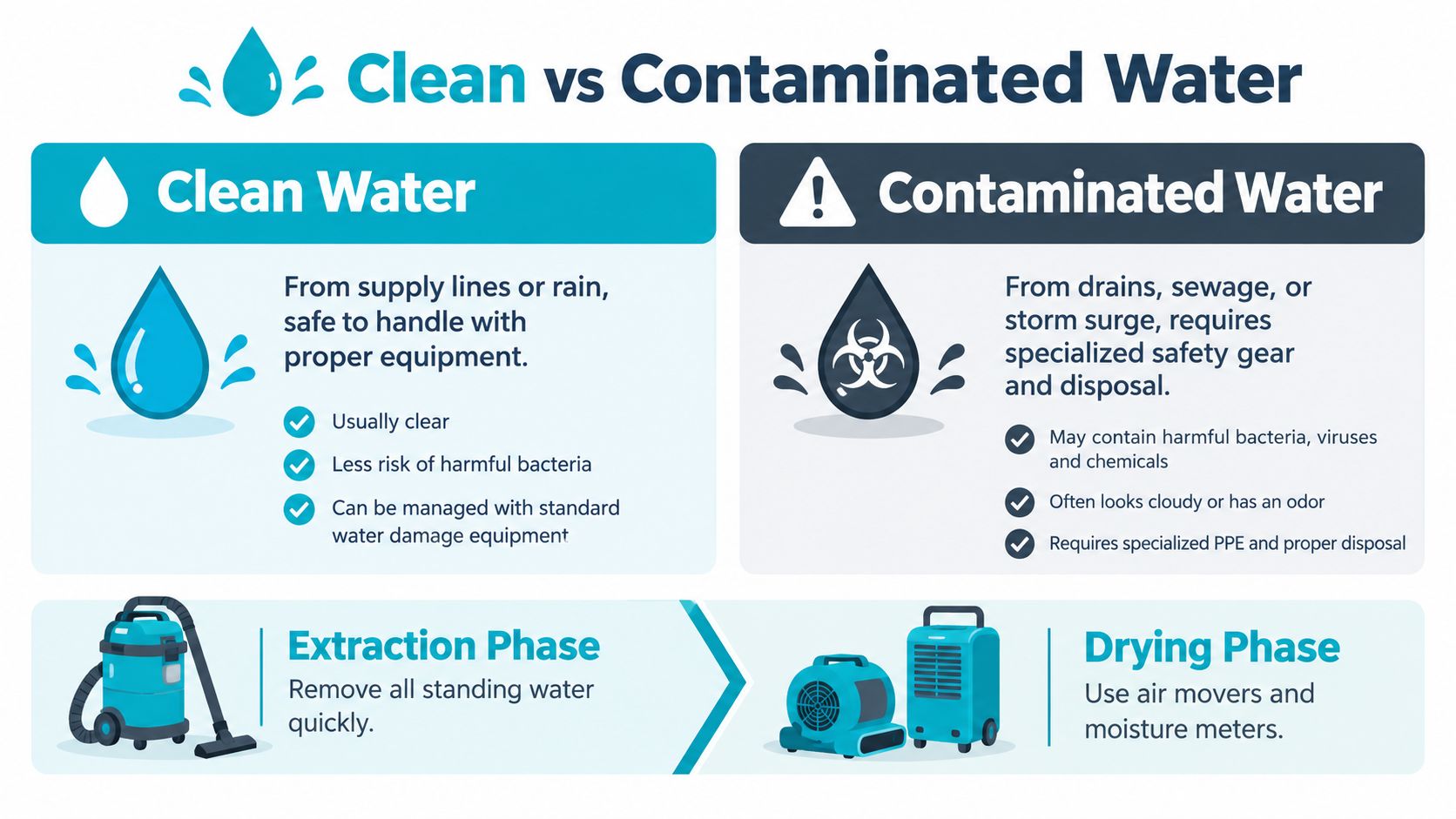
When a qualified team arrives, the first technical question is whether the water is sanitary. A supply-line leak and water from a sewage backup shouldn’t receive the same response.
The EPA warns against using fans before determining that water is sanitary because contaminated water can spread pollutants; suspected sewage, chemicals, or biological contamination require appropriate protective equipment and containment under its water-damage cleanup guidance. Rain entering a building also needs assessment. Its contact with roofing, debris, or outdoor floodwater matters.
Water Classification and Response Rules
| Water Category | Common Florida Source | Immediate Rule | Typical Material Decision |
|---|---|---|---|
| Apparently clean water | A leaking supply line | Confirm the source and affected conditions before drying | Evaluate intact materials for drying in place |
| Potentially contaminated water | Drain backup or rainwater with uncertain contact | Restrict access until assessed | Determine whether affected materials can be cleaned and retained |
| Contaminated water | Sewage or outdoor floodwater | Use professional containment and protective measures | Consider removal of porous materials that can’t be fully cleaned and dried |
Portable or truck-mounted extraction equipment removes accessible water. Air movers support evaporation, while dehumidifiers remove moisture from the air. The equipment arrangement should follow the assessment, not a standard layout used in every room.
What proves drying is complete
Ask for a room-by-room moisture map with affected readings, comparison readings from unaffected materials, and follow-up measurements at identifiable locations. A meaningful log lets you see which material was tested and whether its condition changed.
Moisture meters provide material readings. If thermal imaging is used to locate areas needing investigation, ask for those findings to be checked with moisture measurements rather than accepting an image alone as proof.
EPA material-specific drying guidance calls for rechecking moisture content and distinguishes drywall that may be dried in place from swollen or damaged board requiring removal. Wood also needs prompt moisture reduction through suitable dehumidification, airflow, and cautious heat.
Equipment shows what the team is doing. Moisture records show whether the drying plan is working.
Before repairs close an assembly, request final readings for accessible flooring, drywall, framing, and subfloor areas. Ask how concealed insulation, wall cavities, or suspected HVAC moisture were evaluated. This explanation of structural drying methods can help you discuss the proposed approach.
Warning Signs That Expert Help Is Required
You don’t have to know the full extent of damage to recognize when a cleanup needs professional assessment. The strongest warning signs involve uncertain water quality, electrical exposure, material changes, or moisture you can’t access.
A small visible puddle isn’t necessarily a small loss. Make your decision based on what the water reached and what you can safely inspect, not just how much remains on the floor.
Observable triggers for a professional call
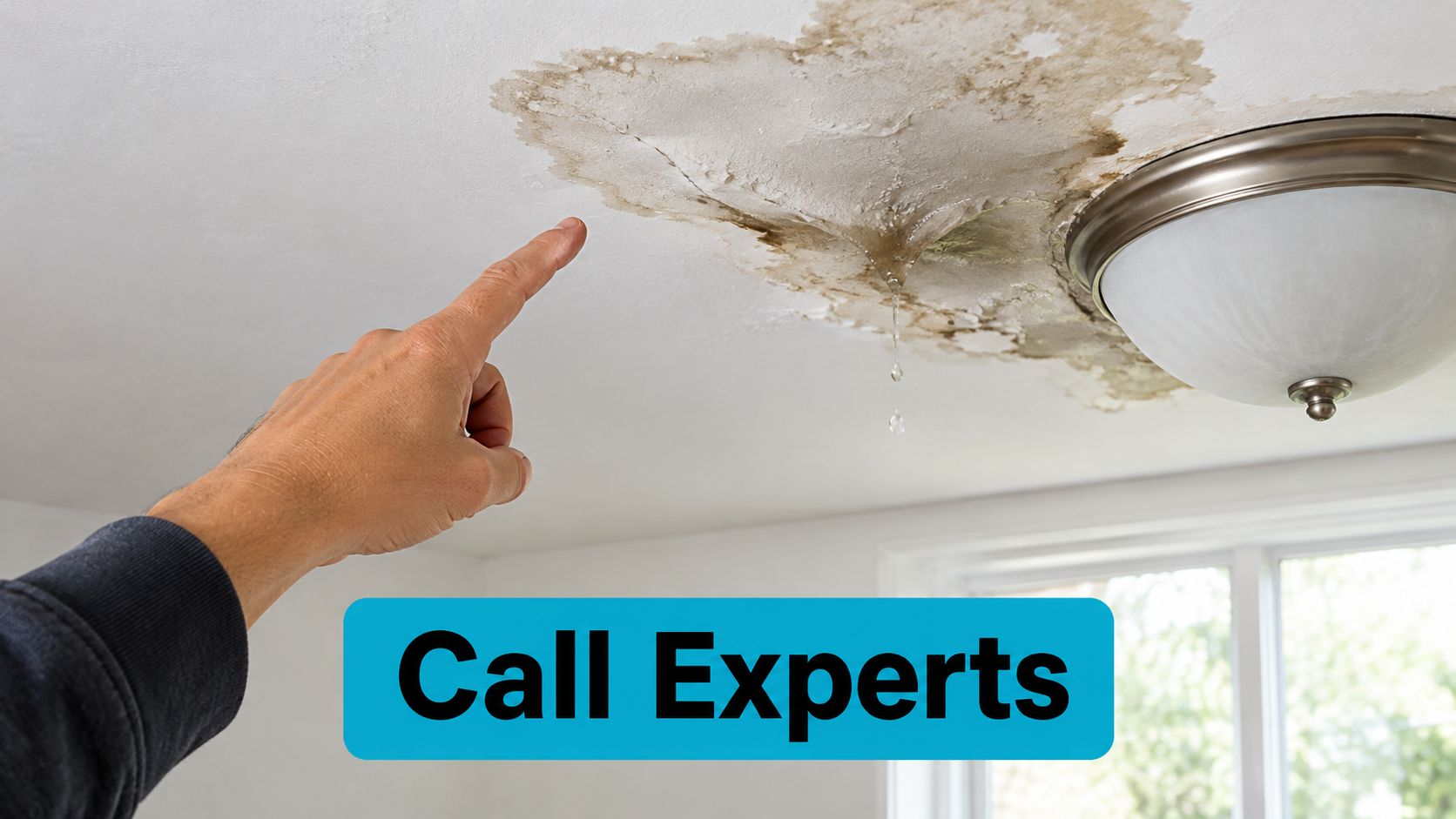
- Waterline staining: Photograph staining on walls and baseboards. Ask whether the materials behind them need testing.
- Wet outlets or HVAC openings: Stay clear of affected electrical equipment and request a safety assessment before operating it.
- Warped or separating flooring: Don’t assume boards will settle once the room feels dry. Request an evaluation of the flooring and underlying assembly.
- Musty or earthy odors: Treat odor as a reason to investigate, not proof of a specific mold species.
- Persistent dampness: Water that has receded can still leave affected drywall, carpet backing, or subfloors needing attention.
- Unknown or contaminated water: Don’t use household fans to spread air through the affected space before assessment.
For signs behind paint and baseboards, this guide to water damage in walls provides a useful starting point for questions to ask your restoration team.
After a Gulf Coast storm
A Sarasota or Saint Petersburg property may look better once outdoor water recedes. That doesn’t establish whether enclosed materials are ready for repair. Ask the technician to distinguish general indoor humidity from moisture retained in specific assemblies.
EPA disaster-cleanup guidance advises removing items that can’t be fully cleaned and dried, avoiding fans when mold is present, and correcting moisture problems before painting or sealing.
Decision rule: If you can’t establish the source, safety, or extent of the wet area, request an assessment instead of guessing.
Once the emergency is controlled, investigate recurring exterior drainage problems. Modern Yard Landscapes’ guide to prevent lawn flooding is a resource for that separate prevention discussion.
Working With Insurance After Sudden Water Damage
Insurance coordination begins with cause and evidence, not a promise that the claim will be paid. A sudden pipe failure may be covered, while flooding, gradual seepage, or maintenance-related damage may be excluded. Your policy and endorsements determine the answer.
Water damage and freezing accounted for approximately 24% of homeowners-insurance claims on average from 2018 through 2022, with an average claim amount of approximately $13,954, according to U.S. News’ summary of Insurance Information Institute and ISO/Verisk data. Those figures exclude flood damage, which standard homeowners policies generally don’t cover. They describe historical claims, not an estimate for your property.
Preserve a usable record
Create a folder for photographs, videos, receipts, work authorizations, and communications. Keep your discovery timeline separate from assumptions about when the leak began.
- Photograph context: Include wide room views and close-ups of the suspected source and damaged materials.
- Record mitigation: Keep extraction records, moisture logs, equipment placement notes, and invoices.
- Notify the insurer promptly: Describe observations accurately and ask what evidence the adjuster needs.
- Preserve causation evidence: Ask how a failed pipe, appliance component, or other damaged item should be retained safely.
Don’t postpone necessary stabilization solely to wait for an adjuster. However, don’t permanently discard evidence without discussing documentation first. Contaminated materials shouldn’t be stored where they could expose occupants.
Separate mixed causes before promising coverage
A Florida storm might involve roof entry, outdoor flooding, and an unrelated plumbing failure. Ask the restoration team to document each suspected source separately rather than labeling everything storm damage.
Review any assignment of benefits or transfer of rights before signing. Ask what the authorization permits, what you owe if coverage is denied, and whether reconstruction requires separate approval.
For another resource to discuss with your claims contact, review ABS Insurance Brokers claim workflow advice, keeping in mind that your Florida policy controls. This local guide to filing an insurance claim for water damage can help organize the documents you’ll need.
Choosing a Qualified Local Provider on the Suncoast
Choose a provider by asking how it will assess, document, and complete the work. A restoration specialist, a general contractor, and a referral service may offer different scopes. None of those labels alone tells you who will arrive or who will be accountable.
IICRC certification is a useful credential to ask about, but also request the proposed drying plan and reporting process. You need clear answers about the people performing the work, not just credentials displayed in an advertisement.
Provider Evaluation Criteria
| Criterion | What to Ask | Why It Matters |
|---|---|---|
| Training | Is the assigned team IICRC-certified? | Helps establish relevant restoration training |
| Emergency availability | When can a crew actually arrive? | Separates phone availability from field response |
| Drying documentation | Will I receive location-specific readings and final results? | Makes completion reviewable |
| Scope of service | Who handles mitigation, repairs, and reconstruction? | Clarifies handoffs and responsibility |
| Insurance coordination | Who submits records and answers adjuster questions? | Keeps claim communication organized |
| Estimate transparency | What’s authorized now, and what needs later approval? | Helps prevent scope misunderstandings |
| Financing | What options and repayment terms are available? | Clarifies potential out-of-pocket arrangements |
Compare accountability, not just arrival promises
A general contractor may be appropriate for rebuilding after verified drying. A referral service may connect you with a crew, but ask who holds the contract and manages follow-up. A turnkey provider offers continuity only if it clearly documents both mitigation and reconstruction responsibilities.
Ask local candidates how they address humid conditions, storm-related access constraints, and applicable building requirements. Request a realistic arrival estimate for your address, especially when many Gulf Coast properties are affected.
AMPM Restoration is a local option offering emergency mitigation through reconstruction and insurance coordination; its IICRC-certified restoration company information describes its team and service approach. Ask about its stated 24/7 availability and one-hour response time, and confirm current dispatch conditions when you call.
Before signing, request a written scope, estimate, reporting schedule, and explanation of change approvals. Ask who decides that drying is complete and what evidence supports that decision. The useful promise is a documented process you can understand, not an assurance that the company will handle everything.
Putting the Process Together and Acting Quickly
A sound response to water damage combines prompt action with careful verification. Speed matters at the beginning, while measurements and material decisions matter before repairs. Neither replaces the other.
The EPA's guidance for schools and commercial buildings reinforces the importance of promptly removing water, fixing the moisture source, and completely drying affected furnishings and building materials. The same practical questions apply whether you're protecting a home, rental property, office, or retail space.
Keep the essential decisions simple
- Call early: Explain the source you suspect and any access hazards.
- Document early: Preserve photographs and a factual timeline without delaying safety measures.
- Require verification: Request understandable final moisture records before assemblies are closed.
- Coordinate communication: Keep the restoration team and insurer working from the same evidence.
You don't need to become a drying technician or an insurance specialist. You do need to know what work is being authorized, which questions remain unresolved, and who is responsible for answering them.
For owners in Bradenton, Sarasota, Tampa Bay, Saint Petersburg, Lakewood Ranch, and surrounding Gulf Coast communities, local continuity can make those conversations easier. AMPM Restoration is based at 4301 32nd St W b18, Bradenton, FL 34205 and serves residential and commercial properties throughout this area.
Its services include professional water damage restoration, mold inspection and mold removal, fire and smoke damage restoration, storm and flood damage restoration, commercial restoration services, and full reconstruction solutions. That range allows owners to discuss related damage and repair needs without treating extraction as the entire recovery process.
Expert water removal should leave you with evidence, not unanswered questions. Ask what remains wet, what can be retained, what must be removed, and what happens before rebuilding starts.
Call 941-946-7807 for a free inspection and estimate. Ask about insurance claim assistance and financing options so your next decision is based on both the property's condition and a clear understanding of the proposed work.
Questions Florida Property Owners Ask Most Often
How can I tell whether water is clean or contaminated?
Explain its origin and what it contacted. Treat water involving drains, sewage, or outdoor floodwater as potentially contaminated until professionally assessed.
Does insurance cover mold after a pipe burst?
Not automatically. Ask your insurer about the triggering event, mold limits, exclusions, and mitigation requirements before assuming payment.
What if the water is gone but a musty odor remains?
Request moisture testing of the affected assemblies. An air purifier doesn't establish whether hidden materials are dry or resolve the moisture source.
Should cleanup begin before the adjuster arrives?
Arrange safe stabilization and photograph conditions first. Ask the team to preserve evidence and document necessary removal for the adjuster.
Can I buy flood insurance when a storm approaches?
Don't assume immediate coverage. NFIP policies normally have a 30-day waiting period, with specified exceptions described in FEMA's flood-insurance waiting-period guidance. Confirm the effective date before relying on a new policy.
What should I receive before reconstruction starts?
Request final moisture readings, the material-removal record, and a written repair scope. Ask how inaccessible areas were assessed and whether any concerns remain unresolved.
For expert water removal and recovery through reconstruction, visit AMPM Restoration Services and call 941-946-7807 for a free inspection and estimate. The team offers emergency restoration across Florida's Suncoast, with insurance claim assistance and financing options to help you plan the next steps toward restoring your property and peace of mind.