

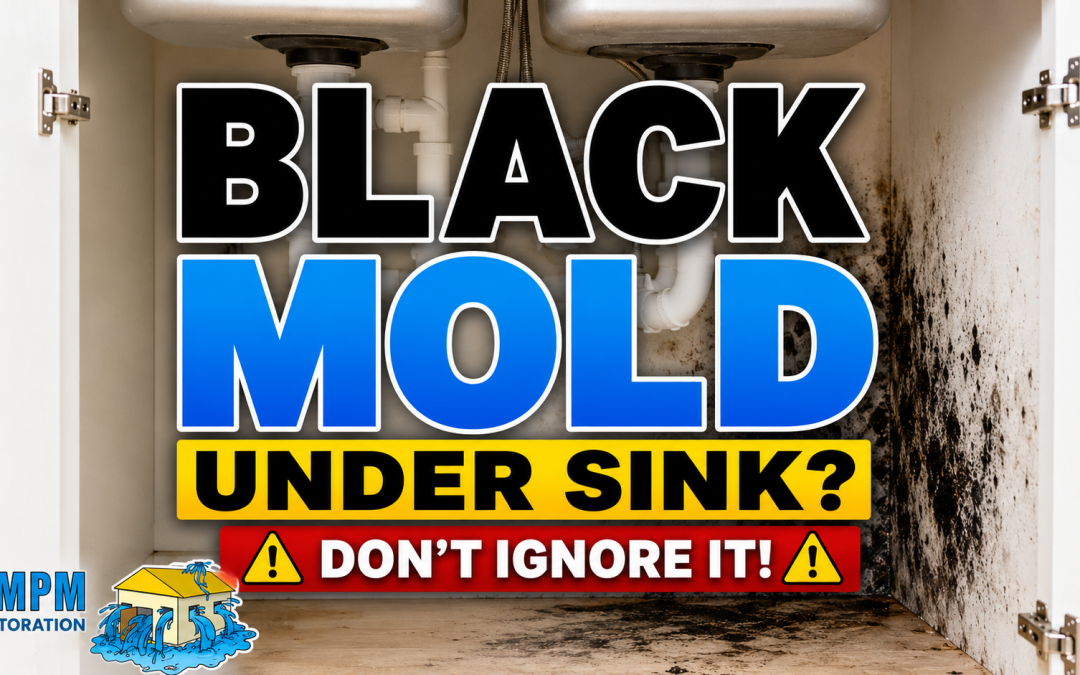
You’ve got the cabinet door open, and there it is again, a dark line on the back panel under the sink, plus that damp smell that never quite goes away. On the Suncoast, that scene usually isn’t a cosmetic nuisance, it’s a moisture problem hiding in plain sight, and the fix starts with finding the water source before anyone scrubs a thing.
A black mold under sink problem is common because sink cabinets trap the exact conditions mold wants, recurring moisture, limited airflow, and organic materials that hold water. In a seven-state U.S. home study, mold showed up in 100% of homes tested, and the area beneath the kitchen sink was one of the most common indoor locations, with mold present in 83% of households study summary. That’s why I treat under-sink growth as a default risk zone in Florida, especially in humid homes, older condos, and cabinets that stay closed for long stretches.
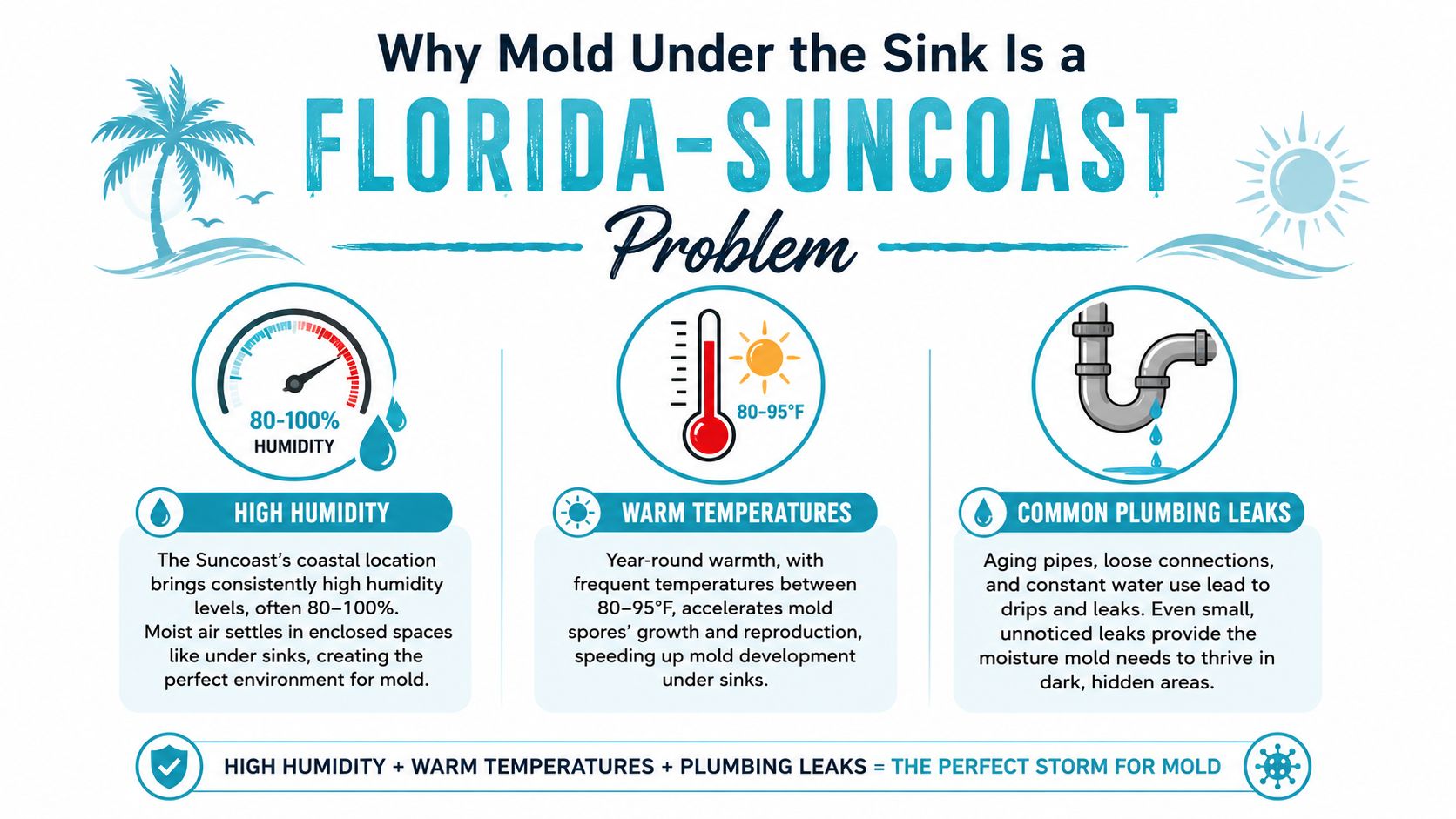
Why Mold Under the Sink Is a Florida-Suncoast Problem
A Bradenton homeowner once called after finding a black patch under the kitchen sink while pulling out dishwasher pods. The cabinet had no obvious flood, just a faint musty odor, a warped toe-kick, and a supply line that had been sweating long enough to darken the particleboard. That is a standard Suncoast job, and the first question is always where the moisture is coming from.
Why the cabinet turns into a hotspot
Under-sink spaces are enclosed, and in Florida that enclosure works against you. Warm, humid air slips in, then gets trapped around plumbing, cleaning supplies, and porous cabinet parts that never fully dry. The cabinet does not need a large leak to become a problem, it only needs repeated dampness from condensation, a slow drip, or a line that stays wet after every use.
That is why I start with moisture-source diagnosis before any cleanup. A cabinet can look like a simple surface issue while the underlying problem sits in the shutoff valve, the trap, the dishwasher hose, or the cabinet materials themselves. On the Suncoast, older kitchens, particleboard bases, and cabinets kept closed in humid weather give mold a place to keep coming back even after someone wipes the visible stain.
Florida homes also have a simple extra burden, the air itself carries more moisture for much of the year. The cabinet under the sink behaves like a small closed room, so any leak, splash, or sweating pipe lingers longer than it would in a drier climate. That is why mold causes in Florida homes usually come back to the same few conditions, trapped humidity, hidden water, and materials that hold onto moisture.
Practical rule: if a sink cabinet smells damp before you see visible growth, assume moisture has already been present long enough for mold to start.
The fix starts with the source, not the stain. Cleaners matter later, but they do not solve a cabinet that is still taking on water.
Recognizing Black Mold and Telling It Apart from Other Stains
The phrase black mold gets used loosely, and that causes a lot of bad decisions. Dark staining under a sink can come from mold, dirt, water damage, old adhesives, or mixed growth on wood grain. Color alone doesn’t identify the species, and the Cleveland Clinic notes that black mold is not any more dangerous than other types of mold for individuals.
What to look for in a real cabinet inspection
Start with smell. A musty odor that returns after you close the cabinet and reopen it later usually points to active moisture or hidden growth. Then look at texture. Mold often looks slimy, dusty, or powdery, while old water staining usually looks flat and stays the same once it’s dry.
The pattern matters too. Growth that tracks along seams, the cabinet back, the bottom edge of the sink base, or around the P-trap area usually points to water intrusion. If the mark wipes away but comes back after the cabinet has been closed and used for a few days, that’s a moisture cycle, not just a stain.
If you want a side-by-side explanation of dark growth versus other mold colors, AMPM’s guide on black mold vs white mold is a useful companion read. It helps homeowners stop overreacting to color and focus on the underlying issue, which is whether moisture is still feeding the problem.
A dark patch that keeps returning is more important than a dark patch that looks dramatic.
For a related homeowner resource on musty cabinet odors, bathroom cabinet moisture fix gives a useful moisture-first perspective. The same diagnostic logic applies under the kitchen sink, smell, texture, location, and repeat appearance tell you far more than color alone.
Safety First, Protect Yourself Before You Touch Anything
Before you move a sponge, bottle, or trash bag, treat the cabinet as contaminated, because it may be. Disturbing growth under a sink can push spores into the air, and the CDC says mold exposure can trigger stuffy nose, sore throat, coughing or wheezing, burning eyes, or skin rash CDC. If anyone in the home has asthma or allergies, be more cautious than you think you need to be.

Gear and airflow that actually help
Wear an N-95 or P100 respirator, nitrile gloves, and eye protection. Put on old clothing you can hot-wash right away. Open a window if you have one nearby, and run a bathroom exhaust fan if it helps move air out of the area. If the growth is widespread, loosely contain the cabinet opening with plastic so you are not stirring the whole kitchen.
The cleanup line is simple. For a small area under 10 square feet, EPA-aligned guidance supports DIY cleanup on hard surfaces, but larger coverage, soft cabinet bases, or growth that reaches walls means you are out of the DIY. Porous material changes the equation fast. Particleboard, drywall, and cabinet backing that are soft, crumbling, or visibly damaged usually need removal, not scrubbing.
Florida cabinets add another problem. Suncoast humidity can keep a leak zone damp long after the drip stops, and older sink bases often use materials that swell, wick, and hold moisture in hidden seams. If the wood feels punky or the surface stays cool and damp after ventilation, cleaning alone will not fix the conditions feeding the growth. For a drywall-related reference on what damaged substrate means, AMPM’s drywall mold safety guide is worth keeping nearby.
Practical rule: if the cabinet base flexes, crumbles, or stays damp, stop and get a pro involved.
Cleaning Small Infestations Step by Step
A small patch under the sink can stay manageable, but only after the moisture source is under control. Product choice matters less than the order of the work. I’ve watched homeowners wipe down a cabinet, shut the door, and see the growth return because the leak, condensation, or overflow problem was still feeding it.
Remove, clean, and dry in the right order
Start by emptying the cabinet completely. Bag porous items that have been sitting in damp conditions, especially cardboard, paper, or anything that smells musty. If the visible growth is dry, a HEPA vacuum can remove loose contamination before wet cleaning begins.
Then wash hard, non-porous surfaces with detergent and water. A surface cleaner only helps after the material is clean, because dirt film and residue get in the way of the finish. If the cabinet base is swollen, soft, or peeling, that is a substrate problem, not a wiping problem.
Drying is where many DIY jobs fall apart. Leave the cabinet open, keep air moving, and run a fan or dehumidifier until the cabinet floor reads dry. Trapped moisture can keep feeding regrowth, and in humid Florida kitchens the surface can feel dry while the cabinet core still holds water cleanup guidance.
Gear and airflow that help
Wear an N-95 or P100 respirator, nitrile gloves, and eye protection before you start. Put on old clothing you can hot-wash right away. Open a window if one is nearby, and run a bathroom exhaust fan if it helps move air out of the area. If the growth is spread across more than a small patch, loosely contain the cabinet opening with plastic so you are not stirring the whole kitchen.
Common mistakes that undo the work
- Bleach on porous wood: it can make the surface look better while leaving moisture and contamination deeper in the material.
- Priming too early: sealing over damp wood traps moisture and can start another growth cycle.
- Kitchen-trash disposal of contaminated sponges: that spreads the mess and keeps damp material in the room.
- Skipping verification: if you do not check the cabinet with a moisture meter, you are guessing.
For a more detailed look at surface removal on damaged building material, AMPM’s drywall cleanup guide follows the same practical rule I use in cabinets, clean only what is sound, then dry it completely.
Finding and Fixing the Moisture Source
A black mold under sink call becomes much easier once you stop thinking like a cleaner and start thinking like a leak tech. The growth is usually telling you where water has been entering, and the cabinet opening gives you access to the likely failure points. One useful guide identifies slow drip leaks at the P-trap, supply line connections, condensation on cold water pipes, a leaking garbage disposal seal, and water that entered during a past overflow and never fully dried as common sources inspection guide.
Inspect the parts that actually fail
Check the supply lines first. Run a dry paper towel under each fitting and leave it overnight if you need to catch a slow leak that only appears after pressure builds. Look at shutoff valves next, then move to the P-trap, because a loose slip nut can drip just enough to keep the cabinet base damp.
The garbage disposal is another common failure point. Look at the flange, discharge tube, dishwasher inlet, and the seals where the unit joins the sink assembly. If the cabinet floor is darkened or soft near the back wall, that often means water has been traveling behind the visible area for some time.
A moisture meter is useful on the cabinet back and floor because it gives you a reality check when the surface looks dry but the substrate isn’t. That’s especially important in humid Florida kitchens, where condensation can masquerade as a plumbing problem and a plumbing problem can masquerade as condensation.
What a homeowner can fix and what needs a plumber
Tightening slip nuts is usually safe. Replacing a worn supply line can be a reasonable homeowner job if you can shut off the water confidently. Re-sealing a disposal flange may also be manageable when the leak is obvious and accessible.
If the shutoff valve itself leaks, the cabinet floor is swollen, or water shows up behind the wall, bring in a licensed plumber. A guide from Ring Hot Water’s pressure relief valve resource is not about sink mold specifically, but it reflects the same diagnostic mindset, trace moisture back to the mechanical failure before you clean the damage.
Practical rule: every cleanup without source repair is temporary.
When DIY Stops and a Certified Remediation Team Takes Over
DIY ends when the cabinet stops being a surface issue and starts being a material failure. If the base is soft, the drywall behind it is compromised, or growth has spread into the wall cavity or subfloor, scrubbing won’t solve the problem. It may make the area look better for a week, but the hidden moisture keeps feeding the colony.
What professional remediation changes
An IICRC-certified crew doesn’t just clean what you can see. The job usually includes containment, negative air pressure, HEPA filtration, removal of damaged porous materials, source repair coordination, and post-remediation verification. That combination matters because mold in particleboard, cabinet backing, or wall assemblies is a structural and air-quality issue, not just a stain on wood.
AMPM Restoration Services is one option for that kind of work on the Suncoast, especially when the issue is tied to water intrusion, cabinet damage, or a larger mitigation job. For situations that have spread beyond a simple surface patch, their professional mold removal guidance matches the decision rule I use in the field, if the material is damaged, the scope is bigger than you think, or the growth keeps returning, stop cleaning and escalate.
Why repeated DIY cleanups get expensive
I’ve seen homeowners spend weekends on the same cabinet more than once because the leak was never fully corrected. That costs time, leaves the odor in place, and usually means the hidden damage gets worse between attempts. A one-time professional fix is disruptive, but it usually beats repeated surface cleaning that only hides an active moisture problem.
If you’re trying to decide, use this test. If the mold is on a sound, non-porous surface and the area is small, DIY can make sense. If the cabinet is soft, the wall is involved, or the smell returns after cleaning, that’s a crew job.
Costs, Insurance, and Long-Term Prevention on the Suncoast
Under-sink mold is annoying when it’s small, and expensive when it turns into a cabinet rebuild. A significant cost driver is not the visible patch; it’s how far the moisture traveled before anyone noticed it. In Florida, that can mean damage hidden in cabinet bases, toe-kicks, drywall, and adjacent flooring.
Budgeting the job and protecting the claim
A small DIY cleanup is usually the least expensive path, but it only works when the substrate is sound and the leak is already fixed. Professional remediation becomes the better choice when the cabinet base is damaged, the growth extends beyond the cabinet, or the odor keeps returning. If the mold traces back to a sudden plumbing failure or a storm-related intrusion, insurance claim assistance can matter, because the documentation needs to show what happened, when it happened, and what was damaged.
Long-term neglect is a different story. Insurance issues get harder when the damage looks like a slow-maintained moisture problem rather than a sudden event. That’s one reason homeowners on the Gulf Coast benefit from a company that can document the source, the visible damage, and the repair path from the first inspection through completion.
Prevention habits that fit Florida humidity
Florida kitchens do better with moisture monitoring than with wishful thinking. Put a leak sensor in the back of the cabinet, keep a sink mat in place, and use dehumidification when indoor humidity stays uncomfortable. A practical target is 30 to 50 percent indoor humidity, and routine cabinet checks every six months catch a problem before it spreads.
If you want the best long-term habit, open the cabinet and look at the plumbing whenever you’re already under there for a filter change or a supply delivery. A slow drip is much easier to stop when you catch it early. That’s especially true in older Suncoast homes and condos, where cabinet materials and plumbing age together.
| Factor | DIY Cleanup | Professional Remediation |
|---|---|---|
| Scope | Small, hard-surface patch | Larger spread, hidden damage, or recurring growth |
| Materials | Sound, non-porous surfaces | Porous cabinet parts, drywall, or subfloor involvement |
| Main task | Clean and dry after leak repair | Containment, removal, filtration, source coordination |
| Risk | Higher if moisture persists | Lower when damage has spread beyond the surface |
| Best fit | Minor, contained issue | Soft cabinet base, odor return, or wall involvement |
Four quick homeowner questions
Does homeowner's insurance usually cover mold from a plumbing failure? Often, sudden water damage gets more attention than long-term neglect, so document the leak early and save repair records. The more clearly you can show a sudden event, the better the claim conversation tends to go.
Does a musty smell mean hidden mold even if I can't see it? Yes, it can. Smell is often the first clue that moisture has reached a place you can't see, especially behind cabinet backs or around plumbing penetrations.
Do I need mold testing for a small patch under the sink? Not always. For a small, clearly visible patch on a sound surface, fixing the leak and cleaning the area is often more useful than paying for testing you won't act on.
How do I compare local companies? Look for IICRC certification, fast response, and real experience with insurance claims and moisture source repair. Ask who documents the damage, who handles containment, and whether they'll explain what gets removed versus what can stay.
AMPM Restoration offers free inspections, insurance claim assistance, and financing options for qualifying homeowners who are dealing with mold and water damage on the Suncoast. If you're staring at a musty cabinet today, AMPM Restoration Services can help you get the leak identified, the damage assessed, and the next step planned before the problem spreads further.
If you've found black mold under sink cabinets in Bradenton, Sarasota, Tampa Bay, Saint Petersburg, Lakewood Ranch, or a nearby Gulf Coast home, AMPM Restoration Services can inspect the moisture source, explain what's safe to clean, and handle the rest when the damage is beyond DIY. Call 941-946-7807 for a free inspection and estimate, and ask about insurance claim assistance and financing options for qualifying projects.