

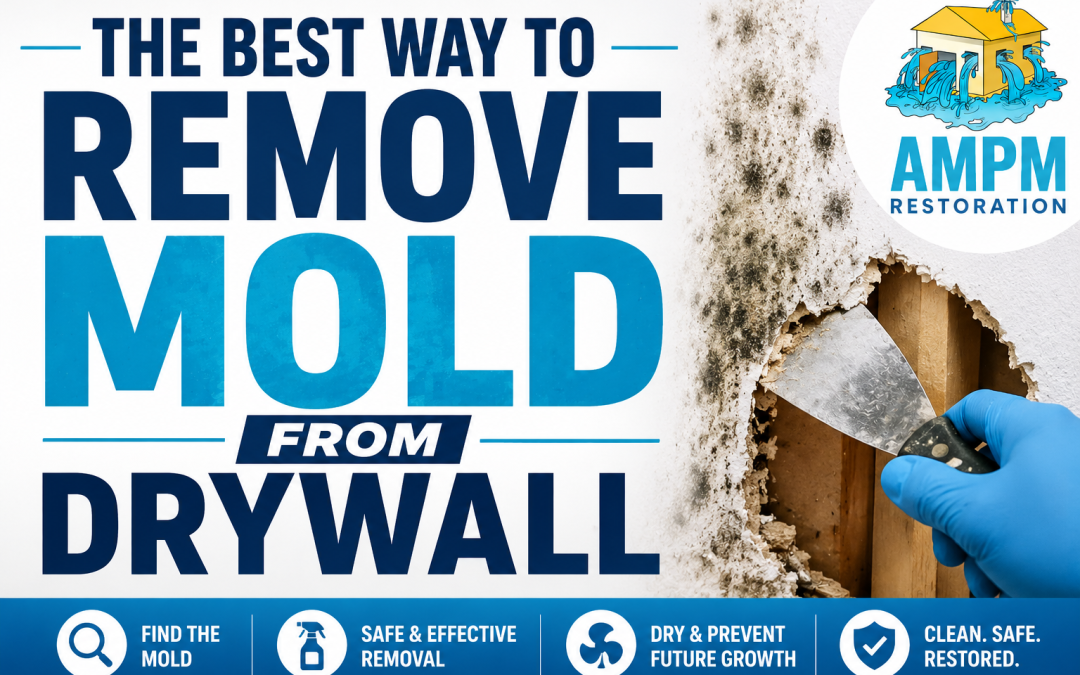
Best Way to Remove Mold from Drywall: Expert Guide
You walk into a bathroom, laundry room, or spare bedroom in Florida and spot dark staining on the wall. Maybe the paint looks bubbled. Maybe there’s a musty smell that won’t leave. At that point, most homeowners ask the same thing: what’s the best way to remove mold from drywall without making the problem worse?
The honest answer depends on how much mold is there, whether the drywall is sealed or porous, and whether moisture is still trapped behind it. In Bradenton, Sarasota, Lakewood Ranch, and across the Gulf Coast, humidity keeps small problems active longer than people expect. That’s why wiping the stain off the wall isn’t always mold removal. Sometimes it’s only cosmetic cleanup.
When drywall mold is limited to a small, surface-level area on painted or otherwise sealed drywall, careful cleaning may be reasonable. When the growth is larger, recurring, inside unsealed drywall, or tied to a leak inside the wall, removal and replacement is often the only correct fix. That distinction matters for your health, your indoor air, and your repair cost.
Is It Safe to Clean Mold on Drywall Yourself?
The first decision isn’t which cleaner to use. The first decision is whether you should touch it at all.
For drywall, the line between a manageable cleanup and a remediation job is usually size and depth. Professional restoration guidance says that if the affected area is more than 10 square feet, or if mold has penetrated unsealed drywall or the wall cavity, professional remediation is recommended rather than simple cleaning. The same guidance notes why this matters financially.
That threshold matters a lot in Florida homes. A small patch on painted drywall after a brief condensation issue is one thing. A recurring stain near a shower wall, under a window, or below an AC line is a different situation entirely.

Signs a homeowner can sometimes handle
DIY cleaning is only worth considering when all of these are true:
- The area is small. It’s confined and clearly below the professional threshold.
- The drywall surface is sealed. Painted drywall gives you a better chance of surface-only contamination.
- The wall is still solid. It isn’t soft, crumbling, swollen, or visibly deteriorated.
- The moisture source is already fixed. If the leak or condensation issue continues, cleaning won’t solve anything.
- The mold appears superficial. Light staining on the surface is different from damage that looks like it has worked into the material.
Red flags that change the answer
Some clues tell you this probably isn’t a cleaning job:
- Bubbling paint or repeated staining
- A musty odor that lingers even when the visible spot is small
- Discoloration near baseboards, windows, plumbing, walls, or ceilings
- Drywall that feels damp, spongy, or warped
- A spot that comes back after being wiped down
Practical rule: If you suspect the drywall got wet from behind, stop thinking about cleaners and start thinking about inspection.
That’s the part many homeowners miss. Mold on drywall is often just the visible edge of a moisture problem inside the wall assembly. If you’re unsure where your situation falls, review these signs you need professional mold removal before attempting a cleanup.
Essential Safety Gear and Work Area Containment
If you’re going to clean a small surface spot, treat it like contamination control, not routine housecleaning. The goal is to protect yourself and keep spores from spreading into the rest of the home.

The minimum protective gear
For small, surface-level mold, the CDC recommends protective gear that includes a NIOSH-approved N95 respirator, gloves, and goggles as part of mold cleanup guidance in the CDC mold cleanup recommendations.
Use:
- An N95 respirator. A dust mask isn’t the same thing.
- Non-porous gloves. Disposable gloves make cleanup and disposal easier.
- Goggles. You don’t want splash or airborne debris reaching your eyes.
- Clothes you can wash immediately. Don’t carry contamination through the house.
How to contain the work area
Containment matters because drywall mold cleanup can release loose spores even when the visible area is small.
Follow this basic setup:
- Close off the immediate area. If possible, isolate the room from the rest of the house.
- Protect openings. Tape plastic sheeting over nearby door openings if you need a more controlled work zone.
- Shut down HVAC serving that area. You don’t want air movement carrying spores through supply or return vents.
- Keep foot traffic out. Children, pets, and anyone with respiratory sensitivity should stay away.
- Vent carefully. If you use a fan, direct air outward rather than across the room so you’re not blowing contamination deeper into the home.
Mold cleanup fails when people clean the spot but ignore where the disturbed spores are going.
A careful setup doesn’t have to look like a commercial containment chamber. It does need to stop cross-contamination. If you can’t isolate the area well, or if opening the wall seems likely, that’s where DIY usually stops being sensible.
How to Clean Minor Surface Mold from Drywall
If the mold is limited to a small area on sealed drywall, the best way to remove mold from drywall is a cautious surface-cleaning process followed by aggressive drying. The cleaning step gets most of the attention, but in Florida homes the drying step often decides whether the problem returns.
Which cleaner makes sense on drywall
Homeowners often receive conflicting advice. Some guides recommend bleach. Others prefer vinegar or detergent. The tradeoff is simple.
Bleach can be used for small, surface-level mold, and the CDC recommends a bleach solution of no more than 1 cup of household bleach per 1 gallon of water for that kind of cleanup. But drywall is porous, and too much moisture or aggressive scrubbing can damage the paper face and push the problem in the wrong direction. That’s why practical drywall guidance also says to use a cloth rather than a brush on porous drywall surfaces and to dry the area completely. Home Depot’s drywall-specific guidance outlines a method for small surface growth on sealed drywall in its mold cleanup instructions for the home.
If you want the shortest version of the cleaner debate, it’s this:
- Mild detergent is a reasonable choice when you want to clean without being harsh on the drywall surface.
- Diluted vinegar is often used by homeowners who want a less aggressive approach.
- Bleach has a place for small surface growth, but it is not a universal answer for porous drywall and should never be overapplied.
Step by step for a small sealed area
- Set up PPE and containment first. Don’t skip that because the spot looks minor.
- Dry-brush loose growth only if it can be done gently. The goal is to remove loose material without grinding into the drywall face.
- Use a damp cloth or sponge, not a stiff brush. Apply mild detergent or diluted vinegar lightly. If using bleach for a small surface spot, stay within the CDC mix ratio.
- Wipe, don’t soak. Saturating drywall is how a small problem becomes a bigger one.
- Rinse lightly if needed. Keep moisture controlled.
- Dry the area completely. Use a fan or dehumidifier until the wall is fully dry to the touch and the room no longer feels humid.
The wrong move on drywall is often mechanical, not chemical. People scrub too hard, fray the paper face, and spread contamination.
What not to do
Avoid these common mistakes:
- Don’t use a stiff brush on drywall. It can damage the surface and spread contamination.
- Don’t soak the wall. More moisture gives mold a better environment.
- Don’t paint over active staining. That hides evidence but doesn’t solve the cause.
- Don’t keep recleaning a recurring area. Repeat growth usually means the contamination is deeper or the moisture source is unresolved.
Here’s a simple comparison of where DIY ends and remediation begins:
| Factor | DIY Cleaning (Small Spots) | Professional Remediation (Call AMPM) |
|---|---|---|
| Mold extent | Small, surface-level area on sealed drywall | Larger area, recurring growth, or suspected hidden spread |
| Drywall condition | Structurally sound and dry after cleaning | Soft, swollen, stained through, or contaminated inside wall assembly |
| Moisture issue | Source identified and corrected | Leak source unknown, active, or inside wall cavity |
| Work method | Light surface cleaning with controlled moisture | Containment, removal of damaged materials, detailed cleanup |
| Risk level | Lower when strictly limited to superficial growth | Higher when spores, hidden damage, or porous contamination are involved |
For a fuller breakdown of what cleaning can and can't do, read the truth about killing mold versus removing it.
Why Cutting Out Moldy Drywall Is Often Necessary
A lot of bad drywall advice comes from treating mold like a stain problem. It isn't.
Drywall is a layered material. Once moisture gets past the painted surface, the paper facing and gypsum core can hold contamination that you can't fully reach from the outside. You may clean what you see and still leave active growth in the material or behind it. That's why the best way to remove mold from drywall is often not cleaning at all. It's controlled removal of the damaged section.
Surface clean versus material removal
Cleaning works only when growth is superficial. The moment mold has worked into unsealed drywall, the wall is no longer just dirty. It's contaminated.
In homes across Tampa Bay and the Suncoast, that often happens after:
- A plumbing leak inside the wall
- Roof or window intrusion
- AC line or air handler moisture issues
- Repeated condensation in bathrooms or laundry areas
The visible patch can be small while the affected cavity is much larger. That's one reason recurring mold is such an important warning sign.
Why repeat cleaning usually fails
When drywall stays damp or has already absorbed contamination, wiping the surface becomes maintenance, not remediation.
You clean it. It looks better. Then the odor returns, the stain reappears, or the paint starts blistering again. That cycle usually means one of two things:
- Moisture is still entering the wall, or
- The drywall itself is holding contamination
If the wall cavity is involved, the visible spot on the drywall is only the symptom.
Homeowners lose time and money by continually trying new sprays, stronger chemicals, or another coat of paint. Meanwhile the wall assembly keeps feeding the same problem.
A hidden moisture issue is often the underlying cause. If that's what you suspect, watch for these signs of water damage behind drywall before deciding the wall can be saved.
What to Expect from Professional Mold Remediation
When drywall mold has crossed out of the DIY category, proper remediation is a controlled process. It's not just spraying a product on the wall and calling it done.
A trained crew starts by determining where moisture has traveled, which materials are salvageable, and where contamination has spread beyond the visible patch. That matters in Florida homes because humid conditions can keep building materials damp longer, especially after leaks or storm-related intrusion.
The professional workflow
A proper remediation job typically includes these phases:
- Inspection and scope determination. The team checks the visible damage and looks for hidden moisture or spread.
- Containment. The affected area is isolated so disturbed spores don't move into clean parts of the home.
- Air filtration and debris control. Professionals use filtration and careful removal methods to reduce airborne contamination during work.
- Selective demolition. Mold-damaged drywall and other unsalvageable porous materials are cut out and removed.
- Cleaning of surrounding structure. Remaining framing and adjacent surfaces are cleaned so restoration can proceed on a clean base.
- Drying and rebuild planning. Once moisture is controlled and contaminated material is gone, reconstruction can begin.
In some cases, homeowners also need broader project planning if mold damage is tied to larger repairs. If that's part of your situation, this guide on hiring a general contractor in Jacksonville is a useful reference for evaluating repair oversight and communication, even outside that market.
What a qualified company should clarify
Ask direct questions. A real remediation contractor should be able to explain:
- What materials are being cleaned versus removed
- How the area will be contained
- How the moisture source is being addressed
- What happens after demolition
- Whether reconstruction is included or separate
One local option is AMPM's mold assessment and mold remediation process, which separates inspection from actual remediation scope so homeowners understand what's being found and what's being removed.
A good remediation plan answers two questions clearly: where did the moisture come from, and which materials can no longer stay in the house?
That's the standard to look for. If a contractor talks only about spraying chemicals and not about containment, moisture, and material removal, keep looking.
Florida Homeowner FAQs and Your Next Steps
Florida homeowners usually don't need more theory. They need straight answers. Here are the questions that come up most often after someone finds mold on drywall in Bradenton, Sarasota, St. Petersburg, or the surrounding Gulf Coast communities.
Frequently asked questions
Can I just paint over mold on drywall?
No. Paint may hide staining for a while, but it doesn't fix contamination or trapped moisture. If the drywall is still affected, the problem usually returns.
Is bleach the best way to remove mold from drywall?
Not automatically. Bleach can be appropriate for small, surface-level mold when used within the CDC dilution guidance discussed earlier, but drywall's porous nature means over-wetting and surface damage are real risks. Cleaner choice matters less than accurate diagnosis and complete drying.
When is drywall replacement the only correct answer?
Replacement is usually the right call when mold is recurring, the drywall is unsealed, the material is soft or deteriorated, or moisture has gotten into the wall cavity. At that point, surface cleaning is usually incomplete.
Will insurance cover drywall mold damage?
Coverage depends on the cause of loss and your policy language. In practice, documentation matters. Homeowners should photograph the damage, document when it was discovered, and report related water events promptly. A restoration contractor can also help organize the scope and communicate with the carrier during the claim process.
How do I keep mold from coming back in a Florida house?
Control moisture first. That means fixing leaks fast, reducing indoor dampness, improving bathroom and laundry ventilation, and not leaving wet materials in place. For homeowners trying to get ahead of the moisture side, this guide on preventing water damage by finding leaks early is worth reading.
What if the mold smell is stronger than what I can see?
Take that seriously. A strong odor with limited visible growth often points to hidden contamination behind drywall, under trim, or inside adjacent materials. That's when inspection becomes more important than scrubbing.
Your next move if you're unsure
If you're still deciding, use a simple filter:
- Clean it yourself only if it's small, clearly superficial, on sealed drywall, and fully dry after cleanup.
- Call for inspection if it keeps returning, smells worse than it looks, or appears tied to a leak.
- Expect removal if the wall is soft, stained through, or contaminated from the back side.
For long-term prevention after cleanup or remediation, review these practical steps on how to stop mold from coming back.
The best way to remove mold from drywall is the method that fits the material condition. Sometimes that's careful surface cleaning. Very often, especially in Florida humidity, it's controlled removal, drying, and rebuild.
If you've found mold on drywall in Bradenton, Sarasota, Tampa Bay, Saint Petersburg, Lakewood Ranch, or nearby Gulf Coast communities, call AMPM Restoration Services at 941-946-7807 for a free inspection and estimate. We provide mold inspection, mold removal, water damage restoration, reconstruction, and direct insurance claim assistance, and we also offer financing options to help you move quickly when the wall can't wait.