

Water Leak Detection Company Near Me: Fast Local Help
A faint musty smell near the baseboard, one warped laminate plank, or a water meter that keeps moving after every faucet is off can signal more than Florida humidity. If you’re searching for a water leak detection company near me, you likely need to know whether the problem is a small plumbing issue or water already spreading inside walls, flooring, insulation, or framing.
A smart sensor may alert you to standing water, but it won’t locate a pinhole beneath a slab, map moisture behind drywall, or coordinate drying and insurance documentation. A local diagnostic team fills that gap with specialized tools, rapid mitigation, and a practical plan for restoring the property.
Why Fast Local Leak Detection Matters on the Suncoast
A Bradenton homeowner notices a faint earthy odor in the hallway. One laminate plank has started to warp near the baseboard, but the family assumes the cause is ordinary Gulf Coast humidity. Several days later, the drywall bubbles, the paint begins to lift, and the homeowner starts searching for a water leak detection company near me.
That delay is common because concealed water rarely announces itself with a dramatic flood. It may travel sideways beneath flooring, follow framing cavities, or collect behind a vanity before visible staining appears. In a region with high groundwater, aging slab foundations, and older plumbing systems, a small failure can become a restoration problem before the source is obvious.
Older Sarasota and Palmetto homes built with polybutylene plumbing can present difficult diagnostic conditions, particularly when the leak is inside a wall or beneath a finished floor. Local crews also encounter slab leaks, failed supply lines, irrigation problems, and storm-related water intrusion across Bradenton, Sarasota, Tampa Bay, Saint Petersburg, Lakewood Ranch, and nearby Gulf Coast communities.
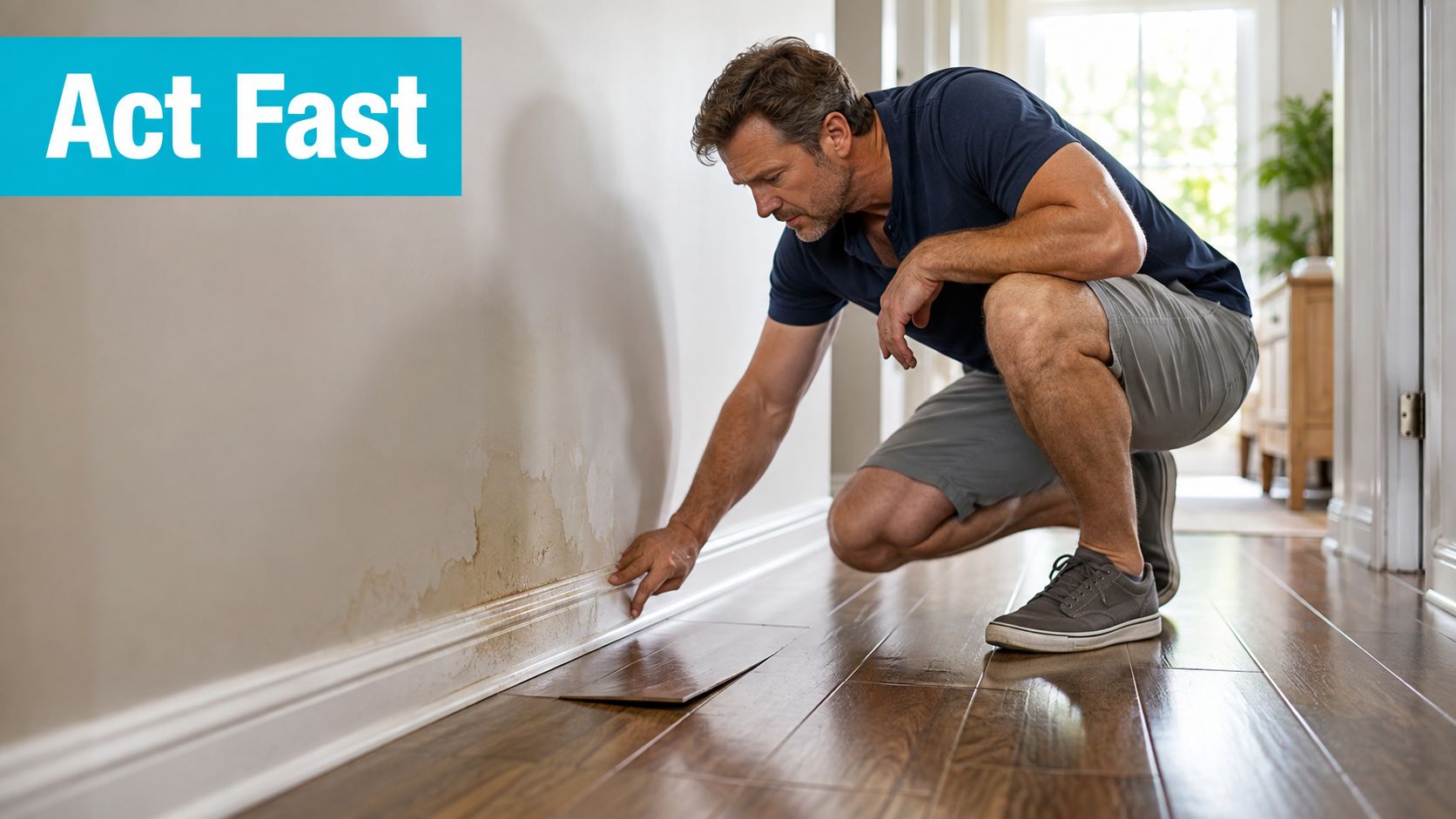
Practical rule: A smell, floor change, or unexplained stain deserves attention before the surface becomes visibly damaged. Learn how quickly moisture can travel through a structure in this guide to how fast water damage spreads in walls.
AMPM Restoration is available 24/7 with a stated one-hour emergency response for Bradenton, Sarasota, and surrounding Suncoast communities. That proximity matters. A nearby restoration crew can reach the property quickly, understand common regional construction and pipe materials, and work with insurance adjusters serving Manatee, Sarasota, and Pinellas counties.
The company’s services extend beyond detection. Its teams handle water damage restoration, mold inspection and removal, fire and smoke damage, storm and flood cleanup, commercial restoration, and reconstruction. The rest of this guide focuses on what a certified technician does after arriving, and where professional diagnosis provides something a consumer sensor cannot.
Common Signs You Have a Hidden Water Leak
Start with what you can see. Unexplained drywall discoloration, peeling paint near a ceiling, swollen trim, cupping hardwood, and buckling laminate all deserve investigation. Efflorescence, a powdery mineral deposit on a garage slab or masonry surface, can also indicate that moisture is moving through concrete.
In Tampa Bay homes, a slab leak may migrate laterally before it reaches an interior finish. A small warm area on tile can point to a hot-water line problem, while a damp cabinet base may reflect a supply-line failure farther inside the wall.
Listen and smell for changes
Turn off faucets, appliances, and irrigation equipment, then listen in a quiet room. A faint hiss behind a wall or beneath tile can indicate pressurized water escaping from a pipe. The sound is often easier to notice at night when air-conditioning cycles, televisions, and household activity have stopped.
Odor provides another warning. A persistent musty or earthy smell suggests that moisture has remained in an enclosed space long enough to affect surrounding materials. A Sarasota condo owner might discover a pinhole supply-line leak only after noticing mold behind a bathroom vanity, not after seeing water on the floor.
Check usage and responsibility
A water meter that continues to register flow when every fixture is off can help confirm an active loss. Don’t assume the issue is inside the home, though. Irrigation lines, toilets, water heaters, and shared plumbing in multifamily buildings can complicate responsibility.
Renters, landlords, and property managers can use this plumbing responsibility breakdown from VerticalRent to clarify common repair obligations before arranging access or notifying the other party.
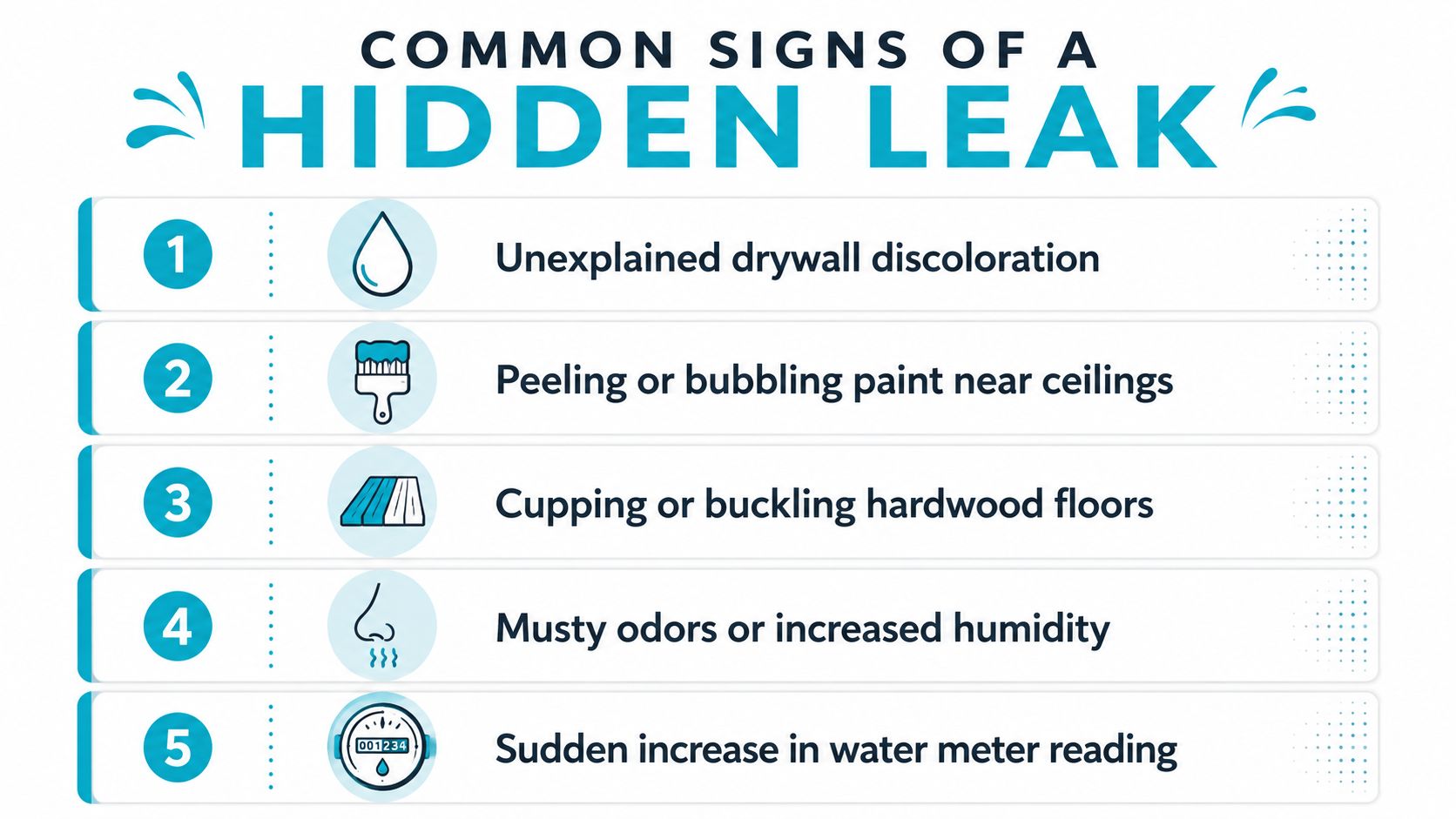
Any single warning sign can justify a professional visit. A qualified technician can compare dry and affected areas, test likely fixtures, inspect accessible plumbing, and determine whether the visible symptom matches the actual source. For more visual examples, see this guide to signs of hidden water damage behind drywall.
Professional Leak Detection Methods Explained
Professional detection works by combining several forms of evidence. No single instrument gives a complete answer in every Suncoast property, especially when tile, concrete, insulation, vapor barriers, or plastic piping interrupt the signal.
Acoustic listening identifies the failure zone
Acoustic detection uses contact sensors, ground microphones, and correlating loggers to listen for the sound produced when pressurized water escapes through a defect. The sensors can be placed at exterior access points such as hydrants or service connections, allowing technicians to investigate without immediately opening walls or breaking concrete.
Field work on ductile iron and copper distribution pipes has identified leaks with sensors spaced up to 176 meters, with recorded leak-noise frequencies from about 220 Hz to 1,400 Hz and inter-sensor coherence above 0.5. These findings come from acoustic leak detection researchPS.1949-1204.0000257), which also explains why pressure, distance, pipe material, and background noise affect interpretation.
Pressure can strengthen the acoustic signature, while distance can weaken it. Plastic piping and low-severity defects may produce a poor signal, so a careful technician won’t treat an acoustic reading as conclusive by itself. A 2024 study reported 1% relative localization error for micro-leak points under optimized conditions, while later laboratory work found longitudinal slit defects in pressurized plastic pipes difficult to detect with standard equipment. The practical lesson is simple: sensor quality and field verification matter.
Thermal imaging narrows the search
Infrared cameras reveal temperature differences at the surface. Evaporative cooling can create a cooler zone over hidden moisture, while hot-water piping may create a warm pattern beneath flooring. Thermal imaging doesn’t show water directly, so the image must be interpreted alongside construction materials, airflow, temperature, and moisture readings.
A technician may sweep a wall or floor with a FLIR camera, mark an unusual pattern, and then test that area with a moisture meter. This thermal imaging leak detection process helps reduce unnecessary exploratory demolition.
Moisture meters define the boundary
Pin-type meters measure moisture within materials such as drywall, wood, and subfloor. Non-penetrating meters help screen larger areas without leaving probe marks. By comparing affected zones with dry reference areas, the technician can document where moisture starts, how far it has traveled, and which materials need extraction or removal.
The sequence is usually layered. Thermal imaging identifies a likely zone, acoustic equipment helps pinpoint the failure, and moisture mapping establishes the restoration boundary. A flashlight and screwdriver can reveal surface damage, but they can’t provide that coordinated picture or document it for a claim.
The AMPM Restoration Leak Detection and Repair Process
After a call about a suspected leak, the first priority is control. The technician needs to know whether water is still flowing, whether the source can be isolated, and whether flooring, drywall, cabinets, or electrical areas are at risk.
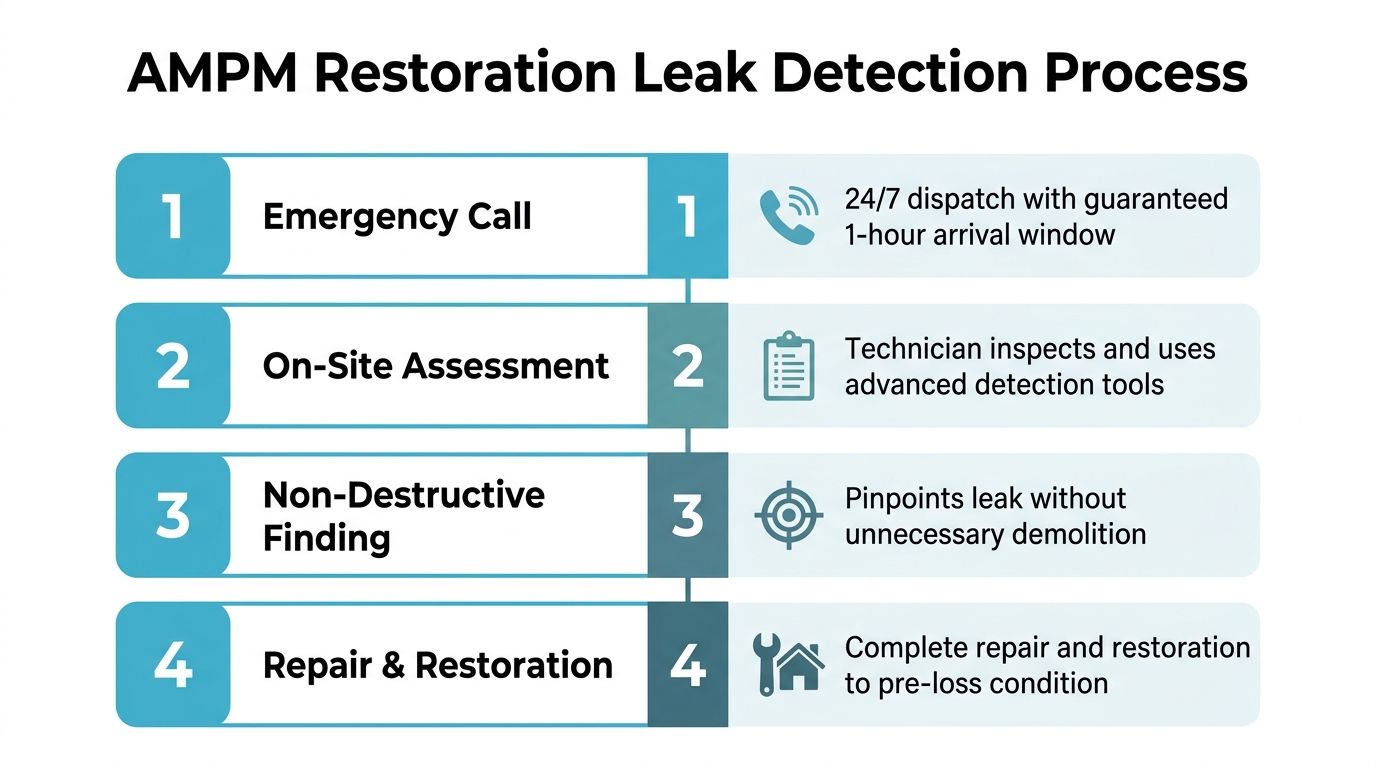
1. Dispatch and arrival
AMPM Restoration operates around the clock and describes a one-hour emergency arrival window across Bradenton, Sarasota, and nearby Suncoast communities. During the initial call, the team gathers the address, visible symptoms, plumbing history, access information, and any immediate safety concerns.
The homeowner should shut off the main water supply if it can be done safely, move valuables away from the affected area, and avoid cutting into walls or floors before the source is assessed. Photos can help show the timeline, but they shouldn’t replace an on-site inspection.
2. Diagnostic inspection
At the property, technicians inspect fixtures, supply lines, ceilings, walls, floors, cabinets, and accessible mechanical areas. They may listen to supply lines with acoustic equipment, scan surfaces with infrared cameras, and take pin-type moisture readings through affected materials.
The team compares readings rather than relying on a single hot, cold, or damp spot. This approach helps distinguish an active plumbing leak from condensation, a past loss, HVAC moisture, or water entering from an exterior opening.
3. Targeted mitigation
Once the source and affected area are understood, the crew works to limit further migration. That may include extraction, removal of unsalvageable materials, placement of commercial air movers, and dehumidification. Drying decisions depend on the material, the source, the extent of saturation, and the readings documented during follow-up visits.
4. Documentation and repair coordination
A complete file may include photographs, moisture logs, equipment records, affected-material notes, and a scope of work. Those details give the homeowner and adjuster a clearer record of what happened and why specific mitigation was necessary.
AMPM Restoration coordinates with the homeowner’s insurance carrier, assists with claim paperwork, and schedules permanent repairs when mitigation is complete. The goal isn’t just to remove visible water. It’s to dry the structure, address the source, and return the property to a safe, functional condition.
How Professional Detection Saves You Money on Insurance Claims
Water damage claims depend heavily on cause, policy language, documentation, and the homeowner’s response. A sudden, accidental plumbing failure may be treated differently from long-term seepage or deferred maintenance, so early professional assessment helps establish what occurred and when.
Drying speed also matters. EPA-based restoration guidance commonly uses a 24-to-48-hour drying window for water-damaged organic materials because drywall, wood, carpet, and insulation can support mold growth when they remain wet. This water damage insurance claim guidance can help homeowners organize the first steps, but it isn’t a substitute for reviewing the individual policy.
A technician’s records can show the initial condition, affected boundaries, equipment placement, and drying progress. That evidence can help an adjuster evaluate necessary work instead of relying only on a homeowner’s description or a single surface photograph.
| Response Timeline | Typical Repair Scope | Estimated Cost Range | Insurance Claim Risk |
|---|---|---|---|
| Immediate response | Source assessment, targeted extraction, controlled drying, and focused repair | Lower relative cost because fewer materials may be affected | Lower risk of disputes tied to delayed mitigation |
| Delayed response | Broader demolition, extended drying, odor treatment, and possible microbial remediation | Higher relative cost as moisture reaches additional materials | Greater risk of questions about neglect or failure to limit damage |
| No professional assessment | Uncertain source, incomplete drying, and repairs based on visible symptoms | Difficult to estimate until concealed damage is opened | Higher uncertainty because the file may lack technical documentation |
The economics aren't limited to the first repair invoice. A missed leak can affect cabinets, flooring, insulation, framing, and personal property. Professional detection doesn't guarantee coverage, but it gives the claim a defensible record and helps the homeowner make decisions before secondary damage expands.
DIY Smart Sensors Versus Hiring a Local Specialist
Smart sensors have a useful role. A Wi-Fi-enabled device near a water heater, washing machine, dishwasher, or sink can alert you when water reaches the sensor. That early notification may prompt you to shut off a valve or call for help before a visible pool becomes a larger loss.
The limitation is location. A sensor detects water where the sensor sits, not necessarily where the leak began. It can't trace a failure inside a wall, beneath a concrete slab, behind a shower assembly, or along a buried service line.
| Capability | Smart sensor | Professional diagnostic visit |
|---|---|---|
| Alert when water reaches a monitored point | Yes | Not the primary function |
| Identify concealed source | No | Yes, using layered inspection methods |
| Map saturation through walls or flooring | No | Yes, with moisture readings |
| Interpret thermal or acoustic anomalies | No | Yes, with trained equipment and judgment |
| Begin extraction and structural drying | No | Yes, when mitigation is required |
| Prepare claim documentation | Usually no | Yes, when the service includes restoration records |
A local IICRC-certified specialist can combine acoustic listening, infrared scanning, moisture mapping, and visual inspection. The technician can also determine whether the moisture is active, residual, or coming from another source.
Use professional free water leak detection when you see damage, smell persistent mustiness, hear unexplained water movement, or suspect a concealed line failure. The strongest setup is complementary: sensors provide notification, while professional detection provides diagnosis, mitigation, and a path to repair.
Service Areas Trust Signals and How to Book Your Free Inspection
AMPM Restoration serves Bradenton, Sarasota, Palmetto, St. Petersburg, the greater Tampa Bay region, Lakewood Ranch, and surrounding Gulf Coast communities. The company is based at 4301 32nd St W b18, Bradenton, FL 34205, and provides water damage restoration, mold services, fire and smoke restoration, storm and flood cleanup, commercial restoration, reconstruction, and leak detection.
When choosing a local contractor, look beyond an attractive emergency-response promise. Confirm state licensing, bonding, insurance coverage, IICRC certification, verified customer reviews, and a satisfaction guarantee. Those signals don't replace a written scope of work, but they help distinguish an established restoration provider from an unverified individual offering limited inspection services.
Property managers and local contractors can also review resources on how to get more home service leads when evaluating the difference between a credible local service presence and a directory listing.
Call 941-946-7807 to request AMPM Restoration's free inspection and estimate. The initial conversation should establish the location, symptoms, water source if known, access details, and whether emergency extraction or shutoff support is needed. Online scheduling is also available through the company website, and financing options can help qualified customers manage restoration expenses.
AMPM Restoration Services provides 24/7 water leak detection, emergency mitigation, drying, mold services, insurance claim assistance, and full reconstruction across Florida's Suncoast. Call 941-946-7807 for a free inspection and estimate, ask about financing options, and visit AMPM Restoration Services before a hidden leak creates a larger loss.