

How to Remove Mold from Clothes
You pull a shirt from the hamper or open the washer expecting clean clothes, and instead you get that damp, earthy smell that means mold has already taken hold. In a Florida home, that’s usually not just a laundry problem. It’s a cross-contamination problem, and the first move matters because spores can jump from one garment to the next if you handle the load carelessly.
If you want to remove mold from clothes safely, treat the first 30 minutes like contamination control, not stain removal. Separate the item, isolate it, and keep the problem from spreading while you decide whether the fabric can be saved with home treatment or needs professional help.
Why Mold on Clothes Is More Than a Stain Problem
A lot of people notice the stain first and miss the bigger issue. A shirt comes out of the closet with gray patches, or a load sits too long in the washer and comes back smelling musty, and the instinct is to rewash it harder. That’s the wrong frame. Mold on clothing is a contamination event, because spores can move between garments, hampers, the washer drum, and the dryer if you shake, pile, or mix items carelessly. The contamination cycle matters more than the stain itself, especially in Florida where humidity gives mold an easy foothold in closets, laundry rooms, and front-loading machines.
The practical difference shows up fast. One damp towel can spread the problem to clean laundry in the same hamper. A contaminated load can also leave odor behind in the machine if it isn’t isolated and cleaned properly. That’s why the opening move is to think in terms of containment, not cosmetics.
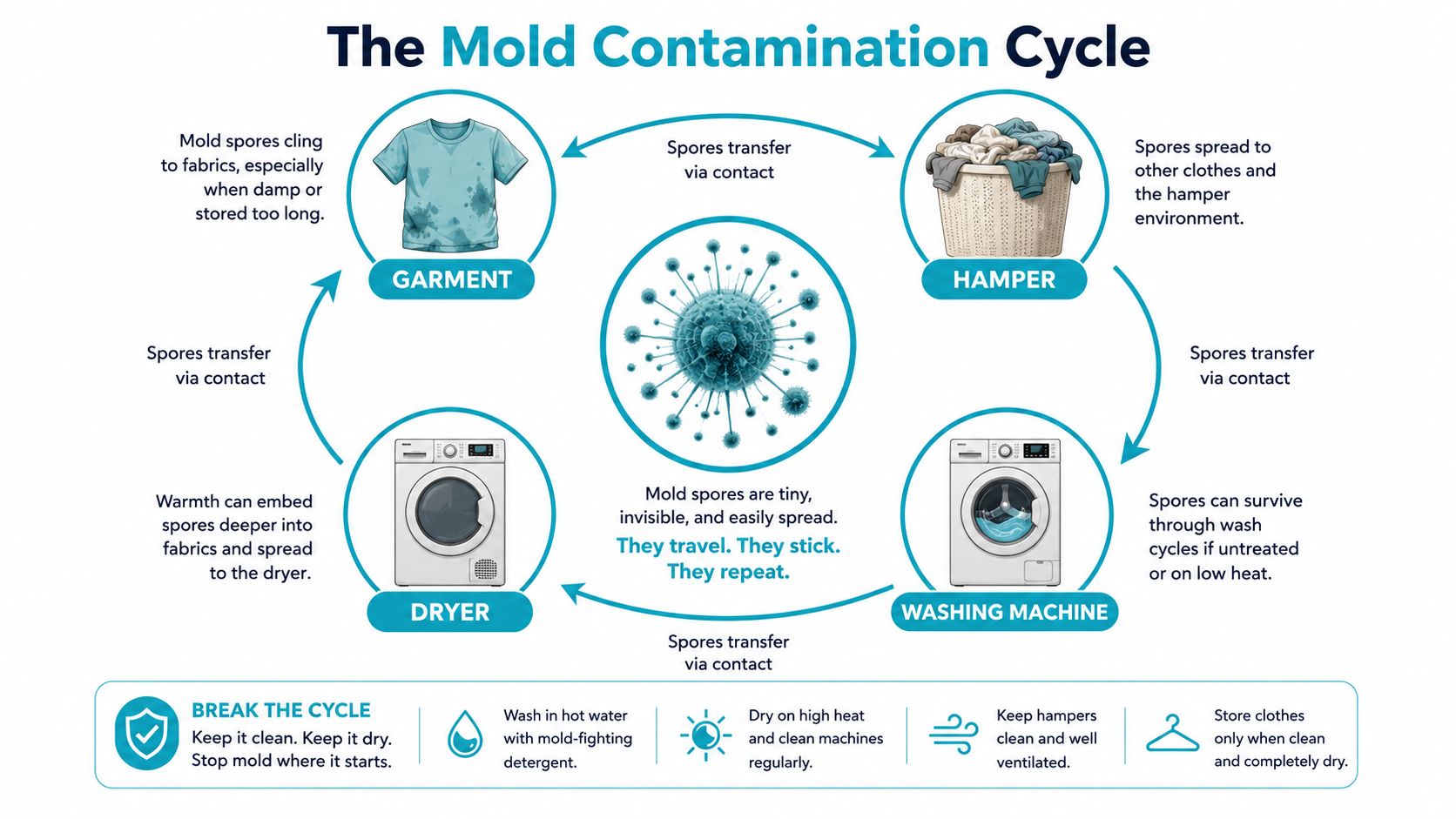
The first 30 minutes decide how far it spreads
Once you find mold on clothing, don’t dump the item back into a laundry pile. Don’t shake it indoors. Don’t toss it on top of clean clothes. Treat it like a dirty spill that can migrate through the house.
Practical rule: if a garment smells musty or shows visible growth, assume every nearby textile touched by it is part of the problem until you inspect it.
For homeowners who are also trying to understand the health side of the issue, the broader picture is covered in these health effects of mold exposure. If the smell in the closet seems to linger after washing, a useful consumer resource on tips for fresh-smelling towels can also help you think about odor control, though odor alone doesn’t prove the item is safe.
Safety and Isolation Steps Before You Treat Anything
Before any soaking or washing starts, put on gloves and a mask, then move the affected items outside. That keeps loosened spores out of the air you breathe indoors and reduces the chance of tracking contamination through the house. If the garment is dry enough to brush, do that outdoors, gently, so you’re not aerosolizing the mess in a laundry room.
Keep contaminated fabric away from everything else
Bag the item in plastic for transport if you have to move it through the house. Keep it away from clean clothes, the hamper, and the inside of the washer until you’re ready to treat it. The dryer is off-limits at this stage, because heat too early can set residual staining and lock in odor.
The same isolation logic applies if the closet, dresser, or laundry room already smells off. If you’re seeing signs beyond the garment, the issue may no longer be confined to clothing, which is why how to safely remove mold from drywall becomes relevant once hard surfaces are involved.
| Pre-Treatment Safety Checklist | Why It Matters |
|---|---|
| Wear gloves and a mask | Limits direct contact and inhalation while handling spores |
| Move items outdoors first | Keeps debris from spreading inside the home |
| Brush loosely attached growth outside | Reduces indoor contamination during prep |
| Bag items separately for transport | Prevents cross-transfer to clean fabrics |
| Keep clean laundry isolated | Stops a small load from becoming a household problem |
| Skip the dryer for now | Heat can set stains before the fabric is fully cleaned |
A clean workflow is simple: isolate, inspect, then treat. If you skip the first two steps, you're usually just moving the problem from one surface to another.
Choosing the Right Treatment for Your Fabric and Severity
The right method depends on fabric type and how deep the contamination goes. Cotton can usually tolerate more aggressive laundering than a delicate blouse. Polyester blends often respond well to hot, fiber-safe washing, while dry-clean-only items and leather need a different decision entirely. A one-size-fits-all fix is how clothes get ruined.
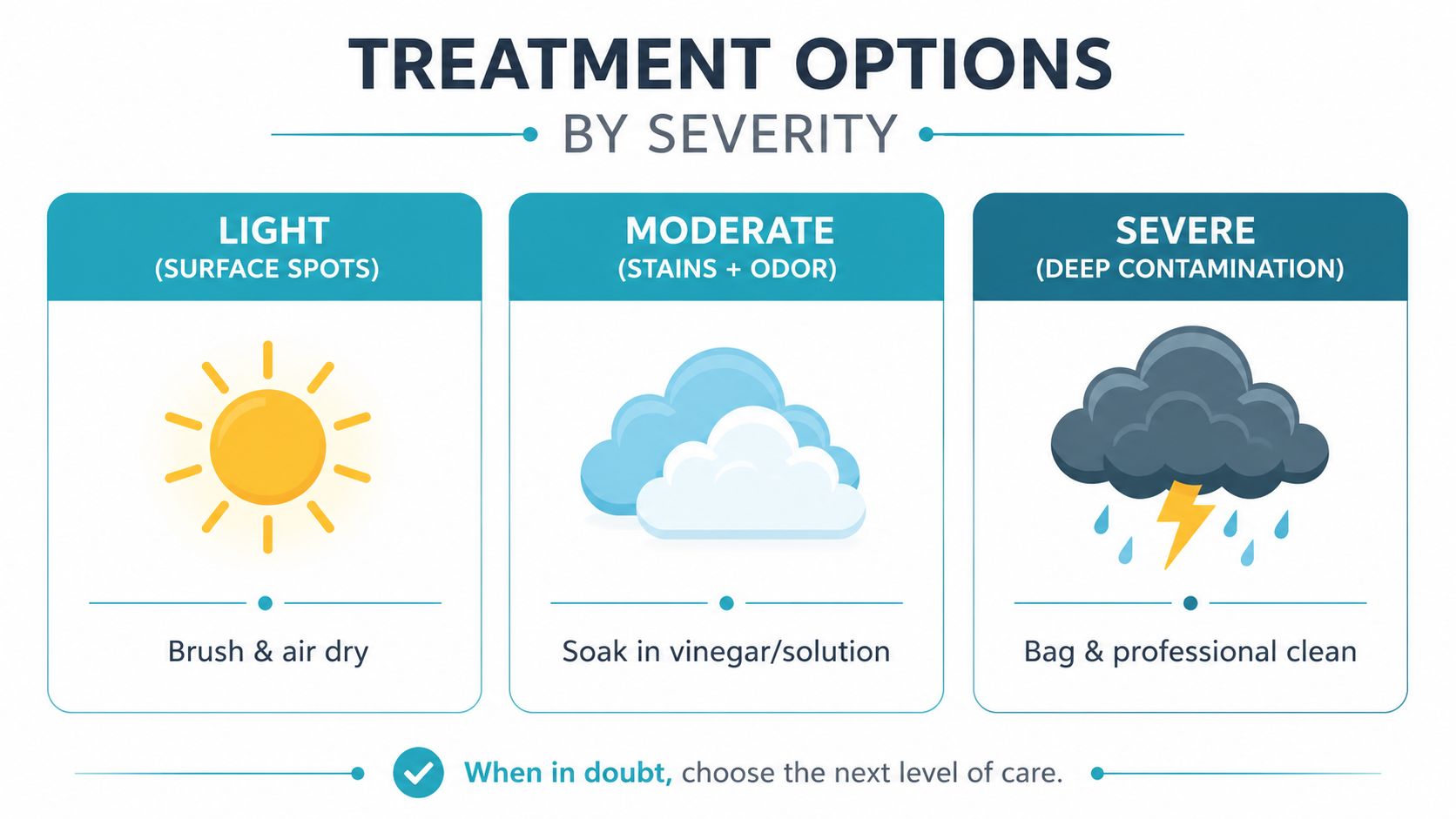
Match the method to the damage
For light surface spots, a dry brush outdoors and immediate air-drying may be enough to stop spread before washing. For moderate staining and odor, white vinegar, hot-wash laundering, and a careful repeat cycle are the workhorses most homeowners can handle. For deep contamination, especially on delicate, dry-clean-only, or leather items, home washing is often the wrong tool.
A few treatment options show up repeatedly in consumer guidance. Vinegar is common because it's accessible and can help with odor and surface contamination. Oxygen bleach is the better next step when stains linger. Borax and enzyme cleaners can help in some fabric situations, but they're not magic, and they're not a substitute for proper isolation and drying.
The important trade-off is this. The harsher the fabric, the less room you have for trial and error. White cotton can take a tougher approach than a silk blouse or a jacket with mixed materials. For a broader comparison of remediation logic, how to kill mold the truth about mold removal is a useful companion read when the garment problem is part of a bigger moisture issue.
| Fabric or Situation | Home Treatment Fit | Caution |
|---|---|---|
| White cotton | Often manageable with vinegar, hot wash, or oxygen bleach | Test first if the item is sentimental or heavily dyed |
| Polyester blends | Usually respond well to fiber-safe hot washing | Avoid overheating if the label warns against it |
| Delicates | Limited home options | Don’t scrub hard or use a rough cycle |
| Dry-clean-only items | Usually not a home-laundry job | Moisture can worsen the damage |
| Leather | Poor fit for standard washing | Seek specialized cleaning or remediation guidance |
When the fabric is valuable, fragile, or structurally compromised, the safe choice is restraint. You're not trying to rescue the garment at any cost, you're trying to prevent a contaminated item from becoming a repeat source.
Washing, Drying, and Sun Exposure the Right Way
The most reliable home workflow is the one that respects sequence. Start with a pre-soak, then wash on the hottest fabric-safe setting, and dry completely before storage. Guidance I trust in the field consistently points to pre-brushing outdoors, a white-vinegar soak at about 1:4 vinegar-to-water for at least 1 hour, then a hot wash with detergent and full drying before the item goes back in the closet. That sequence is the difference between a one-time cleanup and a recurring odor problem.
Heat helps, but timing matters
Some laundering guidance notes that mold spores die above 60°C, or 140°F when the fabric can handle that heat, which is why hot water is materially better than cold or warm cycles for mold removal. At the same time, the dryer can set stains if you use it before the item is clean. That's why air-drying first and checking the fabric in natural light is the safer move.
Do the inspection in daylight. Gray shadowing and lingering odor show up better outside or near a bright window than under bathroom lighting.
If the garment still smells musty or shows a faint mark after the first cycle, repeat the treatment instead of pretending it's fine. For stubborn cases, oxygen-based bleach soaks are commonly used for longer contact time, and some consumer guidance recommends keeping them in solution for 8 hours or overnight. A practical overview of this wash-and-dry sequence also lines up with differences between cleaning and preventing shower mold, because the same principle applies in both places, cleaning works only when moisture is fully removed afterward.
A simple order that works
- Brush outdoors first.
- Soak in a vinegar solution.
- Wash hot, if the fabric allows it.
- Air-dry in direct sunlight.
- Reinspect before using a dryer.
The last step is easy to skip and expensive to regret. If there's still shadowing or odor, treat it again before you put it away. For preventing repeat problems in the laundry area itself, how to stop mold from coming back is worth reading once the clothes are clean.
When to Stop DIY and Call a Mold Remediation Professional
Laundry methods only work when the contamination is on the garment. Once you're seeing mold on closet walls, smelling it through the HVAC, or pulling the same musty items out of the wash after repeated treatments, the issue is probably in the room, not just the fabric. That's the point where bleach, vinegar, and another trip through the washer stop solving the actual problem.
Signs the problem moved beyond clothing
If several items smell off at once, the closet likely needs inspection. If the odor returns after washing, moisture may still be feeding growth somewhere nearby. If family members start reacting with respiratory irritation, the home deserves a serious look instead of another round of guesswork.
AMPM Restoration Services handles mold removal and inspection for Florida homes and businesses, including Bradenton, Sarasota, Tampa Bay, Saint Petersburg, and Lakewood Ranch. In a case like this, a remediation team contains the area, uses air filtration, and addresses porous materials that can't be saved by a normal laundry cycle. That matters because mold on drywall, baseboards, or ductwork won't be fixed by clothing treatment.
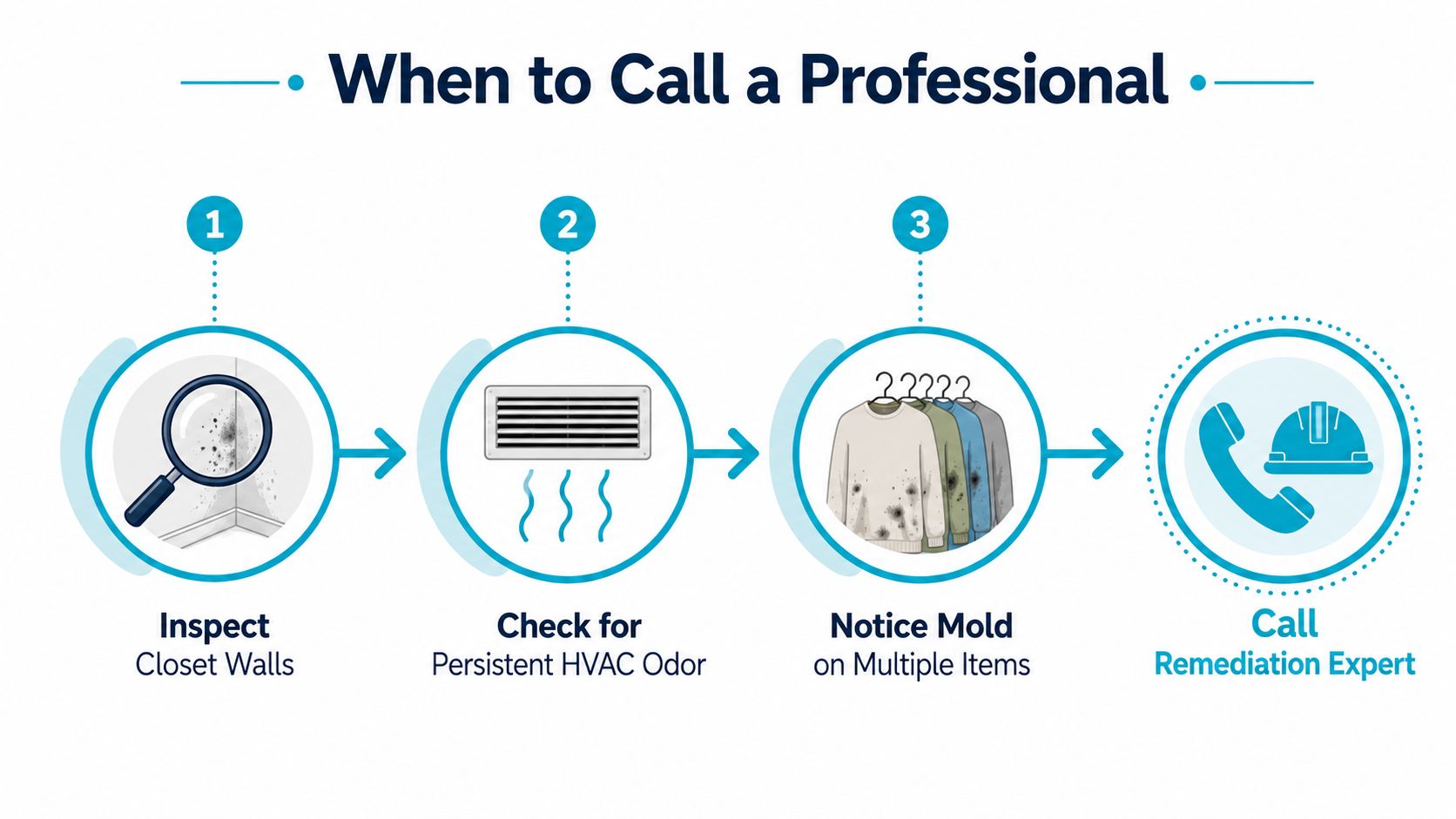
What professional escalation looks like
A good rule is simple. If the garment problem keeps coming back, or if the closet itself smells contaminated, stop trying to solve it only in the laundry room. For a deeper guide on the tipping point, when do I need professional mold removal gives homeowners a clear framework for deciding when cleanup needs containment, not just scrubbing.
When the problem spreads into the structure, the goal changes from “save this shirt” to “protect the house and the people in it.” That's a different job.
Preventing Mold From Coming Back to Your Wardrobe
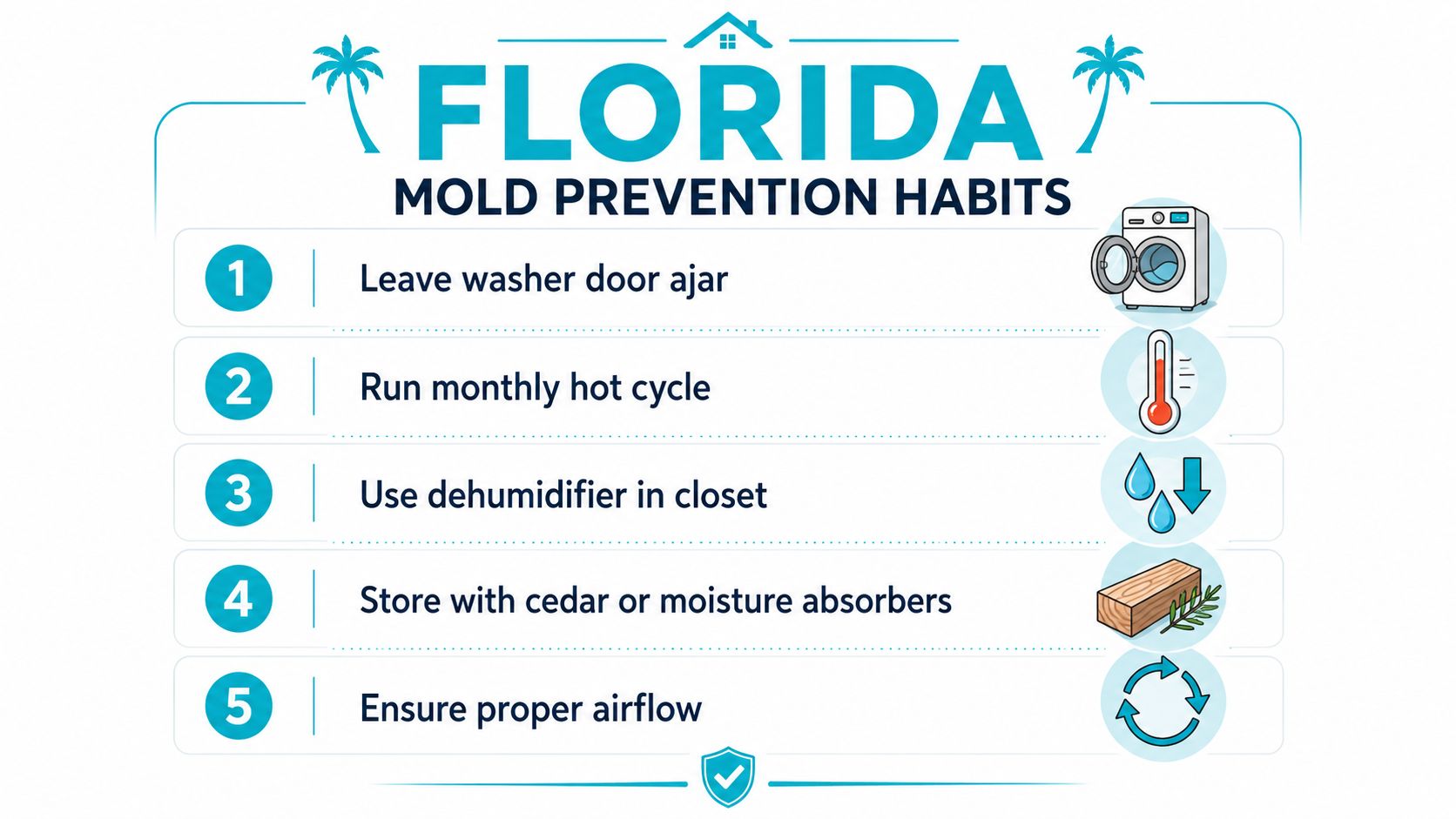
Florida wardrobes stay drier when the laundry room is managed like a humidity zone. Leave the washer door open between loads, use a dehumidifier in closets, and store seasonal clothing in breathable containers instead of sealed piles that trap moisture. Damp gym bags and hampers deserve the same attention, because they're common starting points for repeat contamination.
Keep humidity from winning
A monthly hot cycle with vinegar helps keep the washer from becoming a hidden source of odor. Small leaks need fast repair, because water damage that sits too long can feed mold behind drywall and eventually affect the closet next to it. If you're thinking bigger than the wardrobe, home air quality is the lens to use, because clothing often reflects what's happening in the air and behind the walls.
The practical habit is simple. If clothes sat damp, do not put them away. If the room smells stale, fix the airflow. If a spill, leak, or storm left things wet, address it quickly instead of assuming the issue will dry out on its own.
Get Fast Local Help and Your Mold Questions Answered
If you're dealing with moldy clothes, a musty closet, or repeated contamination after washing, call 941-946-7807 for a free inspection and estimate. AMPM Restoration is available 24/7 with a one-hour response time across Bradenton, Sarasota, Tampa Bay, Saint Petersburg, and Lakewood Ranch, and the team can help with insurance claim assistance and financing options when the problem goes beyond laundry.
FAQs
How do I know if clothes are safe to keep?
If the item cleans up fully, dries completely, and no longer smells musty, it may be salvageable. If the odor or staining keeps coming back, treat it as contaminated.
Is vinegar enough for black mold on clothes?
Vinegar can help with many fabric situations, but deep contamination or recurring growth needs a stronger plan, and sometimes professional help.
When should I throw clothing out?
If the fabric is fragile, dry-clean-only, leather, or still contaminated after repeated attempts, replacement is often safer than forcing another wash.
How long should sun-drying take?
Long enough for the garment to dry completely before storage. Don't put it away while it's even slightly damp.
Can I reuse a washing machine after a moldy load?
Yes, but only after a proper cleaning cycle and inspection. Don't let the machine become the next source of odor.
What does insurance usually cover?
Coverage depends on the cause of the damage and your policy details. A restoration company can help you document the loss and work through the claim.
A CTA for AMPM Restoration Services.