

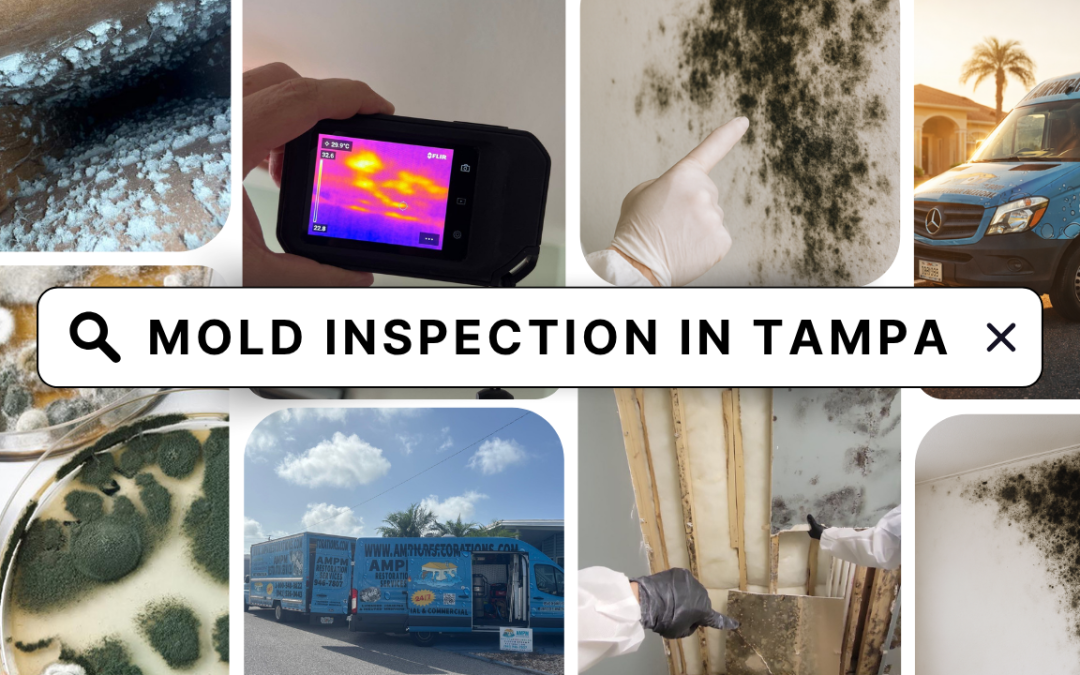
That faint musty smell after an afternoon storm. The AC kicks on, and the odor gets stronger. Maybe you’ve noticed a small ceiling stain, bubbling paint near a window, or a closet that always feels damp no matter how much you air it out. In this climate, those aren’t small housekeeping issues. They’re often the first signs that you need a mold inspection in Tampa, Florida, that homeowners can rely on.
Across Tampa Bay, mold problems rarely begin in obvious places. They start behind drywall, inside insulation, around roof penetrations, under flooring, and in HVAC components that stay cool while the surrounding air stays wet. By the time you can see growth, the moisture problem usually started earlier.
A professional inspection gives you answers before guesswork turns into demolition. If you’re seeing warning signs, scheduling a free mold inspection is often the most practical next step.
Your Guide to Professional Mold Inspection in Tampa, Florida
Many Tampa homeowners call after the same sequence. A storm rolls through. The home dries on the surface. Then a few days later, a guest room smells stale, an air vent looks discolored, or a baseboard starts swelling. The house doesn’t look flooded, so they assume it’s minor.
In Florida, that assumption is where people lose time.
A proper mold inspection in Tampa, Florida service isn’t just someone shining a flashlight at a wall. It’s a moisture investigation. It’s not just about whether mold is present. It’s where water entered, how far it traveled, what materials stayed wet, and whether the issue is active or leftover from an older event.
What Tampa homeowners usually need most
The first need is clarity. People want to know whether the odor is coming from a roof leak, plumbing issue, air handler, or wall cavity.
The second need is a plan. If there’s mold, they need to know whether cleanup is limited and controlled or whether the contamination has spread enough to require a larger remediation setup.
Practical rule: If you can smell mold but can’t see it, assume moisture is trapped somewhere and treat that as an inspection issue, not a cleaning issue.
Good inspection work should leave you with fewer questions, not more. You should know what was found, what wasn’t, and what happens next if the findings point to remediation.
Why Tampa Bay Is a Hotspot for Hidden Mold Growth
Tampa Bay creates conditions that speed mold growth in ways homeowners from drier regions often underestimate. According to reporting on regional mold risk, Tampa Bay’s year-round humidity levels of 60-90% allow mold to colonize damp surfaces within 24-48 hours, and the wet season brings average monthly rainfall above 7 inches in Hillsborough County. The same report notes that over 45% of local homes have hidden moisture issues (regional humidity and hidden moisture data).
That combination changes the way inspection has to be approached. In a dry climate, a minor leak may dry out before it creates a larger reservoir of moisture inside materials. In Tampa, moisture tends to linger in framing, drywall paper, insulation, carpet pad, and attic decking. The surface may look normal while the cavity behind it stays damp.
Why visual checks miss the real problem
A homeowner can walk room to room and see nothing unusual, yet still have a genuine mold issue. That’s common after:
- Roof leaks during wet season storms that wet insulation above ceilings without causing immediate collapse
- Slow plumbing failures under tubs, sinks, or behind appliances, where moisture stays trapped
- Air conditioning condensation issues near vents, plenums, and drain lines
- Poor attic or crawl space ventilation where humidity stays high long enough to support growth
Hidden moisture is why wiping a visible spot rarely solves the full issue. Cleaning addresses the symptom on the surface. It doesn’t confirm whether the surrounding materials stayed wet.
HVAC often plays a larger role than homeowners expect
In Gulf Coast homes, the HVAC system can spread odors and draw attention to problems in one part of the house that started elsewhere. If you’re trying to understand how climate-control components affect moisture behavior and air distribution, this overview of an HVAC climate control module gives helpful context on how climate systems influence comfort and environmental conditions.
That doesn’t replace a mold inspection, but it helps explain why odor patterns can change when the system cycles.
A musty smell that gets stronger when the AC turns on is rarely a “just spray something” problem. It usually points to moisture, air movement, or both.
Homeowners who want to understand why this keeps happening in Florida homes can also review why many Florida homes deal with mold. The short version is simple. Tampa homes live under constant moisture pressure, and hidden moisture is what turns a small event into a larger restoration job.
The Mold Inspection and Testing Process Explained
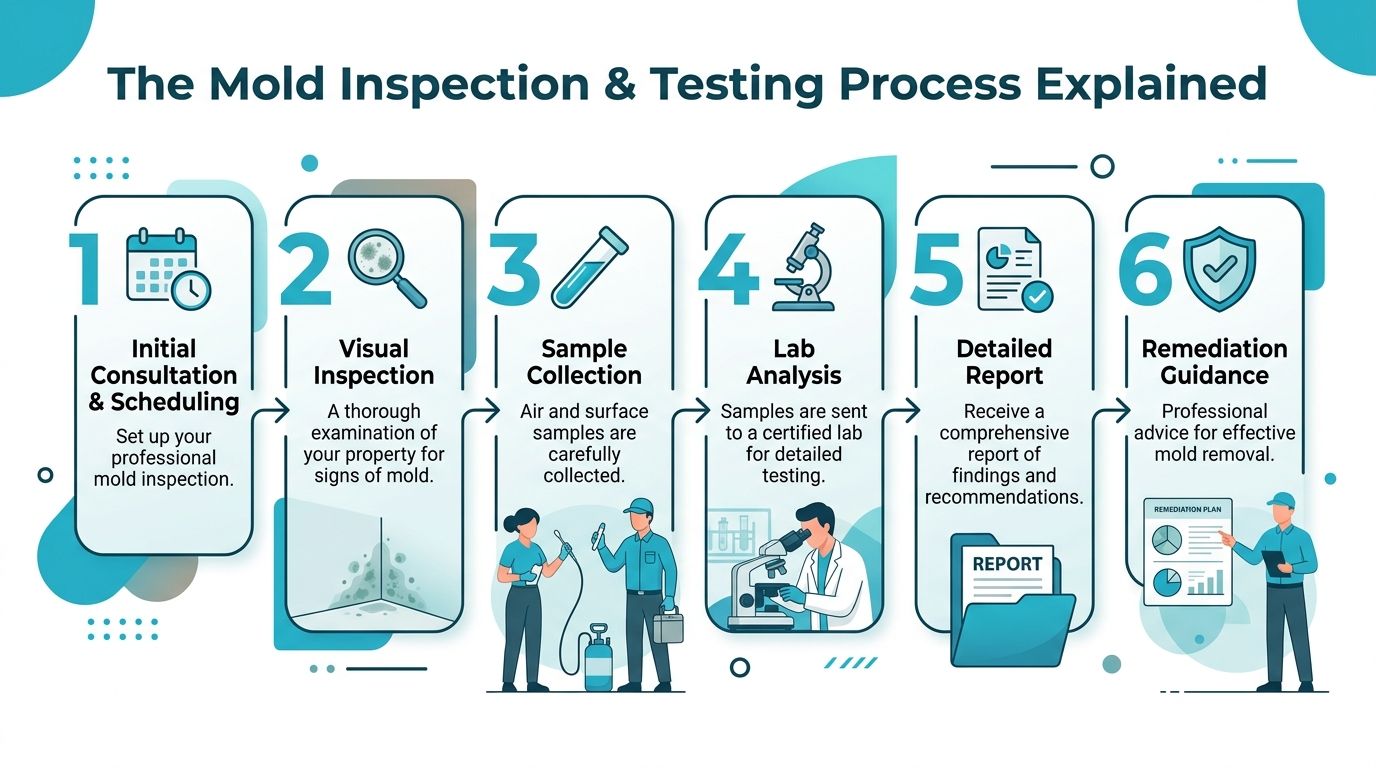
A professional mold inspection should feel methodical. You shouldn’t feel rushed, and you shouldn’t be left guessing why samples were taken in one room but not another. Good inspection work follows the moisture trail.
Step one starts before anyone arrives
The process begins with the property history. The most useful details usually come from the homeowner. When did the smell start. Was there a roof leak, appliance overflow, plumbing backup, or storm event. Does the odor worsen after rain or when the AC runs. Has any area already been painted, patched, or cleaned.
Those details help narrow the likely source. They also help the inspector avoid treating the home like a blank slate when it isn’t one.
The inspection begins with non-invasive observation
The first onsite step is a visual review of accessible areas. That includes ceilings, baseboards, window perimeters, under sinks, around tubs and showers, near air handlers, around supply vents, in closets, and in attic or crawl space access points when available.
The point is not just to find visible mold. It’s to spot the evidence moisture leaves behind. Staining, warped trim, lifted flooring, peeling paint, rusted fasteners, soft drywall, and recurring condensation patterns all matter.
This visual helps frame where instrument testing should happen next.
Moisture mapping is where inspection becomes technical
Professional inspections use tools because mold follows moisture, not assumptions. According to guidance on the inspection process, thermal imaging cameras and moisture meters help locate hidden moisture, and readings above 60% relative humidity or 16% moisture content in materials signal imminent risk. Those findings guide where air or surface samples should be taken for lab analysis, including when identifying species such as Stachybotrys (inspection tool thresholds and sampling guidance).
That matters because different tools answer different questions.
- Thermal imaging helps locate temperature anomalies that may suggest trapped moisture.
- Moisture meters confirm whether building materials are wet or moisture-loaded.
- Humidity readings show whether the room environment itself is supporting continued growth.
A thermal camera alone is not enough. It points to suspicious areas, but the inspector still needs verification with a moisture meter and the context of the building materials involved.
Sampling has a purpose when it’s done correctly
Not every inspection needs the same sampling strategy. If visible mold is obvious and the moisture source is clear, the immediate priority is often source correction and remediation planning. But in many Tampa homes, the issue is hidden, disputed, or tied to indoor air concerns. That’s where testing becomes useful.
Common sample types include:
- Air samples for comparing indoor conditions with normal background conditions
- Surface swabs when a visible substance needs identification
- Tape lifts when growth is on a surface and the inspector wants a direct sample without disturbing more area
Sampling should never be random. It should answer a specific question. Is the vent odor tied to airborne spores. Is the staining fungal growth. Is the bedroom with no visible growth showing air conditions similar to the water-damaged room.
The best inspectors don’t “sell samples.” They explain what each sample can prove, what it can’t prove, and whether it changes the next decision.
The report should connect findings to action
Once the inspection and any testing are complete, the report should document conditions clearly. That usually includes where readings were taken, what materials showed high moisture, what samples were collected, and what the findings suggest for cleanup scope.
Florida homeowners often get confused about whether assessment and remediation are the same service. They aren’t, and that distinction matters. If you want a plain-language breakdown, this guide to mold assessment vs mold remediation lays out the difference.
A useful report doesn’t bury the answer under jargon. It should tell you whether the problem appears localized or widespread, whether hidden cavities are likely involved, and whether licensed remediation is the next proper step.
Decoding Your Mold Inspection Report and Contamination Levels
Inspection reports can look more technical than they really are. Homeowners usually focus on the mold name first, but the more useful question is this: what does the report say about the size of the affected area, where the moisture source is, and what level of containment the cleanup requires?
That’s where Florida contamination levels matter.
Florida contamination levels in plain language
Florida recognizes three contamination levels for mold work. According to Florida mold standards, Level 1 is less than 10 square feet, Level 2 is 10-100 square feet, and Level 3 is more than 100 square feet. Once contamination exceeds Level 1, licensed professionals should handle the work using containment and HEPA filtration, because improper handling can lead to regrowth in 60% of cases (Florida contamination levels and regrowth risk).
Here’s the practical meaning.
| Florida Mold Contamination Levels and Required Actions | ||
|---|---|---|
| Contamination Level | Affected Area | Required Protocol |
| Level 1 | <10 sq ft | Limited cleanup may be appropriate when conditions are simple and isolated |
| Level 2 | 10-100 sq ft | Containment and controlled removal should be performed by licensed professionals |
| Level 3 | >100 sq ft | Full containment, HEPA filtration, and professional remediation planning are required |
The report may not always use conversational language, but the implications are straightforward. As the affected area grows, the risk of cross-contamination grows with it.
What homeowners should look for first?
Don’t get stuck on one line item. Start with these report elements:
- Affected locations tell you whether the problem is confined or spread across multiple assemblies.
- Moisture findings help identify whether the source is still active.
- Sample descriptions show what was tested and from where.
- Recommended protocol tells you whether the next move is source repair, remediation, or both.
If the report shows limited visible growth but high moisture nearby, that’s important. It often means the current damage you can see is smaller than the damage that may be developing behind finishes.
What works and what doesn’t after you get the report
What works is acting on the moisture source first. If a roof leak, plumbing failure, or condensation issue remains active, cleanup alone won’t hold.
What doesn’t work is repainting, sealing over odor, or running a dehumidifier while ignoring wet materials already inside the wall or ceiling.
Small visible growth can still point to a bigger concealed problem. The report’s value is in showing where to open the investigation, not just what was visible that day.
A good report gives you enough information to approve the right scope of work without overreacting or underreacting.
Choosing a Licensed and Certified Mold Inspector in Florida
Florida gives homeowners an important protection that many people don’t know exists until they’re already dealing with a mold problem. Under Florida Statute 468.8419, mold assessment and mold remediation must be kept separate to avoid conflicts of interest. In Tampa, a licensed mold inspection typically costs $300 to $1,075 and provides an unbiased, insurance-ready report used for professional remediation decisions (Florida licensing law and inspection cost range).
That separation matters. If the same company benefits from finding a bigger problem and immediately selling the cleanup, the homeowner loses an important layer of objectivity.
Credentials that actually matter
A polished website isn’t a credential. For a mold inspection tampa florida job, homeowners should ask direct questions about licensing and field qualifications.
Look for:
- State licensing that fits mold assessment requirements in Florida
- IICRC training or certification on the remediation side when cleanup work is later performed
- Clear reporting practices that document findings, sample locations, and moisture conditions
- Understanding of Florida procedure so the company doesn’t blur the line between assessment and remediation
If a company gets vague when you ask who is doing the assessment and who is doing the removal, slow down.
Red flags homeowners should take seriously
Some warning signs show up in the first phone call.
- Immediate pricing for removal before inspection usually means someone is guessing
- Pressure to skip documentation can create problems if you need insurance support later
- Claims that every mold issue needs the same treatment suggest a template, not an evaluation
- No discussion of source correction means the underlying cause may be ignored
For homeowners wondering when the issue has moved past surface cleaning, this guide on when professional mold removal is needed is a useful checkpoint.
Why legal compliance protects your budget too
A licensed assessor doesn’t just protect the process. They protect the scope. The wrong diagnosis can push you into unnecessary tear-out, or the opposite, leave hidden contamination behind walls while a cosmetic cleanup gives false confidence.
That’s why the cheapest inspection isn’t automatically the smartest choice. What you’re paying for is not just a visit. You’re paying for a defensible conclusion.
If the report may affect insurance, tenant disputes, or a property sale, unbiased assessment isn’t optional. It’s part of protecting yourself.
The AMPM Restoration Advantage for Your Tampa Property
Once inspection confirms a mold issue, homeowners need more than a generic recommendation to “fix it.” They need a process that respects Florida’s rules, addresses the moisture source, performs controlled remediation, and verifies that the work was completed properly.
One part of that process is post-remediation verification, often called PRV. According to Florida-focused mold guidance, over 25% of mold complaints involve disputed clearances, and effective PRV using independent lab testing helps confirm the job was successful and reduce recurrence risk when post-remediation humidity remains above 60% (PRV and disputed clearance findings).
What good coordination looks like after inspection
A solid restoration process usually includes several moving parts:
- Moisture source correction such as leak repair, drainage correction, or drying support
- Containment planning based on the contamination level and building layout
- Controlled removal and cleaning using appropriate filtration and work practices
- Documentation for insurance so the file reflects what was found and what was done
- Independent verification when clearance matters
At this stage, many projects can go off course. Some crews remove damaged material but don’t control humidity afterward. Others clean visible growth but don’t address what the HVAC system circulated. Some finish the job but leave the owner with weak paperwork.
What tends to fail in real homes
The most common failure points are practical, not mysterious.
A wall cavity gets opened, but the leak path above it remains. An air handler closet gets cleaned, but the surrounding materials still read damp. A strong antimicrobial odor gives the impression that the issue is solved, but there’s no independent confirmation that the environment returned to acceptable condition.
That’s why one-company convenience isn’t always the same as a complete process. In Florida, the handoff between assessor, remediator, drying team, and verification step needs to be clean and documented.
Where a full-service contractor fits
For homeowners who want one contractor to manage the remediation, repairs, and reconstruction side after a separate assessment is completed, AMPM Restoration Services handles water damage, mold removal, drying, cleanup, and rebuild work across the Gulf Coast. That type of full-service setup can reduce delays after the inspection phase, especially when the mold issue began with a leak, storm intrusion, or another moisture event.
The practical advantage isn’t marketing language. It’s continuity. The fewer gaps between drying, removal, repair, and final finish work, the fewer chances there are for a wet material or missed cavity to get overlooked.
Clearance matters. If no one verifies the result after remediation, the homeowner is left trusting appearance alone.
For Tampa properties, that’s the bigger lesson. Mold work isn’t just about removing what you can see. It’s about restoring dry, stable conditions so the same problem doesn’t come back after the walls are closed.
Your Next Step: Secure a Healthy Home Today
If you’re noticing a musty odor, staining, repeated condensation, or signs of water intrusion, don’t wait for the problem to become obvious. In this region, mold inspection in Tampa, Florida isn’t a luxury service. It’s part of responsible home maintenance.
The right inspection should tell you whether the issue is isolated, whether hidden moisture is still active, and whether licensed remediation is necessary. It should also give you documentation you can use for repair decisions, property records, and insurance conversations.
If you live in Tampa, St. Petersburg, Sarasota, Bradenton, Lakewood Ranch, or nearby Gulf Coast communities, call 941-946-7807 to schedule a free inspection and estimate. AMPM Restoration can help with insurance claim assistance and financing options, so you can move from uncertainty to a clear plan without unnecessary delay.
Frequently Asked Questions About Tampa Mold Inspections
| Question | Answer |
|---|---|
| How do I know if I need a mold inspection or just mold cleanup? | If you have a musty odor, recent water intrusion, recurring staining, or visible growth that may extend beyond a small surface area, inspection comes first. Cleanup without identifying the moisture source often leads to repeat problems. |
| Does every mold inspection include testing? | No. Testing is useful when the source is hidden, when you need documentation, when conditions are disputed, or when indoor air concerns are part of the complaint. In other situations, visible growth and moisture findings may already provide enough direction. |
| Will a home inspector’s visual check replace a dedicated mold inspection? | Usually not. A mold-focused inspection uses moisture meters, thermal imaging, and targeted sampling decisions. A general home inspection may note signs of moisture, but it typically doesn’t provide the same depth of mold-specific evaluation. |
| What parts of the home should be checked during a Tampa mold inspection? | The most important areas are the ones most likely to trap moisture: attics, wall and ceiling areas below roof penetrations, bathrooms, kitchens, laundry spaces, closets, around windows, under sinks, near air handlers, and around HVAC vents and drain lines. |
| Can I stay in my home during the inspection and remediation process? | During inspection, yes in most cases. During remediation, it depends on the contamination level, the work area, the containment setup, and whether HVAC systems are affected. The answer should come from the remediation plan, not a blanket promise. |
| What should I do before the inspector arrives? | Don’t paint over stains, scrub suspect growth, or use heavy fragrance products to mask odors. Leave the conditions as they are, gather any leak or repair history you have, and make a list of where you’ve noticed smells, staining, or humidity issues. |
If you need help with mold inspection in Tampa, Florida, call AMPM Restoration Services at 941-946-7807 for a free inspection and estimate. We assist with insurance claims, offer financing options, and serve homeowners and property managers across Bradenton, Sarasota, Tampa Bay, Saint Petersburg, Lakewood Ranch, and surrounding Gulf Coast communities.