

A faint musty smell near a baseboard is easy to blame on Florida humidity. A cool tile spot can feel like ordinary air-conditioning. But when those clues appear together, you may be standing beside a hidden water leak that has already moved behind the finished surface.
Effective hidden water leak detection isn't about finding a dramatic burst pipe. It's about recognizing small changes early, testing them safely, and deciding whether you can handle the issue yourself or need a plumber, leak specialist, or restoration team. The right decision depends on where the water is, what materials it has reached, and how long they may have stayed wet.
Why Hidden Water Leaks Threaten Florida Homes
A Sarasota homeowner notices a faint musty smell near the baseboards and assumes seasonal humidity is responsible. Three weeks later, the baseboards buckle, the drywall feels soft, and mold is spreading behind the wall. The first clue wasn't dramatic, but it was a warning that deserved investigation.
Florida homes create several conditions that make concealed leaks difficult to judge. Warm weather supports microbial activity, while high indoor humidity can make ordinary condensation resemble a plumbing problem. That uncertainty causes many homeowners to wait until paint bubbles, flooring changes shape, or an odor becomes impossible to ignore.
Gulf Coast construction adds more hiding places. A slab-on-grade foundation can conceal an under-slab plumbing leak until water affects flooring, baseboards, or the soil around the structure. Stucco can hold moisture against wood framing, and an HVAC condensation line can fail unnoticed in an attic or ceiling cavity. The visible damage may appear far from the original source.
Practical rule: A dry-looking surface doesn't prove that the cavity behind it is dry.
The response window matters. The EPA says water-damaged areas and items should be dried within 24 to 48 hours to help prevent mold growth, and materials that stay wet longer require more cautious handling under mold-related remediation guidance. EPA mold remediation guidance also explains that concealed moisture can keep building materials wet even when the surface looks acceptable.
The scale of the problem is larger than one damaged wall. The EPA reports that the average home's leaks waste more than 10,000 gallons of water each year, while household leaks across the United States waste more than 1 trillion gallons annually, roughly equivalent to the annual household water use of more than 11 million homes. EPA household leak data gives useful context for treating leak detection as property protection, not merely a utility-bill concern.
For older construction, recurring plumbing defects, or suspected installation problems, documentation can matter beyond immediate repairs. Homeowners dealing with possible workmanship issues may find this guide to filing a construction defect claim useful when organizing photographs, inspection records, and repair history.
Warning Signs of Hidden Water Leaks
Start with a quick inspection rather than waiting for a large stain. Move through the home in a consistent order, use your senses, and record anything that has changed. One clue may be harmless condensation, but several clues in the same area deserve prompt attention.
Begin with bathrooms and utility spaces
Check around toilet bases with your foot, not a tool. A soft or spongy floor can indicate water beneath the finished surface. Look under vanities for discoloration, swollen cabinet panels, and dampness around supply connections. On exposed pipes, condensation can form when cold water meets humid Florida air, but active leakage usually leaves a repeating wet mark, mineral residue, or moisture that returns after the surface is dried.
In the utility room, inspect the water heater for rust, pooling, or staining. Examine washing machine hoses for bulges, cracks, or damp connections. A washing machine area may look dry between cycles, so check after the appliance has operated rather than relying on one visual snapshot.
Read the kitchen and living areas
Under the kitchen sink, look for warped shelving, darkened wood, mineral deposits, or a musty smell near the dishwasher. A loose drain connection may leak only while the sink runs, while a supply line can leak continuously. Dry the cabinet first, then check again after using the fixture.
In bedrooms and living rooms, inspect for bubbling paint, peeling wallpaper, cupping hardwood, and warm or damp tile spots. A cool area may reflect air movement or a plumbing line, so compare it with nearby surfaces instead of treating temperature alone as proof. The signs of hidden water damage behind drywall can help homeowners organize this visual inspection.
Don't ignore ceilings, bills, and sound
Look above ceilings and inside accessible attic areas for sagging drywall, rust stains around nail heads, or insulation that feels damp and matted. Persistent musty odors are especially important when air fresheners only cover them temporarily.
Also check your water meter and listen when every fixture is off. A faint hiss, dripping sound inside a wall, or an unexplained bill increase can point to a leak that hasn't reached a visible surface. Florida humidity creates false positives, but it doesn't explain away a pattern of odor, staining, sound, and material change occurring in one location.
DIY Detection Methods and Tools
DIY testing works best when the suspected leak is accessible, the water is limited, and no electrical or structural hazard is present. These methods can narrow the source, but they can't certify that a wall cavity, slab, insulation layer, or subfloor is dry.
Five useful checks
Test the water meter. Shut off faucets, appliances, irrigation, and other water sources. Record the meter reading, wait two hours, and check for movement. Any movement suggests water is passing through the system. A very slow change may fit a small drip or toilet leak, while faster movement deserves prompt plumbing attention. The test can't identify the location, and it can miss intermittent leaks.
Use food coloring in the toilet tank. Add dye to the tank without flushing and watch the bowl. If colored water appears, the flapper or another toilet component is allowing tank water to pass. This test identifies a toilet leak, not a supply leak inside a wall or beneath the floor.
Wrap paper towels around joints. Place dry towels around accessible supply valves, traps, washing-machine connections, and pipe joints. Check after 30 minutes and after using the fixture. Wet paper provides a simple confirmation, but a dry towel doesn't rule out a leak behind finished materials.
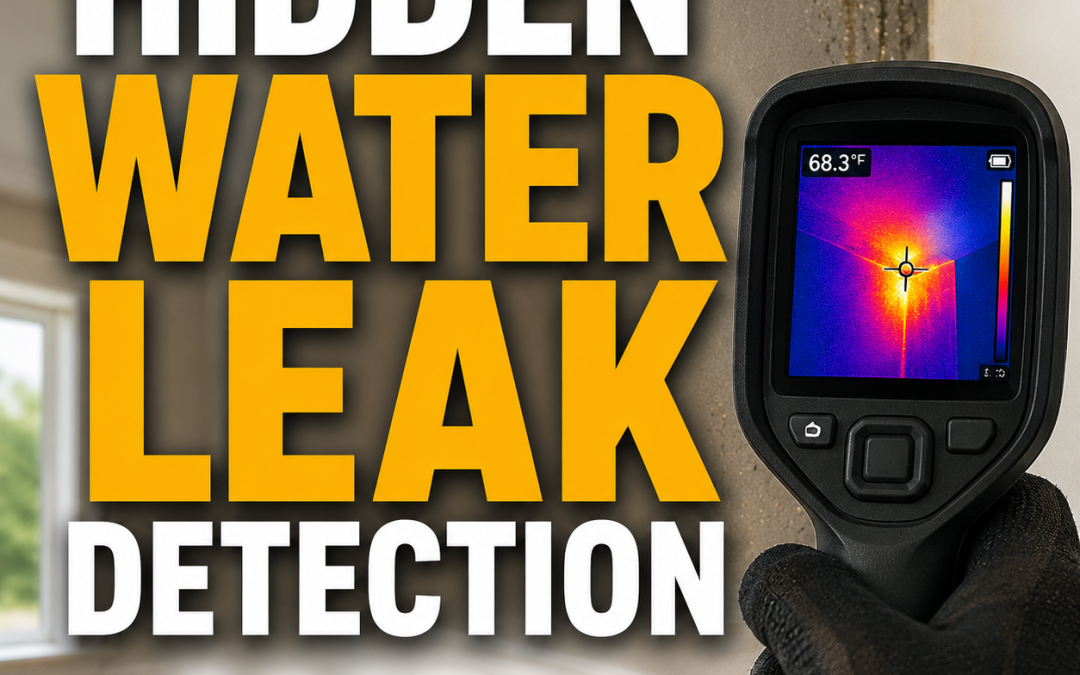
Scan with an infrared thermometer. Compare walls and floors with adjacent areas. A cooler spot can indicate evaporation or moisture movement, but temperature alone doesn't measure water content. Thermal imaging guidance stresses recording environmental conditions, scanning under favorable temperature differences, comparing anomalies with dry reference areas, and confirming suspects with a contact moisture meter. In field validation involving buried-pipe sites, passive infrared thermography clearly identified 59% of leaks, while another 22% produced notable but inconclusive signatures. Technical thermography research supports using thermal tools as screening equipment, not as a stand-alone diagnosis.
Listen carefully. Press the handle of a screwdriver against an exposed pipe and place your ear near the handle. Hissing or dripping may suggest active flow. Walls, insulation, pipe material, household noise, and water pressure can all interfere, so treat this as a clue rather than proof.
| Method | Tools Needed | What It Detects | Limitations | Estimated Cost |
|---|---|---|---|---|
| Water meter test | Access to the meter, paper, phone | Ongoing household water use | Doesn't locate the leak or catch every intermittent leak | Usually no added cost |
| Toilet dye test | Food coloring | Tank-to-bowl toilet leakage | Doesn't test supply lines or hidden plumbing | Pantry item |
| Paper towel test | Dry paper towels, flashlight | Drips at accessible joints | Can't reach concealed spaces | Low household cost |
| Infrared scan | Infrared thermometer | Temperature anomalies that may relate to moisture | Temperature isn't moisture content; humidity and airflow can mislead | Consumer tool cost varies by model and retailer |
| Listening test | Screwdriver or listening tool | Sound from active water movement | Ambient noise and construction can mask the signal | Usually no added cost |
Local hardware stores, home centers, plumbing suppliers, and online retailers carry these basic tools. For a roof-related mystery, a separate roof leak detection guide for homeowners can help distinguish roof entry from plumbing moisture before you open a ceiling.
When testing points to concealed moisture, stop cutting exploratory holes. A dedicated water leak detection service can use non-invasive inspection methods before unnecessary demolition begins.
When to Call a Professional Leak Detection Service
The decision isn't just "DIY or professional." Use three questions: What material is wet? Where is the source? How long might the moisture have been present?
A small drip on a non-porous surface, such as an exposed valve, may be suitable for a homeowner who can safely shut off the local supply and monitor the repair. Porous materials change the situation. Drywall, carpet backing, insulation, wood flooring, and cabinetry can absorb water and conceal continued dampness. The EPA specifically advises drying carpet and backing within 24 to 48 hours, while noting that mold may still have developed even when drying occurs within that window. EPA-related carpet and backing guidance makes surface appearance an unreliable stopping point.
Use location and duration to set urgency
A leak behind drywall needs more than a towel and paint. A leak beneath tile or concrete can require specialized tracing because the visible damage may not identify the plumbing path. Unknown-duration infiltration should be treated cautiously. NIH facilities guidance says the first 24 to 48 hours are critical and recommends handling water as though it has existed for more than 48 hours when the duration can't be determined. NIH water infiltration guidance
Use this triage:
- Weekend DIY: The source is visible, the material is non-porous, the leak has just started, and no mold, odor, swelling, or electrical risk is present.
- Urgent plumber call: The meter moves, the leak is active, the source is behind a fixture or wall, or a stain is expanding.
- Immediate restoration response: Drywall, carpet, insulation, cabinetry, or flooring is wet; the duration is unknown; mold or a persistent odor is present; or several warning signs appear together.
Don't wait for a dramatic puddle. A musty odor that persists beyond 48 hours, visibly enlarging stains, soft structural materials, or multiple clues in one area should move the problem out of the DIY category. For broader property-risk questions, homeowners and contractors can also review how to compare plumbing liability insurance when responsibility for concealed damage is disputed.
Professional emergency leak detection becomes especially important when the suspected source is under a slab, inside a wall, above a ceiling, or connected to electrical equipment.
Immediate Actions and Insurance Documentation
Stop the water first. Close the local fixture valve if you can identify it safely. If the leak continues or the local valve doesn't work, shut off the main supply and avoid reopening it until the source is controlled.
Then protect people and property. Move furniture, electronics, rugs, and personal items away from the wet area. Don't touch outlets, switches, appliances, or wiring near water, and don't perform electrical work in a damp space.
Document before cleanup
Use your phone to capture:
- Wide views: Show the affected room, walls, ceiling, flooring, and the relationship between the damage and nearby fixtures.
- Close views: Photograph stains, swelling, mold-like growth, damaged belongings, pipe connections, and the suspected source.
- Video evidence: Record active dripping, flowing water, sounds, and meter movement when safe.
- Time information: Keep original timestamps and note when you discovered the issue, shut off water, and contacted help.
Create an inventory with each damaged item, its description, approximate purchase date, condition, and estimated value. Save receipts for emergency supplies such as tarps, fans, dehumidifiers, and cleaning materials. Don't discard damaged belongings before your insurer or adjuster has had a reasonable opportunity to review them, unless they create an immediate health or safety hazard. Preserve samples or photographs if disposal becomes necessary.
Fans and dehumidifiers can slow moisture accumulation when used safely, but they don't replace moisture measurement or cavity drying. Florida policies often distinguish sudden, accidental water releases from gradual damage, and exclusions or endorsements vary, so avoid promising coverage based only on the appearance of a stain. This water damage insurance claim guide provides a practical starting point for organizing the report.
Professional Leak Detection and Restoration Services
Professional hidden water leak detection adds information that household tests can't provide. A technician can compare moisture readings across surfaces, use infrared imaging to identify temperature anomalies, and apply acoustic listening equipment to narrow an underground or concealed source. Thermal imaging detects surface temperature differences, not water itself, so responsible inspection confirms suspicious areas with contact moisture readings or another appropriate method.
For buried pipes, combining thermography with acoustic or geophone verification is stronger than relying on an image alone. Research on underground mains describes a process that links environmental conditions, surface thermal contrast, pipe location, and acoustic validation. Another study found that low-resolution infrared systems could be as valuable as high-resolution systems for detecting leakage in some buried-pipe conditions, which reinforces the importance of workflow and field conditions rather than camera specifications alone. Buried-pipe leak localization research
Sensor selection also depends on pipe material, burial depth, ambient noise, and leak size. Acoustic tools can miss certain signals, so newer approaches combine flow, pressure, acoustic, infrared, and electrical-resistance data. A practical inspection doesn't ask which sensor is universally best. It asks which combination can verify this source without unnecessary demolition.
AMPM Restoration can coordinate leak detection with water extraction, structural drying, mold inspection and removal, sanitization, repairs, and reconstruction across Bradenton, Sarasota, Tampa Bay, Saint Petersburg, Lakewood Ranch, and surrounding Gulf Coast communities. The company operates 24/7 from 4301 32nd St W b18, Bradenton, FL 34205, and its insurance claim assistance and financing options can help homeowners manage the next steps. Learn more about integrated water damage restoration services when concealed moisture has already affected building materials.
Call AMPM Restoration Services at 941-946-7807 for a free inspection and estimate when you suspect a hidden water leak, especially if drywall, flooring, insulation, or cabinetry is involved. The team provides insurance claim assistance and financing options, and you can also visit AMPM Restoration Services to request help with leak detection, water damage restoration, mold removal, and reconstruction.
Frequently Asked Questions
What is hidden water leak detection?
Hidden water leak detection is the process of locating water escaping from concealed plumbing or entering enclosed building areas before the source becomes visibly obvious. It may include meter testing, moisture measurement, infrared screening, acoustic listening, and confirmation of suspicious areas.
Can Florida humidity cause a false leak reading?
Yes. Condensation, air movement, solar exposure, and temperature changes can create damp or cool areas that resemble leak evidence. Compare suspect areas with nearby dry reference areas and confirm thermal findings with a contact moisture meter.
Is a hidden leak a plumbing emergency?
It can be. Treat an active leak, an expanding stain, movement on the water meter, or water near electrical components as urgent. Water beneath a slab, behind drywall, or inside insulation also deserves professional assessment because the source and duration may be unclear.
How long can wet materials remain before mold becomes a concern?
The EPA identifies 24 to 48 hours as the important drying window for water-damaged areas and items. If the duration is unknown, treat the moisture conservatively and arrange an inspection rather than assuming the material is safe.
Can I find a leak behind drywall without opening the wall?
You can often narrow the area without cutting into it. Infrared screening, moisture meters, acoustic tools, and plumbing tests may identify the likely location, but each method has blind spots. A professional should confirm the source before extensive demolition or repair.
What should I do before a restoration technician arrives?
Shut off the local or main water supply, keep away from electrical hazards, move valuables from the affected area, and document the source and damage with photographs and video. Don't discard damaged items or begin major demolition before documenting the condition and contacting your insurer.