


You toss a load of towels into the machine, walk down the hall, and ten minutes later a sharp, acrid scorch hits your nose. A thin ribbon of gray haze is curling out from under the laundry closet door, and the metal cabinet feels blistering hot. When you have a dryer on fire, panic pushes most homeowners to yank open the drum door or grab a pot of water from the kitchen sink, and both instincts make the fire worse in seconds.
Most guides on laundry room fires stop at telling you to empty the lint screen. That misses both halves of what saves your family and your house. First, the opening 60 seconds require strict life-safety steps that cut off oxygen and get everyone outside. Second, once the fire trucks pull away, restoration work begins, because smoke, radiant heat, and firefighting water almost never stay inside the appliance cabinet.
What to Do in the First 60 Seconds of a Dryer on Fire
A U.S. Fire Administration residential dryer fire study estimated 2,900 residential-building dryer fires a year from 2008 through 2010, with an average of 5 deaths, 100 injuries, and $35 million in property loss annually, and only 54% of those fires stayed confined to the dryer itself. The rest reached walls, floors, or ducts. That spread is why the first minute is a leave-now sequence, not a chance to save the load or hunt for the spark behind the cabinet.
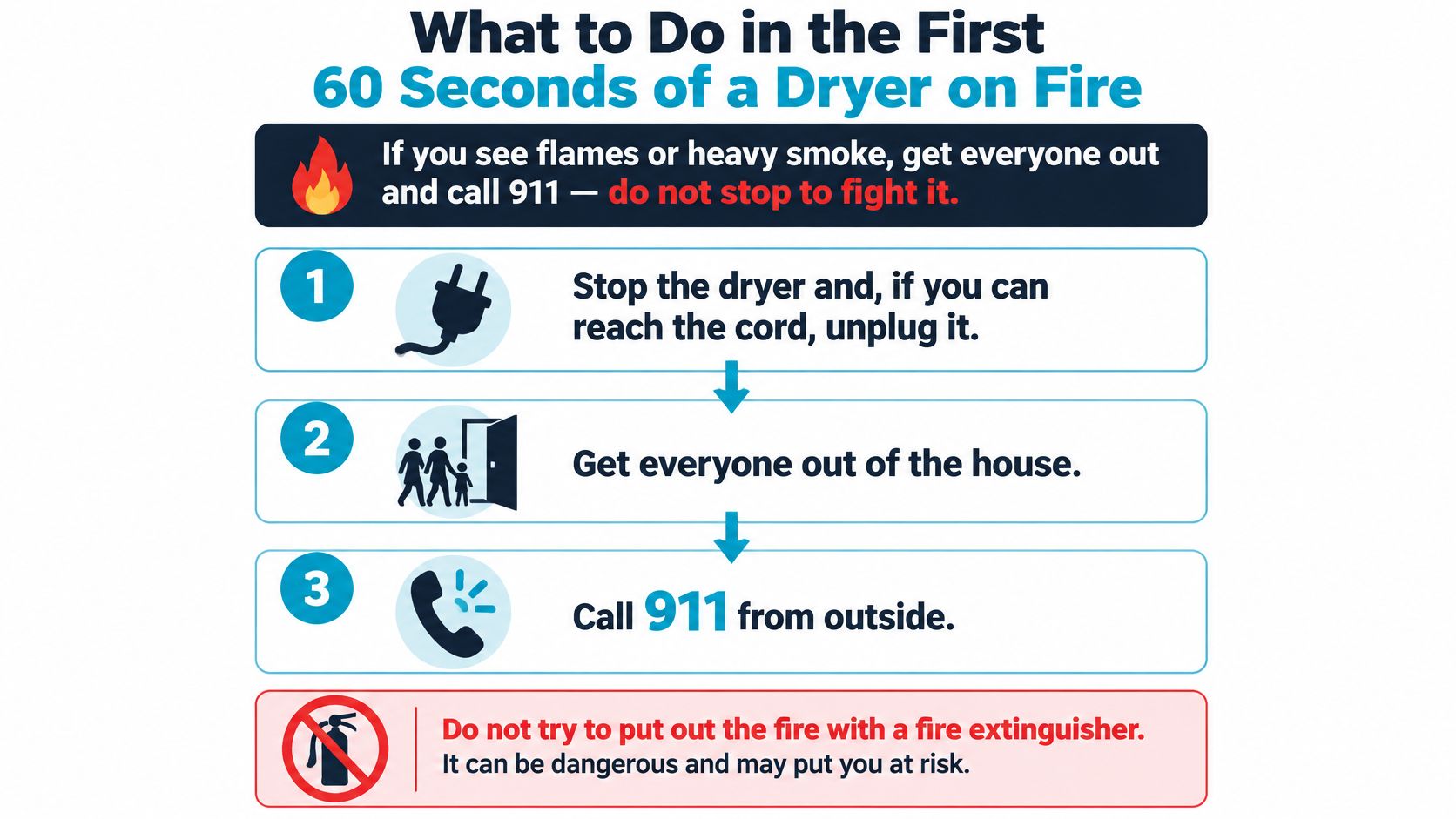
I treat visible flame or heavy smoke in a laundry closet as a life-safety problem. Clothes, the appliance, and the room can wait. People cannot.
The Six-Step Emergency Sequence
Follow this order the moment you suspect active combustion in the laundry room:
- Shut off power only if it is safe: Press the power button or turn the cycle dial off, and unplug the cord only if you can reach the outlet without leaning over or reaching behind a hot, burning cabinet. If the plug sits behind the unit, skip it and leave.
- Evacuate every person and pet: Get everyone moving toward the nearest exit immediately. Pull the laundry room door shut behind you if you can do so safely. A closed door cuts off fresh air and slows heat moving into the hallway.
- Call 911 from outside the home: Do not stay in the laundry room or kitchen while you talk to dispatchers. Smoke fills low ceilings fast, and carbon monoxide impairs judgment before the air looks dark.
- Keep the dryer and laundry doors closed: Do not crack the drum to see whether the flames died down. Fresh oxygen hitting trapped, superheated lint can flash into your face.
- Brief the arriving crew clearly: Meet firefighters at the curb. Tell them the clothes dryer is the origin, whether it uses gas or electricity, and where the exterior exhaust vent leaves the building. That vent path is often how heat and smoke get into walls and ducts past the cabinet.
- Stay outside until cleared: Wait for the incident commander to release the property. Visible flames can die while smoldering lint in a wall chase reignites minutes later.
When an Extinguisher Applies and Why Water Fails
A portable extinguisher is only for a small, incipient flame still inside the drum, and only when you have a completely clear exit at your back and training to use the unit. Call 911 first. Use only an ABC-rated dry chemical extinguisher. Leave the instant the canister empties or the smoke thickens.
Never throw water on a burning appliance. Clothes dryers run on high-voltage circuits that can energize standing water and cause severe electrocution, and DLG Electrical outlines why water never works on electrical fires when energized components and wiring insulation are involved.
Fight or Evacuate in the First Seconds
Match what you see to the safer move:
| What you see | Why |
|---|---|
| Flames visible inside the drum | Evacuate and call 911; oxygen feeds a lint fire, and reopening the door can cause a flash |
| Heavy smoke, no visible flame | Evacuate and call 911; smoldering lint can ignite without warning |
| Small flame, contained, extinguisher at hand, clear exit | Call 911 first, then use an ABC extinguisher only if trained; only an incipient fire with an escape route is fightable |
| Smoke smell, no fire, dryer hot to the touch | Shut off and unplug only if safely reachable, evacuate, and call 911; overheated wiring or lint can be pre-ignition |
| Fire out but smoke throughout home | Stay out until firefighters clear the house; concealed heat and smoke spread beyond the cabinet |
The dryer is replaceable. The next 60 seconds are not.
Why Dryers Catch Fire and How to Stop It
A towel load ends, the closet smells like hot cotton, and the outside vent flap barely lifts. Heat is trapped. Lint is the fuel sitting in that heat.
In its 2014 through 2018 analysis, the National Fire Protection Association estimated that U.S. fire departments responded to an average of 13,820 home structure fires involving dryers each year, resulting in an annual average of 7 civilian deaths, 344 civilian injuries, and roughly $233 million in direct property damage. Earlier 2010 to 2014 findings in the same report showed that 92% of fires involving either washing machines or clothes dryers started with the dryer, failure to clean accounted for 32% of home dryer fires, lint, dust, or fibers were the first material ignited in 27% of incidents, mechanical failures or malfunctions caused another 27%, and electrical failures or malfunctions accounted for 16%.
A clean screen still matters. It does not cover the mechanical and electrical share.

How Restricted Airflow Turns Lint Into Fuel
Every tumbling load sheds fine textile fibers. The removable screen catches most of them. Fibers that get past it collect in the blower housing, the transition duct behind the machine, and the rigid vent pipe in the wall or roof.
Investigative testing by the U.S. Consumer Product Safety Commission found that lint-trap, transition-duct, or vent fires appeared in roughly one-third of 79 investigated dryer fires. Packed fibers choke exhaust. Hot air stays in the cabinet. Temperatures climb until lint near the heating element or gas burner reaches ignition temperature. That is why cleaning and later inspection have to follow the duct past the cabinet, not stop at the door.
The electrical share deserves the same attention. If the breaker trips during a cycle, the outlet face looks discolored, or you smell hot plastic rather than scorched cotton, stop using the unit. I would not run another load until a technician checks the circuit. Arrange emergency electrical repair before the next cycle. A loose high-voltage terminal block or a failing thermal fuse can arc inside the cabinet.
Prevention Habits Paired With Why Each One Works
These habits sit next to broader home hazard mitigation steps that keep a small maintenance gap from becoming a structural loss. Each one trades a few minutes of work for a failure mode you can see.
- Clear the lint screen before or after every load. Fresh lint cuts exhaust velocity on the next cycle. Never run the machine with the filter removed. Loose fibers pack directly around the heating chamber.
- Scrub fabric-softener film off the mesh. Dryer sheets leave a waxy coating that looks clean. Hold the screen under warm tap water. If water puddles instead of draining through, scrub it with mild dish soap and a soft nylon brush, then let it air-dry completely.
- Clean the full vent run once a year and check exterior airflow. Walk outside during a cycle. Warm air should push the vent flap wide open. A sluggish flap means lint is packed in the wall chase or roof cap.
- Replace foil or plastic accordion hose with metal duct. Crushed corrugated foil traps lint in every ridge and fails quickly if a spark enters the duct. Use rigid or semi-rigid metal, keep the path short with few bends, and seal joints with metal clamps or UL-rated foil tape. Skip sheet-metal screws. The tips snag lint inside the pipe.
- Use lower heat and stay home for the cycle. Following U.S. Fire Administration clothes dryer safety guidance, pick the lowest suitable heat setting and a cool-down period. The load takes longer. You are there if smoke starts. Do not run the dryer while sleeping or away from home.
- Keep combustibles out of the drum. Do not dry rubber-backed bath mats, foam pillows, plastic items, or rags that held gasoline, paint thinner, or cooking oils, even after washing. Residual vapors can self-heat inside a warm load.
Florida humidity check: Along the Gulf Coast, tight laundry closets and summer humidity make damp lint clump faster in exterior vent hoods. After heavy storms, clear windblown leaves, insect nests, or stuck louvers before heavy towel loads.
The causes in that NFPA breakdown cluster around skipped cleaning, restricted airflow, and worn mechanical or electrical parts. A daily screen wipe handles one of those. The duct, the heat setting, and the circuit handle the rest.
After the Flames Are Out and What to Inspect Next
Once firefighters declare the structure safe and roll up their hoses, the house often looks calmer than it is. Your first 24 hours determine whether the loss stays confined to the laundry room or spreads into hallways, ductwork, and subfloors.

Lock Down Utilities and Document Before Touching Anything
Leave the circuit breaker tripped and the gas shutoff valve closed until qualified technicians clear the connections. Do not switch on the central air conditioning or heat pump to clear the smell, either. Turning on the HVAC pulls acidic soot into the return plenum and coats coils, registers, and bedrooms that the fire never touched.
Before anyone drags the scorched machine to the curb, pull out your phone and photograph everything in place. Capture the front, back, and drum interior, close-ups of the model and serial number plate, the crushed or charred exhaust duct, and the exterior vent cap, and pull your purchase receipt if you still have it.
Preserving the appliance matters because lint is not the only culprit. Analysis from the National Fire Protection Association on home dryer fires shows that clothing was the first item ignited in 25% of dryer fires, alongside dust, fiber, or lint. Beyond laundry loads, appliance-specific electrical defects create distinct hazards, illustrated by the February 2025 recall of OdorStop boot and shoe dryers after heat or ozone switches showed a risk of short-circuiting and arcing. If a failed heating element, internal wiring defect, or recalled component sparked the blaze, your insurer or an investigator will need the intact machine to verify the cause.
What a Full Post-Fire Inspection Actually Covers
Checking only the blackened metal cabinet is the most expensive mistake homeowners make after a dryer on fire. A complete inspection traces every pathway heat, smoke, and firefighting water can follow:
- Wall cavities, cabinetry, and structural framing: Radiant heat travels through drywall behind the appliance and along the metal vent chase into attic joists or crawl spaces, charring studs that look untouched from the hallway.
- Full exhaust duct continuity and termination: Never hook a brand-new dryer up to an old, soot-lined, or heat-warped vent pipe. If the restriction remains in the wall, the replacement machine will overheat the exact same way. Before recommissioning, verify duct continuity, clearance from combustibles, exterior termination, and functional airflow.
- Hidden water from firefighting efforts: Even a brief hose burst sends gallons under tile grout, behind baseboards, and into subfloors. In Bradenton, Sarasota, and Tampa Bay humidity, trapped moisture behind wet drywall can trigger active mold growth within days if left unextracted.
At AMPM Restoration, our fire and smoke damage restoration process starts with a thorough assessment covering smoke, soot, and water damage from firefighting efforts. From there, we secure the property with board-up or tarping when needed, extract standing water, and deploy industrial-grade air movers and dehumidifiers to dry soaked floors and wall cavities.
Once the structure is stabilized and dry, crews clear debris and clean soot and smoke residues from walls, ceilings, and personal belongings. Because odor lingers long after ash disappears, our smoke odor elimination includes treating the HVAC systems to prevent the recirculation of dirty air, paired with thermal fogging and ozone treatment to neutralize stubborn combustion smells. We then handle full structural repairs, drywall replacement, flooring repairs, and repainting from start to finish.
Never wipe soot off painted drywall with a damp household sponge. Water smears oily combustion residue deeper into the paint pores, turning a cleanable wall into a full repaint or drywall tear-out.
Choosing a Restoration Team and Filing the Claim
Standing in a smoky hallway, still adjusting to the shock, it is tempting to hire the first contractor who drops a flyer on the porch or quotes the lowest number over the phone. After a laundry fire, the cheapest opening bid is a trap. Unseen soot in duct runs and firefighting water trapped under cabinets set the actual cost, and a thin scope that ignores those areas leaves both the walls and the claim short.

Provider Questions to Compare Side by Side
Ask every restoration company the same six questions so bids sit on the same scope and the same accountability:
| Question to ask | Why it matters |
|---|---|
| Is response available 24/7? | Smoke and water keep spreading while you wait |
| Are you licensed and insured? | Protects you if hidden damage is missed |
| Do you reconstruct in-house or subcontract? | Controls schedule and accountability |
| Do you bill my insurer directly? | Reduces out-of-pocket cash flow |
| Do you scope fire, smoke and firefighting water together? | Hidden water and residue drive the final cost |
| Do you offer financing? | Keeps recovery from stalling on cost |
Signing an authorization before the written scope names walls, ducts, and firefighting water locks you into a partial job. Crews then bill change orders for damage the first walkthrough skipped, and the adjuster treats those extras as optional. I would not sign until that scope matches what the carrier asked you to document.
Property guides covering insurance repair builders across Australia stress the same fundamentals Florida homeowners use: verified licensing, a clear written scope, and one party accountable from emergency mitigation through rebuild. Checking for an IICRC-certified restoration company shows technicians are trained to recognized standards for smoke remediation and structural drying.
Filing the Claim While the House Is Still Wet
Call the homeowners carrier as soon as everyone is safe and the fire department releases the house. Get the claim number. Ask what the desk adjuster wants photographed before emergency dry-out starts.
Leave damaged clothing, cabinetry, and flooring in place until the adjuster signs off. Save receipts for temporary lodging and for board-up supplies. Have the restoration project manager compile moisture maps, thermal images, and a room-by-room inventory so hidden smoke and water sit on the file, not in an argument weeks later.
What you control is the timing and the proof. What the contract pays is the carrier's call.
Why a Local Gulf Coast Crew Changes the Schedule
When summer storms pull crews across Florida, out-of-area teams stretch thin and smaller residential fire jobs wait days for drying equipment. A licensed and insured crew already working Bradenton, Sarasota, and Tampa Bay can board broken windows and doors, tarp openings, and start drying before the next rain.
AMPM Restoration works with your insurance provider through the fire job to help streamline the claim, including documentation of hidden smoke and moisture. Repairs, repainting, and refurbishing are designed to meet current building codes, with the goal of returning the home to its pre-fire condition or better, guided by your preferences.
If fire, smoke, or firefighting water is in the house now, get a written scope before you authorize demolition. The seconds that saved lives are over. The days that save the house are the ones spent on scope, drying, and a claim file the adjuster can use.
Dryer on Fire FAQs
Can a Dryer Keep Smoldering After the Cycle Ends
Lint packed inside the blower wheel, heater box, or wall vent can smolder long after the drum stops tumbling and burst into flame minutes or hours later. That delayed ignition risk is why running a load overnight or right before leaving the house turns a minor overheat into a major structural fire. If a cycle ever ends with a scorched smell or a hot cabinet, pull the plug and keep the door closed until the machine cools completely.
What Should You Tell the Insurance Adjuster About the Cause
Stick to what you observed: when the fire started, what the machine was doing, and where flames or smoke appeared first. Avoid guessing at a failed part or a clogged vent, because early speculation can end up in the claim file and complicate the investigation. Preserve the dryer exactly as firefighters left it, and let the adjuster, the fire investigator, and your restoration project manager document the scene before anything is scrapped or hauled away.
Does Homeowners Insurance Cover Dryer Fire Damage
Coverage questions are worth raising the moment you file, since deductibles, limits, and appliance exclusions vary by contract. Section 4 above walks through the full claim sequence, from receipts to documentation.
Will Smoke Odor Fade on Its Own Over Time
Open windows and household air fresheners only mask the smell briefly, because acidic soot particles penetrate unfinished framing, drywall paper, insulation, and HVAC runs. In humid Gulf Coast weather, trapped odor molecules reactivate every time indoor moisture rises, so the smell can seem gone in the morning and return by afternoon. Thorough surface remediation and proven methods for removing stubborn smoke smells are what eliminate the odor, since true deodorization means treating the surfaces and air pathways the particles settled into rather than covering the scent.
What Changes If the Dryer Runs on Natural Gas or Propane
A gas-powered dryer introduces a live fuel supply directly into the fire zone. Never re-enter a smoky laundry room to hunt for the shutoff valve; inform arriving firefighters immediately so they can isolate the gas line safely. Once the property is cleared, a licensed technician should inspect the burner assembly, flex connector, and vent draft before any gas dryer goes back into service, because heat that warps a connector or weakens a seal rarely shows on the outside.
How Can You Tell a True Appliance Fault from Outside Smoke
Smoke drifting in from a neighbor's fire, a barbecue, or a nearby burn can fill a laundry room through the vent duct and mimic an appliance fire. The difference shows in the evidence: a genuine dryer fire leaves soot concentrated inside the drum, the lint housing, and the first stretch of duct, while outside smoke deposits residue evenly across room surfaces and the vent cap. Photograph everything before cleanup, because that pattern is exactly what investigators use to confirm where the fire started.
Your Next Step After a Dryer on Fire
A dryer fire rarely stays inside the dryer. Heat travels up the vent run, soot works into drywall paper and insulation, and the water firefighters used to knock down the flames soaks into flooring and wall cavities. The laundry room can look survivable and still be carrying damage that worsens by the day.
So the practical next step is a professional assessment that covers all three categories at once: smoke, soot, and firefighting water. That assessment is what separates a quick wipe-down from a restoration that returns the room to pre-fire condition. If remediation is needed, the work follows a set order. The property gets secured, soot and debris come off every affected surface, water is extracted, air movers and dehumidifiers pull out the lingering moisture, and odor treatment reaches into the HVAC system so dirty air does not recirculate through the rest of the house.
One decision worth making early: read up on what homeowners should know about insurance restoration services before the adjuster visit, because the documentation and scope of that first assessment shape the entire claim.
AMPM Restoration handles this full sequence for fire-damaged homes across Florida's Suncoast, including Bradenton, Sarasota, Palmetto, St. Petersburg, and the greater Tampa Bay area. The IICRC-certified team is licensed, bonded, and insured, works directly with your insurance carrier, and backs the job with a 100% satisfaction guarantee. Financing options are available, and the inspection and estimate cost you nothing.
