

Hardwood Floor Damage After Water: Repair Options
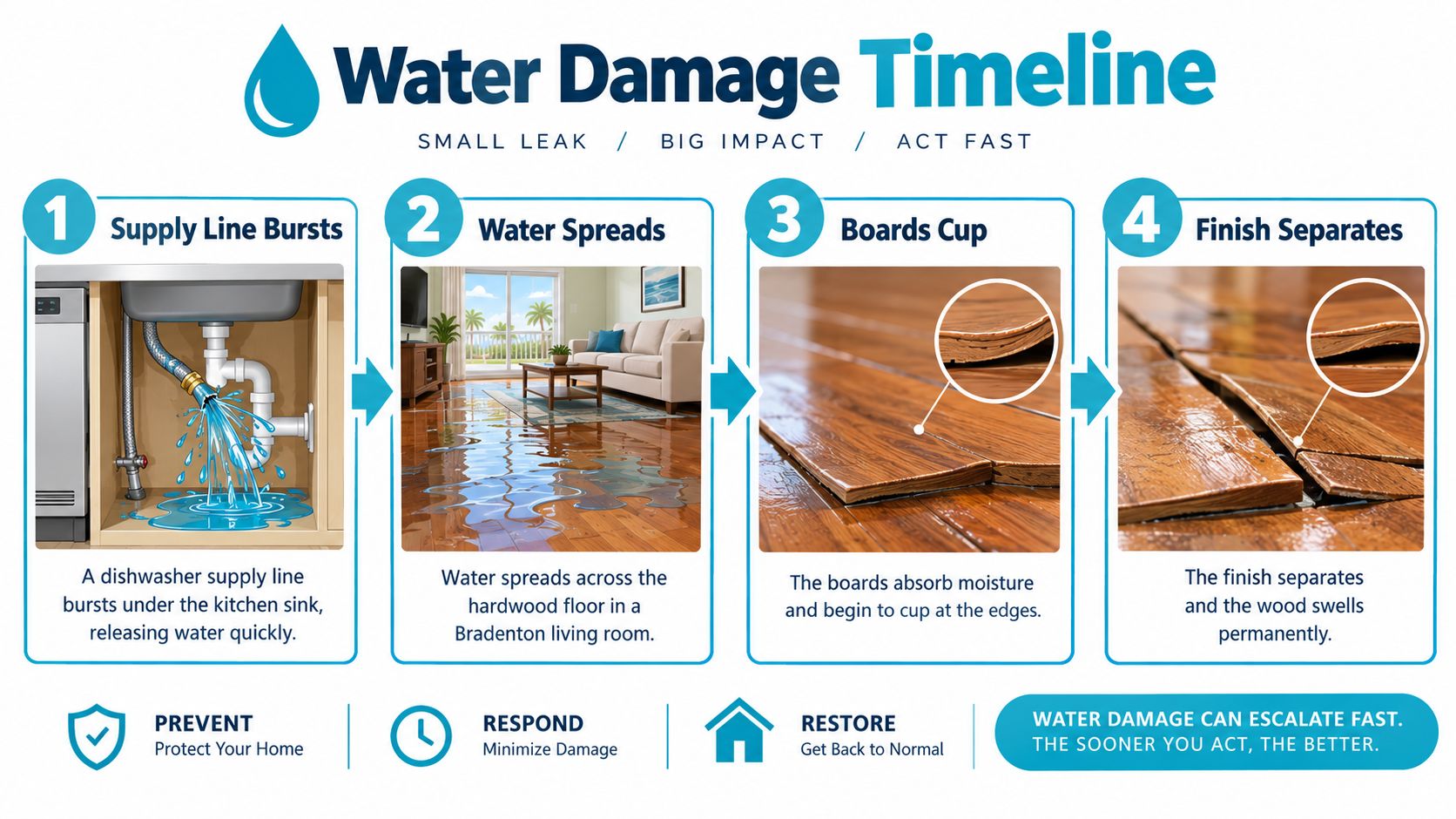
A dishwasher supply line lets go in a Bradenton kitchen, and water is already slipping across the hardwood before you’ve found the shutoff. The floor may look like a surface problem, but water can travel through seams and reach the underlayment and subfloor, where it stays out of sight. The first decisions matter: stop the leak, document what you see, and get the whole flooring assembly assessed before anyone sands or tears it out.
Hardwood floor damage doesn’t automatically mean replacement. On Florida’s Suncoast, the reliable way to choose between drying, repair, refinishing, and replacement is to measure moisture in the boards and subfloor, then wait for the assembly to stabilize. A dry-looking surface isn’t proof that the floor is ready for work.
What Happens to Hardwood When Water Gets In
Water crosses a hardwood floor in stages. The finish may slow it, but it doesn’t make the floor waterproof. Moisture can enter at board seams, exposed ends, transitions, or damaged finish, then move into the boards and below them. Each layer dries at a different rate, so the surface can feel dry while the underside remains wet.
Wood absorbs and releases moisture. As it gets wetter, boards swell; as they dry, they shrink. That movement can cause cupping, gaps, buckling, and finish failure. Moisture is a leading documented cause of hardwood-floor damage: a 2024 industry survey found that more than half of National Wood Flooring Association contractors named moisture claims as a top customer complaint, and retailers also identified them as common claims (industry survey).
The first moves are simple. Don’t wait to see whether the boards change shape.
- Stop the source. Shut off the appliance or water supply if you can do so safely. If water may be contaminated, keep people and pets away and don’t treat it like a clean spill.
- Document the scene. Take photos of the water source, affected rooms, and visible floor changes before moving items or authorizing removal. Note when you discovered the leak.
- Lift wet items. Move rugs, mats, and furniture that can hold moisture against the floor. Don’t drag heavy pieces across wet boards.
- Arrange extraction and assessment. Remove standing water safely, then have the floor and subfloor checked. Quick extraction limits exposure, but aggressive heat can worsen uneven drying.
A 2014 materials study found that pressure rose as common building materials became wetter, with maximum pressure occurring during the first two days for most samples. It wasn’t a test of every hardwood floor design, but it helps explain why a leak can quickly strain tightly fitted flooring assemblies (materials study on pressure from moisture).
For a practical overview of the restoration sequence, see this guide to restoring water-damaged hardwood. Treat the floor as a layered system, not a stain to sand away.
Common Types of Hardwood Floor Damage
The shape of the boards offers clues, but it can’t tell you whether the subfloor is dry. Use visible changes to guide the inspection, not to make the final repair decision.
Cupping and crowning
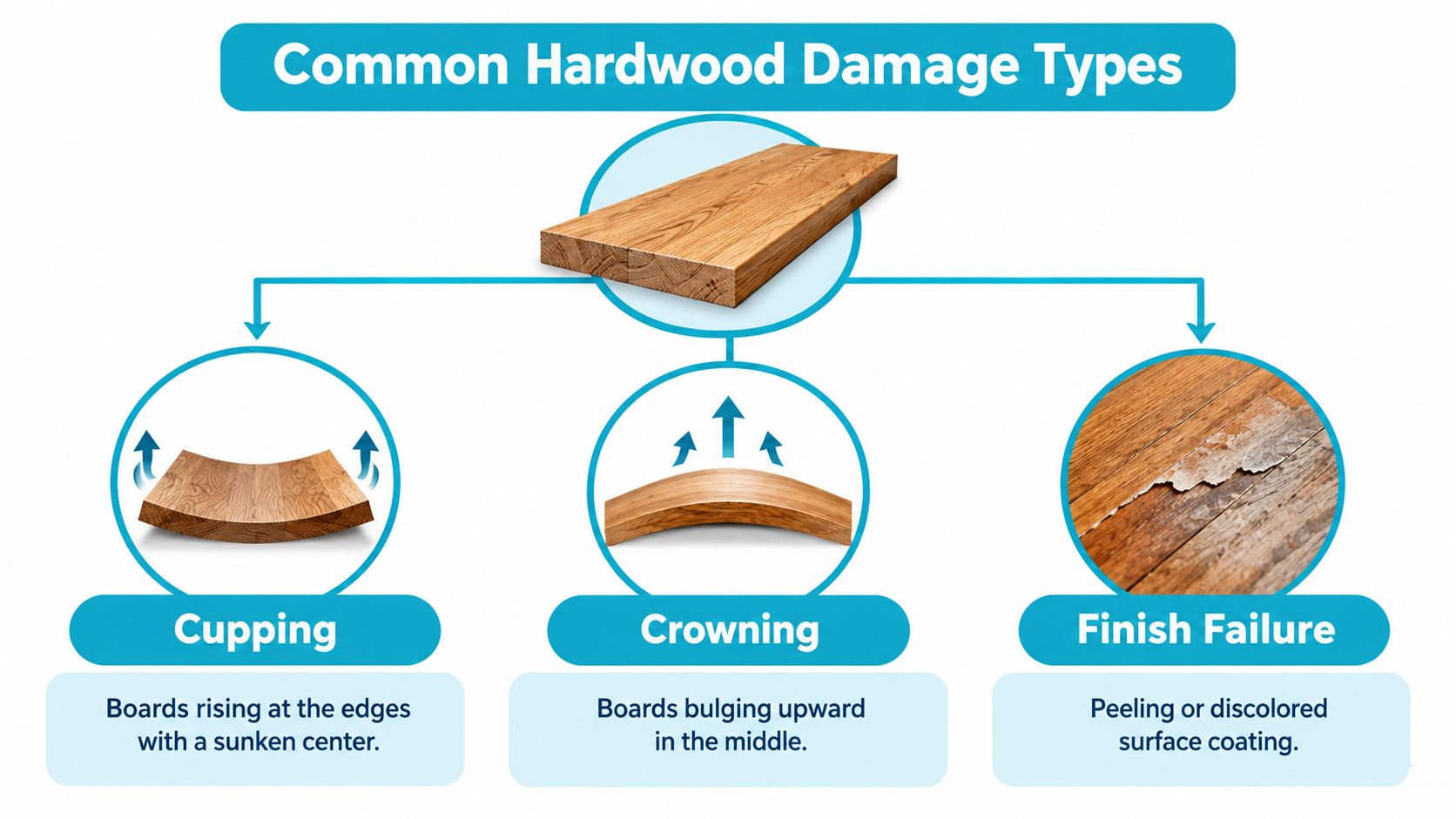
Cupping means a board’s edges sit higher than its center, giving it a shallow bowl shape. It often points to uneven moisture, such as wetter conditions beneath the board than at the surface. Cupping may improve as the assembly dries evenly, so don’t sand it while moisture readings are still changing.
Crowning is the reverse: the center rises above the edges. It can follow uneven drying or premature sanding of a cupped floor. A newly crowned floor needs an assessment of its moisture history, not an immediate sanding job.
Buckling and gapping
Buckling is more serious. Boards lift away from the subfloor when swelling and pressure overcome the floor’s attachment. It can indicate substantial water beneath the flooring or damage to the subfloor; the affected area may need to be opened for inspection.
Gapping appears as spaces between boards. Wood shrinks as it dries, and gaps can form if the floor was installed too wet for its service environment or dries unevenly. USDA Forest Products Laboratory guidance puts the recommended equilibrium moisture content for wood in the southern coastal United States at approximately 11%, compared with about 8% for the central and eastern United States (USDA wood-flooring guidance). That regional difference is a reminder to account for local conditions, not a universal reading that every floor must hit.
Stains and finish failure
Dark or discolored areas can result from water exposure and reactions involving the wood or materials around it. A cloudy, white, peeling, or flaking finish points to surface-coating damage, but it doesn’t establish whether the boards below are sound. Soft spots, persistent odor, or loose flooring deserve closer attention because the concern may extend beyond the finish.
If you notice a musty smell or suspect growth below the boards, review these signs of mold under hardwood floors. Surface marks can sometimes be repaired; movement, softness, or continuing odor calls for moisture testing before cosmetic work.
How Professionals Assess Water-Damaged Hardwood
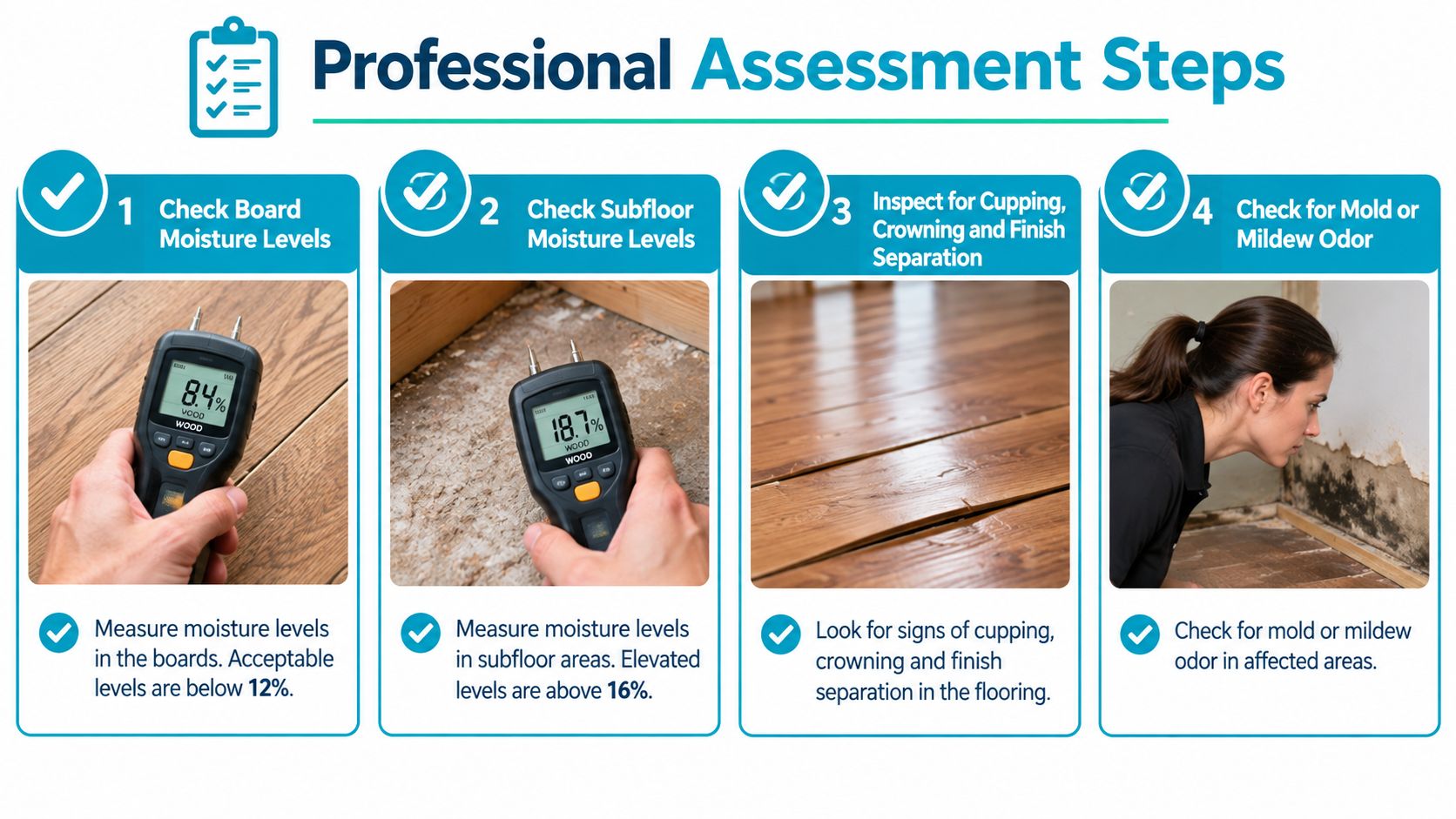
A useful assessment records moisture in the boards and the subfloor, checks the affected area against unaffected flooring, and documents whether readings are stabilizing. A technician shouldn’t call a floor dry because the top feels dry. In coastal Florida, ambient humidity can slow drying and make surface appearance particularly misleading.
Ask what was measured
Request readings from the flooring and accessible subfloor, along with the locations tested and the meter type. Wood species and meter type affect how readings should be interpreted, so a single unexplained number isn’t enough to establish that the floor is ready for sanding or repair. Ask the restoration team to compare affected areas with a dry reference area of similar flooring and to record follow-up readings.
A hygrometer can help document room conditions, but room humidity doesn’t replace material testing. The important question is whether moisture remains inside the floor assembly and whether the readings are moving toward stable conditions.
Treat the first two days as an urgent control window
For clean-water intrusion, the first 24–48 hours are a critical period for removing moisture and reducing mold risk. EPA guidance recommends prompt drying with dehumidifiers, fans, and cautious, gentle heat. It also warns that damp materials left wet for more than 48 hours should be evaluated under mold-remediation procedures. Drying sooner reduces risk, but it doesn’t guarantee that mold hasn’t developed (EPA mold-remediation guidance).
That window is a target for moisture control, not a deadline for deciding whether to replace the floor. EPA also calls for cleaning and drying the subfloor, since hidden moisture can remain below the visible boards. For guidance on the drying process, ask how the team plans to dry and verify the flooring assembly.
Ask for proof: Get the moisture readings, locations, and dates in writing. Then use the documented trend, not the surface appearance, to decide when repairs can begin.
Repair, Refinish, or Replace Making the Right Call
Choose the repair only after the floor and subfloor have been assessed and the water source is controlled. Premature sanding is a common mistake: it can flatten cupped boards before they finish drying, only for the floor to change shape again. Waiting for readings to stabilize may preserve boards that would otherwise be removed too soon.
A small stained area with stable, dry boards may need localized repair. If the wood is sound but the finish has hazed or discolored, spot work or room refinishing may be appropriate. Widespread board damage doesn’t automatically require a full replacement either; a flooring specialist can determine whether localized board replacement will blend acceptably.
Full replacement becomes more likely when boards are permanently deformed, delaminated, or structurally compromised, or when the subfloor remains wet or damaged after controlled drying. EPA guidance says materials that can’t be fully dried and cleaned may need removal (EPA water-damage cleanup guidance). The USDA also advises rapidly drying wood to a moisture content of 20% or less to prevent decay-fungus growth, then keeping it dry (USDA guidance on decay prevention). That threshold isn’t a finish-floor sanding target; it underscores why testing and correcting the moisture source matter.
| Damage Sign | Likely Cause | Recommended Response |
|---|---|---|
| Light stain, stable boards, dry subfloor | Localized surface damage | Assess for spot repair or refinishing |
| Cupping with readings still changing | Uneven moisture in the assembly | Continue controlled drying and monitor before sanding |
| Localized damaged or loose boards | Concentrated damage beneath the finish | Inspect the subfloor, then consider partial board replacement |
| Buckling, delamination, or persistent subfloor wetting | Structural or layered assembly damage | Open and assess the affected area; replace compromised materials |
| Soft flooring, persistent odor, or contamination | Hidden moisture or material that may not be cleanable | Seek professional evaluation and remediation |
Insurance decisions depend on the cause and the policy wording. Sudden accidental leaks may be handled differently from long-term leakage, humidity issues, or flood damage, so don't assume coverage before reviewing the terms. This overview of home insurance and water damage can help you prepare questions for your carrier.
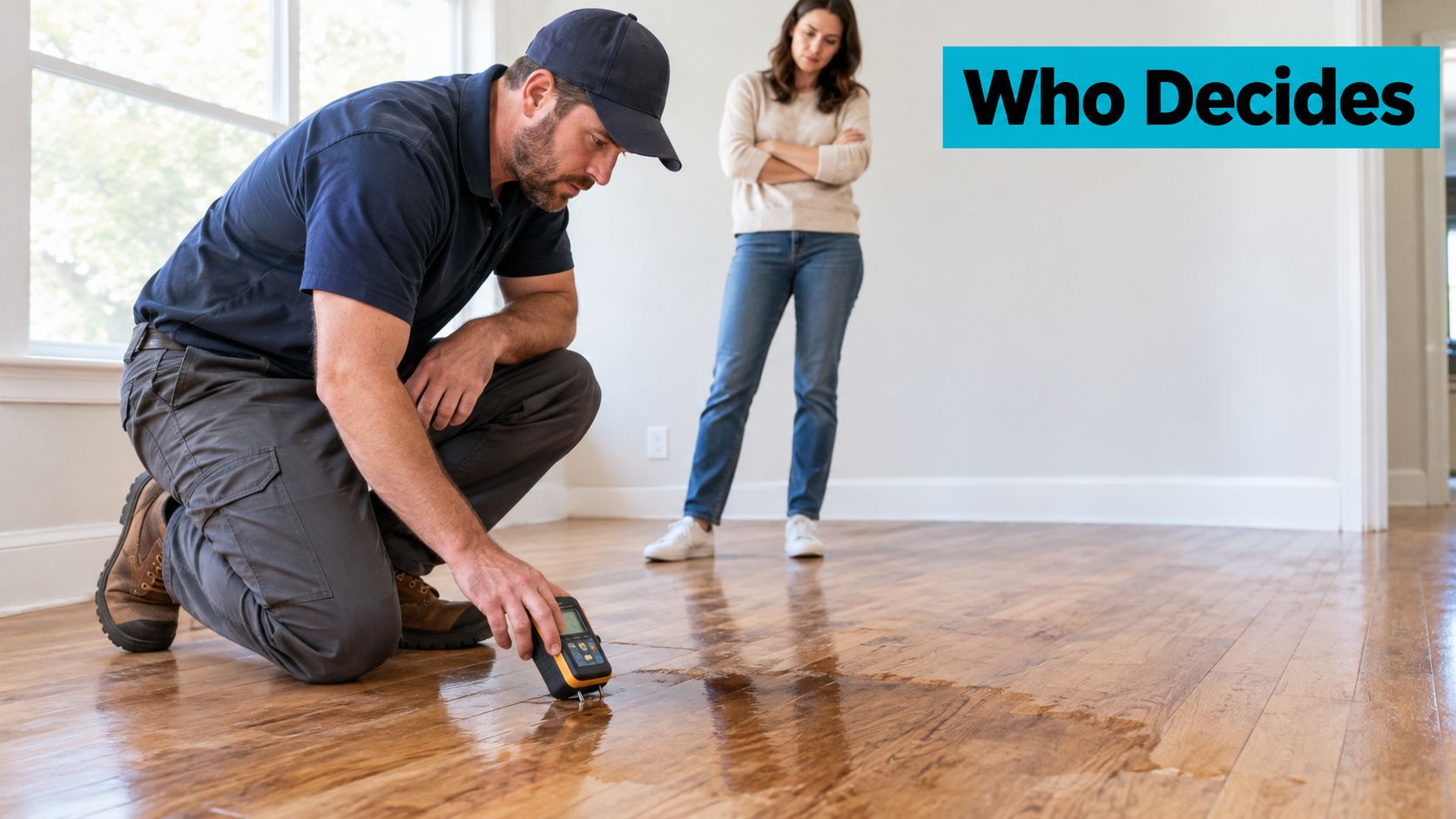
Who Decides Whether Your Hardwood Can Be Saved
No single person should make every decision. Mitigation, floor salvageability, and insurance scope are separate calls, and each requires different expertise.
The mitigation contractor identifies the water source and category, extracts water, establishes drying, and documents moisture conditions. If the water came from sewage or another contaminated source, this isn't routine clean-water cleanup; containment and suitable protective measures are needed.
The flooring specialist assesses the boards, finish, subfloor, and realistic repair options. Ask for an independent flooring opinion if a proposed scope jumps directly from visible cupping to full replacement, or from surface drying to immediate sanding. The specialist should explain what is salvageable and what evidence supports that conclusion.
The insurer or adjuster evaluates coverage and claim scope under the policy. That role doesn't replace the technical assessment of whether a floor can be repaired. For background on choosing a qualified restoration provider, review what an IICRC-certified restoration company should be prepared to document.
Before work disturbs the floor, keep photographs, dated notes, the water source, moisture logs, invoices, and any original flooring details. That record helps the restoration team plan the work and gives the insurer a clearer basis to review the claim. Don't authorize irreversible removal just to make the room look tidy if the damage and proposed scope haven't been documented.
Florida condominiums add another layer: a unit owner, association, tenant, property manager, and insurer may each have different responsibilities. Confirm who controls the affected area and who can authorize work before demolition begins. A short pause to coordinate those roles can prevent confusion; a delay in stopping active water or beginning safe mitigation is a different matter.
Preventing Future Hardwood Floor Damage in Coastal Florida
On the Suncoast, humidity can affect hardwood even without a flood. As noted earlier, wood in the southern coastal United States stabilizes near 11% equilibrium moisture content, so prevention means managing indoor moisture year-round. Keep the HVAC system running consistently. If rooms feel damp or floors change with the seasons, have a technician check airflow and return-air balance. A whole-home dehumidifier can help, but ask an HVAC professional to set it for your home rather than guessing at a target.
Find leaks before they spread. Place smart leak detectors under sinks, behind refrigerators, and near appliances that use water. In older homes, have hidden supply lines and connections checked routinely. Small leaks can go unnoticed until moisture reaches the floor or areas beneath it.
For new flooring, insist on proper acclimation. USDA Forest Products Laboratory guidance recommends opening flooring bundles and loosening the piles about four days before installation so boards can adjust to the building environment (USDA installation and repair guidance). Ask the installer to explain any plan to skip this step.
Use this seasonal checklist:
- Before humid weather: Check HVAC operation, return airflow, and dehumidification.
- Throughout the year: Inspect visible plumbing connections and test leak detectors.
- After a leak: Remove trapped moisture and verify the floor and subfloor before refinishing. If water reached concealed areas, follow a water-leak mold-prevention plan.
- For routine care: Follow daily hardwood floor cleaning advice and keep damp materials off the boards.
Get Fast Help From AMPM Restoration on the Suncoast
After water reaches hardwood, follow the same order: stop the source, document the loss, measure moisture through the assembly, and choose a repair only after the readings support it. Don't let a dry-looking surface pressure you into sanding, and don't assume every cupped floor needs replacement.
AMPM Restoration provides 24/7 emergency restoration from its Bradenton location at 4301 32nd St W b18, Bradenton, FL 34205. The company serves Bradenton, Sarasota, Palmetto, Lakewood Ranch, Saint Petersburg, Tampa Bay, and surrounding Gulf Coast communities, with a stated one-hour emergency response window. Its services include water extraction and drying, mold inspection and removal, fire and smoke restoration, storm and flood cleanup, commercial restoration, and reconstruction.
Hardwood floor damage FAQs
Can a small spill cause lasting damage? It can if water enters the seams or remains trapped beneath a rug. Remove the water and covering, then monitor for changes.
Should I open windows to dry the room? Don't assume outdoor air will help in a humid coastal climate. A restoration professional can choose controlled drying conditions for the home.
Can I use a steam cleaner after the floor dries? Don't use steam on hardwood as a cleanup shortcut. Follow the flooring manufacturer's care instructions.
What should I do if the water came from a storm or sewage backup? Keep people away from contaminated water and get qualified help with containment and remediation before treating the floor as a clean-water loss.
Call 941-946-7807 to request a free inspection and estimate. AMPM Restoration can assist with insurance claim coordination and offers financing options for larger projects.
AMPM Restoration Services provides water damage restoration, moisture assessment, mold inspection and removal, and reconstruction for Suncoast properties. If your hardwood floor has been exposed to water, call 941-946-7807 for a free inspection and estimate, or visit AMPM Restoration Services to discuss insurance claim assistance and financing options.
Treating the floor as a layered system rather than a stain to sand away is exactly right, and the cupping versus crowning explanations make the moisture imbalance easy to picture. I also liked the caution against sanding while readings are still changing, since that can lock in a crowned surface. Getting dated moisture readings for both the boards and the subfloor in writing gives homeowners a real basis for the repair, refinish, or replace decision.