


When you discover standing water in your home, the first instinct is often panic. Don’t. Your first moves aren’t about repairs—they’re about stopping the crisis from getting worse. Before you even think about how to repair water damage, you need to focus on two things: shutting off the water and cutting the power. This is the first critical step in any professional water damage restoration project, and it’s essential for Florida homeowners from Bradenton to Tampa Bay.
Find your main water valve and shut it off immediately. Then, head to your circuit breaker and turn off electricity to the flooded areas. This simple one-two punch prevents more water from coming in and eliminates the very real danger of electrocution.
Your First Steps After Discovering Water Damage
That feeling of dread when you find water in your Bradenton home is universal. But a calm, methodical response can make all the difference, saving you thousands in potential damage. Think of it as emergency first aid for your house.
These first few moments are all about safety and containment.
Once the water and power are off, you need to figure out what kind of water you’re dealing with. This isn’t just a technicality; it’s a crucial safety call that dictates how we approach the entire cleanup. The steps you take in these early moments are critical, which is why we’ve put together a detailed guide on what to do in the first 24 hours of emergency water damage.
What Type of Water Is It? A Guide to Water Damage Repair
In the restoration world, we classify water into three categories. Knowing the difference is key to keeping your family safe and understanding the scope of the problem when planning how to repair water damage.
It’s important to quickly assess the situation. The table below breaks down the different water types, their common sources, and the immediate risks they pose to you and your home.
Water Damage Categories and Immediate Risks
| Water Category | Source Examples | Potential Health Risk | Recommended Action |
|---|---|---|---|
| Category 1 | Broken supply lines, overflowing sink or tub, appliance malfunctions | Low. Minimal immediate health risk but can degrade if left standing. | Act quickly. Can often be cleaned up without major health precautions. |
| Category 2 | Overflowing washing machine or dishwasher, sump pump failure | Medium. Contaminated and can cause illness if ingested or through contact. | Proceed with caution. PPE (gloves, boots) is recommended. |
| Category 3 | Sewage backup, toilet overflow (from beyond the trap), river/storm flooding | High. Grossly unsanitary. Contains bacteria, viruses, and fungi. | Do not handle. Evacuate the area and call a professional immediately. |
This quick guide helps you understand the seriousness of the water damage so you can make safe, informed decisions right away. After a storm here on the Florida Gulf Coast, you should always treat any floodwater as Category 3 black water.
Expert Insight: Never, ever try to handle black water yourself. It requires professional-grade personal protective equipment (PPE) and specific sanitization methods to make an area safe again. In Florida's humidity, mold can take hold in just 24-48 hours, so there’s no time to waste.
Why Acting Immediately Is Non-Negotiable
The restoration industry has seen massive growth, especially in coastal areas like Sarasota and Saint Petersburg. In fact, the U.S. Damage Restoration Services market is expected to reach $7.1 billion by 2026. Professionals don't just "dry things out"; we use scientific methods and tools to hit specific drying goals within about 72 hours. This is what prevents the deep structural rot and stubborn mold that so often plague DIY cleanup attempts.
When water soaks into your home, especially your floors, every second counts. For specific advice on that scenario, you can learn more about fixing hardwood floor water damage. Taking these initial steps correctly buys you valuable time and puts you on the right path to getting your home—and your life—back to normal.
Assessing the Full Extent of the Damage
Okay, you’ve stopped the water and the immediate panic is over. Now what? Your job shifts from crisis control to investigation. Figuring out the true extent of the damage is the first real step toward recovery, and it’s where you start to understand exactly how to repair water damage.
What you see on the surface is almost never the whole story. Especially here in Florida, where our high humidity helps moisture hide and spread with alarming speed.
This isn’t the time to start ripping things apart. It’s time to put on your detective hat. Look for the little clues that tell a big story—bubbling paint, faint water stains on the ceiling, or floorboards that are starting to cup or warp. Are your baseboards pulling away from the wall? That’s a classic sign.
If you smell a damp, earthy, or musty odor, that’s a huge red flag. It’s the unmistakable scent of hidden moisture and a warning that mold growth could be starting. In our climate, it only takes 24 hours.
Looking Beyond the Obvious Signs
Water is sneaky. It follows wall studs, seeps under flooring, and soaks into insulation, causing major problems far from where the leak started. While you can spot the obvious issues, a professional assessment is about finding what’s hidden. That’s where we come in.
At AMPM Restoration, our certified technicians rely on specialized tools to get the complete picture. These aren’t just gadgets; they’re essential for an accurate diagnosis.
- Moisture Meters: We use these to get precise moisture readings in drywall, wood, and even concrete. Pinless meters give us quick scans of large areas, while penetrating meters tell us exactly how deep the water has gone.
- Infrared (IR) Cameras: This is our secret weapon. Thermal imaging lets us "see" temperature differences. Wet spots are cooler than dry ones, so an IR camera instantly lights up hidden moisture behind walls or under floors that you’d never spot otherwise.
- Hygrometers: These devices measure the amount of moisture in the air itself. It helps us understand the full moisture load in a room and track our drying progress to ensure the job is done right.
Relying on a visual-only inspection is a recipe for disaster. It’s how you end up with structural rot and a major mold infestation months down the road. To see what a true professional evaluation entails, you can learn more about the specifics of a professional water damage inspection.
The Power of Detailed Documentation
Before a single thing is moved, cleaned, or thrown away, you need to become a first-rate record-keeper. This is, without a doubt, one of the most critical steps for your financial recovery. Your insurance company needs proof, and without it, you risk having your claim severely reduced or denied.
Start by taking way more photos and videos than you think you need. Don’t just get wide shots of the room. Get up close. Document the water lines on the walls, the warped finish on a dresser, and the soaked contents of a closet.
Crucial Takeaway: Your job is to create a visual diary that tells the story of the flood. Narrate your videos as you walk through, explaining what room you’re in and what you’re looking at. This documentation is the single most powerful tool you have when filing an insurance claim.
Next, make an itemized list of everything that was damaged. For each item, note its approximate age and what it might cost to replace it. This inventory, paired with your visual evidence, is the backbone of your claim.
Remember, when you call AMPM Restoration, this expert documentation is part of our service. We use industry-standard software to generate the detailed reports that insurance adjusters require, taking the pressure off you and helping ensure you get the full coverage you deserve.
The Professional Water Removal and Drying Process
Once a thorough assessment is done, the real work of figuring out how to repair water damage begins. This is where professional crews make all the difference, going far beyond what a homeowner can do with a shop-vac and a few box fans. The entire process boils down to two critical phases: aggressive water removal and scientific structural drying.
This isn't just about making things look dry. It’s a meticulous, science-backed approach designed to pull out the hidden moisture that causes catastrophic secondary damage like mold and rot. After a hurricane in St. Petersburg or a burst pipe in a Lakewood Ranch condo, the speed and thoroughness of this stage are everything.
Before our team ever starts removing water, we have to know exactly what we're dealing with. A solid plan begins with a complete damage assessment.
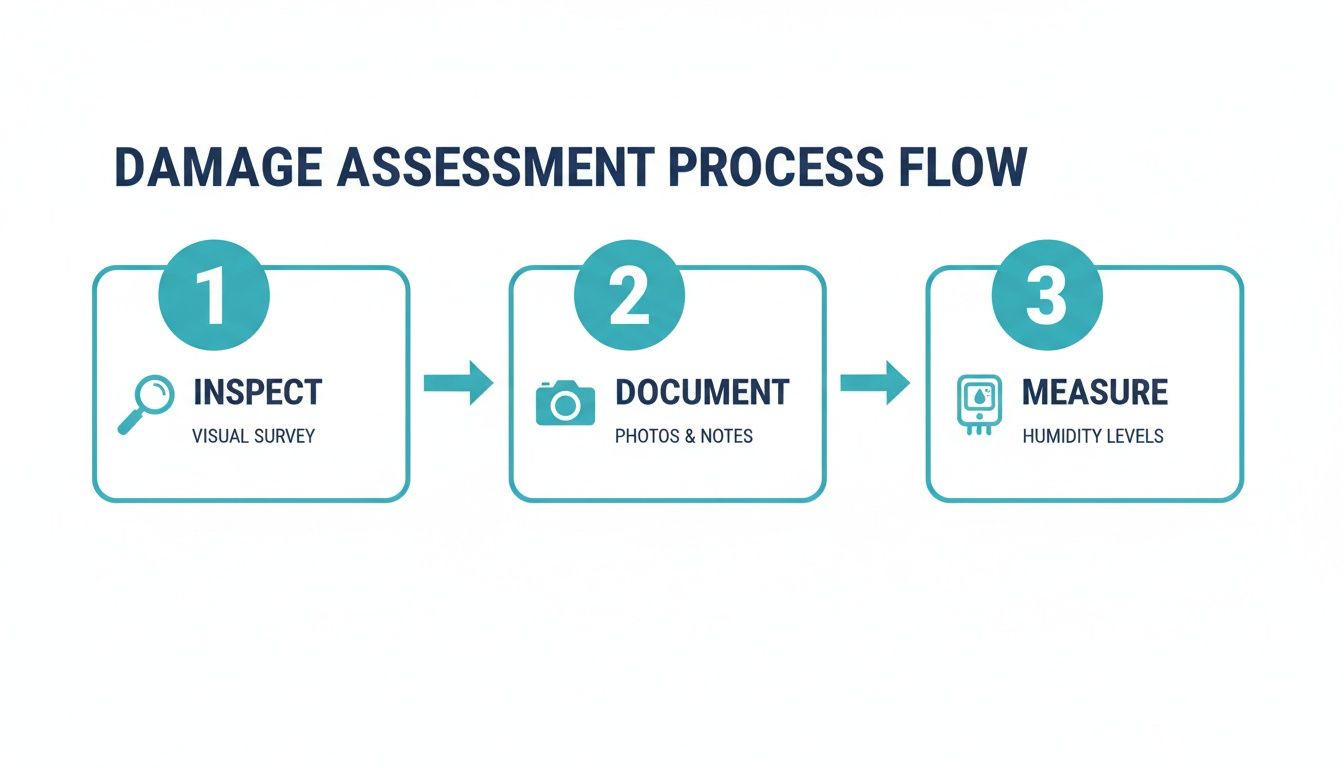
This process ensures we know the full extent of the saturation, allowing us to create the most effective drying strategy from the start.
High-Volume Water Extraction
First things first: we have to get the standing water out, and we have to do it fast. While grabbing your shop-vac is a good first instinct, it’s simply no match for the kind of equipment we bring to a job. At AMPM Restoration, we use powerful tools built for exactly this scenario.
- Truck-Mounted Extractors: These are the workhorses of water removal. They generate incredible suction, capable of pulling thousands of gallons of water from a home and pumping it directly into a holding tank in our truck.
- Submersible Pumps: When we're dealing with several inches or even feet of water, we deploy high-volume submersible pumps. We drop them right into the deepest part of the flood, and they can move hundreds of gallons per minute.
This rapid extraction is crucial. It stops water from soaking deeper into porous materials like drywall, wood studs, and insulation. The faster the bulk of the water is gone, the less permanent damage it can do, and the more of your home we can save. You can learn more about this part of the job in our guide to emergency water removal services.
The Science of Structural Drying
With the standing water gone, the real science kicks in. Now, we have to tackle the "bound water"—the moisture that has already been absorbed deep into the building materials. It’s not about just pointing a few fans at a wet wall; it’s a calculated process of managing airflow, temperature, and humidity.
Expert Insight: Proper drying is a balancing act. If you just blast hot air into a wet room, you can cause wood floors to warp and drywall seams to crack. The goal is to encourage moisture to evaporate from the materials while pulling that wet air out before it can settle somewhere else.
To get this right, we create a controlled drying environment using some serious equipment:
- Industrial Dehumidifiers: These aren't the small units you buy at a home improvement store. Our commercial-grade dehumidifiers can pull dozens of gallons of water vapor out of the air in a single day. They are the key to lowering the room's humidity and speeding up evaporation.
- High-Velocity Air Movers: You might know them as "carpet dryers," but we use them on everything. These fans are strategically placed to push a strong, consistent flow of air across wet floors, behind walls, and under cabinets. The airflow lifts moisture into the air so the dehumidifiers can grab it.
The numbers don't lie. Over 14,000 homes in the U.S. face water damage every single day, with the average insurance claim hitting $15,400. A professional team can use truck-mounted pumps to remove up to 100 gallons of water per minute and get a structure completely dry in just 3-5 days. Speed is critical, since damage can spread by 30-60% for every hour it’s left unaddressed.
By combining these technologies, we create a powerful drying vortex that methodically pulls moisture out of your home’s structure. We check our progress every day with moisture meters and thermal cameras, adjusting the equipment as needed until every corner of your property is back to its pre-loss condition. In a humid climate like Florida's, this professional approach is your best defense against long-term problems.
Cleaning, Sanitizing, and Preventing Mold Growth
So, the water is gone and everything looks dry. It’s tempting to breathe a sigh of relief and call it a day, right? But this is where the real work begins—the critical phase that ensures your home is truly safe and healthy for your family.
This part of how to repair water damage is all about sanitization and mold prevention. For homeowners anywhere along Florida's humid Gulf Coast, from Lakewood Ranch to Saint Petersburg, these steps are absolutely non-negotiable. Getting your home dry is only half the battle. Now, we have to deal with the invisible threats left behind.
The Dangers of Post-Flood Contaminants
Even a "clean" water leak from a supply line can introduce bacteria that multiplies fast. But if your damage came from a dishwasher (Category 2 gray water) or a sewage backup (Category 3 black water), the affected areas are a breeding ground for dangerous pathogens. Just drying these surfaces leaves behind a microscopic minefield that can put your family’s health at risk.
That’s why professional cleaning is so much more than just wiping things down. It’s a full-on decontamination process.
Crucial Takeaway: Water damage cleanup without proper sanitization is incomplete and unsafe. Pathogens left behind by gray or black water can cause serious illness long after the water itself is gone. This is a health risk you cannot afford to take.
At AMPM Restoration, we use EPA-approved, hospital-grade antimicrobial treatments to meticulously clean every affected surface—from flooring and subflooring to the hidden wall cavities and framing. These treatments neutralize the bacteria and viruses, making your Bradenton or Sarasota home safe to live in again. We also use specialized techniques to kill the stubborn, musty odors at their source instead of just covering them up.
Winning the War Against Mold
Now for the biggest secondary threat in Florida: mold. After any water intrusion, mold spores (which are always in the air) find the perfect new home on damp drywall, wood, and insulation. In our warm, humid climate, a new colony can start growing in as little as 24-48 hours.
Preventing mold is the final, essential step in a successful water damage repair, and it all comes down to controlling moisture. Even after our team has professionally dried your home, you'll need to keep an eye on indoor humidity to stop mold from getting a second chance.
Here’s what you need to do:
- Control Indoor Humidity: Your goal is to keep the relative humidity in your home between 30% and 50%. A good air conditioner is your best friend here, but for stubborn moisture issues, a whole-home dehumidifier is a game-changer.
- Ensure Proper Ventilation: Always use the exhaust fans in your kitchen and bathrooms to push humid air outside. Make sure your attic and crawl spaces have good airflow to prevent trapped moisture.
- Address Leaks Immediately: Even a tiny, slow drip under a sink can create the perfect hidden spot for mold to flourish. Be vigilant and check under sinks and around appliances regularly.
Want to learn more? For a deeper dive into this critical topic, check out our guide on how to prevent mold growth in your home. A proactive approach is the only way to be sure that when you repair water damage, you aren’t accidentally setting the stage for a future mold disaster.
Proper cleaning, sanitizing, and mold prevention are what transform a house from simply "dry" to truly "restored." It’s the professional finish that protects your property and your peace of mind.
Navigating Insurance Claims and Final Reconstruction
Once the drying and sanitizing are done, you move into what can feel like the most overwhelming part of the process: dealing with insurance and rebuilding your home. This is where the focus shifts from the emergency response to navigating paperwork and coordinating skilled trades. Knowing how to repair water damage both on paper and in practice is what gets your home back to normal without all the headaches.
The good news? You don't have to manage this marathon alone. A full-service restoration company like AMPM Restoration bridges the gap, handling the entire insurance process and the complete reconstruction for you. We’re with you from the initial emergency call to the final handshake.
Working with Your Insurance Carrier
Let's be honest, filing an insurance claim can feel like learning a new language. It’s full of confusing terms and endless forms. But with a structured approach—and an expert in your corner—it becomes far more straightforward. All that documentation you gathered from the start? That’s your most powerful tool now.
AMPM Restoration takes the entire claims process off your plate. We work directly with all major insurance carriers serving the Bradenton, Sarasota, and Tampa Bay area.
- Detailed Reporting: We create our estimates using Xactimate, the same industry-standard software your insurance adjuster uses. This ensures our reports are accurate, fair, and written in a language they understand and trust.
- Direct Communication: Our team speaks directly with your adjuster, providing documentation and answering their questions. This prevents critical details from getting lost in translation and keeps you out of the middle.
- Advocacy: We’re your advocate. We fight to make sure the full extent of the damage is recognized and covered according to your policy.
Having a pro manage the claim helps you sidestep the common mistakes that can delay or even derail your settlement. To get a clearer picture of this journey, you can read our guide on what homeowners should know about insurance restoration services.
A Note on Speed and Costs: In Florida's humidity, the clock is always ticking. Letting a leak sit for just 48 hours can turn a manageable repair into a project costing over $100,000. The global disaster restoration market is growing at an 8% CAGR, and that’s because professional response is so critical. With the average U.S. claim hovering around $15,400, using a certified company that knows how to work with insurance—where claims succeed 90% of the time with proper handling—is the smartest financial move you can make. You can discover more about these market trends from Mordor Intelligence.
The Final Reconstruction Phase
Once your insurance claim is approved, the real magic begins. This is the exciting part where your house starts to feel like your home again. The scope of work will depend entirely on how much damage occurred, but now it's all about putting the pieces back together.
This phase might involve a whole host of trades, from drywall specialists to painters and flooring installers. Having one company manage the project is a game-changer. It means the schedule flows smoothly, and the quality is consistent from one task to the next.
Typical reconstruction tasks include:
- Replacing damaged drywall and insulation
- Installing new flooring, whether it's carpet, tile, or hardwood
- Hanging and painting new baseboards and trim
- Re-installing or replacing cabinets and countertops
- Putting on the final coats of paint and finishing touches
Of course, rebuilding means dealing with debris from the tear-out. For instance, you’ll likely have damaged materials like plasterboard that need to be removed. It's important to follow local regulations, and asking questions like "can you put plasterboard in a skip" is part of responsible cleanup. Our team handles all debris removal, ensuring your property stays clean and safe throughout the project.
From that first frantic phone call to the final, satisfying walkthrough, AMPM Restoration provides a true end-to-end solution. We don't just restore your property; we restore your peace of mind.
FAQs on How to Repair Water Damage in Florida
When you're staring at a flooded room, your mind is racing with questions. It’s a stressful, confusing time, and you need clear answers, fast. As a leading 24/7 emergency restoration company based at 4301 32nd St W b18, Bradenton, FL 34205, AMPM Restoration has helped countless homeowners across Bradenton, Lakewood Ranch, and the greater Sarasota area navigate this exact situation. We've put together direct, authoritative answers to the six most common questions we hear.
How much does it cost to repair water damage in Florida?
The cost to repair water damage varies significantly. A minor leak from a supply line caught quickly might cost a few hundred dollars. However, for major issues common in the Gulf Coast communities, such as a burst pipe or storm-related intrusion, costs can range from $3,000 to over $15,000. The final bill depends on the size of the area, the materials affected (e.g., hardwood vs. carpet), and whether mold remediation is needed. At AMPM Restoration, we provide a free, no-obligation inspection and a detailed estimate. We also offer financing options and assistance with insurance claims to ease the financial burden.
Can I repair significant water damage myself?
While it's tempting for a small spill, DIY repairs for significant water damage are extremely risky, especially in Florida's climate. The real danger is the moisture you can't see trapped in walls, subfloors, and insulation. Without professional moisture meters, infrared cameras, and commercial-grade drying equipment, it's nearly impossible to fully remove this hidden water. This often leads to structural rot, compromised air quality, and severe mold growth that costs far more to fix later. For anything beyond a minor, clean-water spill, calling a certified professional is the safest and most cost-effective solution.
How long does the water damage restoration process take?
The timeline depends on the extent of the damage. Typically, the active drying phase, where we use air movers and dehumidifiers, takes 3 to 5 days. This is the most critical window to prevent secondary damage like mold. The full reconstruction—including repairs like replacing drywall or flooring—can take anywhere from a week to several weeks. As a fast and reliable company, AMPM Restoration offers 24/7 emergency service to Bradenton, Sarasota, and surrounding areas to start the process immediately, which is crucial for minimizing the overall project timeline.
Will my homeowners insurance cover this water damage?
Most standard Florida homeowners insurance policies cover water damage that is sudden and accidental, such as a burst pipe, appliance failure, or overflowing toilet. However, damage from gradual leaks (considered a maintenance issue) or regional flooding (which requires a separate flood insurance policy) is typically excluded. Navigating claims can be complex, but AMPM Restoration is an insurance-friendly company. We work directly with all major insurance carriers, provide the detailed documentation they require, and advocate on your behalf to help ensure you receive the full coverage you’re entitled to.
What happens if I don't repair water damage immediately?
Delay is the worst enemy of water damage repair. In Florida’s humid environment, the consequences are severe and swift. Within 24-48 hours, clean water can become contaminated with bacteria, and mold growth can begin on damp surfaces. Structurally, wood floors will warp, drywall will swell and crumble, electrical systems can be compromised, and the wooden frame of your home will begin to weaken. A situation that could have been a straightforward drying job can quickly escalate into a much larger, more expensive reconstruction and mold removal project.
What is that musty smell after water damage?
That distinct musty or earthy odor is a definitive sign of active mold and mildew. As these fungi consume damp organic materials like wood and drywall, they release gassy compounds (MVOCs) into the air, which is what you smell. This odor is not just unpleasant—it's a clear warning of a potential health hazard that can trigger allergies, asthma, and other respiratory issues. If you detect this smell, it means the area was not dried properly and now requires professional mold inspection and remediation to eliminate the hazardous source for good.
When water damage strikes your Bradenton, Sarasota, or Tampa Bay property, you need fast answers and even faster action. The certified team at AMPM Restoration is ready 24/7 to restore your property and your peace of mind. We are a fast, reliable, and insurance-friendly company dedicated to restoring both your property and peace of mind. Call us now at 941-946-7807 for a free, no-obligation inspection and estimate. We work directly with your insurance, offer financing options, and guarantee our work 100%. Don’t wait—let our local experts get you on the road to recovery today. Learn more about our comprehensive services at https://ampmrestorations.com.