

Flood Cleanup Services in Sarasota
Water on the floor changes the mood of a house fast. In Sarasota, it often starts with a hard rain, storm surge, a failed appliance line, or water pushing in where it shouldn’t. Your first instinct may be to grab towels, move furniture, and hope it’s a short cleanup.
That impulse is understandable, but flood cleanup services in Sarasota usually need more than surface drying. Water travels under baseboards, into drywall, beneath flooring, and into insulation long before the room looks “that bad.” A Sarasota service page notes that 1 in 55 homes experiences some form of water damage each year, or about 1.8% of homes annually. In coastal Florida, that makes water intrusion a recurring problem, not a rare one.
The homeowners who come out of this best usually do two things early. They protect people first, and they get a proper mitigation plan started before trapped moisture turns a cleanup into a demolition project.
Immediate Steps for Flood Damage in Your Sarasota Home
You walk into the kitchen at dawn and your socks are wet. Or you open the front door after a storm and see water spread across tile, rugs, and the bottom edge of the drywall. That’s the moment to slow down and act in the right order.
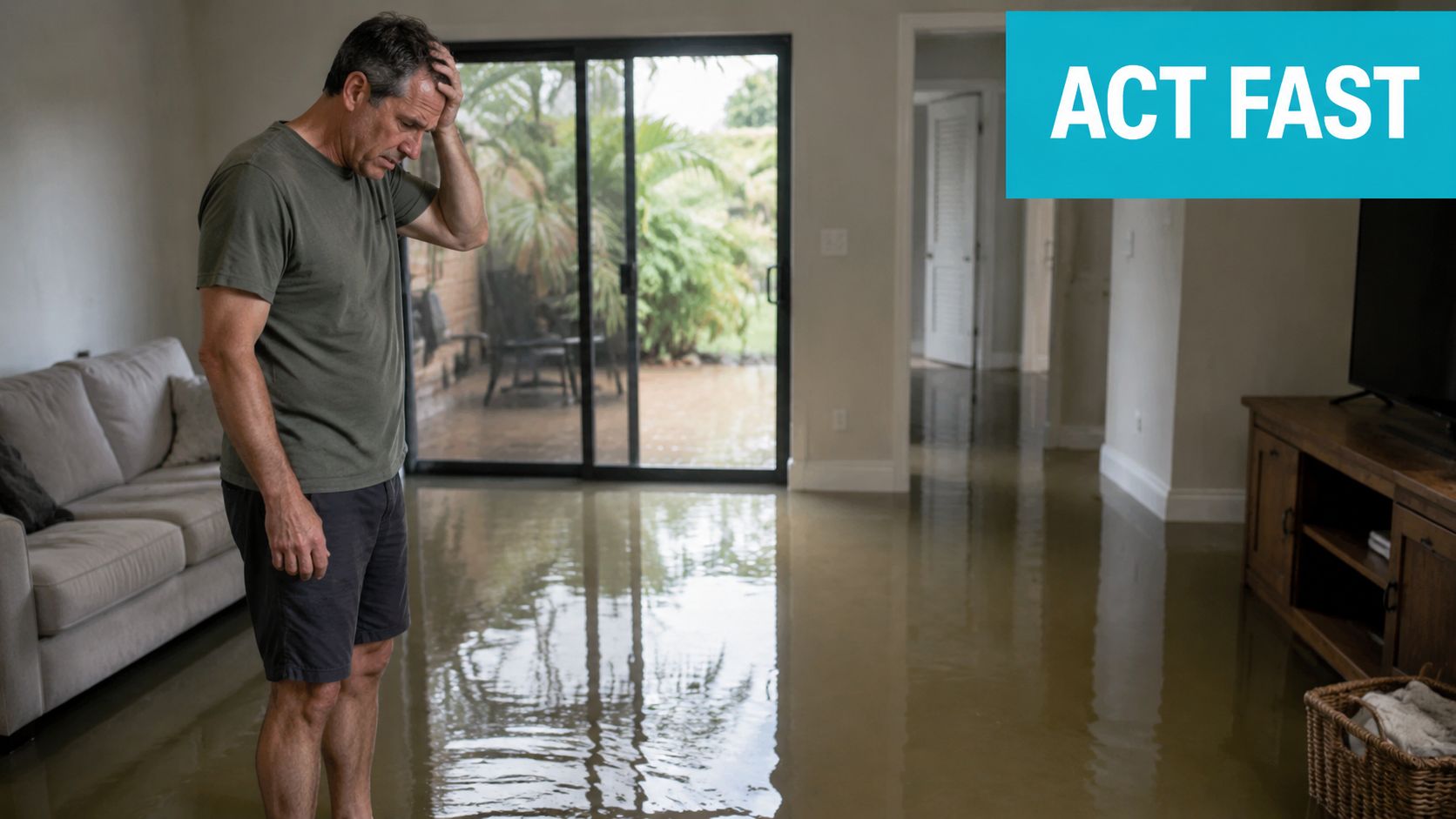
Put safety ahead of cleanup
If water is near outlets, appliances, or your electrical panel, don’t walk into it casually. If you can safely shut off power to the affected area without stepping into standing water, do that first. If you can’t, stay out and wait for qualified help.
Then stop the source if the water came from inside the house. A supply line, ice maker line, washing machine hose, or water heater leak can keep feeding the loss while you’re trying to mop.
Start with these priorities:
- Protect people and pets: Keep everyone out of affected rooms if there’s any risk of shock, slipping, or contaminated water.
- Stop active flow if possible: Shut off the main water supply if a plumbing failure is feeding the damage.
- Avoid using household vacuums: Regular vacuums aren’t built for this. They can fail, spread contamination, or create electrical hazards.
- Move only what you can move safely: Lift lightweight items, documents, electronics, and loose textiles out of the wet area if you can do it without risk.
Practical rule: If you don’t know whether the water is clean, treat it as contaminated until a professional evaluates it.
What usually makes the damage worse
Homeowners often try to save materials too early. They close the house up tightly, run the air conditioning without extraction, or lay towels over wet carpet and assume it’s drying. That doesn’t pull moisture from the pad, tack strip, subfloor, wall cavity, or cabinet toe-kicks.
What works is rapid mitigation. Sarasota providers commonly advertise 24-hour response and extraction because delays tend to expand the scope of work, especially in humid conditions. If you want a short homeowner checklist before help arrives, this guide on steps to take after home flooding is useful.
Professional flood cleanup services in Sarasota are built around one goal at this stage. Remove water fast, document the damage correctly, and prevent hidden moisture from turning a manageable event into a much larger restoration.
Understanding the Flood Restoration Timeline
Most homeowners expect flood cleanup to be one visit. It rarely is. A proper restoration timeline looks more like medical care. First comes triage, then stabilization, then recovery.

Triage and classification
The first job is inspection. The crew identifies where the water went, what materials are wet, and what category of water is involved. That last point matters more than is commonly realized.
A proper protocol distinguishes between clean-water intrusion, contaminated floodwater, and sewage backup, because each one requires a different containment and sanitization workflow. The equipment may look similar from room to room, but the handling standards are not.
Here’s the practical difference:
| Water condition | What it means for cleanup |
|---|---|
| Clean-water intrusion | Focus is often extraction, drying, and material monitoring if the response is quick |
| Contaminated floodwater | Cleaning becomes more controlled, with greater emphasis on sanitation and affected-material decisions |
| Sewage backup | Expect stricter containment, disposal decisions, and a more aggressive sanitation process |
Stabilization of the structure
After inspection, the crew starts water extraction. This is the part homeowners usually recognize: pumps, extractors, wet vac systems designed for restoration work, and removal of standing water. But extraction alone doesn’t finish the job.
Drying is where the structure is stabilized. Air movers, dehumidifiers, moisture meters, and often thermal imaging help the team track moisture in flooring systems, wall assemblies, and cavities that can’t be judged by touch. If drywall wicked water, if engineered wood has absorbed moisture, or if cabinets trapped water behind panels, the drying plan has to account for that.
The room isn’t dry because the surface feels dry. The room is dry when the affected materials test back to an acceptable dry standard.
Cleaning, sanitizing, and odor control
Once the water is out and the environment is under control, cleaning starts. This phase may include antimicrobial treatment where appropriate, sanitation of salvageable contents, and deodorization if floodwater or stagnation left odors behind.
This is also where hidden mistakes show up. If contaminated water touched porous materials, some materials may not be good candidates for saving. If the loss involved a small amount of clean water and the response was immediate, more can often be preserved. The timeline changes because the water category changes.
For homeowners trying to understand why one project finishes quickly and another stretches out, this overview of how long water damage restoration can take gives helpful context.
Recovery and rebuild
The final stage is restoration. That can be minor, such as reinstalling baseboards and patching drywall, or more involved, such as replacing flooring, rebuilding lower wall sections, refinishing trim, and restoring affected rooms to pre-loss condition.
Flood cleanup services in Sarasota are strongest when one team can carry the job from emergency response through drying, sanitation, and repairs without dropping the handoff. That reduces delays, finger-pointing, and the all-too-common problem of a “drying company” leaving before the rebuilding plan is clear.
Estimating Timelines and Costs for Flood Cleanup
At this stage, Sarasota homeowners usually want a straight answer on two things. How many days will the house be disrupted, and what will the bill look like?
The honest answer starts with the same question every estimator should ask on site: what got wet, how dirty was the water, and how long has it been sitting? A small interior loss on tile can stay fairly contained. Floodwater that moved through several rooms, reached insulation or cabinets, or carried debris usually turns into a larger project with demolition, cleaning, drying, and rebuild costs all stacked together.
Response time still affects both price and schedule. The IICRC explains in its restoration standards and consumer guidance that early mitigation helps limit secondary damage, which is why reputable flood cleanup services in Sarasota treat dispatch speed as part of loss control, not customer convenience. Every extra hour can mean more swelling, more trapped moisture, and fewer materials worth saving.
What usually stretches a project
Drying equipment can run for several days even on a moderate loss. Rebuild work often starts only after moisture readings show the structure is ready. If flooring has to come out, cabinets are affected, or drywall needs to be cut above the water line, the timeline shifts from a short mitigation job to a multi-phase restoration project.
Permit requirements, specialty materials, and insurance approval can also add time.
How to read a flood cleanup estimate without getting lost
Homeowners get into trouble when they compare only the bottom-line number. Two estimates can look close in total but cover very different scopes of work. One may include moisture mapping, monitoring visits, containment, sanitation, and debris haul-off. Another may show a lower number because those steps are missing or written vaguely.
A solid estimate for flood cleanup services in Sarasota usually breaks costs into clear categories:
- Emergency mitigation: Water extraction, initial moisture inspection, equipment setup, and return visits to track drying
- Selective demolition: Removal of materials that cannot dry properly, such as wet insulation, swollen baseboards, pad, or damaged drywall
- Cleaning and sanitation: Surface cleaning, antimicrobial treatment where appropriate, and odor treatment if contamination or stagnation is involved
- Contents handling: Moving, protecting, cleaning, or packing out affected furniture and belongings
- Repairs and rebuild: Drywall replacement, trim, flooring, paint, cabinetry repairs, and other finish work needed to return the space to pre-loss condition
That breakdown matters for insurance too. It shows what was done to prevent further damage versus what was needed to restore the home.
Why a room that looks “not that bad” can still cost more than expected
Surface appearance fools people all the time. I have seen a room with dry-looking baseboards still test wet behind the wall, under the vinyl plank, and inside the vanity toe-kick. Once moisture gets trapped in those areas, the labor goes up because crews have to expose the wet materials, dry the structure correctly, and verify the results.
That is why any precise price given from a few phone photos should make you cautious. A reliable estimate comes after moisture readings, inspection of affected materials, and a clear determination of whether the water was clean, gray, or contaminated. If you want a clearer picture of what homeowners pay out of pocket before approving work, this guide to restoration costs and payment plans helps explain the financial side that many local flood guides skip.
Coordinating Insurance for Your Sarasota Flood Claim
Insurance confusion adds a second emergency on top of the first one. The house is wet, you’re trying to protect belongings, and now you’re reading policy language that doesn’t match what you thought was covered.
The coverage gap that surprises people
One point causes more frustration than almost any other. FEMA notes that flood losses are typically not covered by standard homeowners insurance, which is why separate flood coverage and careful claim documentation matter.
That distinction matters because people use the word “flood” loosely. A sudden plumbing leak inside the home may be handled differently than rising water entering from outside. The cleanup process may look similar in the first day, but the claim path may not.
If coverage is uncertain, document first and argue later. Don’t wait to gather proof because the room will not look the same after extraction and demolition.
What helps a claim move more smoothly
The strongest claims usually have a clean paper trail. That means clear photos, a list of damaged rooms and contents, notes on when the loss was discovered, and documentation showing that mitigation started promptly to prevent further damage.
Useful claim documentation includes:
- Wide and close photos: Show the full room and then the specific damaged materials
- Itemized notes: Record what was affected, including flooring, drywall, cabinetry, furniture, and personal items
- Timeline details: Note when the loss started or was discovered and what immediate steps were taken
- Professional records: Moisture readings, drying logs, photos during mitigation, and material-condition notes
Why claims assistance matters
Homeowners often assume the restoration company and the adjuster naturally see the loss the same way. They don’t always. Adjusters need documentation tied to cause, category, affected materials, and mitigation necessity. If the contractor doesn’t document well, the homeowner ends up trying to explain technical drying decisions after the fact.
A restoration company that assists with claims can reduce that friction by organizing records, communicating scope, and helping the owner understand what belongs in mitigation versus reconstruction. If you’re preparing to report a loss, this guide on filing an insurance claim for water damage is a practical place to start.
Flood cleanup services in Sarasota should protect the building and the claim at the same time. If either side is mishandled, the homeowner feels it later.
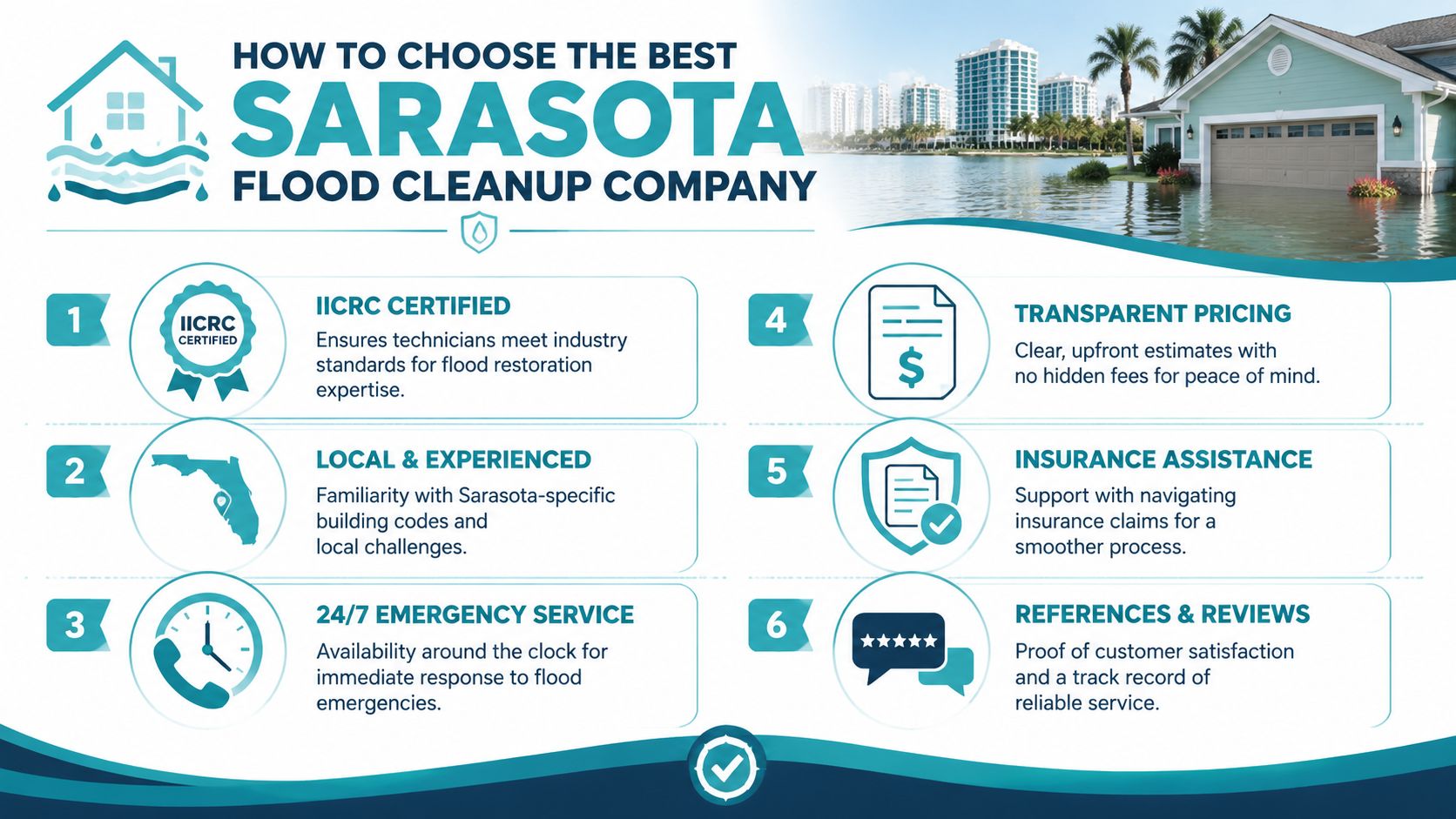
How to Choose the Best Sarasota Flood Cleanup Company
At 2 a.m., after a pipe break or storm intrusion, every company on Google can sound qualified. The difference shows up after the crew arrives. A good flood cleanup company does more than extract water. It identifies what can be dried in place, what should be removed to stop hidden damage, and how to document each decision so the homeowner is not left arguing about it later.
Response time matters, but response quality matters just as much. Sarasota homes often have tile over slab, layered cabinetry, drywall, and insulation that can hold moisture out of sight. If a crew arrives quickly but skips moisture mapping, contamination assessment, or removal decisions, the job can look dry on day one and still fail later.
Ask direct questions before authorizing work:
- Are your technicians IICRC certified? Certification does not guarantee good judgment, but it does tell you the crew has been trained in water categories, drying methods, and material handling.
- Who is actually coming to my house tonight? Ask whether the company uses trained in-house technicians, subcontractors, or a mix of both.
- Do you handle mitigation and rebuild under one roof? Separate vendors can work fine, but handoffs often create delays, scope disputes, and finger-pointing about what was removed and why.
- How do you verify drying? Look for clear answers about moisture meters, daily monitoring, and written drying records.
- How do you handle contaminated water? Outdoor floodwater and sewage losses require a different approach than a clean supply-line leak.
- What will you provide for insurance? You want photos, moisture readings, equipment logs, demolition notes, and a scope that matches the actual damage.
- Can you explain the cost drivers before work starts? A reliable company should be able to explain what affects price, including extraction, demolition, drying days, antimicrobial treatment, and specialty cleaning.
That last point gets missed in a lot of local guides. Homeowners deserve plain language on costs before the fans are running. No reputable contractor can give a final number over the phone without seeing the loss, but they should be able to explain how the invoice is built and which parts are mitigation versus reconstruction.
The first phone call also tells you a lot. A capable dispatcher or project manager will ask where the water came from, how long it sat, what rooms are affected, whether power is safe, and whether the loss involves sewage or stormwater. If the conversation jumps straight to price or broad promises, keep looking.
A few warning signs come up again and again:
- A firm quote is offered before inspection
- Every material is promised salvageability
- The company talks about fans and dehumidifiers but not moisture mapping
- No one can explain who writes the scope or checks the drying progress
- Repair work is treated as a separate problem with no plan for the handoff
One strong sign is operational clarity. The company should be able to explain who is in charge of your project, how often the site will be checked, what gets removed first, and what documentation you will receive. If you want to see how one local company presents its credentials and service model, review AMPM Restoration Services’ company background and certifications.
Choose the contractor who sounds methodical under pressure. In flood cleanup, calm judgment usually saves more materials, shortens disputes, and reduces the odds of paying twice for the same loss.
Why Trust AMPM for Your Flood Cleanup Services
The Sarasota restoration market is built around rapid, multi-stage work. Local providers commonly offer the full sequence of water removal, drying, sanitation, mold remediation, reconstruction, and insurance claim assistance because flood losses rarely stop at extraction alone.
That full-sequence model is what homeowners should look for. You don’t want one vendor extracting water, another checking moisture, and a third trying to figure out what the first two meant. You want a documented path from emergency mitigation through final repairs.

AMPM Restoration Services is one local option that fits that model. According to the publisher information provided for this article, the company is locally owned, available 24/7, offers a one-hour response time, uses an IICRC-certified team, and handles mitigation, sanitization, repairs, reconstruction, and insurance coordination across Sarasota, Bradenton, Lakewood Ranch, St. Petersburg, and the Gulf Coast. You can learn more on the company’s about page.
What that means for a homeowner
In practice, the value is simple. Faster arrival helps limit damage. A trained crew reduces bad decisions about materials. One coordinated team cuts down on delays between drying and repairs. Clear documentation makes insurance conversations easier.
Flood cleanup services in Sarasota should restore more than drywall and flooring. They should restore order. When the job is managed well, you know what’s wet, what’s salvageable, what’s next, and who is responsible for each step.
Sarasota Flood Cleanup FAQs
Can I clean up flood damage myself?
You can move dry items, protect valuables, and take photos if it’s safe. But DIY cleanup often misses trapped moisture and mishandles contaminated water. Household fans and shop towels don’t tell you what’s happening behind baseboards, under flooring, or inside cabinets. If sewage or outdoor floodwater is involved, leave cleanup to professionals.
Should I stay in the house during restoration?
That depends on which rooms were affected, what kind of water entered, and whether demolition or sanitation is needed. Some homeowners stay in unaffected parts of the home. Others leave temporarily because of noise, equipment, access restrictions, or contamination concerns. Ask for a room-by-room recommendation after inspection.
What should I do with wet furniture and belongings?
Don’t assume everything is ruined, and don’t assume everything can be saved. Move small valuables, documents, medications, and electronics out of danger first if you can do it safely. Leave heavily affected contents in place for documentation until the restoration team has photographed and evaluated them.
Will insurance cover flood cleanup?
Coverage depends on the cause of loss and the policy language. Standard homeowners coverage may handle some sudden internal water losses differently than exterior flood events. That’s why good documentation matters so much. The mitigation side still needs to begin promptly even while coverage is being clarified.
How do I help prevent mold after a flood?
Act quickly. The most effective prevention is rapid extraction, proper drying, and removal of materials that can’t be safely restored. What doesn’t work is masking odors, painting over damp surfaces, or waiting to “see if it dries out.” A professional drying plan is the key mold-prevention step.
How long will the drying equipment stay in my house?
It varies with the materials affected, the amount of trapped moisture, and the water category. Equipment stays until moisture readings show the structure has returned to an acceptable dry standard. Removing equipment too early is one of the most expensive mistakes in water restoration because it can leave moisture behind where you can’t see it.
If you’re dealing with active water intrusion or storm damage, don’t wait for the damage to declare itself. Flood cleanup services in Sarasota work best when mitigation starts early, documentation is thorough, and the repair plan is clear from the beginning.
If you need flood cleanup services in Sarasota, contact AMPM Restoration Services for immediate help. Call 941-946-7807 for a free inspection and estimate. AMPM provides insurance claim assistance and financing options, so you can move from emergency cleanup to full restoration with less confusion and less delay.