

Restoration Company for Water Damage Repair
For a common single-room water loss from something like a burst pipe, homeowners often see about $3,000 to $8,000 in restoration and repairs. Water damage is also far from rare. It accounts for nearly 24% of all property insurance claims, the average water damage and freezing claim is about $12,514, and 1 in 60 insured homes files that kind of claim each year, according to ConsumerAffairs’ water damage insurance claims statistics.
You walk into the laundry room in Bradenton or Sarasota, and the floor feels warm, wet, and wrong. The water heater has been dripping for hours, maybe longer. Baseboards are swollen, drywall is soft, and now you’re trying to figure out two things at once. How bad is this, and what is a fair price from a restoration company for water damage?
That stress gets worse when the first estimate is full of equipment charges, demo lines, and drying language that doesn’t mean much if you’ve never handled a loss before. On the Florida Suncoast, where humidity works against you, the right response matters as much as the price. A cheap job that leaves moisture in the wall cavity often turns into a larger repair.
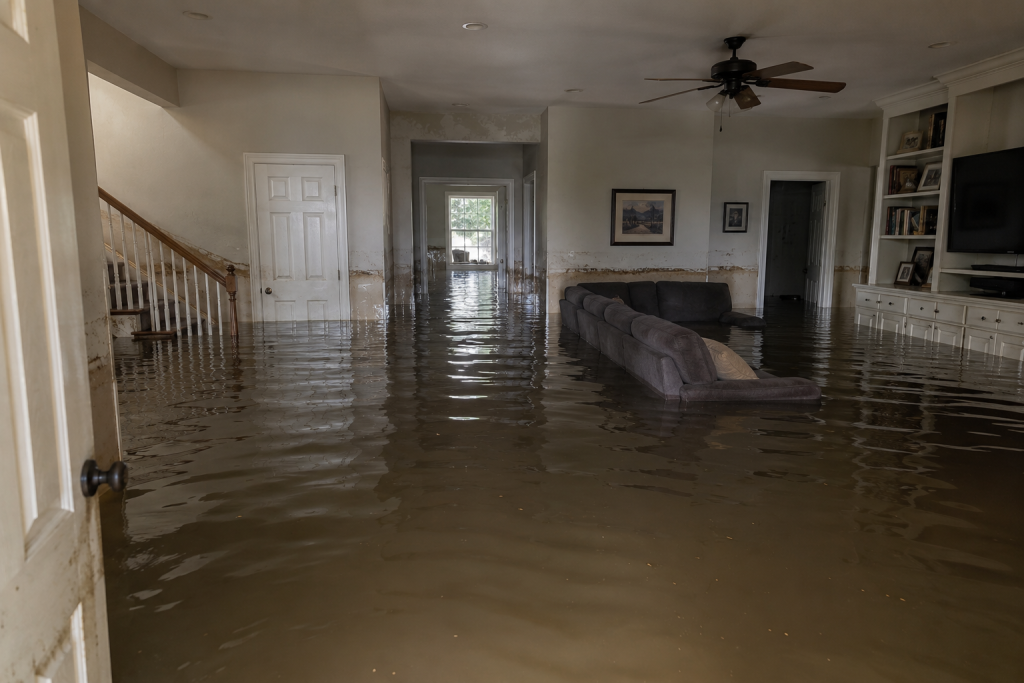
Your Guide to Water Damage Restoration Costs in Florida
A fair price starts with understanding what you’re paying for. A professional restoration company for water damage isn’t just removing visible water. The job entails finding where moisture migrated, stopping further damage, documenting conditions, drying the structure correctly, and only removing materials that can’t be saved.
What Florida homeowners usually want to know first
Callers don’t call because they want a technical lecture. They want to know whether the floor has to come out, whether insurance may help, and whether the estimate in front of them makes sense.
In practice, pricing shifts based on contamination level, how far the water spread, what materials got wet, and how long moisture sat in place. A laundry room leak that stays on tile is one kind of job. A hidden pipe leak that wicked into cabinets, drywall, insulation, and adjacent rooms is another.
The first inspection should reduce confusion, not create more of it. If the contractor can’t explain why each line item exists, the estimate isn’t ready.
What a useful estimate should tell you
A useful estimate should answer these questions clearly:
- Where the water came from and whether the source has been stopped
- What materials are wet and which ones are likely salvageable
- What drying equipment is needed and why
- What demolition is necessary now versus what can wait until readings confirm it
- What is mitigation and what is reconstruction
If mold is already part of the picture, it helps to review related repair concerns too. This guide on mold removal cost in 2026 gives helpful context on when a water job becomes a mold job.
A restoration company for water damage should give you enough detail to make decisions while you’re under pressure. That’s what turns panic into a plan.
Typical Water Damage Restoration Costs on the Suncoast
The hard part about pricing is that homeowners want one number, but water losses don’t price that way. Mitigation is usually based on the class of water damage, the category of water, the affected materials, and the amount of equipment and labor required to dry the structure correctly.
Why estimates vary so much
Two houses can have the same leak and very different invoices. One has ceramic tile, open access, and quick shutoff. The other has laminate flooring, trapped moisture under cabinets, and water that traveled behind baseboards into a hallway and bedroom.
The broad market is crowded. The U.S. damage restoration services industry is a $7.1 billion market with over 60,000 businesses, according to IBISWorld’s industry profile. That competition is one reason pricing varies, but procedure is what separates a careful contractor from one that writes a bigger scope.
Estimated Water Damage Restoration Costs in Florida 2026
| Damage Class & Water Category | Average Cost Per Square Foot | Example Scenario (1,000 sq ft) |
|---|---|---|
| Class 1, Category 1 | $3 to $5 | $3,000 to $5,000 |
| Class 2, Category 1 | $4 to $6 | $4,000 to $6,000 |
| Class 2, Category 2 | $5 to $8 | $5,000 to $8,000 |
| Class 3, Category 2 | $7 to $10 | $7,000 to $10,000 |
| Class 3, Category 3 | $8 to $15 | $8,000 to $15,000 |
| Class 4 specialty drying | $10 to $15+ | $10,000 to $15,000+ |
What those classes and categories mean in plain English
- Class 1 loss affects a smaller area with low material absorption.
- Class 2 loss usually means water reached more of the room and got into porous materials.
- Class 3 loss involves major saturation. Walls, insulation, flooring, and multiple rooms may be affected.
- Class 4 drying involves dense materials such as hardwood, plaster, concrete, or specialty assemblies that take longer and require more control.
Water category matters too:
- Category 1 starts as a clean source, such as a supply line.
- Category 2 carries more contamination risk, often from appliances or drain-related events.
- Category 3 is heavily contaminated and demands stricter handling, disposal, and cleaning.
If the damage is overhead, ceiling work can become its own repair line item. This breakdown of the cost to repair a water damaged ceiling in Florida helps when you’re trying to separate mitigation from rebuild pricing.
Key Factors That Influence Your Final Bill
The final bill comes from conditions on site, not from a flat menu. That’s why one invoice looks reasonable and another looks bloated. A trustworthy restoration company for water damage should be able to tie each charge to a real condition in the home.
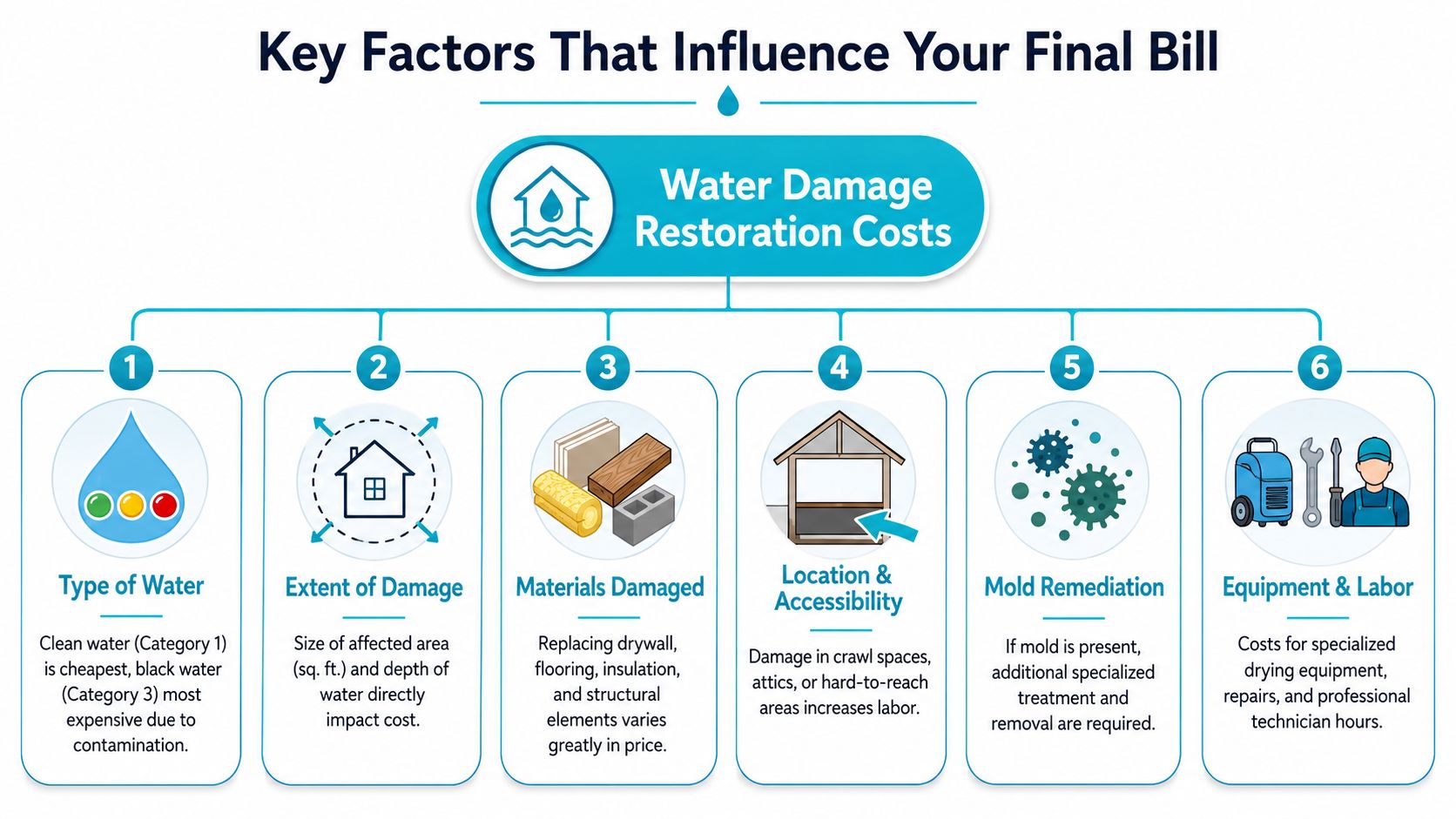
Water type changes the whole job
Clean water is the simplest scenario. If the loss came from a supply line and was discovered quickly, crews may be able to save more materials and limit demolition.
Once water comes from an appliance discharge, drain issue, flood intrusion, or sewage-related source, labor and disposal requirements rise. Protective equipment changes. Cleaning protocols change. The number of materials that can be safely saved often drops.
Size matters, but saturation matters more
Homeowners often focus on square footage. That matters, but saturation depth matters just as much. Fifty square feet of soaked drywall, wet insulation, and trapped moisture under cabinets can be more involved than a larger but lightly affected tile floor.
If you want to understand how this spread happens behind finishes, this article on how fast water damage spreads in walls is worth reviewing before you approve a scope.
Practical rule: Pay attention to words like “affected,” “wet,” “non-salvageable,” and “containment.” Those terms should match what the technician actually measured, not what sounds dramatic.
Materials and access drive labor
A wet tile floor can often be cleaned and dried with less demolition than wet laminate, engineered wood, particleboard cabinets, insulation, or textured drywall. Porous materials absorb water, hold contamination, and often need more aggressive treatment or removal.
Access also changes pricing fast:
- Behind cabinets requires more labor to inspect and dry hidden cavities
- Inside wall chases often means selective demolition and repeated moisture checks
- Under flooring systems can require lifting finishes or specialty drying
- In attics or crawl spaces the crew spends more time reaching, protecting, and monitoring the area
Mold concerns can add a second scope
Once visible growth, odor, or long-term dampness enters the picture, you’re not dealing with a basic dry-out anymore. You’re balancing moisture control with contamination control. If you’re comparing how other specialists explain this issue, this resource on understanding mold removal costs and risks gives a useful outside perspective on why remediation pricing changes once microbial concerns appear.
The takeaway is simple. Equipment, demolition, sanitation, and rebuild costs should follow evidence. They shouldn’t be padded because the claim exists.
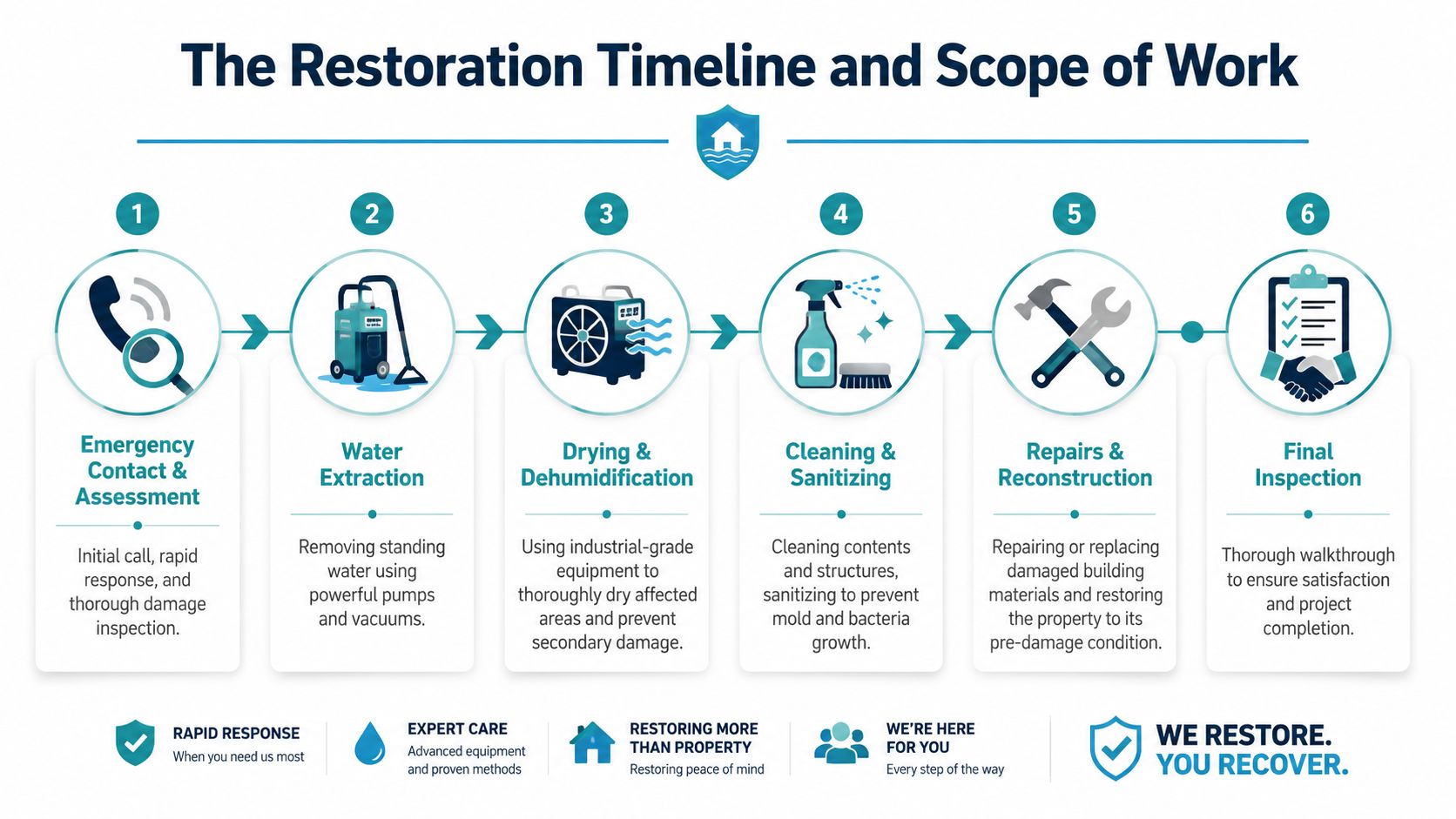
The Restoration Timeline and Scope of Work
Good water restoration follows a sequence. If a contractor skips steps, the job may look dry while moisture remains trapped in framing, insulation, subfloors, or wall cavities.
What the first day should look like
The first priority is source control. If the leak is still active, drying equipment won’t solve anything. After that comes extraction, then inspection with moisture-detection tools, then a drying plan.
Effective water remediation is a sequence of source control, extraction, controlled drying, and sanitization, and it typically includes standing water removal, moisture detection, air movers, dehumidifiers, and an EPA-registered disinfectant.
A typical first visit includes:
- Stop the cause if it hasn’t already been isolated.
- Inspect the affected rooms and identify moisture migration.
- Extract standing water from floors, pads, and accessible cavities.
- Remove unsalvageable materials where drying isn’t realistic or safe.
- Set air movers and dehumidifiers based on layout and material load.
What happens during drying
Drying is where a lot of homeowners get frustrated because the equipment is noisy and the house may still look damaged. But this stage is where hidden problems are prevented.
Daily or scheduled monitoring matters. A competent crew checks moisture readings, adjusts equipment placement, and confirms that wet materials are progressing toward dry standards. If readings stall, the scope may need to change. That might mean more access cuts, removing trapped insulation, or opening a toe-kick area under cabinets.
For homeowners comparing schedules, this guide on how long water damage restoration takes helps explain why mitigation and rebuild don’t move at the same pace.
Drying isn’t finished when surfaces feel dry to your hand. It’s finished when the structure tests dry enough to close it back up safely.
What the closeout phase should include
Once the structure is dry, the next steps are cleaning, sanitizing, and preparing for repairs. Depending on the loss, that may include drywall replacement, trim, paint, flooring work, cabinet repair, or more substantial reconstruction.
If you hire a full-service provider such as AMPM Restoration Services, ask for clear separation between mitigation charges and reconstruction charges. That protects you when you’re reviewing insurance approvals and keeps the scope easier to follow.
Navigating Insurance Claims with Your Restoration Company
A lot of contractors say they work with insurance. That phrase means almost nothing by itself. The real question is whether the restoration company for water damage documents the claim in a way that protects your property and also keeps the scope honest.
What an advocate actually does
A strong restoration partner uses a standardized damage-assessment workflow, documents all loss conditions as they develop, and communicates with both the owner and insurer. Industry guidance also treats IICRC certification as a meaningful quality signal because it shows the technicians are trained in accepted water-damage practices and claim documentation, according to Continuity Insights on selecting a water damage restoration partner.
That matters because water losses evolve. A wall may look lightly affected on day one and show hidden migration once baseboards come off and meters go in. Without good documentation, you can end up in a scope dispute where the adjuster thinks the extra work is optional and the contractor says it isn’t.
Where homeowners get burned
The conflict point is simple. The same company may handle mitigation, equipment rental, demolition, and rebuild. That can be convenient, but it can also blur the line between necessary work and profitable work.
Watch for these issues:
- Vague drying language that doesn’t identify which rooms or assemblies are wet
- Large demolition scopes before moisture readings justify them
- Equipment charges without explanation of placement, purpose, or duration
- Bundled invoices that make it hard to tell mitigation from reconstruction
- Pressure to sign quickly before you’ve seen the documentation
Ask one direct question: “What evidence supports each part of this scope?” A good project manager can answer that room by room.
How to make the claim smoother
Start your own file right away. Save photos, videos, plumber reports, leak location notes, and a running list of damaged contents. If you haven’t built one before, this practical guide to home inventory is a useful reference for organizing belongings in a way that helps during insurance review.
Then ask your contractor for:
- Moisture maps
- Daily or regular reading logs
- Photo documentation before demo
- Clear notes on salvageable versus non-salvageable materials
- Direct communication records with the adjuster
If you’re getting ready to open a claim or respond to a reservation of rights letter, this article on how to file an insurance claim for water damage can help you organize the process.
A fair claim isn’t the biggest claim. It’s the one that captures the full necessary scope, no less and no more.
Real-World Cost Scenarios for Suncoast Homeowners
General pricing gets clearer when you tie it to real situations. On the Suncoast, I see the same patterns repeatedly. Appliance line failures, roof leaks after storms, and hidden plumbing leaks under floors or behind walls.
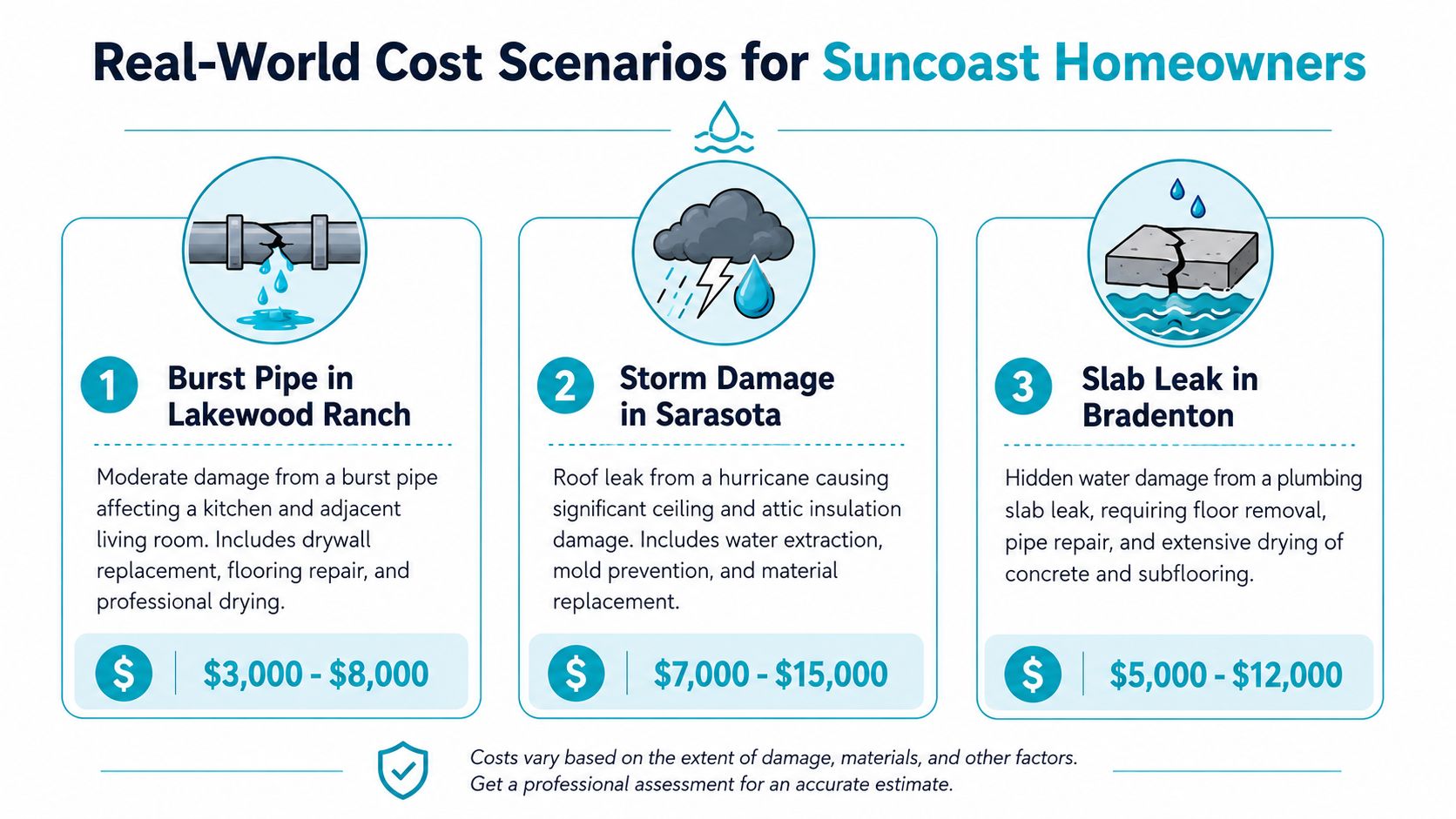
Three scenarios homeowners recognize quickly
Burst pipe in Lakewood Ranch
A kitchen supply line fails while nobody’s home for several hours. Water travels across the kitchen, into the living room edge, and under some base cabinets. A reasonable range is $3,000 to $8,000 when the work includes extraction, selective drywall cuts, drying equipment, antimicrobial treatment, and some flooring or drywall repair.
Storm damage in Sarasota
A roof leak during heavy weather wets the ceiling, attic insulation, and a bedroom wall. If the loss includes removal of wet insulation, controlled drying, sanitizing, and interior material replacement, costs often land in the $7,000 to $15,000 range. If roof documentation becomes part of the insurance conversation, this outside resource on expert advice on roof inspection reports helps explain what carriers usually want to see.
Slab leak in Bradenton
A hidden plumbing leak under the floor causes gradual damage before anyone notices. Flooring has to come up, concrete and subfloor areas need drying, and adjacent finishes may need repair. A common range is $5,000 to $12,000, depending on how far the moisture migrated and how much finish material has to be removed and rebuilt.
What changes these numbers fast
One job stays near the low end when the source is found early, access is straightforward, and materials are limited. The same basic event climbs when cabinets trap moisture, dense materials need specialty drying, or contamination changes the cleaning standard.
The point isn’t to memorize ranges. It’s to use them as a reality check when a restoration company for water damage hands you a scope that feels far outside what the conditions seem to support.
Water Damage FAQ and Your Free Inspection
One of the hardest parts of water damage is judging what’s necessary and what’s been added because you’re in a hurry. Industry education has pointed out that owners often struggle to verify restoration scope and avoid unnecessary charges because urgent losses make benchmarking difficult, especially when one company may be incentivized to expand the invoice, as discussed in this industry video on restoration scope and billing concerns.
Frequently Asked Questions
| Question | Answer |
|---|---|
| How fast should I call a restoration company for water damage? | Call as soon as the source is stopped or identified. The longer moisture sits in drywall, flooring, and insulation, the harder the dry-out becomes and the more materials may need removal. |
| Can I stay in my home during restoration? | Sometimes, yes. It depends on which rooms are affected, the water category, noise from drying equipment, and whether demolition or contamination makes areas unsafe or impractical to occupy. |
| What’s the difference between water mitigation and restoration? | Mitigation is the emergency side. It covers stopping the source, extraction, drying, and stabilization. Restoration is the repair side, such as replacing drywall, flooring, cabinets, and finishes. |
| Do I need to replace everything that got wet? | No. Some materials can be dried and saved. Others can’t. The decision should come from moisture readings, contamination level, material type, and whether the item can be restored safely. |
| Should I trust a company that says it will “handle insurance” for me? | Trust the process, not the slogan. Ask for documentation, moisture maps, and a line-by-line explanation of scope. A reliable contractor helps with the claim while keeping charges tied to actual conditions. |
| What should I do before the crew arrives? | If it’s safe, stop the water source, move valuables out of affected areas, take photos, and avoid using electrical devices near wet materials. Don’t start tearing out materials unless a professional has advised you to do it. |
If you're on the Florida Suncoast and need a restoration company for water damage, get the house inspected before the damage spreads and before guesswork turns into extra cost.
If you need help now, contact AMPM Restoration Services for a free inspection and estimate. We serve Bradenton, Sarasota, Tampa Bay, Saint Petersburg, Lakewood Ranch, and nearby Gulf Coast communities with 24/7 emergency response, insurance claim assistance, and financing options. Call 941-946-7807 to speak with a team that can document the loss, explain the scope clearly, and help you move from emergency cleanup to full restoration.