

Attic Mold Removal Costs: What You Should Know
Moderate attic mold removal costs in Florida usually fall between $3,500 and $8,000, while extensive attic mold cases often range from $8,000 to $15,000 depending on severity and access. If you just found a musty smell after a humid stretch or a recent storm, that number probably feels heavy, but waiting usually costs more than acting early.
A lot of Florida homeowners first notice attic mold the same way. There’s a stale odor after rain, discoloration near the roof decking, or insulation that doesn’t look right. In Bradenton, Sarasota, Lakewood Ranch, Saint Petersburg, and across Tampa Bay, attic conditions can change fast when heat, trapped humidity, and poor ventilation work together.
Attic mold removal costs aren’t just about surface cleaning. The actual price depends on how far the growth has spread, whether insulation is contaminated, how hard the attic is to access, and whether the moisture source also needs correction. That’s why two homes that look similar from the outside can get very different remediation estimates.
AMPM Restoration is a 24/7 emergency restoration company based at 4301 32nd St W b18, Bradenton, FL 34205, serving Bradenton, Sarasota, Tampa Bay, Saint Petersburg, Lakewood Ranch and surrounding Gulf Coast communities with professional water damage restoration, mold inspection and mold removal, fire and smoke damage restoration, storm and flood damage restoration, commercial restoration services, and full reconstruction solutions.
Your Guide to Attic Mold Removal Costs in Florida
If you climbed into the attic after a storm and caught that earthy, musty smell, you’re not alone. Florida homeowners often discover attic mold after a roof leak, a ventilation issue, or a stretch of heavy humidity that pushed trapped moisture into the wood and insulation.
That first question is always the same. How much is this going to cost?
Many people become uncertain at this point. One company throws out a low number over the phone. Another talks about containment, HEPA filtration, insulation removal, and repairs. The gap between those two conversations is usually the difference between a cosmetic wipe-down and a real remediation job.
What homeowners need to know first
Attic mold removal costs are shaped by more than the visible stain on the wood. A proper estimate usually reflects:
- Contamination size: A small isolated patch is different from widespread growth across roof decking.
- Moisture cause: If the source remains, mold can come back.
- Material impact: Wet or mold-saturated insulation may need removal and replacement.
- Safety setup: Containment, filtration, and disposal are part of doing the work correctly.
Practical rule: If a quote sounds surprisingly cheap, check what it leaves out. Ventilation correction, containment, and insulation handling often determine whether the problem is actually solved.
Homeowners in Bradenton and Sarasota don’t need scare tactics. They need a straight explanation of what drives the bill, what work matters, and what shortcuts usually fail. That’s the purpose of this guide. It gives you a practical way to think about attic mold removal costs before you commit to a contractor, file a claim, or decide whether delay is worth the risk.
Typical Attic Mold Remediation Price Ranges for 2026
A Florida attic mold estimate can look high until you compare it to the repair bill that follows months of ignored moisture. For many homeowners, a professional attic remediation job lands in the low thousands for moderate contamination and climbs much higher once crews have to remove saturated insulation, clean large sections of roof decking, or address structural damage discovered during the work.
That is why broad price ranges matter more than a single number. In Florida, moderate attic mold projects often fall in the mid-range of professional remediation pricing, while severe cases can move into a much larger budget once the problem has spread across the attic or been left in place long enough to damage materials.

National averages for context
National pricing helps set expectations, but it does not always prepare Florida homeowners for what happens in a humid attic. Across the U.S., professional attic mold remediation is often priced by square footage and total affected area, with smaller jobs at the lower end and larger or more invasive projects rising fast.
A practical way to view it is by job size:
- Small attic areas with limited visible growth: usually the least expensive professional projects
- Mid-size contamination with some insulation impact: often a middle-range remediation job
- Large attics or widespread growth: commonly the most expensive category, especially if cleanup goes beyond surface treatment
Per-square-foot pricing also changes based on what the crew finds after setup begins. Surface cleaning is one price. Heavily embedded growth, disposal of contaminated materials, and specialty methods for difficult attic framing can push the rate much higher.
Why Florida estimates often run above the national norm
Florida attics stay hot, damp, and poorly forgiving. A stain that looks minor from the access hatch can turn into a broader remediation scope once technicians get eyes on the roof sheathing, truss connections, and insulation below.
In my experience, the jobs that cost the most are rarely the ones with the ugliest first impression. They are the ones that sat through another wet season. That delay gives mold more time to spread, gives moisture more time to weaken materials, and gives you fewer low-cost options.
For homeowners comparing quotes, it helps to review real mold removal cost examples and pricing situations in Florida homes so the line items make sense before you approve the work.
A sound attic mold estimate covers removal, cleanup, and the work needed to reduce the chance of it coming back. If a quote only addresses the visible staining, the final bill may grow later.
What Factors Increase or Decrease Your Final Bill
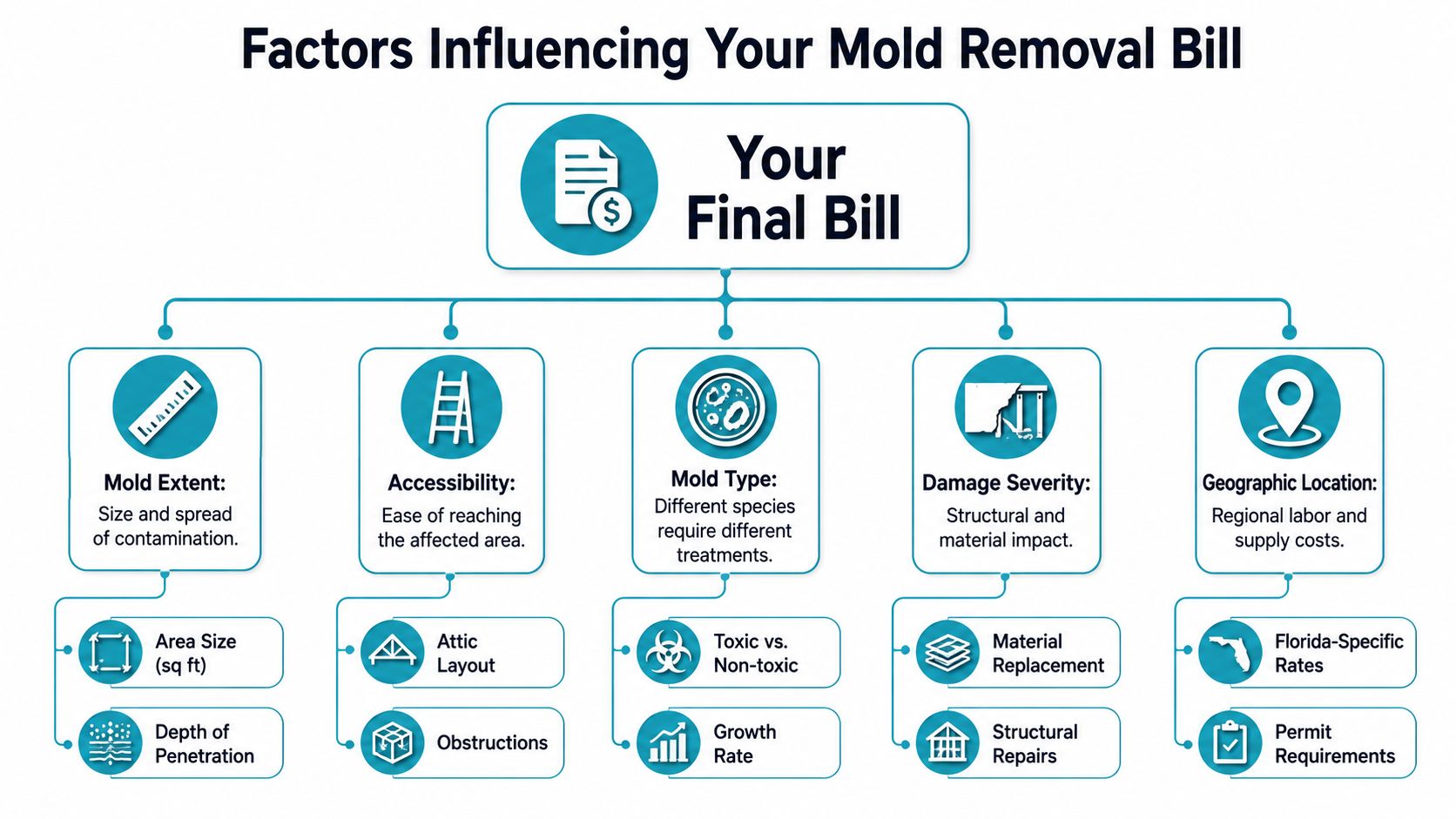
Two attics can have mold and still produce very different invoices. The final number comes from the work required to remove contamination safely and keep it from returning. In the Tampa Bay region, which includes Bradenton, Sarasota, and Saint Petersburg, standard attic mold projects generally range from $1,500 to $4,500, with pricing of $10 to $25 per square foot for accessible surface mold, rising to $25 per square foot if demolition or deep embedding is involved (Tampa Bay mold remediation pricing).
The biggest cost drivers
Some factors increase labor hours. Others increase material removal, disposal, or repair scope. The key is knowing which parts of the quote protect your house and which parts react to complexity.
| Attic Mold Removal Cost Factors | Low Impact (Cost Decrease) | High Impact (Cost Increase) |
|---|---|---|
| Cost Factor | Low Impact (Cost Decrease) | High Impact (Cost Increase) |
| Affected area | Small, contained surface growth | Widespread growth across multiple sections |
| Depth of contamination | Stays on exposed surfaces | Embedded into wood, insulation, or concealed areas |
| Attic access | Walkable layout with open access | Tight entry, low clearance, obstacles, limited movement |
| Insulation condition | Dry and unaffected | Moldy, saturated, compressed, or needing replacement |
| Containment needs | Limited isolation required | Larger containment zones and more air control |
| Repairs needed | No visible structural impact | Damaged decking, framing, or ventilation defects |
| Moisture correction | Minor airflow adjustments | More involved ventilation or air sealing work |
What's usually inside a professional quote
A good estimate should spell out what the crew will do. That usually includes inspection, setup, containment, physical removal, cleaning, disposal, and a plan to address the moisture source. If you're comparing attic mold removal costs, understanding the difference between cleaning visible mold and full remediation matters. This breakdown of the difference between mold removal and remediation helps clarify why some estimates are much more complete than others.
Here's what commonly affects whether your bill lands on the low side or the high side:
- Easy access lowers labor pressure: Open attic layouts are faster and safer to work in.
- Embedded growth raises complexity: Mold inside porous materials often means removal, not just treatment.
- Contaminated insulation adds disposal and replacement: Once insulation holds mold or moisture, leaving it in place usually isn't the smart move.
- Moisture-source correction protects your investment: Without fixing the reason mold formed, cleanup becomes temporary.
Contractors don't charge more because the stain looks ugly. They charge more when the job requires more containment, more removal, and more repair.
What tends not to work
Low bids often skip one of three things. They skip proper containment, they skip insulation handling, or they skip the correction that caused the mold in the first place. That may reduce the initial invoice, but it usually doesn't reduce the cost of ownership.
A practical attic remediation estimate should answer three questions clearly:
- What materials are affected
- What must be removed versus cleaned
- What change will stop the mold from coming back
If those answers aren't in the proposal, the number on the bottom of the page doesn't mean much.
The True Cost of Delaying Attic Mold Removal
You open the attic to check on a small dark patch near the roof decking and decide to deal with it later. In Florida, that delay is where financial losses mount. Professional remediation often falls in the $1,500 to $6,000 range, while waiting can turn the job into sheathing replacement and repairs that reach $8,000 to $15,000 (cost of delaying attic mold remediation).
That jump happens because attic mold rarely stays a surface issue in our climate. Warm air, high humidity, storm moisture, and weak ventilation keep feeding growth long after the original leak or moisture event seems finished. Wood holds moisture. Insulation traps it. The attic keeps getting worse while the problem stays out of sight.

Delay changes the kind of job you need
Early on, a contractor may be able to keep the scope tighter. After weeks or months of Florida humidity, the work often shifts from treating affected surfaces to removing insulation, replacing damaged wood components, and correcting the moisture conditions that let the mold spread in the first place.
That is the financial trade-off homeowners need to see clearly. Paying for remediation now is usually the smaller bill. Paying later often means remediation plus reconstruction.
Low-price cleanup can create the same problem on a smaller timeline. As noted earlier, incomplete work often leaves the moisture or ventilation issue in place, which raises the chance of mold returning and pushes the total cost of ownership higher.
Florida homes can't afford wishful thinking
Attic mold does not need a dramatic roof failure to grow. A slow leak, bath fan venting into the attic, wind-driven rain, or trapped humidity can keep materials damp enough for growth to spread. If the mold started after a leak or storm event, this page on how mold grows after water damage over time shows why waiting even a short time can increase the scope.
I've seen homeowners hope the staining will stay cosmetic. In Florida attics, that is a costly bet. By the time discoloration looks obvious, the job is often larger, dirtier, and more expensive than it would have been at the start.
Cheap cleanup is a short-term invoice. A durable fix protects the roof structure, insulation, indoor air quality, and resale value.
Professional Remediation vs DIY Cost and Risk
DIY attic mold cleanup looks cheaper on day one. That's the appeal. A few store-bought products, a rented sprayer, maybe a brush and a mask, and it feels like a money-saving project.
The problem is that attic mold remediation isn't just about making wood look clean. Most professional attic mold removal projects fall within a total cost range of $1,500 to $6,000, with a baseline fee starting around $1,500 regardless of outbreak size because inspection, containment, and disposal are core parts of the job (baseline cost for professional attic mold removal).
What professionals do that DIY usually misses
A homeowner can scrub a visible patch. A trained crew handles the contamination in a controlled way so spores don't spread through the house or remain active in porous materials.
Professional remediation typically addresses:
- Containment: Isolating the workspace to reduce cross-contamination.
- Air control: Using filtration and negative-pressure methods where needed.
- Safe removal: Handling insulation, debris, and contaminated materials correctly.
- Moisture diagnosis: Finding out why mold formed, not just where it showed up.
If you're weighing the risk yourself, this guide on whether to remove mold yourself or hire a professional lays out the practical trade-offs.
Where DIY goes wrong
DIY attempts often fail in one of two ways. They leave active contamination behind, or they spread spores while cleaning without proper containment. Neither one saves money if the attic has to be professionally remediated afterward anyway.
For homeowners who want a job-specific estimate before deciding, AMPM Restoration Services offers free inspections and estimates for mold remediation. That can help define the actual scope before anyone buys equipment, removes insulation, or disturbs contaminated material unnecessarily.
Navigating Insurance for Mold on the Florida Suncoast
A Florida homeowner often finds attic mold only after a storm, a roof leak, or a failed inspection before a sale. At that point, the first insurance question is simple. Is this covered, or is it coming out of pocket?
The answer usually depends on the cause. Insurance may help when mold follows a covered water event, such as storm damage or a sudden leak. Carriers are far less likely to cover mold tied to long-term humidity, deferred roof maintenance, or moisture that sat too long without action. In Florida attics, that line matters because humid conditions can turn a small moisture problem into a much larger repair bill if the issue is left alone.
What to document right away
If there is any chance the mold started with a covered event, document the attic before anyone disturbs materials.
- Photograph visible growth and surrounding damage: Capture rafters, decking, insulation, vents, and any staining or moisture path.
- Save records from the event: Keep roofing invoices, leak reports, storm notes, and plumbing repair records.
- Write down the timeline: Note when you first noticed the issue, when the leak or storm happened, and when you called for help.
- Request a written inspection or remediation scope: Clear findings help show what was damaged, what likely caused it, and what work is being recommended.
That paperwork can make a real difference. A weak file slows the claim. A well-documented file gives the adjuster a clearer basis to evaluate whether the mold resulted from a covered loss or from conditions that developed over time.
Why local claim support matters
On the Suncoast, attic claims are rarely clean-cut. A storm may lift shingles, water may enter slowly, and Florida humidity may accelerate mold growth before anyone notices. The insurer will want to separate the original event from any delay-related damage.
That is why homeowners benefit from inspection notes that are specific, organized, and tied to observable conditions in the attic. If your mold issue appears connected to water intrusion, review how water damage insurance coverage works in Florida before speaking with the adjuster.
I've seen the same pattern repeatedly. Claims tend to go more smoothly when the homeowner documents early, gets the attic inspected quickly, and avoids tearing out insulation or scrubbing surfaces before the carrier has a chance to review the loss.
Insurance support does not promise approval. It does help prevent avoidable mistakes, and that can protect both your claim and your budget. In a Florida attic, delay gives mold more time to spread into insulation, sheathing, and framing. The longer that goes on, the more likely a manageable remediation turns into a much more expensive repair.
Restore Your Peace of Mind Call AMPM Restoration Today
Attic mold removal costs are easier to manage when the problem is handled early. The expensive part usually isn't the initial remediation. It's the delay, the spread, the damaged insulation, and the structural repair that can follow when moisture stays active in a Florida attic.
Professional remediation also protects you from the false savings of incomplete cleanup. A proper scope addresses contamination, safe disposal, and the conditions that caused the mold in the first place. That's what turns a stressful attic problem into a controlled repair instead of a recurring one.
AMPM Restoration serves homeowners and property managers throughout Bradenton, Sarasota, Tampa Bay, Saint Petersburg, Lakewood Ranch, and nearby Gulf Coast communities with 24/7 emergency response, mold inspection, mold removal, reconstruction, and insurance claim assistance. If you're worried about attic mold removal costs, the smart next step is to get the attic inspected before the damage spreads further.
Call 941-946-7807 for a free inspection and estimate. Help is available with insurance claims, and financing options are available if you need to move quickly without delaying the work.
Frequently Asked Questions About Attic Mold Removal
Homeowners usually have the same practical questions once they know the attic needs attention. Here are the ones that come up most often.
| FAQs | |
|---|---|
| Question | Answer |
| How do I know if attic mold is active or old staining? | Old staining and active growth can look similar from the floor hatch. A professional inspection is the safest way to tell whether the material is currently contaminated and whether moisture is still present. |
| Will I need to leave the house during attic remediation? | Not always. It depends on the attic layout, containment plan, and whether work affects occupied areas below. A contractor should explain safety steps before work starts. |
| Does all attic insulation have to be removed? | No. Removal depends on whether insulation is contaminated, wet, compressed, or holding odor. If insulation stayed dry and unaffected, selective removal may be possible. |
| How long does attic mold remediation take? | Project length varies by access, contamination level, and whether insulation or structural materials need replacement. Small jobs can move quickly, while complex jobs take longer because setup and correction matter as much as cleaning. |
| What does a free inspection usually include? | A free inspection typically includes a visual review of affected areas, a discussion of likely moisture causes, and an estimate for the scope of remediation and related repairs. |
| Can mold come back after professional remediation? | Yes, if the moisture source isn’t corrected. Proper remediation reduces risk, but lasting results depend on fixing leaks, ventilation issues, or humidity problems that fed the growth. |
If you've found a musty attic, dark staining on roof decking, or insulation that looks compromised, don't wait for the problem to spread. AMPM Restoration Services provides free inspections and estimates, insurance claim assistance, and financing options for homeowners across Bradenton, Sarasota, Tampa Bay, Saint Petersburg, Lakewood Ranch, and surrounding Gulf Coast communities. Call 941-946-7807 now for 24/7 help and a clear plan to address your attic mold removal costs before they turn into a much larger repair.