


How to Dry Wet Carpet After Flooding
Water is across the living room. The carpet squishes under your shoes. The air already feels heavy, and in Florida that’s the part many homeowners underestimate. Wet carpet after a flood isn’t just an inconvenience. It’s a race against trapped moisture, hidden contamination, and the kind of mold problem that starts below the surface long before you see it.
If you’re searching for how to dry wet carpet after flooding, move fast, but don’t move blindly. The right sequence matters. So does knowing when a small cleanup has crossed into a restoration job. In Bradenton, Sarasota, Lakewood Ranch, Saint Petersburg, and across Tampa Bay, the combination of storm water, warm temperatures, and high humidity makes carpet drying harder than often realized.
Your First Response to a Flooded Florida Home
The first few minutes set the tone for the whole recovery. If a summer storm pushed water in through a slider, or a pipe burst while you were away, the instinct is usually to start grabbing towels and fans. That’s understandable, but how to dry wet carpet after flooding starts with control, not panic.
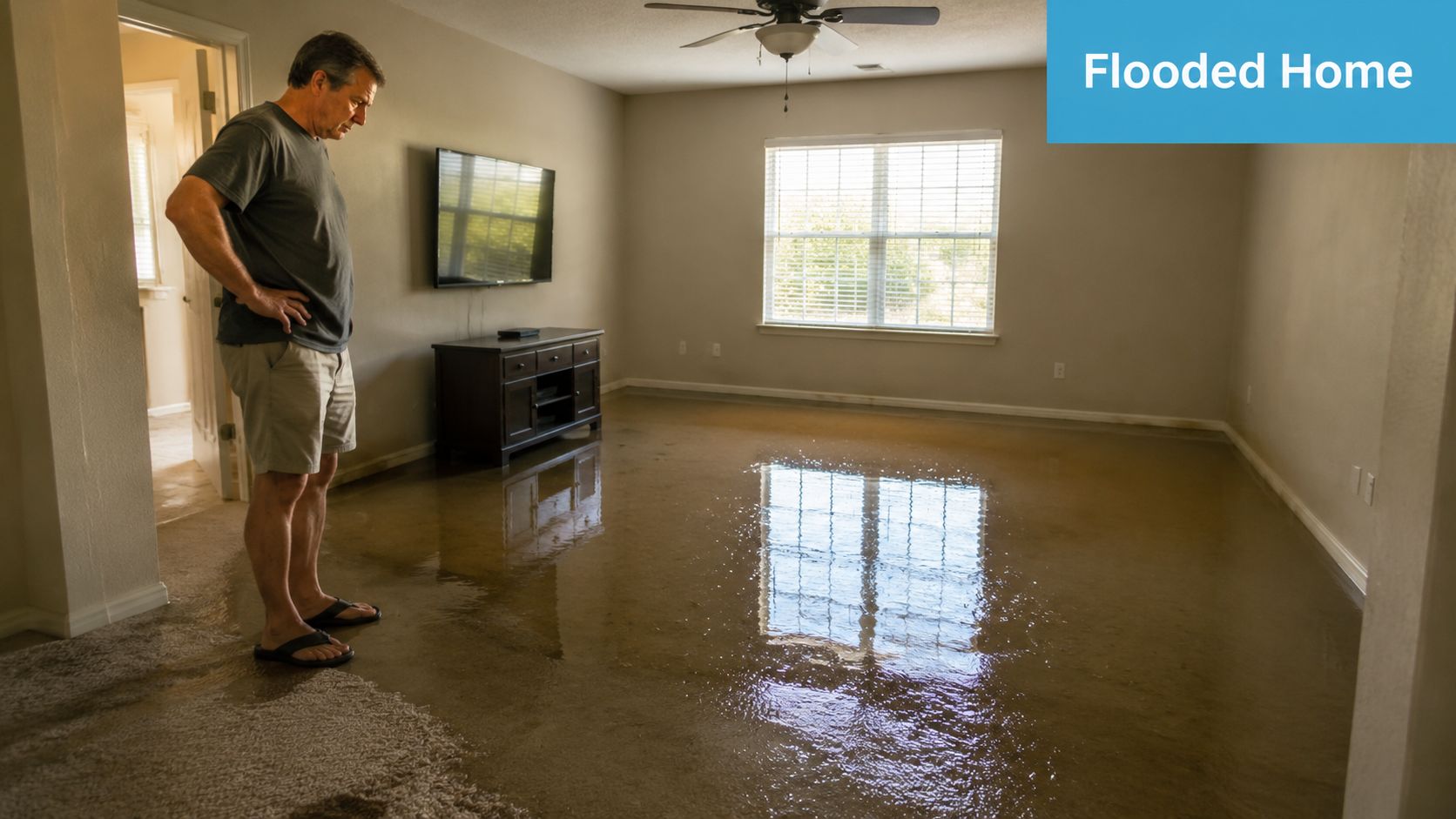
Stop the source if you can
If the water is still coming from inside the house, shut off the supply line or the main water valve if it’s safe to reach. If the problem started underground or outside the home, a plumbing repair may be part of the larger fix.
Then protect what you can without spreading damage. Move lightweight furniture, rugs, electronics, and paper items out of the wet area. Don’t drag heavy furniture across soaked carpet if it’s going to tear fibers or force dirty water deeper into adjacent rooms.
Focus on speed, but use the right order
Drying carpet isn’t the same as cleaning carpet. The main issue is the water you can’t see. Moisture drops through the carpet face into the pad and then into the subfloor. If you only dry the top, the room may feel better while the structure underneath stays wet.
Start with these priorities:
- Limit foot traffic: Every step pushes moisture and soil deeper into the carpet and pad.
- Separate dry from wet areas: Close doors where possible and keep kids and pets out.
- Document conditions early: Quick photos now save confusion later.
- Get a recovery plan in motion: If you need a broader checklist, this post-flood response guide is a useful next step.
Practical rule: A wet carpet can often be saved. A wet carpet that stays wet is where expensive trouble starts.
Florida homes don’t get much help from outdoor air. In Bradenton and Sarasota, opening the house and hoping for a breeze often leaves you with warm, damp air moving through an already wet space. That’s why calm, fast action matters more than improvised action.
Immediate Safety Steps and Insurance Documentation
Before touching the carpet, deal with the hazards first. Water damage scenes injure people when they rush. Slips are obvious. Electrical shock is the one homeowners miss. Contamination is the one they often underestimate.

Make the area safe before cleanup
If water is near outlets, power cords, appliances, or baseboard wiring, stay out until power is shut off safely. If you can turn off electricity from the main panel without entering standing water, do it. If not, wait for qualified help.
Use a hard line on water categories too. Water from a broken supply line is one thing. Water that came in from outside, backed up, or passed through dirty building materials should be treated as contaminated. In those cases, DIY carpet salvage gets much riskier.
Use this quick checklist:
- Shut off electricity safely: Don’t step into wet carpet near energized areas.
- Avoid skin contact with suspect water: Wear gloves and boots if you must enter.
- Watch your footing: Wet carpet over tile or smooth subfloors can shift under you.
- Isolate pets and children: They’ll walk through contaminated water without hesitation.
If the water source is questionable, stop thinking about drying first and start thinking about exposure first.
Document before you disturb anything
Homeowners often make insurance harder by cleaning too aggressively before recording the loss. Take wide shots of every affected room. Then take close-up photos of wet carpet edges, baseboards, furniture legs, walls, and any visible staining or debris line. Shoot video too, especially if water is still entering or if you can hear dripping behind walls.
Keep damaged items together if possible. Don’t throw away pad, tack strip, or ruined belongings until your carrier or adjuster has given direction, unless leaving them in place creates a safety issue.
For claim preparation, a resource like this guide on filing an insurance claim for water damage can help you avoid missing key documentation.
What to write down
Photos matter, but notes matter too. Record:
- When you found the damage
- What you believe caused it
- Which rooms were affected
- What actions you took immediately
- Who you contacted, and when
That paper trail helps whether you’re dealing with a homeowner’s policy, a landlord issue, or a commercial claim. It also prevents the common argument that damage got worse because no one acted quickly.
Water Extraction DIY Methods and Professional Thresholds
Once the area is safe, remove as much water as possible. This is the part most homeowners can start on, but it’s also the point where a lot of DIY efforts stall out. Surface water comes up quickly. Subsurface water doesn’t.
A sound sequence for how to dry wet carpet after flooding is to remove standing water first with a wet/dry vacuum or pump, then create strong airflow, then run dehumidification continuously so moisture leaves both the carpet and the room air, as described in this carpet drying workflow.
What a homeowner can do effectively
If the affected area is limited and the water source is clean, a wet/dry vacuum can help. Make slow, overlapping passes. Don’t rush it. The goal is extraction, not one quick pass to make the carpet look less wet.
A small portable pump can help if water is pooled in one low area. After that, wet vac extraction does the rest of the visible work. Towels are useful only for spot cleanup and furniture protection. They are not a real extraction method for flooded carpet.
DIY tools work best when:
- The wet area is small: Think localized intrusion, not a broad multi-room loss.
- The water is clean: Supply-line water is a different decision than storm or sewage-related water.
- You caught it early: Fresh losses are more manageable than water that’s been sitting.
- You can continue the drying process correctly: Extraction without airflow and dehumidification isn’t enough.
Where DIY usually stops being enough
Homeowners need a clear threshold. Call for professional assistance if any of the following apply:
- The wet carpet extends beyond a small room
- The water has been there for over 24 hours
- The source is contaminated or unknown
- The pad and subfloor are clearly saturated
- The room still feels heavy and damp after extraction efforts
Those situations usually require stronger extraction, controlled drying, moisture checks, and selective tear-out of materials that won’t dry safely in place.
A professional crew may use equipment designed to pull more water from carpet and pad than a household wet vac can manage. If you need that level of intervention on the Suncoast, 24-hour water extraction in Sarasota is the kind of response you’re looking for, including services from providers such as AMPM Restoration Services.
The mistake isn’t trying to help your own home. The mistake is staying in DIY mode after the job has clearly outgrown household equipment.
Setting Up for a Thorough Drying Process
Once standing water is gone, the harder part begins. Carpet dries from the surface down only if there’s very little moisture below it. After a flood, that’s rarely the case. The pad traps water. The subfloor holds moisture. Florida air slows evaporation unless you control the room environment.
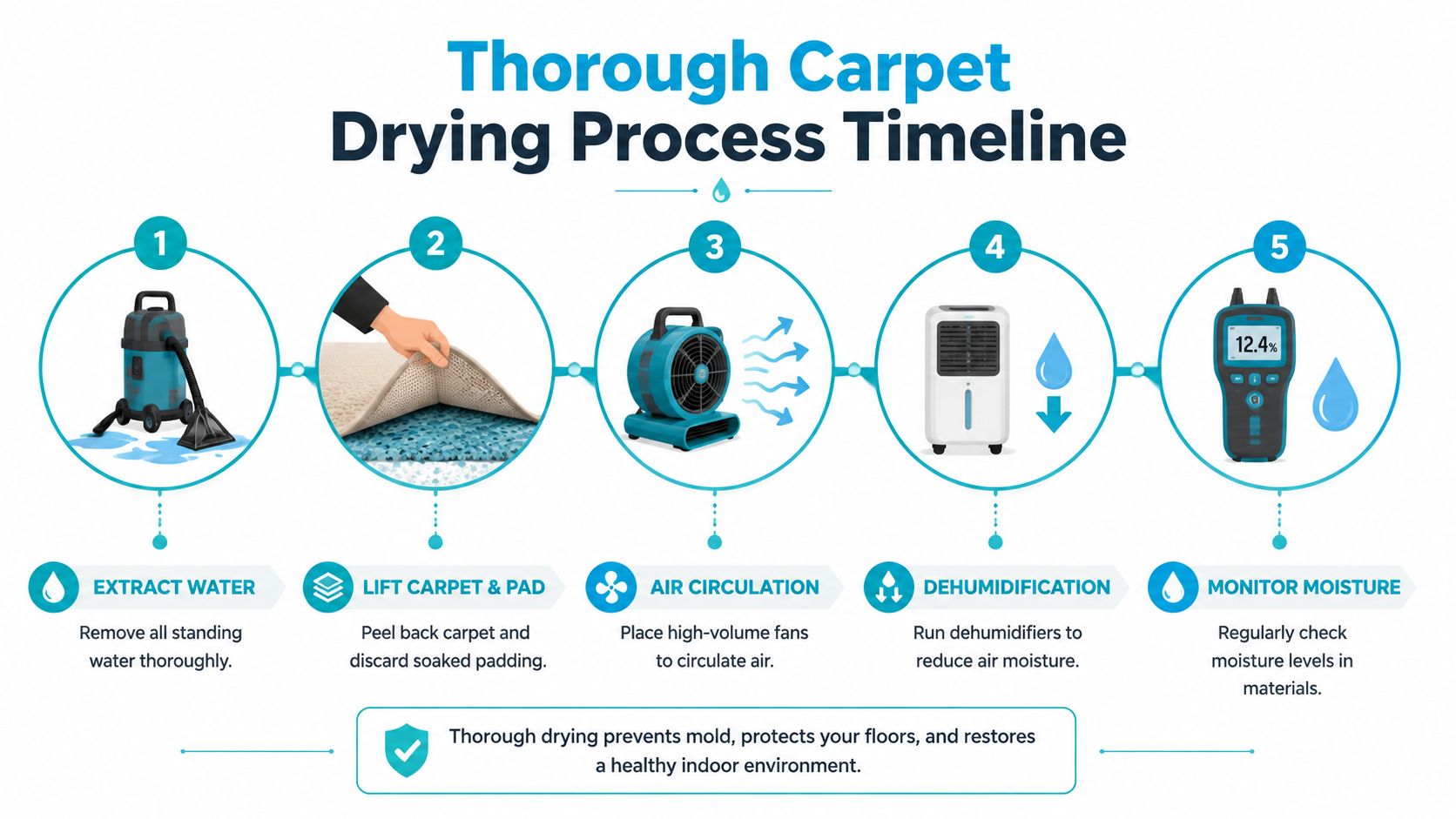
Lift, separate, and move air where moisture is trapped
After flooding, carpet should be dried within 24 to 48 hours to reduce mold and mildew risk, and a typical flooded carpet may take about 3 to 5 days to dry completely depending on materials, ventilation, and how much moisture reached the pad and subfloor, according to flooded carpet drying guidance.
That timeline surprises people. They expect a fan to fix it overnight. It won’t.
The right setup usually includes:
- Lifting a corner of the carpet: This lets you check whether moisture reached the pad and helps air move underneath.
- Directing high airflow across and under the carpet: Air movement should target the wet assembly, not just the middle of the room.
- Running dehumidification continuously: If the air stays damp, evaporation slows down.
- Keeping the space closed and controlled: Open windows in humid weather often feed the problem instead of helping it.
Why open windows can backfire in Florida
In drier climates, fresh air can help. Along the Gulf Coast, outdoor air often brings moisture with it. If you open windows during a humid day in Bradenton or Saint Petersburg, you may feel airflow, but the carpet system can stay wet because the surrounding air is already loaded with moisture.
That’s why pros rely on controlled drying instead of hopeful drying. Air movers push moisture out of materials. Dehumidifiers capture that moisture from the air so evaporation can continue. If either part is missing, the process bogs down.
A homeowner checking progress should lift a carpet corner and inspect the carpet-to-pad interface. If it still feels damp underneath, the job isn’t done. For a fuller walkthrough of the process, this guide on drying out a flooded home step by step is worth reviewing.
Dry doesn’t mean the top fibers feel normal. Dry means the materials underneath are no longer holding moisture.
What works and what doesn’t
| Method | What it does well | Where it falls short |
|---|---|---|
| Household box fans | Moves some surface air | Doesn’t control humidity or reach trapped moisture well |
| Air conditioning | Helps lower indoor moisture somewhat | Usually isn’t enough by itself for saturated carpet systems |
| Wet/dry vacuum | Good first step for removing visible water | Doesn’t finish the drying job |
| Controlled airflow plus dehumidification | Supports full drying of carpet and room air | Requires proper setup and monitoring |
Sanitizing the Carpet and Preventing Mold Growth
A carpet can be dry enough to walk on and still not be safe enough to keep as-is. Flooding leaves behind more than moisture. Soil, bacteria, and odor-causing residue can remain in the fibers, pad, tack strip, and subfloor. If the water came from outside or from a backup, sanitizing isn't optional.
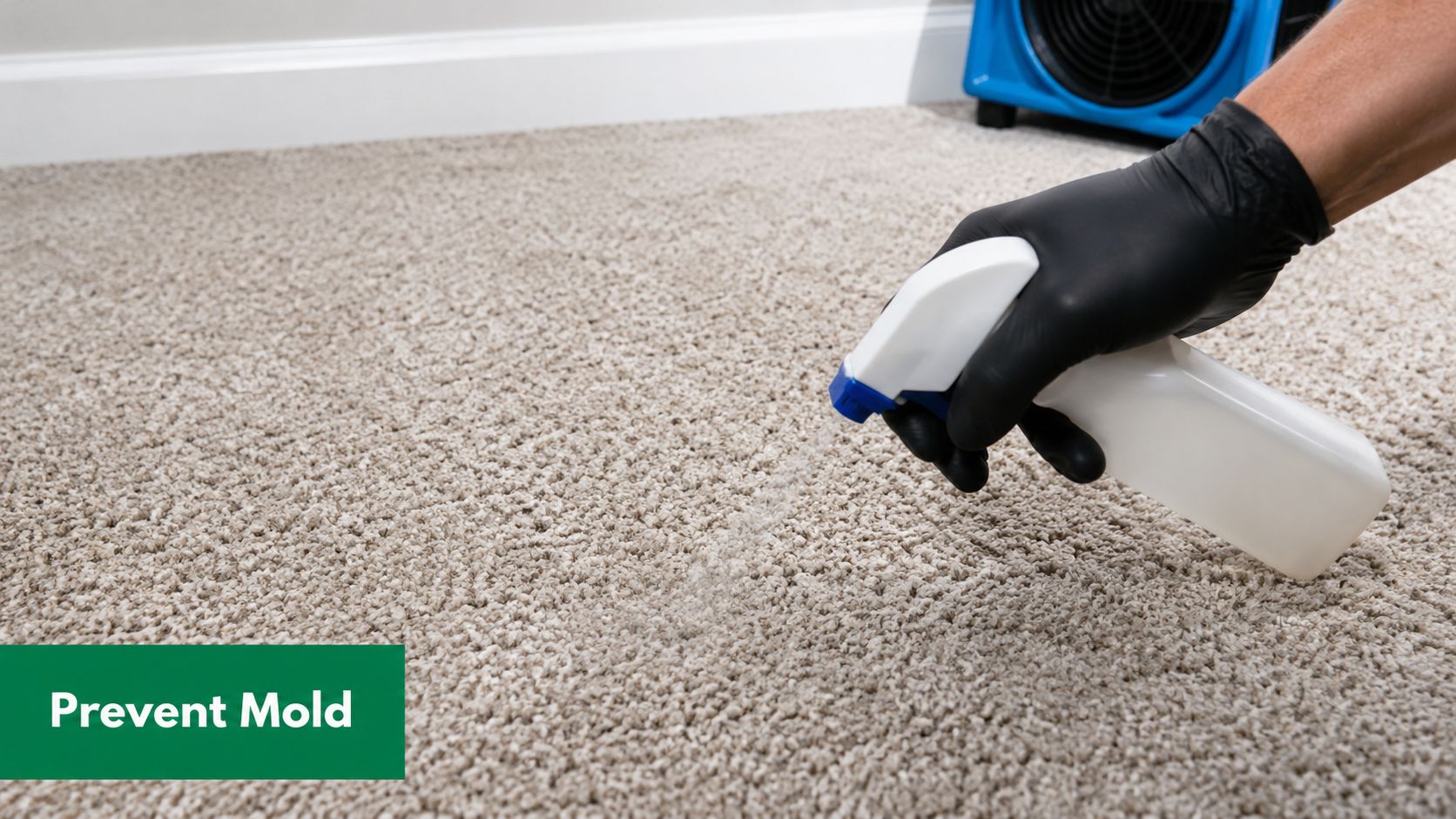
Padding is often the real problem
For smaller water intrusions, NC State Extension recommends lifting the carpet and propping it up to dry, cutting away wet padding, and using oscillating fans and air conditioning to speed evaporation. It also notes that padding often holds water longer than the carpet face fibers, which is why saturated padding often needs to be removed and airflow increased underneath the carpet, as outlined in NC State Extension guidance on water-damaged carpets and rugs.
That matches what shows up on real jobs. The carpet face may recover. The pad often doesn't. Once padding is soaked, it acts like a sponge pressed against the subfloor. If it stays, drying drags out and odor problems follow.
What sanitation should include
Proper post-flood cleaning usually involves more than a retail carpet spray. Depending on the water source and what the carpet was exposed to, the process may require:
- Removal of saturated pad: Especially where moisture is trapped underneath.
- Cleaning of the carpet backing and exposed subfloor: Not just the visible surface.
- Application of an appropriate antimicrobial treatment: To address microbial risk and odor.
- Inspection for hidden mold activity: Along baseboards, lower drywall, and under the carpet edge.
If you want a homeowner-friendly explanation of the mold side of this issue, this article on how to protect your Portland house from mold is a useful general read, though Florida conditions usually make moisture control even more urgent.
Don't trust smell as your only test
A room can smell fine and still have residual moisture. The reverse is also true. A musty odor after drying attempts usually means something below the surface is still wet, still dirty, or both.
Use these decision points:
- Keep the carpet only if it dried thoroughly and the water source was clean
- Replace the pad if it remained saturated or cannot be cleaned confidently
- Inspect nearby drywall and baseboards if the room still smells off
- Treat mold prevention as part of the drying job, not an afterthought
For Florida homeowners, this broader guide on how to prevent mold after a flood can help you spot the warning signs early.
When to Call The Pros Your Restoration Roadmap
Knowing how to dry wet carpet after flooding means knowing when the job has moved beyond towels, a wet vac, and a few fans. If the affected area is more than a small room, if the water source is contaminated or uncertain, or if the carpet system didn't dry fast enough, the risk shifts from inconvenience to secondary damage.
The roadmap is simple. Make the area safe. Document everything. Extract standing water. Dry the carpet, pad, and subfloor correctly. Sanitize what can be saved. Remove what can't. If any step stalls, don't guess.
For homeowners in Bradenton, Sarasota, Tampa Bay, Saint Petersburg, Lakewood Ranch, and nearby Gulf Coast communities, fast action matters. A professional inspection can tell you whether the carpet is salvageable, whether the padding needs to go, and whether hidden moisture is still sitting below the surface.
Frequently Asked Questions About Drying Wet Carpet
How long does it take to dry wet carpet after flooding
A flooded carpet often takes about 3 to 5 days to dry fully when the process is done correctly, but the timeline depends on the carpet material, thickness, ventilation, and whether water reached the pad and subfloor. Surface dryness happens sooner than full system dryness. That's why homeowners sometimes think the problem is solved when moisture is still trapped below.
Can carpet padding be saved after flooding
Sometimes, but not reliably enough to assume it's fine. Padding holds water longer than the carpet face, so it's often the part that forces removal. If the padding is saturated, contaminated, or still damp underneath after initial drying efforts, replacement is usually the safer move because it allows the subfloor to dry properly and reduces the chance of lingering odor or mold.
Will homeowners insurance cover wet carpet after water damage
That depends on the cause of loss and the details of your policy. Sudden and accidental interior water damage is often handled differently than long-term leaks or outside flood events. The best move is to photograph everything before cleanup changes the scene, keep a written timeline, and notify your carrier quickly. Good documentation helps whether the claim is straightforward or disputed.
What happens during a free inspection for wet carpet damage
A proper inspection should identify the source of water, the rooms and materials affected, and whether moisture likely reached the pad, subfloor, baseboards, or nearby drywall. You should also get a practical explanation of what can probably be dried in place, what may need removal, and what steps are needed to prevent odor and mold. That kind of inspection is meant to give you decision-ready information, not just a sales pitch.
Is it safe to stay in a house with wet carpet
Sometimes, but not always. If the water involved electrical hazards, contamination, strong odor, or widespread saturation, staying in the affected area may not be wise. Even with clean water, wet carpet can create slip hazards and poor indoor air conditions once materials start holding moisture. If sensitive occupants are in the home, such as young children, older adults, or anyone with respiratory concerns, caution matters even more.
Why is drying wet carpet harder in Florida humidity
Because evaporation slows down when the surrounding air is already damp. In a Florida home, opening windows can move air without helping the carpet release moisture efficiently. Professional drying setups work better because they combine strong airflow with dehumidification, which keeps pulling moisture out of the air so wet materials can keep drying instead of stalling.
If you need help with how to dry wet carpet after flooding, don't wait for the smell, staining, or mold to confirm the damage is worse than it looked. AMPM Restoration Services provides 24/7 emergency response across Bradenton, Sarasota, Tampa Bay, Saint Petersburg, Lakewood Ranch, and surrounding Gulf Coast communities. Call 941-946-7807 for a free inspection and estimate. The team can assist with insurance claim documentation and offers financing options to help you move forward quickly.