


What to Do After Pipe Burst: Your Emergency Guide
You hear rushing water before you see it. Then you turn a corner and find water spreading across the floor, soaking baseboards, creeping under cabinets, or dripping through a ceiling. In that moment, most homeowners ask the same thing: what to do after pipe burst so the damage doesn’t get worse by the minute.
Panic is normal. What matters is what you do next.
On the Florida Suncoast, a burst pipe is more than a plumbing problem. In Bradenton, Sarasota, Lakewood Ranch, St. Petersburg, and across Tampa Bay, warm air and high humidity make wet materials harder to dry and hidden moisture more likely to linger. That’s why the first response has to be fast, safe, and organized. A minor burst-pipe incident can be around $1,000, but structural damage can push losses to $15,000+, with emergency plumbing often costing $250-$1,500 and water extraction and drying adding $1,000-$4,000 in moderate cases.
The good news is that you can take control quickly. If you follow the right sequence, you can protect your family, preserve your insurance claim, and give your home a much better chance of a clean recovery.
Introduction A Sudden Flood and the First Crucial Steps
When homeowners search for what to do after pipe burst, they usually aren’t planning ahead. They’re standing in wet shoes, grabbing towels, trying to figure out whether to call a plumber, the insurance company, or both.
The first mistake I see is people reacting to the water they can see instead of stopping the source they can’t. They start mopping, moving furniture, or trying to patch a wall while pressurized water is still feeding the leak. That burns valuable time.
The second mistake is underestimating how fast a clean water loss turns into a bigger restoration problem in Florida. Drywall swells. Cabinets wick moisture. Laminate floors trap water below the surface. In our coastal climate, that dampness doesn’t leave on its own just because the visible puddle is gone.
Practical rule: Your first job isn’t cleanup. Your first job is control.
Think in phases. First, stop the active emergency. Then protect the property. Then document everything. Then bring in the right people in the right order. If you do those four things well, the situation becomes manageable.
Your First 15 Minutes Emergency Safety and Mitigation
The first 15 minutes decide whether this stays contained or spreads into a larger structural loss. If you’re dealing with an active burst, follow this order.

Stop the water first
The highest-value first response is to shut off the main water supply. That step comes before everything else because it stops more water from entering the structure. Standard restoration guidance also puts electrical safety immediately after that. If water has reached outlets, switches, appliances, or anything electrical, cut power to the affected area only if it’s safe to do so, as outlined in this first 30 minutes burst-pipe safety guidance.
If you’ve never located your main shutoff, check where the water line enters the house. In many Florida homes, that may be near the meter, garage, utility area, or exterior wall.
Then deal with immediate hazards
Do these next, in this order:
- Keep people and pets out of the wet area. Wet floors, loose debris, and contaminated surfaces create slip and shock hazards.
- Don’t step into standing water if electricity may be involved. If the breaker panel is in a wet area, leave it alone and call for help.
- Open faucets and flush toilets after the main is off. This helps relieve pressure still sitting in the lines.
- Call the right help. If you need immediate extraction, professional emergency water removal for flooding and burst pipes should be arranged while the plumbing repair is being handled.
- Move valuables only if it’s safe. Prioritize electronics, documents, medications, and items that can stain or swell.
Water and electricity are a bad combination. If you’re unsure whether an area is safe, stay out of it.
What works and what doesn’t
Some homeowner actions help. Some make the loss worse.
- Use towels, mops, or a wet/dry vacuum if the area is safe. Those tools can buy time while you wait for professional equipment.
- Don’t use a standard household vacuum on standing water. That’s a known electrical hazard in burst-pipe response guidance.
- Open windows and interior doors if outdoor conditions allow. Air movement helps, especially before dehumidifiers arrive.
- Don’t assume clear water is harmless water. If the pipe break has affected insulation, wall cavities, or flooring adhesives, the moisture problem is already larger than the puddle.
If you’re worried about whether the water may have picked up contaminants from affected materials or plumbing conditions, this BacteriaFAQ water quality guide gives a useful overview of how water quality is assessed.
Securing Your Claim Documenting Damage Before You Touch Anything
Once the water is off and the area is safe, stop for a moment before cleanup starts. At this point, many insurance claims get harder than they need to be.

Build your evidence before items get moved
A major challenge in pipe-burst claims is proving what happened when the leak was hidden or discovered late. Insurers often distinguish sudden damage from gradual seepage, so prompt records matter. Guidance on hidden leaks also notes that photos, videos, and professional moisture mapping records are important, especially because mold can begin growing within 24-48 hours in the right conditions, as explained in this Allstate burst pipe insurance overview.
Take more photos than you think you need. Wide shots establish the room. Close-ups show material damage. Video helps tell the story in sequence.
Capture these details before you move belongings if possible:
- The apparent source. If the break is visible, photograph the pipe, valve, connection, or wet ceiling area.
- The water path. Show where the water traveled across flooring, down walls, or into adjacent rooms.
- Damaged contents. Furniture, rugs, boxes, electronics, and personal items should be photographed in place first.
- Affected building materials. Focus on baseboards, swollen trim, buckled floors, staining, peeling paint, and sagging drywall.
- Your timeline. Note when you discovered the problem, when the water was shut off, and when calls were made.
Hidden leaks require stronger proof
If the pipe burst behind a wall or under a floor and you discovered it later, your documentation needs to answer three questions clearly:
| What the insurer needs to understand | What you should collect |
|---|---|
| Where the loss started | Photos of the affected area, plumber notes, and any visible access point |
| How far the moisture spread | Room-by-room photos, video walkthroughs, and moisture readings from a restoration contractor |
| What you did to limit damage | Call logs, mitigation invoices, and receipts for emergency supplies |
That last point matters. Carriers often want to see that you acted promptly after discovery. If you're trying to understand how contractors and insurers typically verify a claim path, this overview of home service insurance checks is helpful background.
Good documentation protects you twice. It supports the cause of loss, and it shows you didn't let the damage sit.
For homeowners who want a practical next step after gathering evidence, this guide on filing an insurance claim for water damage can help you organize the process.
Assembling Your Recovery Team Plumbers vs Restoration Experts
A plumber and a restoration crew do different jobs. You usually need both.
A plumber stops the leak, isolates the failure, and repairs or replaces the damaged section. That's essential. But once water has soaked flooring, drywall, cabinets, insulation, or framing, the plumbing repair alone doesn't solve the property damage.
The plumber fixes the pipe
Call a plumber when you need to identify the break, repair the line, replace fittings, or inspect the system for related failures. If your issue may involve clogged lines, backups, or exterior drainage complications around the event, resources on blocked drain assistance can also help you understand when a plumbing response is part of the bigger picture.
What a plumber usually does not handle is full moisture mapping, structural drying, content protection, demolition planning, odor control, or post-loss monitoring.
The restoration team saves the structure
That's the side homeowners often miss.
When water enters a home, it doesn't stay where you see it. It migrates under baseboards, below floating floors, inside wall cavities, and into insulation. In Bradenton and Sarasota, our humidity works against passive drying. Surfaces may feel dry while the wall behind them is still wet.
A restoration contractor's job is to inspect the full spread of moisture, remove standing water, set drying equipment, monitor materials, and determine what can be saved versus what needs removal. IICRC-based methods are critical. You're not guessing. You're measuring.
One option for that part of the response is professional water damage restoration services, including extraction, drying, monitoring, cleanup, and reconstruction planning where needed.
If the plumber stops the bleeding, the restoration crew handles the internal injury.
When to call each one
Use this simple split:
- Call the plumber for the cause. Broken pipe, failed valve, cracked supply line, or appliance connection.
- Call the restoration specialist for the effect. Wet materials, trapped moisture, odor, mold risk, and salvage decisions.
- Call both early if multiple rooms are involved. Delays create overlap problems later, especially when flooring and walls hold moisture out of sight.
The Path to Recovery What to Expect During Water Damage Restoration
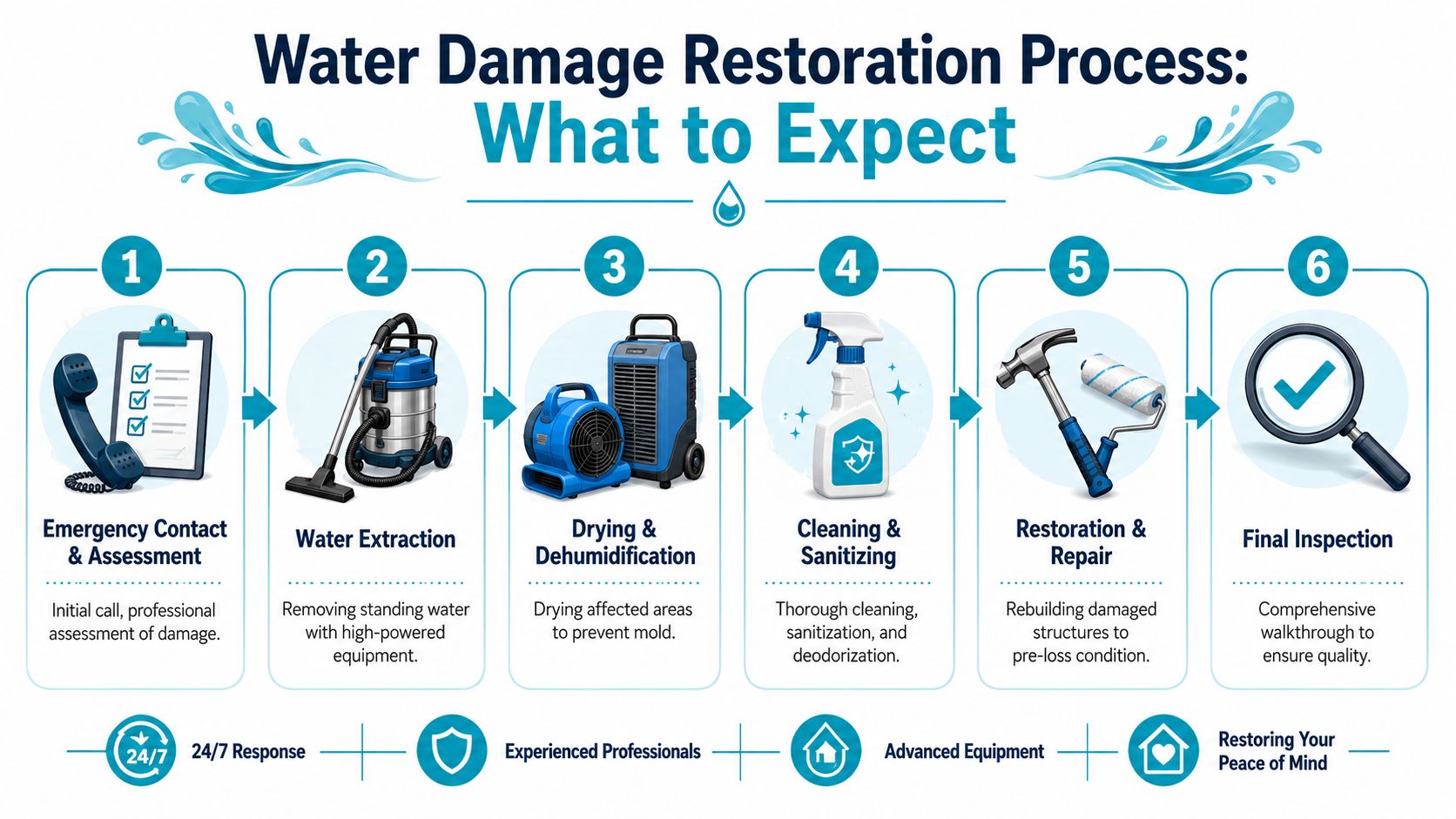
Once the emergency phase is under control, most homeowners want to know what happens next and how disruptive it will be. A proper drying job follows a sequence. It isn't random, and it shouldn't feel improvised.
Inspection and moisture assessment
The first visit should identify both visible and hidden damage. That means checking not just the wet room but nearby rooms, shared walls, flooring transitions, cabinets, and lower wall sections where water may have migrated.
The key is mapping the actual footprint of the loss, not the obvious footprint.
Extraction and controlled drying
After assessment comes water removal. Standing water is extracted first. Then drying equipment is placed based on the materials affected and how moisture is moving through the structure.
The 24-hour rule is emphasized by guidance on burst-pipe cleanup, which states that starting professional cleanup within the first 24 hours can dramatically reduce total damage and cost, and that mold remediation alone can add $500-$6,000 if moisture is left untreated and mold develops, according to this burst-pipe cleanup guidance on the 24-hour rule.
In Florida, that timeline matters even more in practice because outdoor humidity slows natural evaporation. Fans alone rarely solve the problem when subfloors, drywall cores, or cabinetry are wet.
Cleaning, removal, and rebuild decisions
Not every wet material has to be removed. Not every wet material can be saved. Good restoration work is about making that distinction correctly.
Here's the trade-off:
- Hard surfaces and some solid contents may be cleaned, dried, and retained.
- Swollen composite materials often lose integrity and finish quality even if they dry later.
- Drywall and insulation may need selective removal if moisture is trapped or the material has deteriorated.
- Cabinet toe kicks, baseboards, and flooring transitions often reveal how far water traveled.
A room isn't dry because the air feels less damp. It's dry when the materials test dry.
If you're trying to understand the timeline from extraction through final drying and repairs, this breakdown of how long water damage restoration takes gives a useful homeowner view of the process.
Final verification
Before rebuild begins, the structure should be checked again. That may include moisture readings, visual inspection, and confirming that odor or staining issues have been addressed. Only after that should cosmetic reconstruction move forward.
That sequence matters. Painting over damp drywall or reinstalling finishes too early is one of the most expensive shortcuts a homeowner can make.
Future-Proofing Your Home Pipe Burst Prevention Tips for the Suncoast
Most burst pipes don't feel preventable when you're standing in water. Some are. Many are.
On the Suncoast, prevention isn't only about cold snaps. It's also about aging supply lines, storm prep, outdoor plumbing exposure, appliance hoses, and leaks that go unnoticed in humid spaces.
Smart checks that actually help
A few habits make a real difference:
- Know your shutoff location. Every adult in the home should know where the main water valve is and how it turns off.
- Inspect appliance supply lines. Washing machines, dishwashers, refrigerators, and water heaters are common trouble spots.
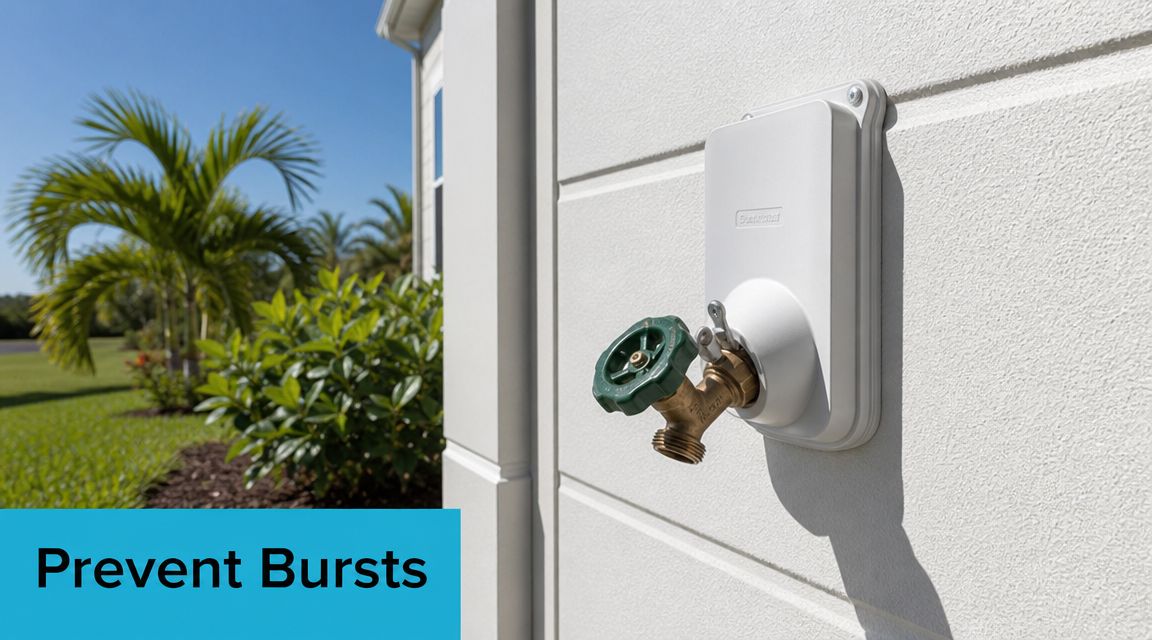
- Watch exterior spigots and exposed piping. Sun, weather, and age wear components down over time.
- Check for quiet warning signs. Staining, musty smells, warping trim, and unexplained moisture around cabinets deserve attention.
- Prepare before storm season. If a property will sit vacant or weather may disrupt utilities, inspect plumbing weak points in advance.
Florida-specific risk management
In Bradenton, Sarasota, and surrounding Gulf Coast communities, high humidity can hide a slow plumbing problem until damage becomes obvious. That makes early leak detection more valuable than many homeowners realize. If you suspect a concealed issue behind a wall, under flooring, or around a slab edge, professional leak detection services can help narrow down the source before it turns into a full water loss.
A simple rule works well here. Don't wait for active dripping. If materials feel off, smell off, or look distorted, investigate.
Pipe Burst FAQs for Florida Suncoast Residents
Frequently Asked Questions
| Question | Short answer | Why it matters | What to do next | Florida Suncoast note | When to call for help |
|---|---|---|---|---|---|
| Is a burst pipe an emergency? | Yes | Water spreads fast and can saturate hidden materials | Shut off water, secure power if safe, document damage | Humidity makes drying more urgent | Call immediately if multiple materials are wet |
| Should I call a plumber or restoration company first? | Usually both | One fixes the pipe, the other addresses moisture damage | Stop water, then line up both responses | Coastal conditions make hidden moisture harder to dry | Call restoration early if floors or walls are wet |
| Can I clean it up myself? | Sometimes for very small, safe losses | Surface drying doesn’t address hidden moisture | Do basic mitigation only if safe | Florida homes often retain moisture longer | Call if drywall, cabinets, or flooring are involved |
| Will insurance cover it? | It depends on the cause and documentation | Sudden damage and gradual seepage are treated differently | Photograph everything and keep records | Hidden leaks need stronger proof | Call if you need claim-ready documentation |
| How long should wet materials sit before drying starts? | They shouldn’t | Delay increases risk of secondary damage | Start mitigation immediately | Humid air slows passive drying | Call if you can’t dry quickly and safely |
| What evidence helps the most on a hidden leak claim? | Photos, videos, timeline, and moisture records | It shows source, spread, and your response | Build a room-by-room record | Hidden wall and floor moisture is common locally | Call when the source isn’t obvious |
Should I stay in the house after a pipe burst?
That depends on safety and scope. If the affected area is limited, power can be safely isolated, and there's no ceiling collapse risk, many homeowners can remain in the property during drying. If water reached major electrical areas, several rooms are affected, or a ceiling is sagging, staying elsewhere may be the safer call.
Use common-sense thresholds. If you can't move through the home safely, don't stay just to watch the damage.
Is all pipe-burst water considered clean?
Not automatically. A supply line break may begin as clean water, but once it passes through walls, insulation, flooring materials, dust, or stored contents, the cleanup conditions change. That's why surface appearance isn't enough to judge the true condition of the loss.
If the water source is uncertain, or if the area sat wet for any length of time, a professional inspection is the safest route.
What if I found the damage days later?
Then the priority shifts from emergency shutdown to proof and containment. Don't rip out everything immediately. Preserve evidence first. Photograph all affected rooms, visible staining, warped materials, and any clues that point to the origin. Then get both plumbing evaluation and moisture inspection arranged.
Hidden losses are exactly where homeowners run into coverage disputes, because the timeline is harder to prove.
Should I throw out wet belongings right away?
Not until they've been documented, unless they create an immediate health or safety issue. For claims purposes, damaged contents should be photographed before disposal whenever possible. Group like items together, take close-ups, and keep notes.
Soft goods, paper goods, and low-value porous items may not be worth saving. Electronics, furniture, and sentimental contents often deserve a more careful evaluation.
Why does Florida humidity make burst-pipe recovery harder?
Because moisture removal depends on conditions, not just airflow. When outdoor air is already damp, opening a house and running a few fans may not dry structural materials effectively. Wet wall cavities, cabinets, and subfloors can hold moisture even after visible water is gone.
That's why Florida homeowners often need a more controlled drying setup than they expect.
What's the biggest mistake homeowners make after a pipe burst?
They focus on what they can see and miss what's still wet underneath, inside, or behind. Mopping the floor is useful. Assuming the job is done because the room looks better is where expensive secondary damage starts.
If you're dealing with what to do after pipe burst in Bradenton, Sarasota, Lakewood Ranch, Tampa Bay, or nearby Gulf Coast communities, don't guess your way through a water loss. Contact AMPM Restoration Services for a free inspection and estimate, call 941-946-7807 any time, and get help with emergency mitigation, insurance claim assistance, and financing options so you can move from panic to a clear recovery plan.