


Expert Storm Cleanup Services in Sarasota
You walk outside after the storm and the problems stack up fast. A tree limb is across the driveway, part of the fence is down, water is dripping from a ceiling stain that wasn’t there yesterday, and the air inside already feels heavy. In Sarasota, that combination is common after a hurricane or strong coastal storm. Wind damage, roof breaches, floodwater, power loss, and hidden moisture often show up together.
That’s why storm cleanup services in Sarasota need to be more than debris pickup. The first job is to make the property safe. The second is to stop secondary damage before it spreads into drywall, insulation, flooring, cabinets, HVAC components, and personal contents. The third is to protect your insurance claim while the evidence is still intact.
Homeowners often get pulled in two directions. They want everything cleaned up immediately, but moving too fast without documentation can create claim problems later. Move too slowly, and moisture and contamination get deeper into the structure. The right response balances both.
The Aftermath of the Storm in Sarasota
By the time the wind drops, a Sarasota home can already be in two recoveries at once. One is obvious. Branches on the roof, torn screens, standing water in the garage, and a fence panel in the neighbor’s yard. The other starts subtly. Moisture moves into insulation, wall cavities, subflooring, and cabinets while the house still looks manageable from the driveway.
That split is what catches homeowners off guard. Cleanup has to protect the structure and protect the claim file at the same time. If debris gets hauled off before it is photographed, or wet materials are removed without notes on where the water traveled, you can make a hard week even harder when the adjuster asks for proof. In Florida’s humidity, waiting too long creates a different problem. Damp materials can hold enough moisture to support mold growth long after the rain stops. Our first 24 hours after water damage guide covers the early decisions that matter most.
Storm conditions here also create mixed-loss jobs. A roof problem becomes an interior water problem. A fallen limb becomes a safety issue, an access issue, and sometimes an insurance documentation issue. If a tree is resting on the structure or blocking safe entry, homeowners may need emergency tree removal services before interior mitigation can begin.
What homeowners usually face first
The first hours after a storm are usually chaotic because several categories of damage show up at once.
- Exterior hazards can include roof impact points, loose soffit, damaged gutters, shattered glass, displaced pool screens, and unstable limbs.
- Interior moisture issues often show up as ceiling stains, wet drywall, swollen baseboards, damp insulation, buckled flooring, and musty air from hidden saturation.
- Interrupted systems make response slower because power loss affects lighting, HVAC, refrigeration, and the ability to start controlled drying.
Storm cleanup is site control, moisture mapping, hazard removal, and documentation under pressure.
This defines the practical job of professional storm cleanup services in Sarasota. The first priority is to identify active risks and stop conditions from getting worse. The next is to document the damage clearly enough that your carrier can follow the loss. Then the crew can sort what can be dried, what must be removed, and what should stay in place until the adjuster has seen it.
A rushed cleanup often creates expensive mistakes. Wet carpet gets discarded before anyone records the water source. Ceiling drywall is opened in the wrong area, while trapped moisture remains above the next room. Debris gets piled curbside without photos that show where it came from. Those errors weaken documentation and extend repairs.
Why Immediate Storm Mitigation Is Non-Negotiable
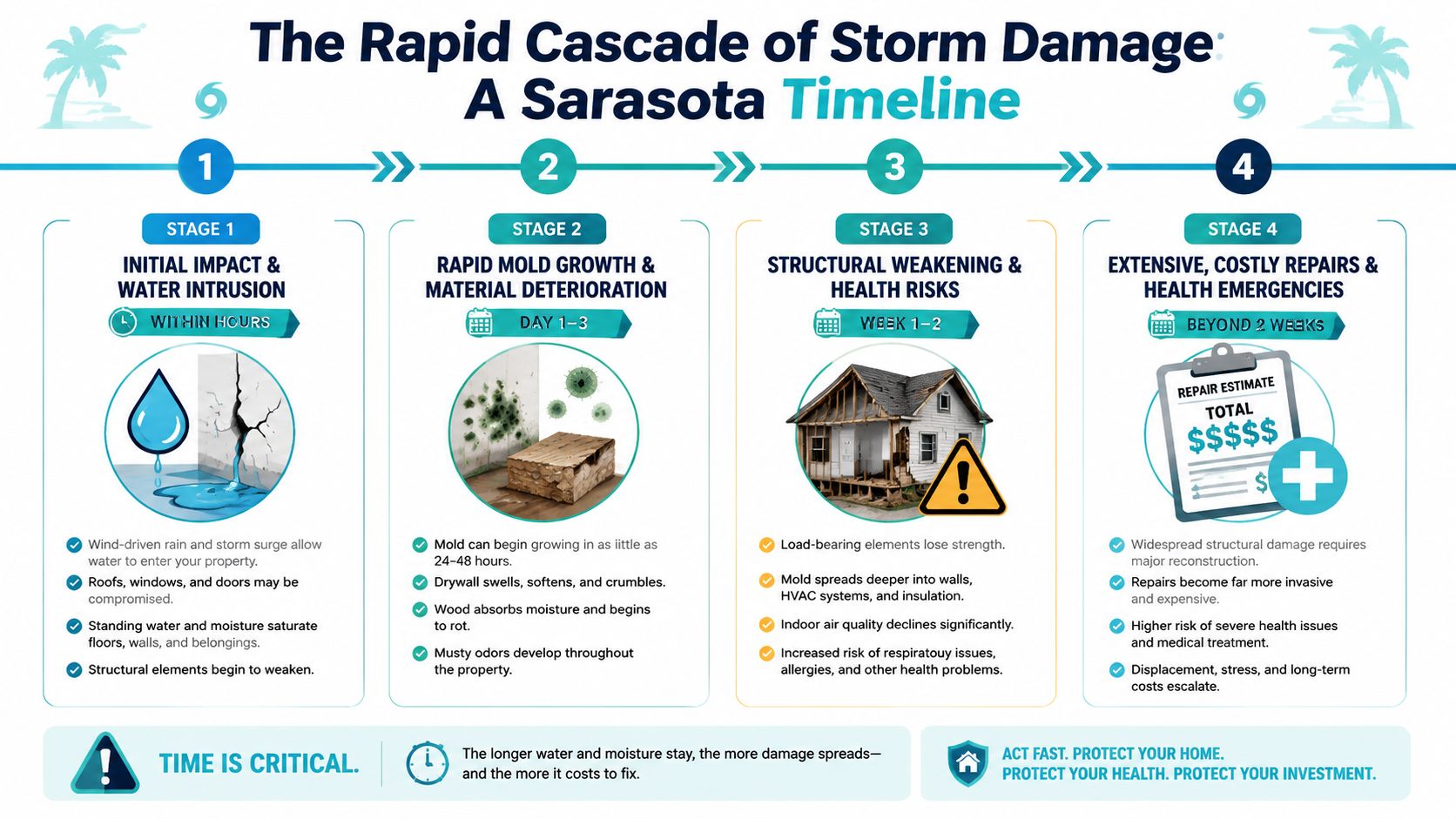
In Sarasota, time matters because heat and humidity keep working after the storm passes. Water that enters through a roof breach, window failure, or flood event doesn’t stay where you first see it. It moves by gravity, capillary action, and airflow into materials that can still look normal from the outside.
Sarasota County’s post-storm guidance warns residents to avoid flooded or debris-filled areas because they may hide downed power lines, and it notes that an unopened refrigerator keeps food safely cold for about four hours if the power is out, according to Sarasota County’s after-the-storm guidance. That same urgency applies to the building itself. Secondary losses start quickly.
The first problem isn’t appearance
The first problem is uncontrolled exposure. If rain keeps entering through a torn roof section or broken window, every hour expands the damage path. If standing water remains in the home, flooring, drywall, framing, and cabinetry start absorbing it. If wet materials stay enclosed, hidden microbial growth becomes more likely.
Public-health guidance consistently warns that mold can begin growing within 24 to 48 hours in wet indoor materials. In Sarasota’s climate, that’s the window most homeowners need to take seriously. By the time you smell mustiness, the opportunity for a simpler drying project may already be gone.
Debris removal is not enough
A lot of people hear “storm cleanup” and think branches, ruined fencing, and trash piles. That’s only one layer of the job.
Professional mitigation means:
- Stopping active water intrusion with tarping, board-up, or temporary sealing
- Removing standing water before it soaks deeper into porous materials
- Starting dehumidification and structural drying right away
- Checking concealed areas such as wall cavities, subfloors, and insulation
- Separating contaminated materials from salvageable contents
The longer water stays in porous materials after storm intrusion, the higher the chance of swelling, delamination, and microbial growth, as described in the storm damage restoration overview. That cause-and-effect model is the core of emergency restoration work.
Practical rule: If a property has both visible debris and indoor moisture, treat the moisture as the clock that matters most.
If a tree is on the house, the tree has to be addressed. But if you’re looking for a useful outside reference on how heavy storm debris is handled, this overview of emergency tree removal services shows why large loads, unstable limbs, and access constraints require specialized equipment, not a chainsaw and a pickup truck.
Homeowners who want a clearer breakdown of the earliest response window can also review what to do in the first 24 hours after emergency water damage. The main point is straightforward. Fast mitigation protects both the structure and the claim.
What Professional Storm Cleanup Services Include
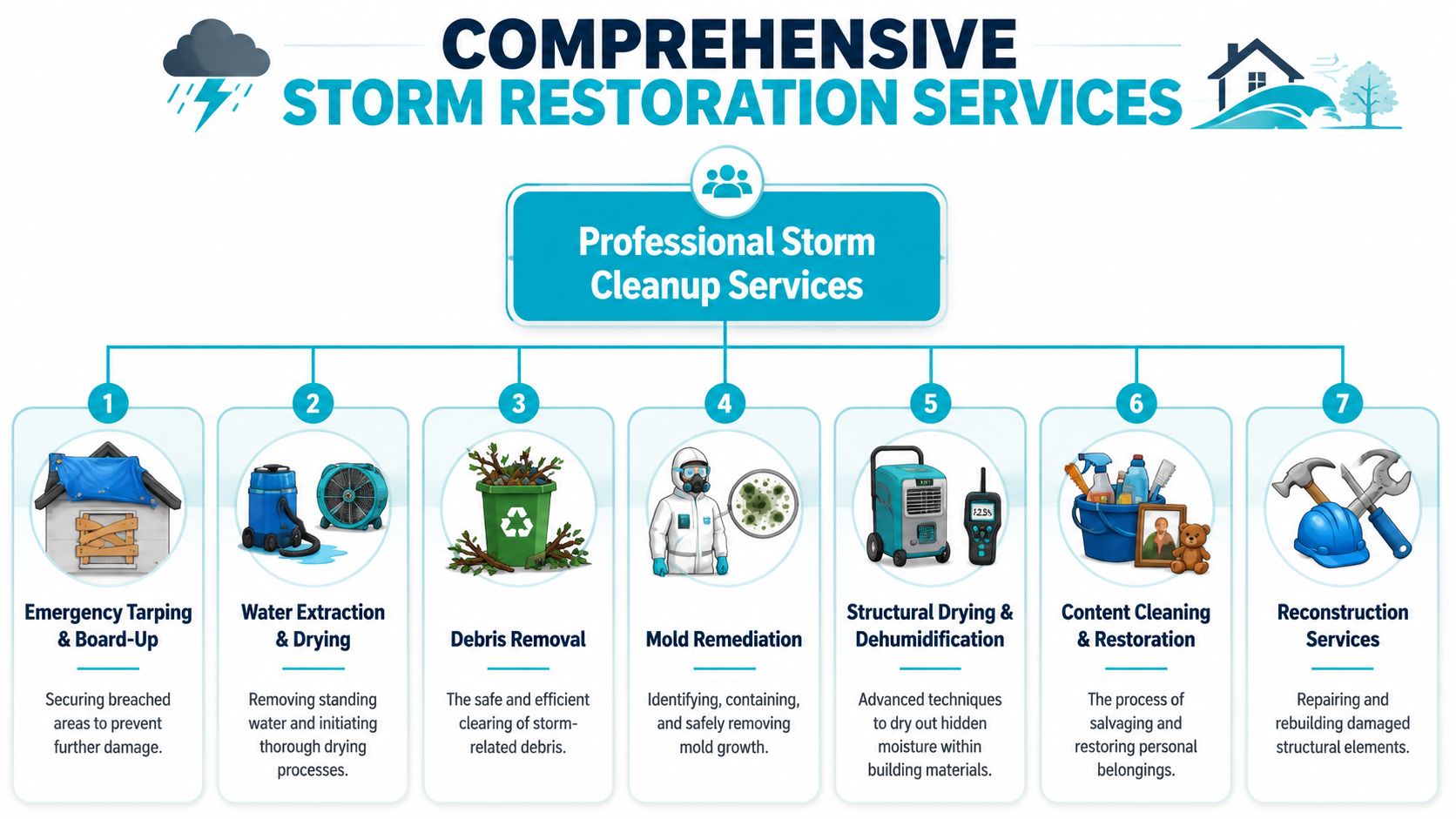
A proper storm response is a sequence, not a single service call. When homeowners search for storm cleanup services in Sarasota, they’re often trying to solve several different problems at once. The confusion usually disappears once the work is broken into its actual components.
Emergency stabilization
This is the part that prevents the loss from expanding before repairs begin.
Board-up and roof tarping come first when the building envelope has been breached. Broken windows, damaged doors, missing shingles, punctured decking, or exposed underlayment all create pathways for additional water entry. Temporary protection isn’t a cosmetic patch. It buys time so the structure can be assessed and dried without taking on new damage every time it rains.
Site safety controls also fall into this phase. Crews identify unstable limbs, hanging materials, slippery surfaces, exposed fasteners, and structural concerns around entrances or covered areas.
Water extraction and muck-out
If water got inside, extraction has to begin before the project can turn into controlled drying.
That may involve submersible pumps, weighted extractors, truck-mounted or portable units, wet vac systems, and containment for contaminated materials. In storm losses, muck-out can include waterlogged carpet pad, saturated drywall, ruined insulation, damaged baseboards, and debris left behind by wind or floodwater.
Here’s the difference a lot of homeowners miss. Removing visible water does not mean the building is dry.
Structural drying and dehumidification
Drying is where professional equipment matters most. Air movers, low-grain refrigerant dehumidifiers, moisture meters, thermal imaging, and daily readings are what separate real mitigation from “we put a few fans out.”
The technical priority in professional storm cleanup is rapid water extraction and drying because the longer water remains in porous materials, the more likely they are to swell, delaminate, or support microbial growth, as explained in this local restoration service overview. Hidden moisture in wall cavities, cabinetry voids, subfloors, and insulation often decides whether a property needs modest repairs or far more invasive reconstruction.
Drying should start as soon as the site is stable enough for equipment placement. Waiting for repairs before drying is backward.
Debris removal outside and inside
Exterior debris can include fencing, branches, fallen tree sections, damaged pool enclosures, roofing fragments, soffit material, and gutter debris. Interior debris may be drywall fragments, insulation fallout, ceiling collapse material, broken glass, or contents displaced by water.
Professionals don’t approach all debris the same way. Heavy loads and puncture risks are handled first. Fine debris cleanup comes later, after hazards are controlled and drainage paths are reopened.
Mold prevention and contamination control
Florida storm work always needs a mold lens. If materials stayed wet, if power was out, if the home remained closed up, or if there’s a lingering odor, the job may need more than extraction and fans.
That can include:
- Antimicrobial application where appropriate after removal and cleaning
- Containment if microbial growth is suspected in a defined area
- HVAC evaluation when systems may have circulated humid or contaminated air
- Material removal decisions for drywall, insulation, and other porous finishes that can’t be reliably salvaged
Content cleaning and reconstruction
Storm cleanup doesn’t end when the water is gone. Contents may need sorting, cleaning, and documentation. Once moisture goals are met, reconstruction can include drywall replacement, trim, paint, flooring, cabinetry, and finish carpentry.
AMPM Restoration Services is one local option that handles emergency mitigation, drying, sanitation, and reconstruction under one roof, which can reduce handoff delays on storm losses.
Your Homeowner Checklist Before Help Arrives
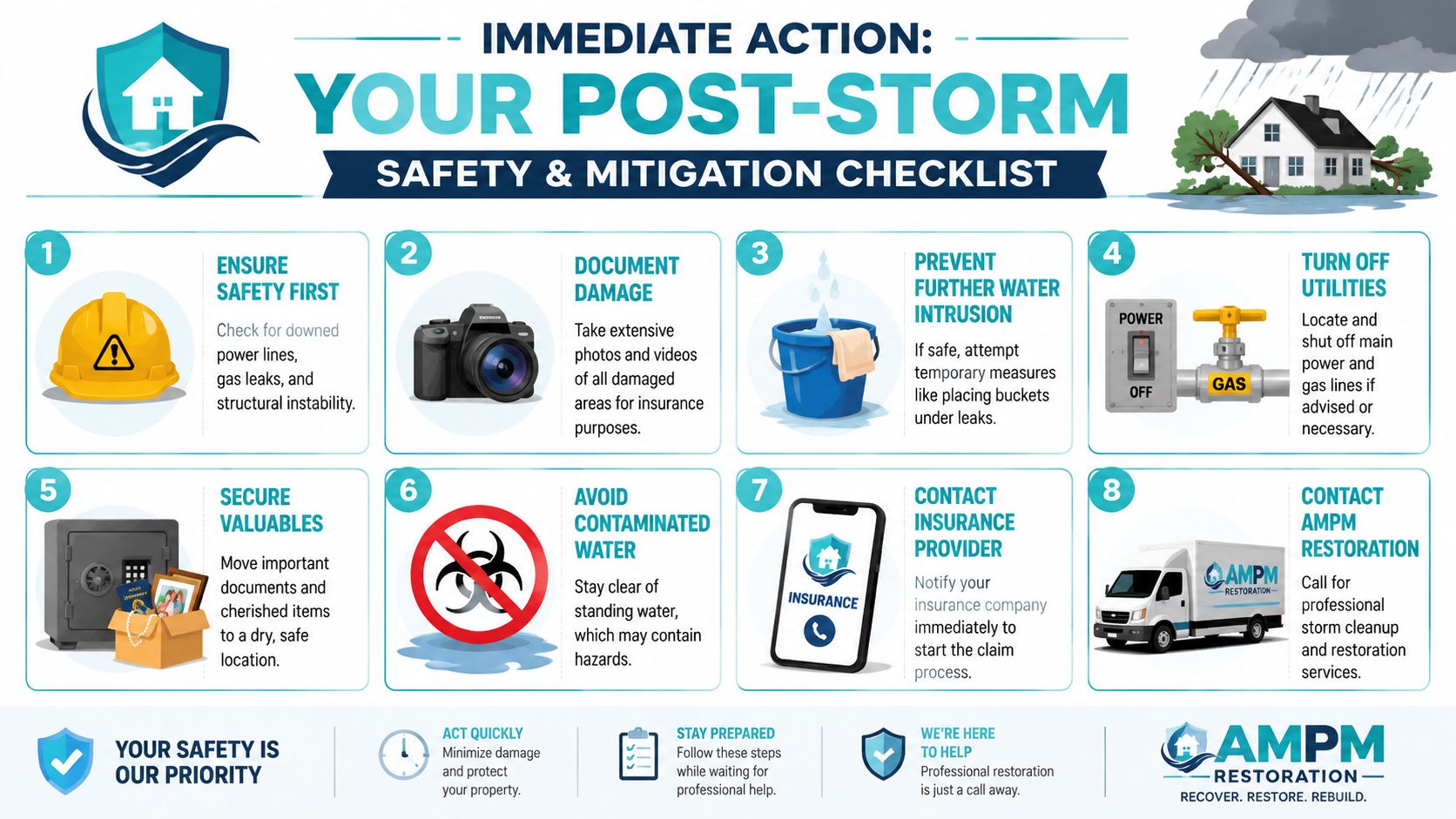
The time between the storm and the crew’s arrival matters. You can make smart moves in that window, but only if you separate safety actions from claim-protection actions. Most mistakes happen when those two get mixed together.
Safety first
If the property has standing water, structural shifting, exposed wiring, or tree impact, stay cautious. Don’t assume a room is safe because the floor looks dry near the doorway.
Use this short checklist:
- Avoid floodwater and debris piles because they may hide sharp objects, contamination, or electrical hazards.
- Stay clear of downed lines and wet electrical areas until utility safety is confirmed.
- Shut off utilities only if it’s safe to do so and you know where the controls are.
- Use buckets or towels only for active drips you can reach safely. Don’t climb onto a wet roof or enter unstable attic spaces.
- Move irreplaceable items carefully such as documents, medications, and essential electronics, but only if the path is safe.
Protecting your claim before cleanup starts
This is the step most homeowners underdo. Once damaged materials are moved, bagged, hauled off, or cut out, some of the best claim evidence disappears with them.
A strong claim file usually includes:
- Wide photos first that show the entire room, exterior elevation, roof line, or affected area
- Close-up photos next of stains, warped flooring, damaged contents, fallen branches, impact points, and debris fields
- Video walkthroughs with spoken notes about what you’re seeing
- A written room-by-room list of damaged materials and belongings
- Policy and carrier information pulled together before the adjuster calls
- A folder for invoices and mitigation records from the first day forward
A major gap in storm advice is that homeowners aren’t told what evidence they need before cleanup starts. Detailed photos, moisture readings, and emergency mitigation invoices help separate covered mitigation from optional upgrades, as summarized in this Florida hurricane claim documentation search reference.
Don’t throw away damaged materials too quickly if they may need inspection. Fast cleanup helps the structure, but preserving evidence can help the claim.
If you want a simple homeowner action list to compare against your own situation, this guide on steps to take after home flooding is a useful reference.
The AMPM Restoration Process From Call to Completion
The best restoration process feels organized from the first phone call. In storm work, that matters because homeowners are often dealing with contractors, neighbors, insurance calls, and a house that may not be fully livable. A clear workflow reduces bad decisions.
What happens first
The process starts with the emergency call and dispatch. The immediate goal is to understand whether the property has active water intrusion, structural exposure, debris hazards, or contamination concerns. That determines what kind of crew, equipment, and safety setup need to be sent.
On site, the first visit is about triage. The team identifies openings in the structure, assesses wet areas, checks where water likely migrated, and determines whether there are safety limits on occupancy or access.
A homeowner who wants to understand the general response model can review how 24/7 emergency restoration service calls typically work.
How the work is sequenced
A technically sound debris workflow prioritizes large, unstable debris first, then restores drainage paths, according to roof and debris cleanup guidance for storm events. That sequencing is practical because the biggest debris creates the highest load and puncture risk, and clogged gutters or blocked runoff paths can keep feeding water back into the structure.
In real terms, the workflow often looks like this:
- Secure the site with hazard identification and temporary protection.
- Remove major obstructions such as heavy limbs, roof debris, and unstable materials.
- Reopen drainage paths so water can shed correctly instead of ponding.
- Document visible damage before significant removal changes the scene.
- Begin extraction and drying inside the structure.
- Monitor moisture and adjust equipment until drying goals are met.
- Move into repairs and reconstruction after mitigation is complete.
Where homeowners feel the most relief
The turning point usually comes after the first stabilization day. Once the roof is temporarily protected, the standing water is out, the equipment is running, and the damage is documented, the property starts moving from chaos to project management.
That’s also when communication matters most. Homeowners need to know what was removed, what was saved, what still needs adjuster review, and what the likely next decisions will be. A disciplined restoration process doesn’t just remove damage. It creates a reliable record of what happened and what was done to stop it.
Understanding Cleanup Costs and Your Insurance Claim

Cleanup costs in Sarasota usually spread across two tracks at once. One is the emergency work needed to stop additional damage. The other is the documentation needed to protect the insurance claim. Homeowners who treat cleanup as debris removal only often lose time, lose claim clarity, or end up fighting preventable mold problems a few weeks later.
In a major storm, pricing also shifts because labor, drying equipment, dumpsters, roof tarping crews, and specialty trades are all in high demand. That pressure is real, but it does not change the basics. The bill still comes down to what got wet, how contaminated the water was, how far moisture traveled, and how much material can be dried versus removed.
What usually drives cost
The biggest cost drivers are straightforward.
| Cost factor | Why it matters |
|---|---|
| Type of water | Clean water, gray water, and storm or floodwater call for different cleaning, disposal, and sanitation procedures. |
| Extent of spread | Moisture that stayed in one area costs less to address than moisture that moved through connected rooms, wall cavities, or flooring systems. |
| Affected materials | Drywall, insulation, laminate, hardwood, cabinets, and framing all respond differently to wetting and drying. |
| Access and debris conditions | Tree impact, unstable roofing, blocked entries, and heavy exterior debris increase labor time and safety requirements. |
| Reconstruction scope | Some projects stop at mitigation. Others continue into drywall, flooring, trim, cabinetry, and paint. |
Florida humidity adds another cost variable that homeowners sometimes miss. If wet materials sit too long, the job can shift from water mitigation to demolition, cleaning, and mold remediation. That is one reason fast documentation matters. The claim file needs to show why a material was dried, removed, or cut out, especially if the condition changed over the first 24 to 72 hours.
Where claim value is won or lost
Insurance carriers usually look for a clean chain of proof. That means photos before and during mitigation, moisture readings, a written scope, invoices separated by category, and notes showing why emergency work could not wait for a later inspection.
I tell homeowners to think about three questions an adjuster will ask. What was damaged by the storm. What work was necessary right away to prevent further loss. What evidence supports the price being claimed. If your contractor cannot answer those clearly, the claim gets harder.
Homeowners should expect help with:
- Detailed estimates tied to the actual damage
- Moisture maps, drying logs, and equipment records
- Photos that show conditions before removal and after stabilization
- Invoices that separate emergency mitigation from rebuild work
- Communication that helps the adjuster understand scope changes
For local guidance, these water damage insurance claim tips explain the records and communication habits that reduce avoidable disputes.
If you want a non-Florida comparison for how contractors explain the claims side to homeowners, this guide for DFW homeowners on storm damage is useful because it shows how often claim problems come back to documentation, deductibles, and scope detail.
One more practical point. Do not approve broad tear-out work without photos and written justification unless there is an active safety issue. In Sarasota, hidden moisture is common after wind-driven rain and roof breaches, but every removal decision should still be documented. That protects the structure, supports the claim, and reduces the chance that damp materials stay behind long enough to turn into a mold problem.
Sarasota Storm Recovery FAQs and Getting Help Now
When homeowners need storm cleanup services in Sarasota, they usually need three things at once. They need a crew that can respond fast, a process that protects the structure from further damage, and documentation strong enough to support the insurance side. That combination matters more than a quick debris haul-off.
Many homeowners also want broader perspective while comparing contractors and repair approaches. If you're doing that, this outside guide with insights on storm damage repair can help you frame the questions to ask before authorizing work.
Common questions homeowners ask
How do you prevent mold from returning after storm damage
You don't prevent mold with surface cleanup alone. Key control points are source control, removal of unsalvageable wet materials where needed, verified drying, and attention to hidden moisture in wall cavities, subfloors, and HVAC-related areas.
Can you handle large fallen trees on a property
Large trees usually require a coordinated approach with specialized removal equipment. Restoration crews often work alongside tree or crane specialists when impact debris affects roofs, access points, or structural stability.
Is the inspection and estimate free
Yes. AMPM Restoration offers a free inspection and estimate for storm-related damage.
How long does structural drying take
Drying time depends on how much water entered, what materials were affected, how long they stayed wet, and whether the home had power and climate control. The only reliable way to answer that is with on-site moisture readings and daily monitoring.
Do you work with insurance companies
Yes. Insurance claim assistance is part of the process, including documentation, estimates, and communication that helps support the claim.
What areas besides Sarasota do you serve
AMPM Restoration serves Sarasota, Bradenton, Tampa Bay, Saint Petersburg, Lakewood Ranch, and surrounding Gulf Coast communities.
If you need storm cleanup services in Sarasota, don't wait for damage to spread. Call AMPM Restoration Services at 941-946-7807 now for a free inspection and estimate. The team is available 24/7, provides insurance claim assistance, and offers financing options to help you move forward quickly after a hurricane or severe storm.