


You open the front door before sunrise and step into standing water, broken glass, or that sharp burnt odor that tells you the day just changed. For a retail manager, the damage itself is only half the problem. The other half is lost sales, spoiled inventory, staff confusion, and an insurance clock that starts immediately.
That's why retail property damage restoration in Tampa Bay has to be handled differently than a typical cleanup job. A store isn't just a building. It's sales floor flow, display fixtures, electronics, receiving areas, back stock, vendor deliveries, and customer expectations, all tied to operating hours. Every hour you lose affects more than drywall and flooring.
Responding to a Retail Property Emergency in Tampa Bay
Retail emergencies in this region rarely stay simple. Water moves under shelving, behind slatwall, into laminate bases, under POS counters, and into stockrooms before most managers have finished their first round of calls. In Tampa Bay, that risk has intensified. A reported 40% increase in restoration demands as of late 2025 underscores how exposed local properties are to flooding and heavy rainfall in this hurricane-prone market, according to this report on rising Tampa water damage claims.
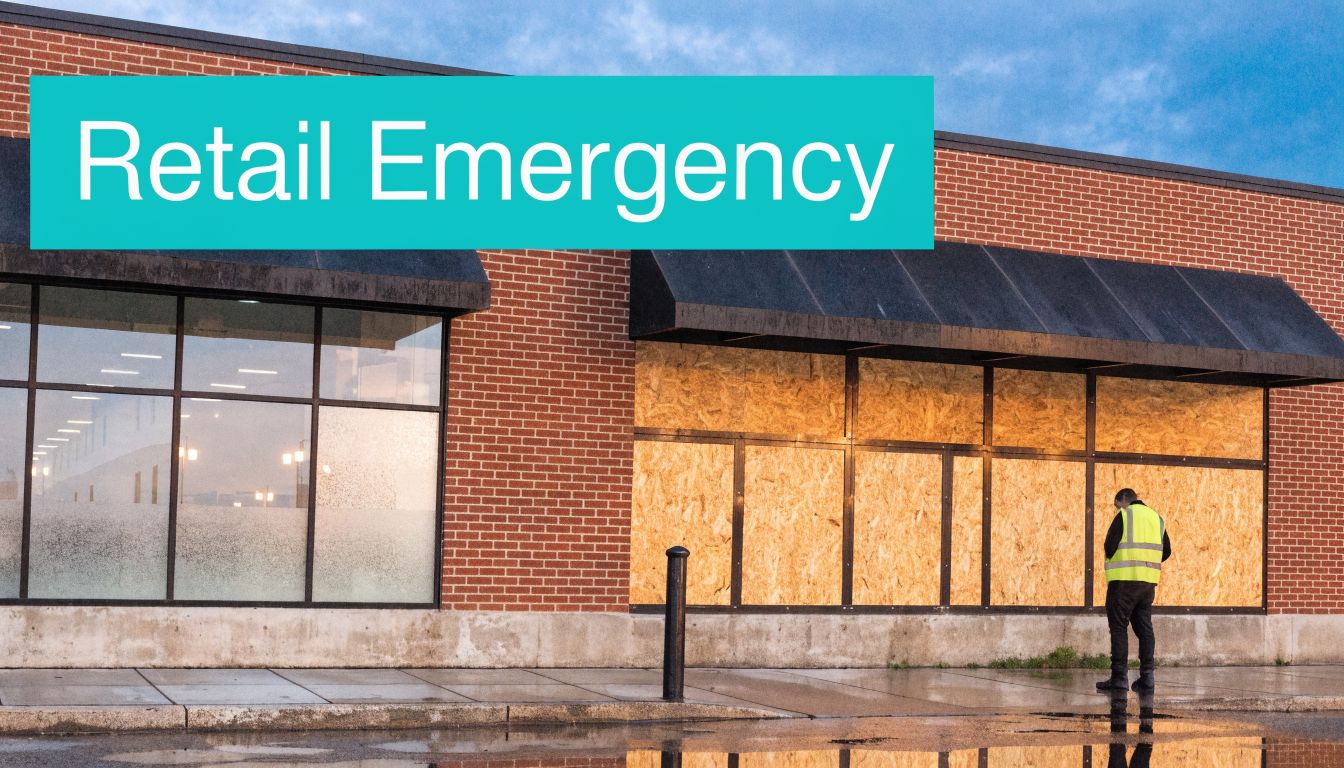
The first mistake I see in damaged retail spaces is hesitation. Managers wait for ownership approval, for the adjuster, or for someone to tell them whether the damage is “bad enough.” Meanwhile, moisture spreads, odors settle into soft goods, and contaminated water turns a salvageable loss into a disposal job.
What makes retail losses different
A retail property has competing priorities that don't exist in many other commercial buildings:
- Customer-facing areas matter immediately. A warped entry floor or smoke odor at the front door can keep you closed even if the stockroom is intact.
- Inventory isn't all equal. Cosmetics, paper goods, boxed merchandise, textiles, electronics, and seasonal displays all react differently to water, soot, and humidity.
- Downtime compounds fast. Delayed reopening affects sales, staffing, reorders, vendor schedules, and customer trust.
Practical rule: In a retail loss, the first priority is life safety. The second is stopping the spread. The third is documenting what was affected before anything gets moved too far.
What a property manager should focus on first
Treat the first response like incident command. Secure the site, isolate the affected area, and get a qualified emergency team moving. If water entered from a roof breach, pipe break, overflow, or storm event, don't assume it's “just cleanup.” In retail environments, the right response includes extraction, containment, drying, inventory triage, sanitation, and a reconstruction plan that won't leave your store half-open for weeks.
If you need after-hours help, use a team that handles 24/7 emergency restoration services and can coordinate mitigation before secondary damage sets in. That speed matters in Bradenton, St. Petersburg, Sarasota, Tampa, and the rest of the Gulf Coast corridor where weather and humidity don't give you much margin.
Immediate Steps to Mitigate Damage and Protect Assets
The first hour matters more than most property managers realize. You're not trying to restore the building yourself. You're trying to prevent the loss from spreading before professionals arrive.
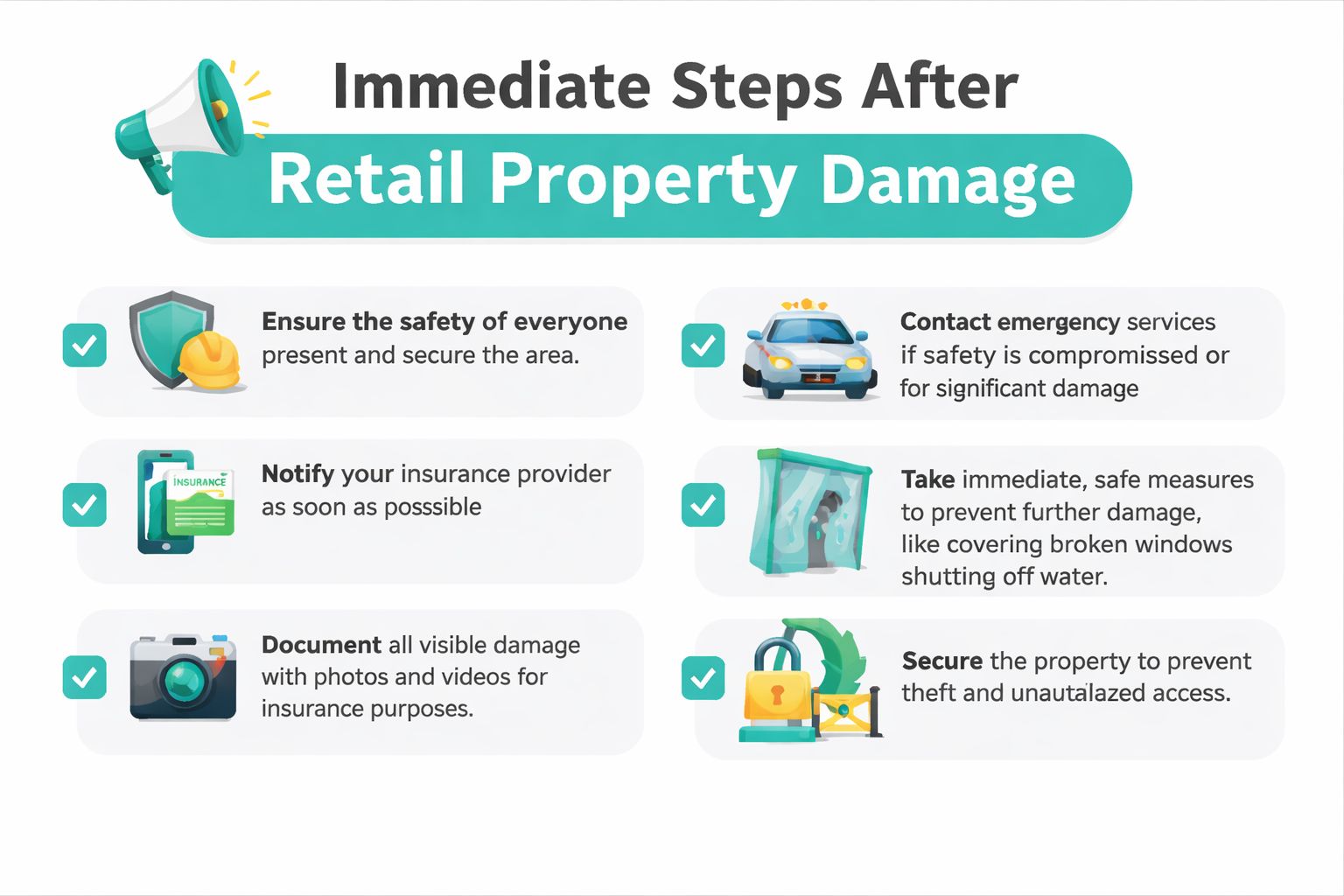
Your first-hour checklist
- Protect people first. Keep staff and customers out of wet, smoky, unstable, or contaminated areas. Watch for slip hazards, ceiling sag, exposed wiring, and sharp debris.
- Call emergency services if needed. If there's active fire damage, electrical risk, structural instability, or a hazardous condition, contact emergency responders before anyone starts moving inventory.
- Stop the source if it's safe. Shut off the local water valve, isolate a leaking fixture, or protect an opening with temporary coverings if you can do it without creating more risk.
- Shut down vulnerable systems. If water is near outlets, power strips, display lighting, POS hardware, or back office equipment, leave those systems alone until a qualified professional says they're safe.
- Move high-value inventory selectively. Don't start dragging everything across wet flooring. Prioritize portable, high-margin, and easily contaminated items first.
- Photograph before rearranging. Take wide shots, then close-ups. Get floors, walls, displays, stockrooms, ceiling tiles, affected fixtures, and damaged product.
- Secure the building. Lock compromised doors, board openings if necessary, and restrict employee access to a single controlled entry point.
What helps and what usually backfires
Some actions buy you time. Others create a bigger claim problem.
A few practical examples:
| Action | Usually helpful | Usually harmful |
|---|---|---|
| Moving inventory | Relocating dry, high-value stock to a clean zone | Piling wet and dry inventory together |
| Air movement | Using building ventilation only if conditions are safe and directed by a pro | Blasting air across contaminated water or soot |
| Odor control | Isolating affected zones and removing source materials | Covering smoke odor with sprays or fragrances |
| Temporary protection | Tarping openings or placing barriers to limit spread | Sealing in wet materials without drying |
After fire or smoke exposure, retail owners often ask about improving indoor air quality for unaffected sections of the store. In some situations, portable smoke air purifiers can be a useful interim measure for occupied areas, but they don’t replace soot removal, HVAC cleaning, or source-based restoration.
Don’t throw damaged materials into a dumpster too early. If they matter to the claim, disposal before documentation can create avoidable disputes.
If the loss involves water, the most useful next step is to get a team on site that understands what matters in the first 24 hours of emergency water damage repair. Retail spaces give you very little forgiveness once moisture gets into finishes, shelving systems, cartons, and underlayment.
Documenting Losses and Initiating Your Insurance Claim
A messy claim usually starts with messy documentation. Retail managers often assume the carrier will “see the damage” and fill in the gaps. That’s not how it works. The claim gets built from what you can show, what the restoration team records, and how clearly the damage is tied to the loss event.
Claim denials affect 35% of Florida commercial claims, and business interruption losses can average $15,000 per day for a mid-size retail store, according to this overview on commercial property claim issues in Florida. That’s why documentation isn’t paperwork. It’s revenue protection.
What to document before cleanup moves too far
Start broad, then get specific. Your first set of records should answer three questions: what happened, where it spread, and what business property it affected.
Capture these items:
- Exterior points of entry such as roof breaches, broken glazing, damaged doors, or visible storm impact
- Interior progression including floors, wall bases, ceiling tiles, display zones, fitting rooms, stockrooms, offices, and restrooms
- Affected systems like lighting, data equipment, point-of-sale stations, refrigeration, security devices, and HVAC-visible contamination
- Inventory categories rather than random single-item photos only. Show shelves, racks, cartons, bins, and whole display sections
- Temporary protection work such as board-up, tarping, water shutoff, or containment barriers
Build an inventory list that the adjuster can follow
Don’t wait for a perfect spreadsheet. Start with an operational list and improve it as you go.
A useful retail loss inventory typically includes:
- product category
- location in store
- visible condition
- estimated quantity affected
- whether the item is likely salvageable, questionable, or non-salvageable
- supporting photo or video reference
This is also the point where a restoration contractor’s records become valuable. Moisture readings, room-by-room observations, equipment logs, and photo documentation often help connect visible damage to hidden conditions. That matters when the adjuster asks why a wall cavity, subfloor section, or merchandise run needed additional work.
A good claim file tells the story in order. Cause, spread, affected property, mitigation steps, and business impact.
What not to do during the claim stage
Avoid these common mistakes:
- Don’t discard damaged stock too early unless health or safety requires it
- Don’t clean heavily damaged inventory for appearance only before it’s documented
- Don’t rely on memory for affected quantities
- Don’t separate accounting from operations. Someone from the store side and someone from the financial side should compare notes early
If you need a practical reference for the paperwork side, this guide on how to file an insurance claim for water damage lays out the process clearly. The strongest retail claims are the ones where the manager, contractor, and carrier all receive the same organized picture of the loss.
How to Select the Right Tampa Bay Restoration Contractor
Not every commercial contractor is equipped for a retail loss. Some are solid at drying a vacant suite or repairing a simple leak, but they struggle when the building is partially occupied, the inventory has mixed salvage potential, and the reopening plan matters as much as the demolition scope.
That’s where retail property damage restoration in Tampa Bay separates experienced operators from general responders. The contractor has to protect assets, sequence work around operations, and understand that the sales floor, stockroom, HVAC, and insurance file all move together.
The minimum requirements you should insist on
Start with qualifications and operational readiness. A retail property manager should ask direct questions and expect direct answers.
Look for these basics:
- IICRC-certified technicians who can document moisture, contamination, and drying conditions in a commercial setting
- 24/7 availability with a realistic emergency response plan
- Retail-specific experience with merchandise handling, pack-out logic, and phased reopening
- Mitigation through reconstruction capability so you don’t have to hand off the project midstream
- Insurance coordination including photo logs, moisture records, and communication with adjusters
Inventory salvage is where many contractors fall short
This is one of the biggest gaps in the market. Standard commercial restoration often overlooks the unique challenges of retail inventory recovery, and AI-driven inventory triage tools can recover 40-60% more value from damaged stock, according to this discussion of retail inventory recovery challenges.
That doesn’t mean software solves the loss by itself. It means the contractor should have a process for separating categories fast: what can be cleaned, what must be isolated, what needs vendor input, and what should be documented for disposal. A team that treats all merchandise the same will usually cost you more.
Ask one question early: “How do you decide what inventory is salvageable, and who documents that decision?” If the answer is vague, keep looking.
What practical selection looks like
A strong contractor should be able to explain their first-day workflow without sales language. They should tell you who arrives first, how they assess hidden moisture or smoke spread, how they protect unaffected stock, and how they handle communication.
For owners who want to understand the settlement side more thoroughly, this article on how to get full property damage payout is a useful outside reference. It helps frame the difference between a loosely documented loss and one that’s supported from day one.
One local option is AMPM Restoration’s commercial restoration company services, which include emergency mitigation, drying, mold and fire-related work, reconstruction, and insurance coordination from its Bradenton base. What matters most is that whichever contractor you choose can handle the entire retail loss without losing control of inventory protection, claim support, or schedule.
The Restoration Process Timeline and Cost Expectations
Once the site is stabilized, the project shifts from emergency response to controlled recovery. Retail owners usually want one answer: how long will this take? The honest answer is that the timeline depends on the category of damage, what materials were affected, whether merchandise can stay on site, and how quickly the building can be dried and cleared for repair.
What shouldn’t be a mystery is the process itself.

Phase one assessment and control
The first technical phase is assessment. In retail spaces, crews typically use infrared cameras and moisture detectors to identify affected structural zones and inventory areas. According to this overview of commercial restoration timing for retail properties, the initial assessment identifies affected areas within the first 2-4 hours of arrival, and a 48-72 hour drying window is critical to prevent inventory loss. The same source notes that properties with systematic damage assessment protocols often experience 40% faster insurance claim resolution.
That timeline matters because visible dryness isn’t the standard. Base plates, wall cavities, under-display flooring, and stockroom materials can still hold moisture long after the floor looks better.
Phase two mitigation and controlled drying
This part usually includes:
- water extraction
- demolition of unsalvageable wet materials where necessary
- dehumidification
- air movement
- contamination control
- cleaning and sanitation based on the cause of loss
Retail environments often need tighter zoning than other commercial spaces. You may have one area under containment, another being dried, and another prepared for limited reopening. That sequencing can preserve revenue if it’s planned correctly.
Drying equipment should follow a monitored plan, not a guess. If no one is checking readings and adjusting placement, time gets wasted and damage lingers.
Phase three repairs and reopening strategy
After moisture and contamination are controlled, repairs begin. That can range from replacing floor sections, drywall, ceiling tiles, and fixtures to more extensive reconstruction after storm or fire damage. The cost depends on scope, material type, contamination level, access, and how much work has to happen after hours to reduce disruption.
For managers trying to plan operations, a practical approach is to separate the work into three buckets:
| Bucket | Typical focus |
|---|---|
| Emergency work | Stop active damage, secure the site, start documentation |
| Recovery work | Drying, cleaning, removal of unsalvageable materials, monitoring |
| Rebuild work | Repairs, finish restoration, fixture reset, reopening support |
If you're trying to compare expected durations, this page on how long water damage restoration takes is a useful reference point. The right contractor should also provide a written scope, milestone updates, and a clear explanation of what has to happen before customers and staff can safely return.
Proactive Maintenance to Prevent Future Retail Damage
The cheapest retail loss is the one you prevent. In Tampa Bay, that starts with humidity control and disciplined building checks. The area averages 74% annual relative humidity, and mold growth can begin within 24-48 hours of water intrusion, according to this article on commercial fire and mold remediation conditions in Tampa Bay. In practice, that means a minor leak over a weekend can become a merchandise and air-quality problem by the time Monday staff arrive.
A prevention checklist that actually helps
- Inspect roof penetrations and drains before storm season and after heavy weather. Retail leaks often begin at flashing, rooftop units, and clogged drainage points.
- Check plumbing in back-of-house areas. Supply lines behind sinks, ice makers, breakroom fixtures, and restrooms deserve regular attention.
- Maintain HVAC for moisture control. A system that cools but doesn't control humidity can leave the store vulnerable even without a major leak.
- Protect inventory off the floor. The right storage systems for retail operations can reduce low-level water exposure in stockrooms and receiving areas.
- Document store condition routinely. Updated photos of fixtures, finishes, and merchandise layout make later claims easier to support.
- Pre-plan vendor contacts. Have one list for restoration, roofing, electrical, glass, and building ownership contacts before an event happens.
What doesn't work
Reactive patching isn't a maintenance plan. Neither is waiting until you smell mildew. Retail properties need scheduled inspections, humidity awareness, and a written storm prep routine that staff can implement.
A simple rule works well here: if an area is easy to ignore, inspect it more often. Ceiling voids, stockroom corners, under-sink cabinets, rear entries, and low shelving bases are where small problems become expensive ones.
Frequently Asked Questions About Retail Restoration
Retail managers usually ask better questions than they are often given credit for. They're balancing operations, staffing, customer experience, and property damage at the same time. These are six questions that come up often in retail property damage restoration in Tampa Bay.
| Question | Answer |
|---|---|
| How do I decide whether to close the whole store or only part of it? | Base that decision on safety, contamination boundaries, and whether customers can enter without crossing active work areas. Partial operation can work if unaffected zones are truly isolated and staff can serve customers safely. |
| Should I move all my inventory out immediately? | No. Move what is vulnerable, high-value, and portable first. A rushed full-store move often causes tracking, cross-contamination, and poor documentation. |
| Can smoke-damaged merchandise be cleaned and sold? | Sometimes, but it depends on the product type, packaging, odor absorption, and contamination level. Soft goods, porous packaging, and items near the source usually need stricter evaluation than sealed hard goods. |
| What if damage happened overnight and no one noticed until morning? | Treat it as an active loss anyway. Secure the site, document current conditions, isolate affected inventory, and get professional assessment started immediately. Delayed discovery doesn’t remove the need for mitigation. |
| Who should speak to the adjuster from our side? | Ideally one person from operations and one from finance or ownership should stay aligned. Mixed messages about inventory, business interruption, or repair priorities can slow the claim. |
| Is reconstruction handled by the same company that does mitigation? | Sometimes yes, sometimes no. It’s often smoother when one qualified contractor manages both, because the drying records, demolition scope, and repair plan stay connected from start to finish. |
Retail recovery works best when one person owns the internal decision-making. Too many decision makers slow approvals, confuse staff, and create gaps in the claim record.
If your store, shopping center unit, showroom, or stockroom has suffered water, mold, fire, smoke, or storm damage, contact AMPM Restoration Services at 941-946-7807 for a free inspection and estimate. We serve Bradenton, Sarasota, Tampa Bay, Saint Petersburg, Lakewood Ranch, and surrounding Gulf Coast communities. We also provide insurance claim assistance and financing options so you can move from emergency response to recovery with a clear plan and less stress.