


Sewage Backup Cleanup in Tampa Bay: 24/7 Fast Response
Sewage backup cleanup in Tampa Bay can run from $2,000 for a minor incident to over $10,000 for severe contamination. The final price usually comes down to how far the sewage spread, what materials it touched, and how much demolition, drying, sanitizing, and rebuilding the property needs.
If you’re reading this with a bathroom floor covered in black water, a hallway that already smells foul, or a tenant calling in a panic, the first priority isn’t cosmetic cleanup. It’s stopping a Category 3 biohazard from spreading through flooring, drywall, cabinets, and HVAC pathways. In Tampa Bay, that risk gets worse fast because older sewer infrastructure, heavy rain, and high humidity turn a plumbing emergency into a health and structural problem quickly.
AMPM Restoration is a 24/7 emergency restoration company based at 4301 32nd St W b18, Bradenton, FL 34205, serving Bradenton, Sarasota, Tampa Bay, Saint Petersburg, Lakewood Ranch and surrounding Gulf Coast communities with professional water damage restoration, mold inspection and mold removal, fire and smoke damage restoration, storm and flood damage restoration, commercial restoration services, and full reconstruction solutions. For homeowners dealing with sewage backup cleanup in Tampa Bay, the hard part is usually not deciding whether the mess is serious. It’s figuring out what has to be removed, what might be saved, what insurance may cover, and how to keep the bill from spiraling.
A Homeowner’s Worst Nightmare in Tampa Bay
A common call starts the same way. A toilet overflows, but it isn’t clean water. It’s dark, foul-smelling sewage pushing out onto tile, then under baseboards, then into the adjacent bedroom carpet before anyone realizes the problem isn’t isolated to one fixture.
By the time a homeowner has tried towels, a mop, and maybe a wet vacuum, the contamination has usually traveled farther than it looks. Sewage doesn’t stay politely on the surface. It wicks into drywall, soaks under flooring, settles in grout lines, and leaves behind bacteria and solids that regular household cleaners won’t safely address.
That’s why sewage backup cleanup in Tampa Bay has to be treated as emergency remediation, not standard housekeeping. In many Florida homes, one backup also exposes another problem. Poor drainage around the property, aging laterals, or municipal overload after a storm. If you’re dealing with active water spread, emergency flood response matters just as much as biohazard handling, which is why many homeowners start with emergency flood cleanup in Tampa Bay.
Why this hits Tampa Bay harder
This isn’t just a private-home problem. After a major storm event, local systems can fail at scale. Following Hurricane Helene, the City of St. Petersburg released over 151 million gallons of partly treated sewage into Tampa Bay, while the City of Tampa dumped approximately 8.5 million gallons after more than 22 inches of rain overwhelmed aging infrastructure according to regional reporting on Tampa Bay sewage discharges.
What matters in the house: once sewage enters living space, time works against you.
Homeowners in Bradenton, Sarasota, St. Petersburg, and the greater Gulf Coast region often assume a backup is a one-room plumbing issue. In practice, it can be a building contamination event. The longer it sits, the more demolition, odor control, drying, and reconstruction the job requires.
Why Sewage Water Is a Category 3 Biohazard
Sewage is the highest-risk water category used in restoration work. That matters because the cleanup standard changes completely the moment the water is classified as Category 3.
Under the IICRC S500 standard, sewage backup is classified as Category 3 water, meaning it can contain harmful pathogens such as E. coli, Salmonella, and hepatitis A virus, and all porous materials like drywall, insulation, and carpet that contact it typically have to be removed.
What Category 3 means inside your home
A lot of homeowners ask the same reasonable question. Can’t the crew just clean and disinfect everything?
Usually, no. Not if sewage soaked into porous materials.
Porous materials absorb contamination below the visible surface. Carpet backing, pad, drywall paper, insulation, pressed wood, and upholstered furniture can hold bacteria, organic waste, and moisture in places surface sprays can’t fully reach. On a proper sewage loss, the standard isn’t “wipe it down and hope.” It’s controlled removal, disposal, structural cleaning, and measured drying.
For homeowners looking for a practical overview of first-response mistakes, these sewage cleanup tips are useful, especially in the first hours before a crew arrives.
What doesn’t work
The biggest mistakes usually come from trying to treat sewage like a regular water leak:
- Mopping only the visible water: That leaves contamination in grout, trim edges, subfloor seams, and wall cavities.
- Running the HVAC: That can move odor and airborne particulates through the home.
- Keeping wet carpet because it “looks fine”: With sewage, appearance doesn’t mean safe.
- Using consumer deodorizers: Fragrance may mask odor briefly, but it doesn’t sanitize or dry the assembly.
Sewage cleanup isn’t about making a room look better. It’s about returning it to a sanitary, dry condition.
Why the process gets expensive fast
The cost isn’t just labor. It’s the chain reaction. Contaminated carpet leads to pad removal. Wet drywall leads to flood cuts. Saturated cabinets or vanities may need tear-out. Then the structure needs antimicrobial treatment, air movement, dehumidification, odor control, and clearance for reconstruction.
That’s why a backup that starts at one toilet can become a multi-trade project in a single day.
Typical Costs for Sewage Backup Cleanup in Tampa Bay
Most homeowners don’t need a generic warning. They need a realistic budget range. For sewage backup cleanup in Tampa Bay, the broad pricing spread exists because two jobs that sound similar on the phone can be very different once the crew inspects materials, moisture migration, and contamination depth.
2026 Estimated Sewage Cleanup Costs in Tampa Bay
| Severity Level | Typical Scenario | Estimated Cost Range |
|---|---|---|
| Minor | Single fixture overflow with limited spread to a small bathroom or adjacent hard surface area | $2,000 to $4,000 |
| Moderate | Backup affecting one or two rooms, with contaminated carpet, drywall cuts, sanitizing, and drying equipment needed | $4,000 to $10,000 |
| Major | Multi-room contamination, prolonged exposure, material removal, odor treatment, extensive drying, and reconstruction prep | Over $10,000 |
These figures are practical planning ranges, not fixed pricing. A proper estimate still depends on inspection. The same bathroom overflow can stay near the low end if it was caught immediately on tile. The price rises quickly if sewage reached carpet, vanity toe-kicks, drywall, closets, or neighboring rooms.
What each tier usually includes
A minor job often includes extraction, containment, sanitation of affected hard surfaces, disposal of limited contaminated material, and short-duration drying. A moderate loss usually adds demolition of porous materials, more equipment time, odor treatment, and additional labor for cleaning contents or moving furniture.
A major loss is where budgets jump. Those projects can involve several rooms, cabinet removal, subfloor cleaning, insulation removal, repeated antimicrobial applications, dehumidification, and coordination with rebuild trades. If the source wasn't corrected first, no reputable contractor should promise a final cleanup price before the cause is stabilized.
For related moisture and extraction work, homeowners often compare the broader scope of water damage restoration in Tampa because sewage losses often include both contaminated water removal and post-remediation structural drying.
Why line-item pricing varies so much
The same square footage doesn't always mean the same invoice. Sewage on sealed tile is one thing. Sewage under laminate, into baseboards, and behind cabinets is another. Access matters too. A slab-on-grade home with easy equipment placement is different from a condo with elevator restrictions, limited parking, and strict disposal rules.
Budget rule: pay attention to what the estimate includes for demolition, drying days, sanitation, disposal, and rebuild preparation. Those line items usually explain the total.
If an estimate seems unusually cheap, check whether it excludes material removal, post-remediation drying verification, or odor treatment. Those aren't optional extras on a real sewage job.
Key Factors That Influence Your Final Bill
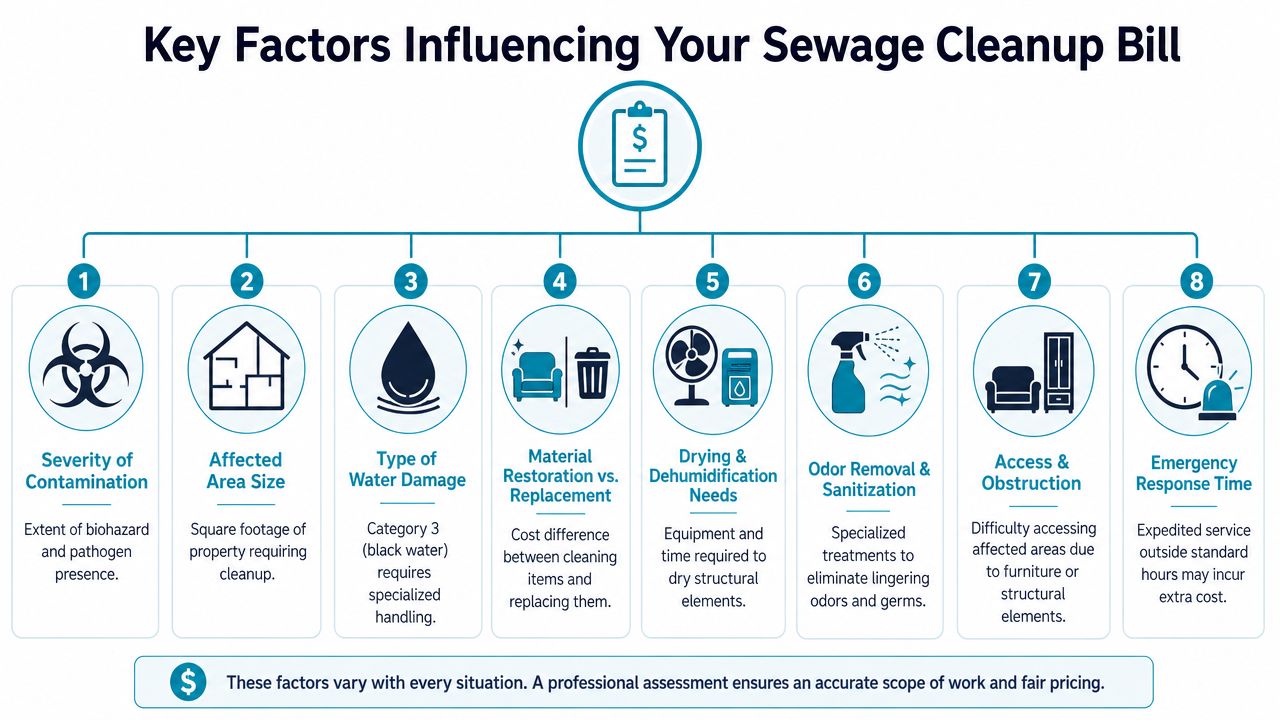
The final bill is rarely driven by one thing. It's the combination of contamination, demolition, equipment time, access, and responsibility for the failed line.
Responsibility changes who pays
One of the most important cost questions is whether the problem came from your private line or the public system. The City of Tampa reports that 40% of backup incidents originate in private lateral lines, which are the homeowner's responsibility, while public sewer main failures are handled by the city at no charge to the property owner, according to the City of Tampa Wastewater Department.
That distinction matters before cleanup even starts. If the city confirms a public-side failure, your financial exposure may look very different than if roots, grease, corrosion, or collapse occurred in your private lateral.
The biggest price drivers
Here are the factors that most often move a job from manageable to expensive:
- Contaminated area size: More rooms mean more extraction, demolition, labor, disinfectant, and disposal.
- Material type: Tile and concrete are more salvageable than carpet, pad, drywall, insulation, and engineered wood.
- Time before response: Sewage that sat longer usually penetrates deeper and creates stronger odor and broader demolition needs.
- Access difficulty: Tight bathrooms, occupied homes, upper floors, and furnished spaces slow production.
- Drying requirements: Some losses need extended dehumidification and moisture monitoring to protect framing and subfloor.
- Contents handling: Furniture moving, pack-out, cleaning, or disposal adds labor.
- Odor treatment: Persistent sewage odor often requires more than one treatment cycle.
- Emergency timing: Nights, weekends, and storm-period calls can affect operational cost.
Replacement costs are often underestimated
Homeowners often focus on extraction and sanitizing, but replacement is where budgets can widen. Carpet is a good example. Looking at general pricing for carpet cleaning services can help illustrate how cleaning is priced in normal conditions, but sewage losses are different because contaminated carpet and pad often can't stay in place at all.
For the drying side of the job, structural drying services in Tampa Bay are often the line item people underestimate most. Equipment time, monitoring visits, and moisture verification can continue after visible water is gone.
The visible mess is only part of the invoice. Hidden moisture and contaminated materials are usually the expensive part.
When you review a quote, ask where the sewage originated, what materials must be removed, how moisture will be tracked, and whether rebuild items are included or separate. That turns a confusing estimate into a workable plan.
The Professional Cleanup Process Versus DIY Risks
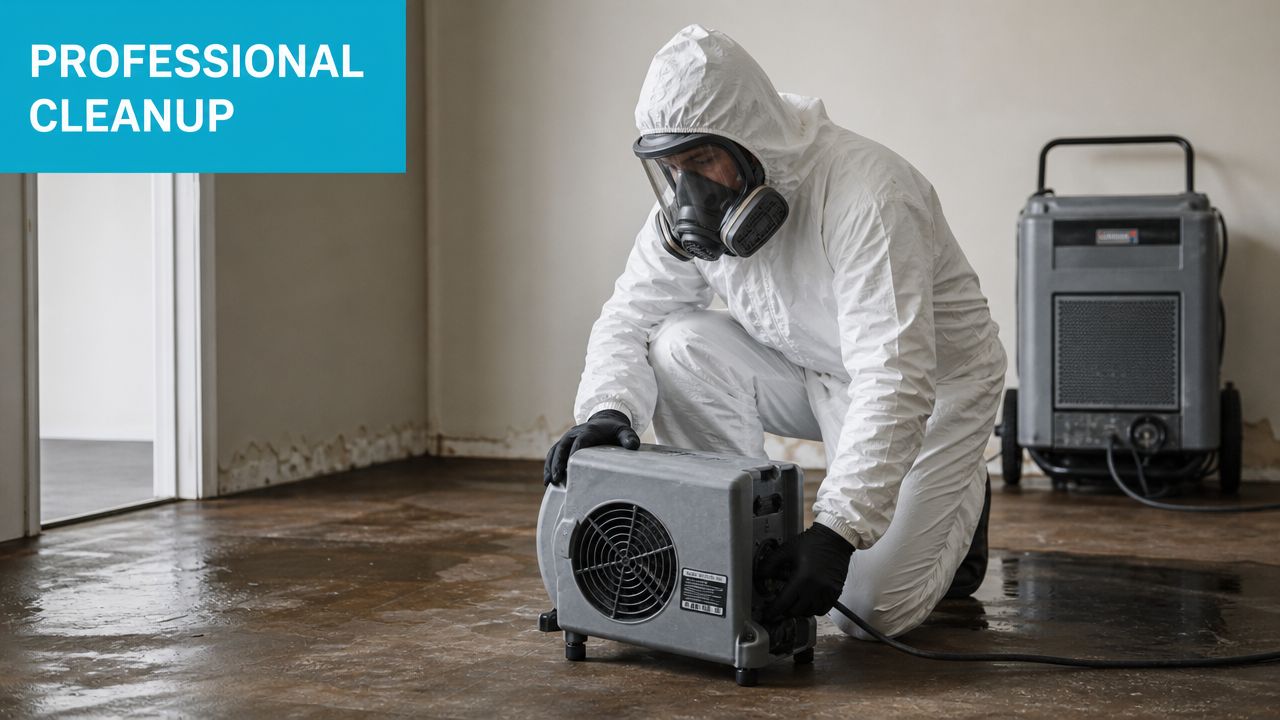
The safest sewage jobs follow a disciplined sequence. The dangerous ones start with gloves from the garage and a shop vacuum.
What a professional crew actually does
A proper sewage remediation job usually includes:
-
Inspection and hazard assessment
The crew identifies the source, confirms the contamination path, and checks where sewage migrated beyond what's visible. -
Containment and safety controls
Affected zones are isolated. Power risks are addressed. Traffic through the contaminated area is limited. -
Extraction and waste removal
Standing sewage and solid waste are removed with equipment designed for hazardous water. -
Demolition of unsalvageable materials
Carpet, drywall, insulation, pad, and other porous materials that absorbed sewage are removed when required by the loss conditions. -
Cleaning, antimicrobial application, and odor treatment
Remaining structural materials are cleaned and treated with appropriate products. -
Measured drying and monitoring
Air movers, LGR dehumidifiers, and moisture meters are used until materials reach acceptable dry standards.
The standard behind this is clear. Professional cleanup follows IICRC S500 requirements, which mandate removal of porous materials such as carpet, drywall, and insulation that absorbed contaminated water. The same standard notes that failing to dry structures below 15% moisture content creates a 70% higher risk of permanent structural damage and mold, as reflected in the IICRC S500 standard reference.
What DIY cleanup gets wrong
DIY attempts usually fail in one of four ways:
- Under-removal: The homeowner keeps materials that should have been discarded.
- Under-drying: Surfaces feel dry, but framing, subfloor, or wall cavities remain wet.
- Cross-contamination: Shoes, tools, fans, or HVAC distribute contamination beyond the original room.
- Poor documentation: Insurance disputes get harder when the loss was altered before proper records were made.
If you want a non-restoration perspective on prevention, these valuable insights on sewer line care are useful for understanding how line condition contributes to future risk.
For homeowners still wondering whether they can handle it themselves, why you shouldn't DIY water damage restoration applies even more strongly to sewage losses.
Trying to save money on sewage cleanup often shifts the cost into reconstruction, odor correction, or a denied insurance dispute later.
A professional bill can feel heavy. A failed DIY cleanup usually costs more because it delays the right work.
Navigating Insurance and Reducing Out-of-Pocket Costs
Insurance is where many homeowners either protect themselves or make an already bad loss much harder. The first mistake is assuming every water claim is covered the same way. Sewage backup claims often depend on the exact wording of the policy and whether the owner added the right endorsement.

What helps your claim
The best approach is simple and disciplined:
- Document first: Take photos and video before cleanup changes the scene.
- Notify the carrier quickly: Delays make causation disputes more likely.
- Keep all emergency invoices: Initial mitigation is often reviewed separately from rebuild work.
- Ask about backup endorsements: Don't assume base water coverage includes sewage backup.
- Separate mitigation from reconstruction: Insurers often evaluate them differently.
If your adjuster asks what caused the event, that answer matters. In this region, not every backup starts in the house. Recent reporting noted that millions of gallons of wastewater were bypassed during a single storm event in Manatee County due to lift station overflows, showing that some backups stem from systemic municipal failures, not just private plumbing issues, as discussed in this local report on wastewater bypasses in Manatee County.
Ways to limit out-of-pocket expense
You usually have more control than it feels like in the moment.
First, act quickly. Fast mitigation can reduce how much drywall, flooring, cabinetry, and contents need to be replaced. Second, identify the source before authorizing broad repairs. If the issue ties back to a municipal failure, that may affect how you pursue responsibility. Third, keep prevention records. Sewer line cleaning, inspections, and prior plumbing repairs can help establish that you weren't ignoring a known problem.
A smart owner also separates two long-term strategies:
- Private-line prevention: Maintain your lateral, monitor recurring slow drains, and address known root or corrosion issues before they become backups.
- Municipal accountability: If neighborhood systems repeatedly surcharge during storms, document patterns and push for formal city review rather than paying for the same interior cleanup again and again.
Insurance pays for many losses. It doesn't replace the value of catching the right cause early.
For homeowners in Tampa Bay, that distinction between private failure and overloaded public infrastructure is one of the most useful ways to avoid repeat bills.
Frequently Asked Questions on Sewage Backup Cleanup
How long does sewage backup cleanup usually take
Emergency mitigation often starts the same day if you call quickly. The full timeline depends on how much demolition, drying, sanitizing, odor treatment, and rebuilding the property needs. A small bathroom loss moves much faster than a multi-room event with cabinet and flooring removal.
Will the smell go away completely
It can, but only if the contaminated materials and hidden moisture are handled correctly. If odor remains, that usually means sewage residue is still present in porous materials, under flooring, inside wall cavities, or in the HVAC pathway. Deodorizer alone won't solve that.
Is it safe to stay in the house during cleanup
Sometimes yes, sometimes no. If the loss is isolated and the affected area can be safely contained, limited occupancy may be possible. If sewage reached key living spaces, if odor is strong, or if demolition and drying equipment will disrupt daily use, temporary relocation is often the better choice.
What happens to furniture and personal belongings
Each item gets evaluated by material type and contamination level. Non-porous items may be cleanable if structurally sound. Absorbent items may not be worth the health risk or cleanup cost. Clothing, keepsakes, and contents should be handled carefully and documented before disposal.
Can hardwood floors be saved
Sometimes, but sewage makes that decision stricter. If contamination stayed superficial and the floor system can be cleaned and dried without trapping sewage beneath boards, some assemblies may be salvageable. If sewage penetrated between boards or under the floor, removal is often the safer route.
How soon can repairs and reconstruction begin
Repairs should begin after contaminated materials are removed, the structure is cleaned, and drying goals are met. Starting reconstruction too early traps moisture and odor in the assembly. That creates callbacks, material failure, and repeat labor nobody wants to pay for.
For general prevention reading outside Florida, some homeowners find this drainage advice for homeowners in Dorset useful because the blockage patterns are familiar even if the climate is different.
If you need sewage backup cleanup in Tampa Bay, don't wait for the contamination to spread or for hidden moisture to turn into a larger rebuild. AMPM Restoration Services is available 24/7 for homeowners and property managers across Bradenton, Sarasota, Tampa Bay, Saint Petersburg, Lakewood Ranch, and nearby Gulf Coast communities. Call 941-946-7807 now for a free inspection and estimate. AMPM Restoration also provides insurance claim assistance and financing options so you can move quickly, protect your property, and start restoring peace of mind.