

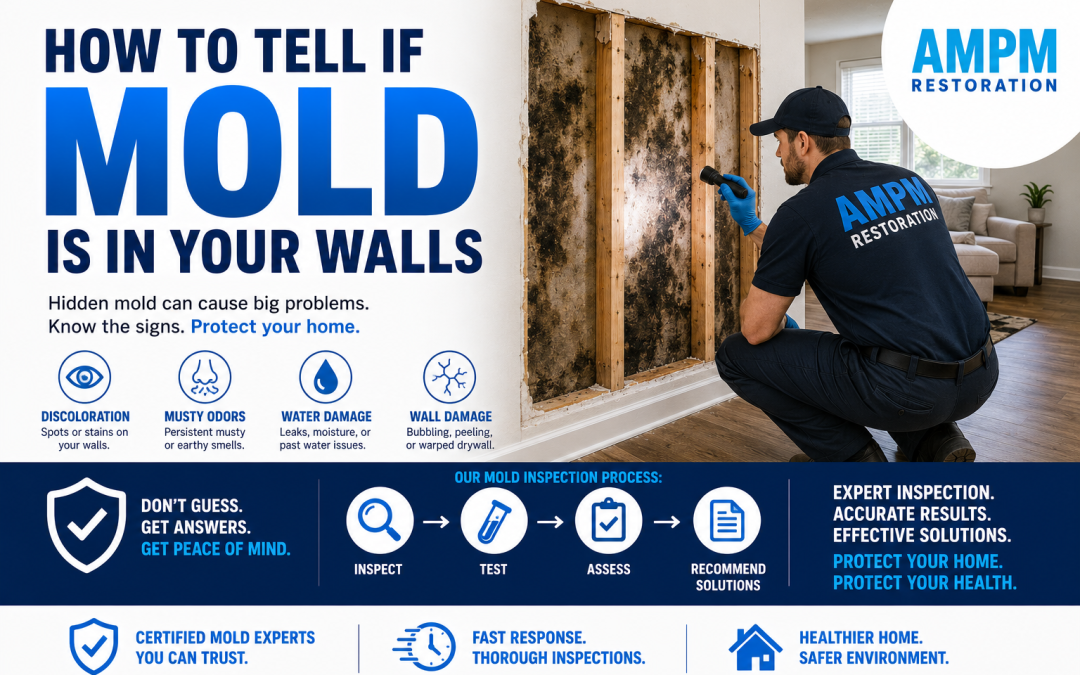
How to Tell If Mold Is in Your Walls
A lot of Florida homeowners start asking how to tell if mold is in your walls the same way. The house smells musty after a storm, a leak under the sink seemed minor, or one patch of paint keeps bubbling no matter how many times it’s cleaned or repainted. You don’t see obvious growth, but something feels off.
That concern is reasonable on the Gulf Coast. In Bradenton, Sarasota, St. Petersburg, and the Tampa Bay area, homes deal with heavy humidity, wind-driven rain, plumbing leaks, and repeated wet-dry cycles that can leave drywall and insulation damp behind the surface. Hidden wall cavities give mold exactly what it wants: moisture, darkness, and time. If you’ve wondered whether that smell or stain means something is growing out of sight, this guide will help you make a practical decision instead of guessing.
Is a Hidden Problem Lurking in Your Florida Home?
Hidden mold leaves a pattern. In Florida, that pattern often starts with a musty room after rain, a swollen baseboard near a shower wall, or paint that keeps blistering around a window even after it has been scraped and repainted.
On the Gulf Coast, I tell homeowners to focus less on getting a quick yes or no and more on reading the risk correctly. A small, isolated issue, like a one-time spill that dried fast and never returned, may call for a careful DIY check. A wall that has seen repeated humidity, storm exposure, past roof leaks, plumbing trouble, or hurricane-related water intrusion deserves more caution because drywall, insulation, and framing can stay damp behind a surface that still looks intact.
That climate piece matters. Homes in Bradenton, Sarasota, St. Petersburg, and across Tampa Bay deal with heavy outdoor humidity, wind-driven rain, older window and roof assemblies, and repeated wet-dry cycles that can feed hidden growth inside wall cavities. If you want local background on why this problem shows up so often, AMPM’s guide on why many Florida homes deal with mold adds useful Florida-specific context.
One practical rule helps.
Practical rule: A persistent musty odor plus a known moisture history is a stronger warning sign than a stain alone.
Florida homeowners also need to be realistic about the limits of DIY tools. A flashlight, careful visual inspection, and a basic moisture meter can help you decide whether a wall deserves closer attention. They do not confirm what is growing inside a closed cavity, how far it has spread, or whether the moisture source is still active. If the home has a history of storm damage, recurring leaks, high indoor humidity, or health symptoms that seem worse in one area of the house, professional inspection is the safer call.
The goal is not to panic. The goal is to catch a moisture problem before it turns into a larger remediation job.
Trust Your Senses Uncovering Visual and Olfactory Clues
The first pass is simple. Walk the house slowly and pay attention to what you smell before you focus on what you see.

Start with odor, not the wall finish
A musty, earthy smell is one of the strongest early clues that something may be happening inside a wall cavity. Expert guidance commonly treats odor plus moisture as a stronger signal than visible staining alone, and that smell can show up even when the painted surface still looks normal.
In practice, odor matters most when it behaves consistently. If the smell gets stronger after rain, near an exterior wall, around an HVAC closet, under a window, or beside a bathroom, that’s more meaningful than a temporary stale smell in a closed room. On the Gulf Coast, I’d pay especially close attention to odors that appear after a humid stretch and then return again.
Look for surface changes that suggest trapped moisture
Once you’ve identified a suspicious area, inspect the wall slowly in natural light if possible. Hidden mold usually announces itself through moisture damage first.
Common clues include:
- Water stains or rings: Yellow, brown, or darker marks can indicate previous or ongoing wetting inside the wall.
- Bubbling or peeling paint: Paint film often lifts when moisture is pushing outward from behind the drywall.
- Discoloration: Spotting, shadowing, or repeated dull patches can point to a damp area below the finish.
- Warping or bowing: A wall that looks uneven, swollen, or slightly proud of the surrounding surface deserves attention.
- Baseboard movement: Swollen trim, gaps, or soft caulk lines often show up before obvious wall failure.
Not every stain means mold. Some marks are old and inactive. The key is whether the wall shows a pattern of moisture, especially when paired with odor.
If a room smells musty but the wall looks fine, don’t assume the wall is clean. Hidden growth often shows up in the air and in the nose before it shows up on paint.
Check the places Florida homes struggle most
A quick room-by-room walk usually tells you where to focus:
- Bathrooms: Around tubs, showers, toilet supply lines, and exhaust fan penetrations
- Kitchens and laundry rooms: Under windows, behind appliance hookups, and around sink plumbing
- Exterior walls: Especially where wind-driven rain hits
- Closets and corners: Low airflow lets moisture linger
- Areas with prior storm damage: Even if repairs were done, recurrence is possible
If you’re seeing several of these clues, it helps to compare what you find with other common signs of mold damage in homes. That won’t confirm hidden mold by itself, but it will sharpen your judgment before you move to tools and testing.
Investigate Further DIY Inspection and Moisture Detection
At this stage, the goal isn’t to prove mold. The goal is to find out whether the wall still has a moisture problem. That’s the decision point many homeowners miss.
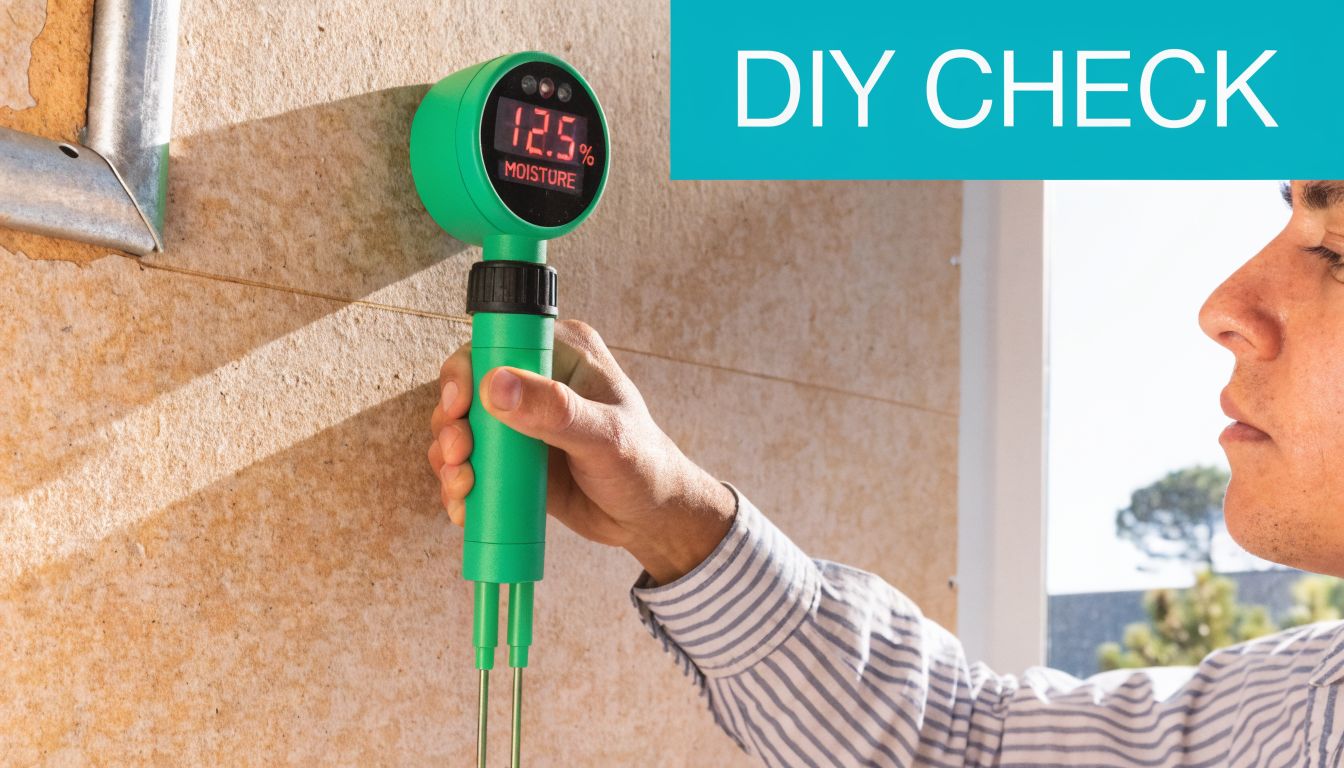
What a moisture meter can and can’t tell you
A moisture meter is one of the most useful DIY tools for checking suspicious walls. But it has limits. Non-invasive tools can help locate dampness, yet they do not confirm mold on their own. They point to the water source that mold needs to grow, which is why they’re so valuable when a wall shows peeling paint, soft drywall, or other ambiguous warning signs.
Use the meter like a comparison tool, not a magic detector.
A practical method:
- Start with a dry control area in another room or on a nearby interior wall with no history of leaks.
- Test the suspect wall in a grid pattern from baseboard height upward.
- Check around plumbing, windows, and exterior corners where water often enters or condenses.
- Repeat after rain or AC use if the issue seems intermittent.
If one area reads consistently wetter than comparable parts of the house, that’s useful evidence of active moisture.
Add hands-on checks that don’t damage the wall
You can learn a lot without opening anything.
- Press gently on drywall: Softness, crumbling, or a slight sponge feel suggests the core has been wet.
- Look at trim and flooring edges: Tack strips, baseboards, and door casings often react to hidden moisture first.
- Watch for recurring condensation: A wall that repeatedly feels clammy or shows moisture at certain times of day may have an insulation or air leakage issue.
- Note paint behavior: Fresh bubbling, cracking, or seam movement is more concerning than an old scuff mark.
If you think the issue may be tied to a plumbing source, it’s worth reviewing Harrlie Plumbing’s leak finding advice. It’s a helpful checklist for tracing the kind of slow leaks that often feed hidden wall moisture.
Field note: A moisture meter answers “Is this wall behaving wet?” It does not answer “What species is present?” or “How far has contamination spread?”
When DIY checking is enough, and when it isn’t
DIY inspection is usually enough to justify fast drying or a repair call when:
- You have a known fresh leak
- The affected area is easy to identify
- The wall shows moisture but no strong odor
- There’s no sign the issue has spread
DIY checking is not enough when the clues conflict. A wall may smell strongly musty but read inconsistently. Or it may look dry on the surface while staying damp deeper in the assembly. In those cases, compare your findings with other signs of water damage in walls and be ready to escalate to a more thorough inspection.
DIY Test Kits vs Professional Mold Testing
Store-bought mold kits appeal to homeowners because they seem fast, cheap, and simple. The problem is that they often answer the wrong question. Mold spores exist in normal environments, so collecting something in a petri dish doesn’t necessarily tell you whether the wall cavity is the source of the problem.
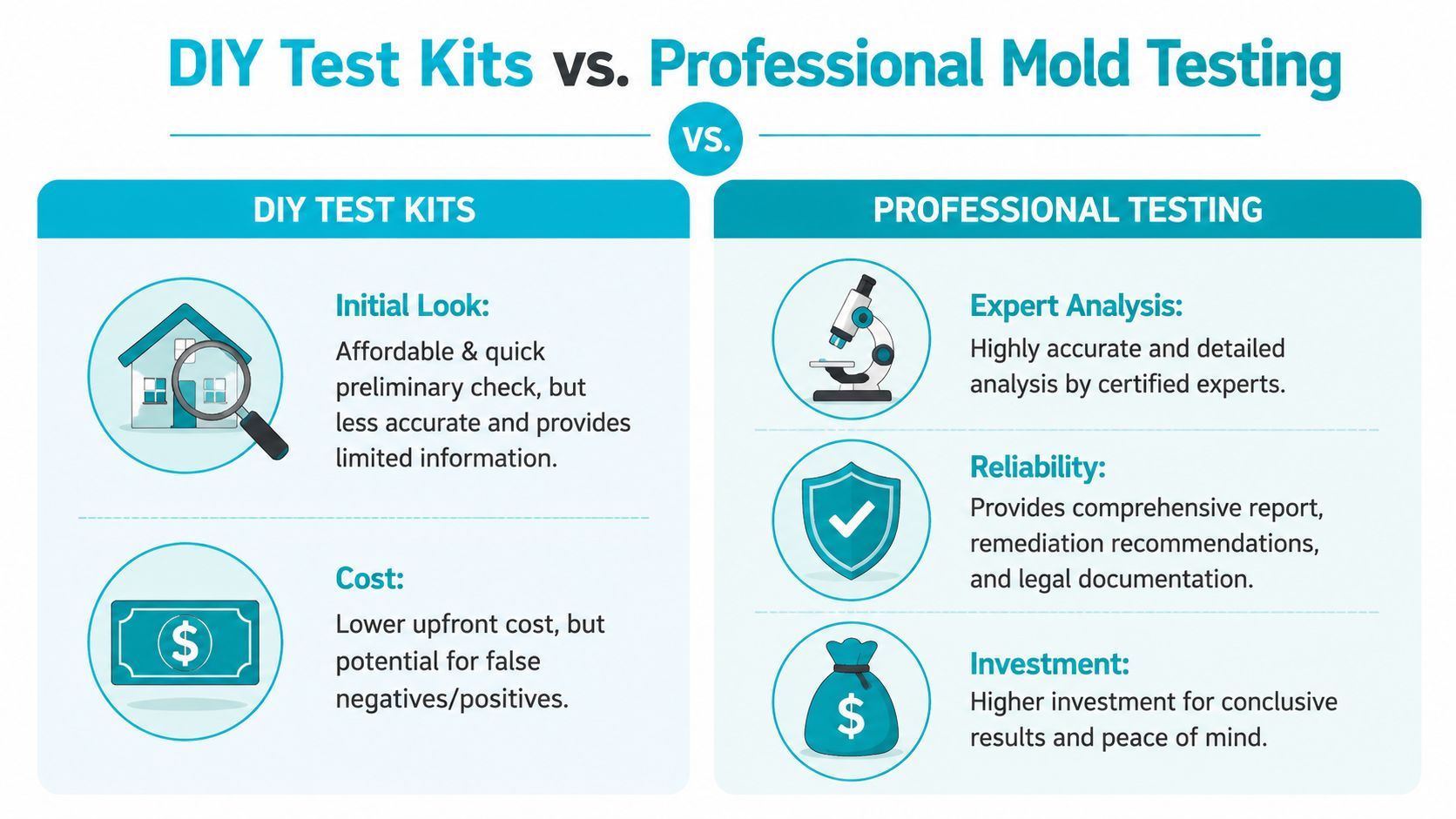
Why quick kits create false confidence
The CDC and NIOSH note that thorough visual inspections and detection by musty odors are often more reliable than short-term air sampling alone. When professionals do use air sampling, they compare indoor samples with outdoor baseline samples to look for increased indoor spore levels that may suggest a hidden source. The same guidance also notes that there are no health-based standards for interpreting short-term mold air samples, which is why experience matters when results come back ambiguous (CDC and NIOSH mold testing guidance).
That’s the core weakness of a DIY kit. It might show that mold exists somewhere in the environment, but it usually won’t tell you:
- whether the wall is the source
- whether moisture is still active
- whether the issue is limited or spreading
- whether opening the wall is warranted
What a professional inspection does differently
A proper inspection looks at the building, not just the sample. In a Florida house, that often includes moisture mapping, thermal imaging, odor assessment, leak history, and selective confirmation methods such as cavity inspection or a small access opening when justified.
One option homeowners use locally is AMPM’s explanation of mold assessment vs mold remediation, which helps clarify the difference between finding the problem and cleaning it up. That distinction matters because remediation without a solid assessment can miss the moisture source, while testing without a plan can leave the underlying issue unresolved.
Mold Detection Methods DIY vs. Professional
| Feature | DIY Mold Test Kit | Professional Inspection (AMPM Restoration) |
|---|---|---|
| Main purpose | Basic indication that mold may be present in the environment | Determine whether hidden wall conditions point to active mold and moisture intrusion |
| Source tracking | Usually weak | Stronger, because inspection focuses on leaks, damp materials, and cavity conditions |
| Moisture evaluation | Typically none | Includes moisture-focused investigation |
| Interpretation | Homeowner has to guess what the result means | Findings are interpreted in context |
| Wall cavity insight | Limited | May include borescope use, targeted sampling, or a small access opening if needed |
| Best use | Very rough preliminary curiosity check | Decision-making for repair, remediation, and scope |
If a musty odor persists and the moisture story doesn't make sense, don't spend your time trying to “win” an argument with a cheap kit. Get the building evaluated.
The real trade-off
DIY kits can satisfy curiosity. Professional inspection supports decisions. If you're trying to decide whether to repaint, replace drywall, open a wall, submit an insurance claim, or protect a tenant or family member, a serious inspection is the more useful path.
The Hidden Dangers Mold Growth and Your Health
A Florida wall can look fine on the outside and still hold enough moisture inside to affect the room, the materials, and the people living there. That is what makes hidden mold different from a simple cosmetic stain. Once drywall, insulation, or wood framing stays damp after a leak, storm intrusion, or prolonged humidity, the problem shifts from drying wet materials to dealing with growth inside a closed cavity.

Why waiting makes the situation harder
As noted earlier, mold can begin growing quickly after materials become damp. In Gulf Coast homes, that timeline often gets shorter in practical terms because high humidity slows drying, air conditioning can hide the feel of dampness, and past storm damage may have already weakened parts of the wall assembly.
That changes the scope of work.
A wall with a one-time moisture issue may respond to drying and a repair to the leak source. A wall with active hidden growth often means removing affected porous materials, cleaning inside the cavity under containment, and rebuilding only after the moisture source is corrected. From a restoration standpoint, delay usually means more demolition, more cleaning, and a higher chance that odor has spread beyond the original area.
Health concerns often appear before you see mold
Homeowners usually do not call me because they identified a species inside a wall. They call because a bedroom smells musty every afternoon, the AC seems to carry that smell, or someone starts dealing with irritated eyes, congestion, coughing, headaches, or asthma flare-ups in one part of the house.
Those symptoms do not confirm mold on their own. They do tell you the issue should be taken seriously, especially in homes with children, older adults, or anyone with asthma, allergies, or a weakened immune system. If the same room keeps bothering people and there is also a moisture history, the practical choice is to treat it as an indoor environmental problem until inspection proves otherwise.
Hidden growth in an exterior wall, around a window assembly, behind baseboards, or inside a return cavity can affect indoor air even when the wall surface still looks intact. Paint, caulk, air fresheners, and surface cleaning do not fix that. They only make it harder to judge what is happening.
A closed wall can still release odor and particulates into the room. Visible staining is not the threshold that makes a mold problem serious.
For homeowners comparing symptoms with building clues, AMPM explains common health effects of mold exposure. In a Florida home with persistent odor, recurring dampness, or a storm history, the safest decision is to stop guessing and get the wall condition evaluated before the problem spreads further.
Your Next Steps When to Call a Mold Remediation Expert
Some situations are reasonable to monitor for a short time. Others need professional inspection right away.
Call for expert help when any of these apply:
- The odor is strong and persistent: Especially if you've cleaned the room and the smell keeps returning.
- Moisture readings stay high: If your wall repeatedly tests wetter than surrounding areas, the source may still be active.
- The wall is changing shape or texture: Bowing, bubbling, soft drywall, and swelling trim usually mean the issue has moved beyond cosmetic damage.
- The problem follows a storm, roof leak, or plumbing failure: Florida homes often hide water in cavities longer than expected.
- Someone in the home is reacting to the room: If symptoms seem tied to a space, don't keep experimenting.
Strong odors, recurring condensation, or dark stains are clues, not proof. In situations where moisture readings are high or the smell persists, air sampling or opening a small access point may be needed, especially in humid, storm-prone Florida homes where repeated intrusion and condensation behind walls are more likely (Full Circle Home Inspectors on hidden wall mold clues).
When a professional steps in, the process should be straightforward. The first job is to identify whether moisture is active and whether the wall assembly needs to be opened. The second is to contain any contaminated area if removal is required. The third is to correct the water source so the problem doesn't return.
If you're in Bradenton, Sarasota, Lakewood Ranch, Tampa Bay, or nearby Gulf Coast communities, don't let uncertainty drag on. Hidden wall mold usually gets more expensive, more invasive, and more disruptive the longer it sits.
Frequently Asked Questions About Mold in Walls
| Question | Answer |
|---|---|
| Can mold be in a wall even if I don't see black spots? | Yes. Hidden wall mold often grows behind drywall, wallpaper, paneling, or insulation. A musty smell, bubbling paint, swelling, or repeated staining can matter more than visible spotting. |
| Does a musty smell always mean mold? | Not always. Musty odor is a strong clue, but it isn't proof by itself. Damp building materials, old water damage, or poor ventilation can create similar concerns. If odor keeps returning, it deserves investigation. |
| Will a moisture meter confirm mold? | No. A moisture meter helps locate dampness. It tells you where moisture may be feeding a problem, but it does not identify mold by itself. |
| Should I use bleach on a suspicious wall? | Surface cleaning may remove residue you can reach, but it won't solve hidden growth inside a wall cavity. If the material behind the surface is still wet or contaminated, the problem can keep coming back. |
| Can I just paint over a stain and move on? | That only hides the symptom. If the stain came from an active leak or hidden moisture, the paint may fail again and the underlying issue can worsen. |
| Does homeowners insurance cover hidden mold in walls? | Coverage depends on the cause of loss and your specific policy. Insurance may treat sudden covered water damage differently from long-term neglect or maintenance issues. It's worth documenting the problem early and asking for claim guidance. |
If you're still wondering how to tell if mold is in your walls, the safest move is to stop guessing and get clarity. AMPM Restoration Services provides mold inspection, water damage restoration, mold removal, and reconstruction support for homeowners across Bradenton, Sarasota, Tampa Bay, Saint Petersburg, Lakewood Ranch, and surrounding Gulf Coast communities. Call 941-946-7807 for a free inspection and estimate. We can also help with insurance claim assistance and discuss financing options so you can move quickly without added stress.