

At 11 p.m., the flames are out, the kitchen is dark, and your family is standing outside waiting for permission to go back in. The fire department has stopped the immediate danger, but the walls are blackened, cabinets are coated with soot, and firefighting water is moving into the floor and wall cavities. You're no longer dealing with one emergency. You're dealing with the pricing decisions that determine whether the loss stays contained or becomes a full reconstruction project.
Fire damage restoration rates vary because restoration isn't one service. The bill can include emergency stabilization, smoke and soot cleaning, water extraction, contents handling, deodorization, demolition, and rebuilding. A widely cited U.S. benchmark places the average fire restoration project near $27,175 to $27,477, with common project ranges from roughly $3,000 to more than $50,000, depending on severity, smoke spread, structural loss, and rebuild requirements, according to HomeAdvisor's fire and smoke damage cost guide.
For Florida homeowners, the smart move isn't to ask only for the total. Ask what each line pays for, what has been excluded, and whether suppression water has created a second remediation scope.
The First Call After the Flames Are Out
A Sarasota family can spend months preparing for a kitchen update, then lose control of the entire budget in one night. A stovetop fire may be extinguished quickly, yet smoke can travel through an open-plan living area while water from hoses and sprinklers settles beneath flooring and inside drywall.
That first night matters because acidic smoke residue can begin corroding metal within hours. Technical restoration guidance also warns that outcomes can decline sharply after roughly 48 to 72 hours of exposure, particularly for electronics, connectors, and other metallic components, as explained in technical guidance on smoke-damaged electronics restoration. The longer soot remains on cabinets, appliances, wiring, and painted surfaces, the more likely controlled cleaning turns into replacement.
What the dispatcher needs to know
Your first call should give the restoration team enough information to send the right crew and equipment. Expect questions about:
- Property location: Give the full address and identify whether the property is in Bradenton, Sarasota, Tampa Bay, Saint Petersburg, Lakewood Ranch, or another Gulf Coast community.
- Fire department status: Confirm that the fire department has released the property for entry and whether investigators still need access.
- Water presence: Report standing water, wet flooring, active leaks, sprinkler discharge, or visible seepage around walls.
- Utilities: Tell the dispatcher whether electricity, gas, and water remain active. Don't enter unsafe areas or operate switches after fire or water exposure.
- Property security: Mention broken windows, roof openings, damaged doors, or areas exposed to rain.
Emergency board-up or roof tarping may appear before cleaning because the contractor must first stop weather, theft, and additional contamination from worsening the loss. That charge isn't a cleaning fee. It's stabilization work that protects the remaining structure and contents.
In Bradenton, Sarasota, Pinellas, and Hillsborough County, a local emergency crew can often reach the property the same day. AMPM Restoration describes a one-hour response time in its publisher information, but homeowners should still ask the dispatcher for a realistic arrival window, the first services to be performed, and whether emergency work requires written authorization.
Use this guide to what to do after a fire before moving belongings or wiping soot from surfaces. A well-intended cleanup can smear residues, spread odor, or destroy evidence needed for an insurance inventory.
Practical rule: The first estimate should explain how the contractor will stabilize the property, identify hidden moisture, and preserve salvageable materials before anyone promises a final restoration total.
What Fire Damage Restoration Rates Actually Include
A fire restoration estimate usually combines several pricing methods. Cleanup and smoke remediation may be priced by square foot, while emergency labor can be hourly and structural rebuilding is usually assembled from detailed construction line items.
Common reference points place cleanup and standard restoration near $4 to $7 per square foot, with a midpoint around $5.50 per square foot, according to HomeGuide's fire damage restoration cost guide. Another guide places smoke and soot cleaning alone near $3.50 to $7 per square foot, with deeper contamination costing more when wall cavities, insulation, or HVAC systems require specialized treatment, as described by Coastal Restoration's pricing overview.
Those figures don't represent the full rebuild. Reconstruction, permits, code requirements, appliance replacement, and extensive contents work can sit outside a basic cleanup rate. The professional standard ANSI/IICRC S700 treats fire and smoke restoration as a technical process involving structural surfaces, HVAC systems, contents, odor control, and documentation. That's why “general cleaning” is too vague for a serious estimate.
Four buckets to look for
- Emergency mitigation includes securing openings, documenting conditions, extracting water, setting drying equipment, and removing materials that cannot be salvaged.
- Contents handling covers inventory, manipulation, pack-out, cleaning, storage, and return of furniture, clothing, electronics, documents, and other belongings.
- Cleaning and deodorization can include HEPA vacuuming, soot removal, surface cleaning, air filtration, and odor treatment.
- Reconstruction covers drywall, insulation, cabinets, flooring, electrical work, painting, trim, and other repairs after mitigation.
A contractor may use Xactimate or RSMeans-style line items to build the estimate, but you still need plain-English explanations. Ask whether “cleaning” includes ceilings, wall cavities, baseboards, cabinets, and HVAC supply and return paths.
| Cost Bucket | Usually Included in Base Estimate | Usually Billed as Add-On |
|---|---|---|
| Emergency mitigation | Initial inspection, documentation, limited securing, water response | Extended board-up, roof tarping, engineering, permits |
| Contents handling | Basic manipulation or documented pack-out | Off-site storage, specialty cleaning, electronics treatment |
| Cleaning and deodorization | HEPA vacuuming, soot cleaning, surface deodorization | HVAC duct cleaning, thermal fogging, ozone, hydroxyl treatment |
| Reconstruction | Selective demolition and defined repairs | Code upgrades, appliance replacement, expanded flooring or cabinetry |
| Water response | Extraction and initial drying within the written scope | Additional drying time, hidden moisture, subfloor or insulation removal |
For a homeowner comparing bids, the fire damage cleanup cost guidance from AMPM Restoration is useful as a scope reference, not a substitute for an inspection. Demand a room-by-room estimate and challenge every undefined phrase.
The Cost Drivers That Move Your Estimate the Most
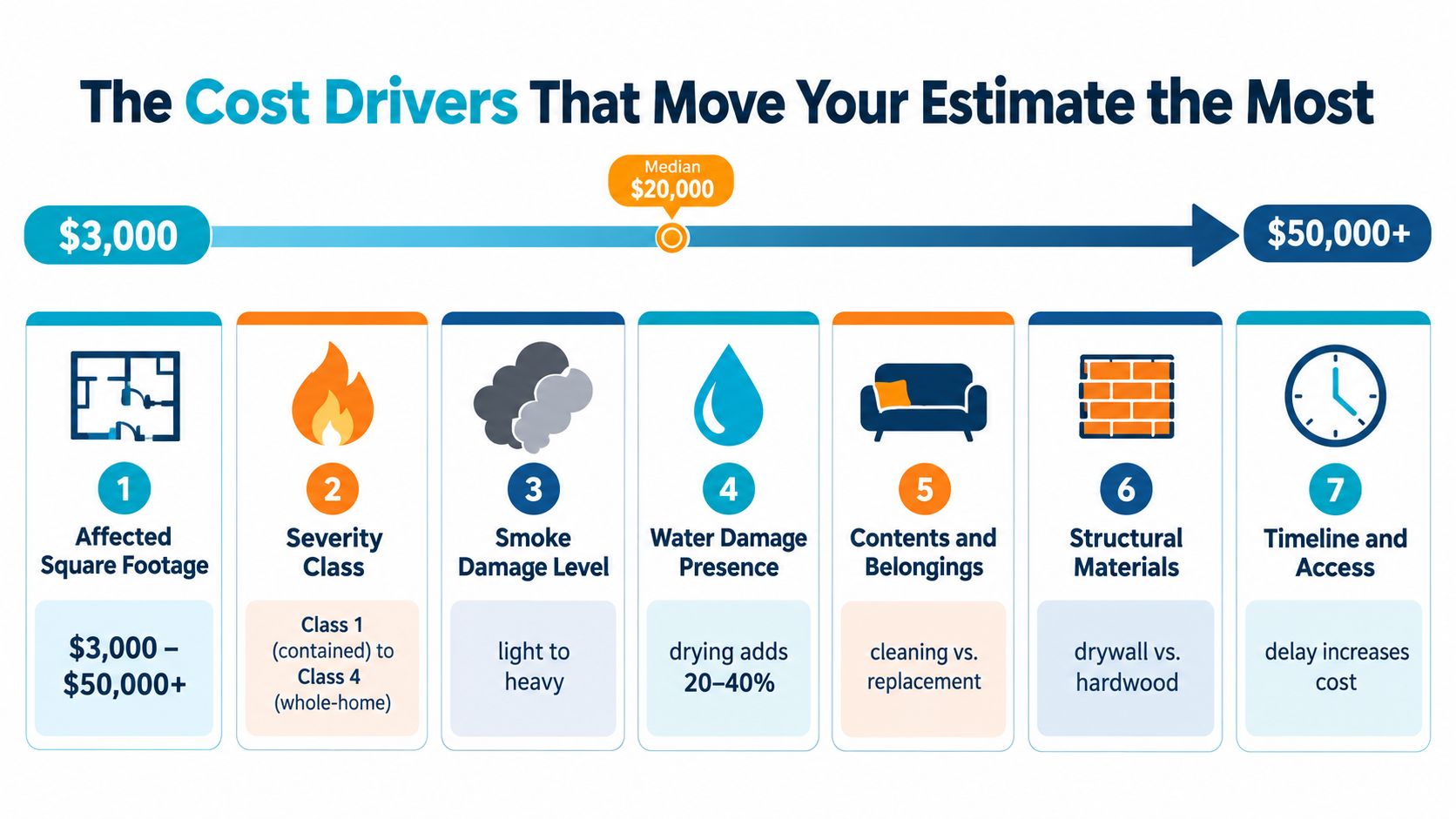
A kitchen fire can leave you with a cleaning bill, a reconstruction bill, or both. In Florida, suppression water adds a separate risk: moisture can move behind drywall, into insulation, below flooring, and through electrical areas before the visible damage appears. Read the estimate by scope, not by its final total. National restoration benchmarks range from about $3,000 to $50,000 or more, while the actual figure depends on the burned materials, smoke migration, water intrusion, and stabilization work.
Seven variables that change the scope
- Affected square footage: A contained kitchen may need targeted cleaning. Smoke moving through an open floor plan expands the cleaning area even when flames stay in one room.
- Severity classification: ANSI/IICRC S700 considers technical conditions, contamination, materials, contents, and documentation. Surface cleaning and structural compromise require different work plans.
- Soot type: Dry soot, wet soot, protein residue, and hydrocarbon residue respond differently. Cooking fires often leave oily contamination that requires specialized cleaning.
- Structural materials: Smoke-coated drywall may be cleanable. Charred framing, burned cabinets, damaged insulation, compromised flooring, and affected electrical components may require removal or replacement.
- Firefighting water: Treat extraction and drying as their own line items. In Florida's humid conditions, the contractor should identify wet-area boundaries, moisture readings, equipment, and the planned drying period. Do not approve a vague “water mitigation” charge.
- Contents density: Furniture, textiles, electronics, artwork, and stored belongings add inventory, handling, cleaning, storage, and replacement decisions.
- Timing and access: Early residue removal can limit bonding to porous materials. Delayed access, unsafe utilities, occupancy restrictions, and continuing moisture increase labor and equipment needs.
Separate the bid into four practical buckets: cleanup, structural rebuild, firefighting-water extraction, and contents handling with deodorization. Smoke inside HVAC pathways may add duct cleaning or odor treatment. Water beneath flooring may add demolition, drying, and subfloor work. A low cleanup price does not mean the full project will stay low.
Your Florida estimate should name each affected room, material, water boundary, contents status, and odor process. Ask whether cleaning includes ceilings, wall cavities, baseboards, cabinets, and HVAC supply and return paths. If the inspector cannot explain those boundaries, do not approve the price yet.
Sample Estimates by Real-World Scenario
Homeowners need comparisons that resemble actual loss patterns, not one national average. The following bands are planning examples based on scope. They aren't guaranteed bids, and they must not be treated as substitutes for a site inspection.
Scenario A
A contained kitchen fire leaves soot on walls and ceilings but causes no meaningful structural loss. The likely scope is emergency securing if needed, surface cleaning, cabinet assessment, odor treatment, and limited contents manipulation.
Scenario B
A whole-room loss includes charring to framing, smoke throughout the floor, damaged cabinets and countertops, and a contents pack-out. The contractor may need demolition, cleaning, deodorization, partial reconstruction, and coordination with an electrician or other specialists.
Scenario C
A severe structural loss affects multiple rooms after suppression water reaches drywall, insulation, flooring, and electrical components. This tier requires extensive demolition, extraction and drying, contents decisions, structural assessment, reconstruction, and potentially temporary living arrangements.
| Scenario | Scope of Damage | Cleanup Rate Range | Rebuild Rate Range | Total Estimate Range |
|---|---|---|---|---|
| Small contained kitchen fire | Soot on surfaces, limited water, no structural loss | $2,500 to $6,500 | Limited or none | $2,500 to $6,500 |
| Whole-room loss | Charring, smoke migration, lost cabinets and counters, contents pack-out | Included in combined project scope | Partial rebuild | $15,000 to $35,000 |
| Severe structural loss | Multiple rooms affected by fire and suppression water, drywall, insulation, flooring, and electrical replacement | Extensive mitigation and cleaning | Major reconstruction | $50,000 to $120,000 or more |
The table separates the logic of the estimate, but contractors may present their proposals differently. Ask for line items covering emergency board-up, water extraction, contents manipulation, demolition, cleaning, deodorization, and reconstruction.
For Bradenton property owners, fire restoration services in Bradenton can help frame the local service conversation, especially when a home needs both fire cleanup and water mitigation. A low total may mean the bid excludes contents, drying, HVAC, or reconstruction.
A realistic estimate tells you what the crew will do, what it won't do, and what conditions would trigger a supplement.
The Hidden Add-Ons That Change the Final Number
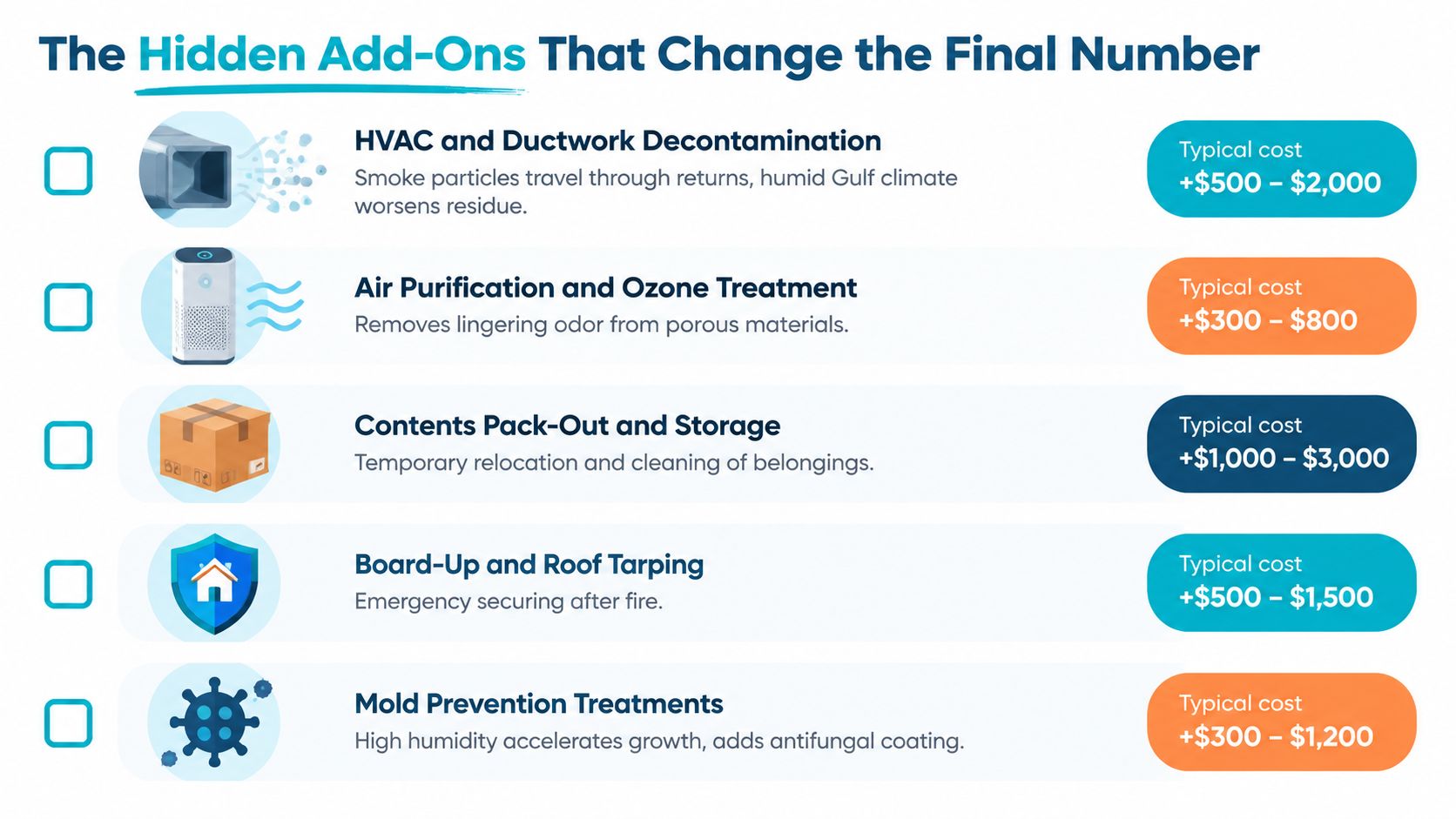
The second or third invoice often reveals the scope gaps that weren't obvious during the first walk-through. Florida homes face a particular challenge because smoke residue, wet building materials, and Gulf Coast humidity can interact after suppression.
Current pricing references list uneven specialty line items. They include $200 to $1,200 for smoke damage per room, $200 to $1,000 per contents item, $50 to $100 per pound for damaged-item removal, and $250 to $500 for duct cleaning, according to Angi's fire damage restoration cost guide. These aren't universal rates, but they show why an apparently simple per-square-foot quote can conceal substantial scope.
Read the specialty lines closely
- HVAC decontamination: Smoke can move through returns and supply pathways. Ask whether the estimate includes inspection, cleaning, filter changes, registers, and any inaccessible or contaminated duct sections.
- Contents pack-out and storage: Furniture, electronics, clothing, and documents may need inventory, transport, cleaning, storage, and return. Confirm whether manipulation is charged separately from specialty restoration.
- Deodorization: Standard surface cleaning may not remove odor from porous materials. Thermal fogging, hydroxyl equipment, or ozone treatment should be listed with the method, equipment duration, and safety restrictions.
- Water extraction and drying: Firefighting water can saturate drywall, subfloor, insulation, and flooring. The estimate should identify wet areas, moisture readings, equipment, monitoring visits, and the conditions for removing drying equipment.
- Permits and code work: Electrical, framing, ventilation, and other required updates may not be included in the initial restoration scope.
Use this professional smoke smell removal resource to understand why deodorization isn't the same as spraying fragrance. If the contractor proposes an odor treatment without explaining the contaminated materials and source-removal plan, ask for a revised scope.
Florida's moisture risk makes drying a priority, not an optional upgrade. A fire estimate that ignores water boundaries is incomplete even when the visible damage is mostly soot.
Insurance, Billing, and Financing Considerations
A fire claim gets easier to manage when each line on the estimate matches the correct policy category. Most homeowners policies separate Coverage A for the dwelling, Coverage B for other structures, Coverage C for personal property, and Coverage D for additional living expenses.
Structural rebuilding, soot cleaning, smoke damage, and firefighting-water work generally belong to the dwelling portion when the policy covers them. Furniture, clothing, electronics, and other belongings use contents coverage. Temporary housing and eligible living costs may fall under additional living expenses, subject to policy limits and conditions.
Documentation controls the conversation
The carrier needs a defensible scope, not one combined total. Request a claim packet with:
- Photo evidence: Document rooms, surfaces, contents, openings, water impact, and damaged building components before disposal, when safe.
- Moisture documentation: Require moisture maps, readings, drying logs, and equipment records for areas affected by firefighting water.
- Itemized scope: Separate labor, materials, equipment, demolition, cleaning, contents work, and reconstruction. Keep cleanup, structural rebuilding, water extraction, and deodorization visible as distinct cost groups.
- Contents records: List damaged items with descriptions, condition, photographs, cleaning decisions, and replacement recommendations.
- Claim forms: Keep copies of the proof of loss and every message exchanged with the carrier or adjuster.
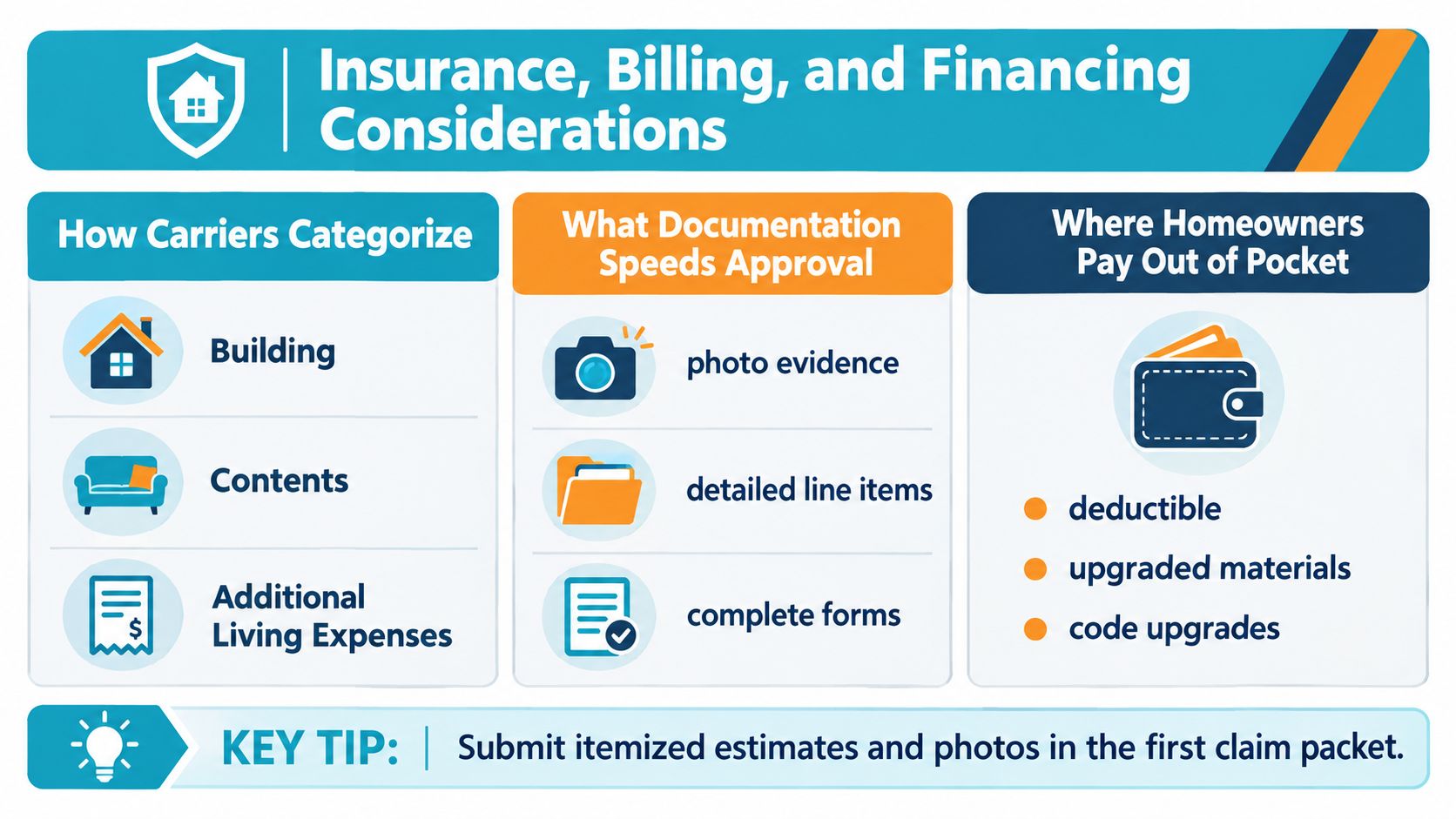
The homeowner usually pays the deductible, upgraded materials, permit-related requirements, and code upgrades that the policy excludes. In older Florida homes, rebuilding can expose electrical or wind-mitigation work that was not part of the original fire scope. The deductible remains the homeowner's responsibility, so reserve funds for that amount before approving work.
Ask the adjuster and contractor to identify coverage gaps in writing. A bid that combines firefighting-water extraction with smoke cleanup can hide moisture-related work, while a reconstruction total may omit contents handling or required code work.
If the repair shortfall requires financing, discuss the terms with a qualified lender and review home renovation financing resources before borrowing. After a declared disaster, eligible households may also investigate FEMA assistance or SBA disaster loans. Eligibility depends on the event and individual circumstances.
Read what homeowners should know about insurance restoration services before authorizing work. Require the contractor to explain billing, supplements, deductibles, and uncovered upgrades in plain language.
Choosing a Restoration Company That Protects Your Budget
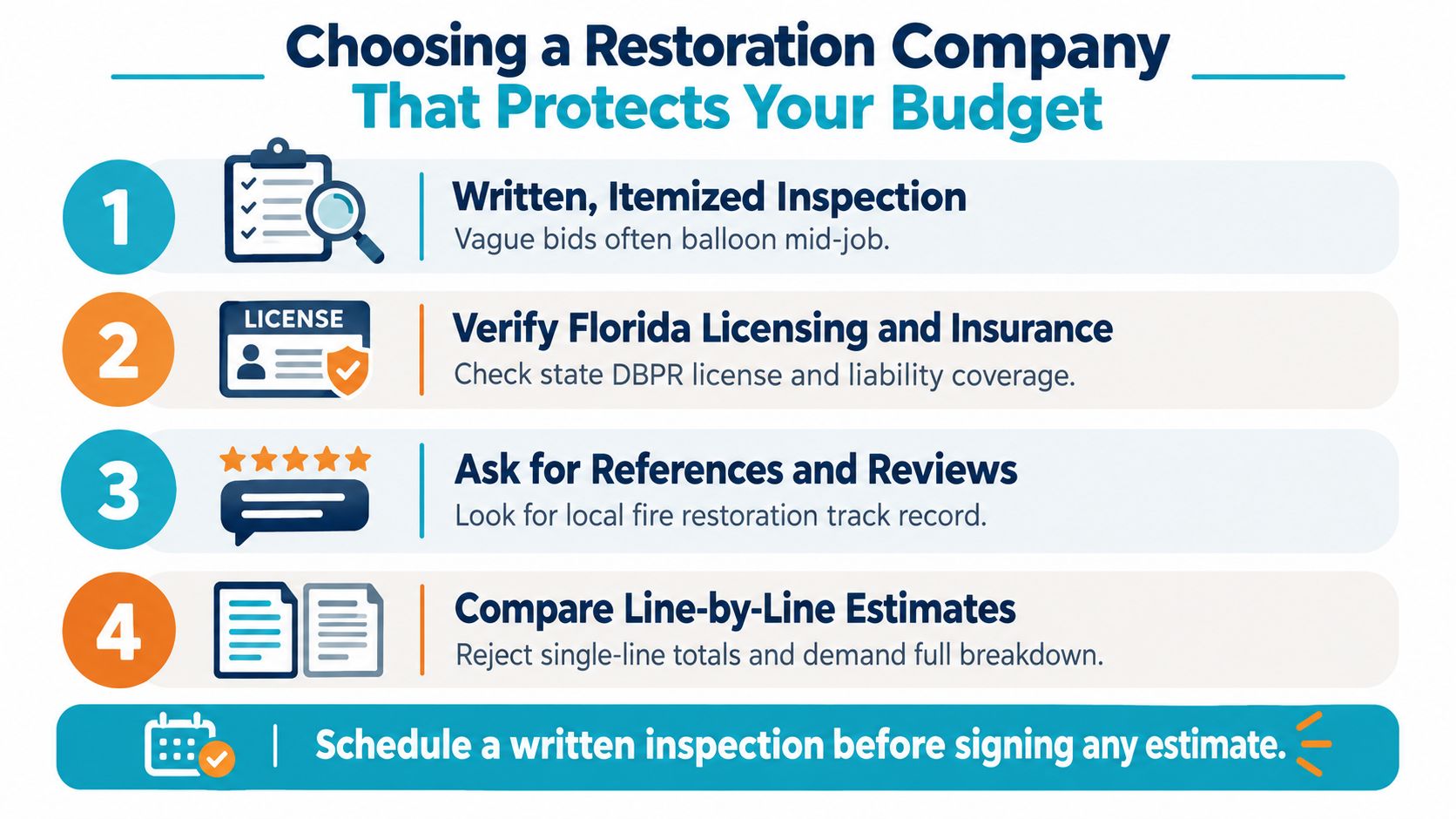
The safest financial decision is simple: schedule a written, itemized inspection before signing a restoration estimate. Vague bids almost always create disputes because “clean the house” doesn't define the rooms, materials, contents, equipment, odor process, or reconstruction boundary.
Four filters for Florida homeowners
- Verify fire restoration credentials. Look for IICRC training appropriate to fire and smoke restoration, and ask who will supervise the project.
- Confirm insurance protection. Request proof of general liability coverage and pollution or contractor's pollution coverage, particularly when soot, chemicals, contents, and water mitigation are involved.
- Check rebuilding capacity. An in-house structural repair team can reduce handoff problems. If subcontractors will perform the rebuild, ask who manages them and who remains accountable.
- Demand carrier-ready estimates. Ask whether the company prepares Xactimate or Symbility estimates, supplies photo logs, records moisture readings, and handles supplements when hidden damage appears.
Local response matters on the Suncoast. A Bradenton- or Sarasota-based crew can reach a property faster than a distant provider, stabilize openings, begin water removal, and reduce the time soot and moisture remain in contact with materials. Speed doesn't replace a thorough scope, but delay can make a contained loss harder to clean.
Ask these questions during the first call:
- Will you provide a room-by-room scope?
- Which services are included in the first estimate?
- What will be billed as an add-on?
- Do you coordinate directly with my insurance carrier?
- Do I need to sign authorization before board-up or emergency work?
- Who handles contents inventory and storage?
- How will you document moisture and drying?
- Who performs reconstruction after mitigation?
AMPM Restoration Services is a 24/7 emergency restoration company based at 4301 32nd St W b18, Bradenton, FL 34205, serving Bradenton, Sarasota, Tampa Bay, Saint Petersburg, Lakewood Ranch, and surrounding Gulf Coast communities with water damage restoration, mold inspection and removal, fire and smoke restoration, storm and flood cleanup, commercial restoration, and reconstruction solutions.
For homeowners comparing fire damage restoration rates, call 941-946-7807 for a free inspection and estimate from AMPM Restoration, with insurance claim assistance and financing options available. Visit AMPM Restoration Services to request help with stabilization, documentation, smoke cleanup, water extraction, and the restoration decisions that follow a Florida fire.