

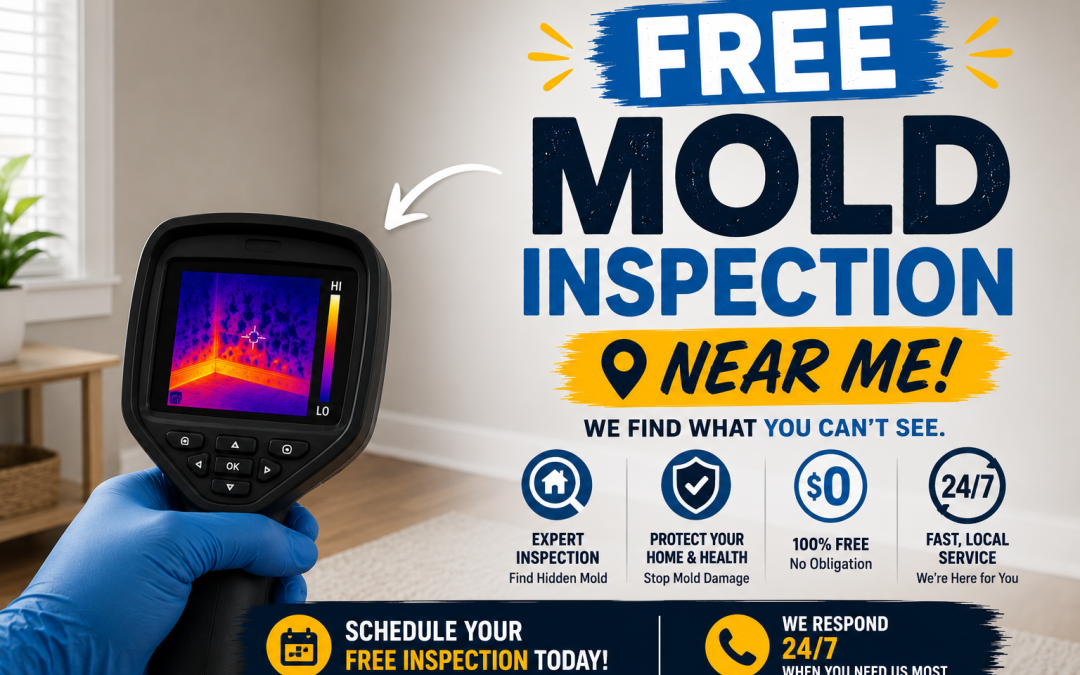
Free Mold Inspection Near Me
A musty smell after a storm. A dark patch near an AC vent. A bathroom wall that suddenly looks different after weeks of heavy humidity. That’s usually the moment a Florida homeowner opens a phone, types free mold inspection near me, and tries to figure out whether this is a small cleanup job or the start of a much bigger problem.
In Bradenton, Sarasota, Saint Petersburg, Lakewood Ranch, and across Tampa Bay, that concern is justified. According to the Centers for Disease Control and Prevention (CDC), over 90% of homes with reported mold problems had a history of water intrusion within the previous 12 months, which is why leaks, roof issues, storm exposure, and hidden moisture need attention fast, as noted by AMPM Restoration’s mold guidance. AMPM Restoration is based at 4301 32nd St W b18, Bradenton, FL 34205 and provides 24/7 emergency restoration across the Gulf Coast for water damage restoration, mold inspection and mold removal, fire and smoke damage restoration, storm and flood damage restoration, commercial restoration services, and full reconstruction.
Your Guide to a Free Mold Inspection in Florida
If you’re searching for a free mold inspection near me, you probably aren’t looking for theory. You want a straight answer. Is there mold, how serious is it, and what should happen next?
In Florida, the inspection is the first step that matters most. When a home has had roof leaks, plumbing problems, AC condensation, storm exposure, or lingering humidity, mold usually follows moisture. The visible staining is only part of the issue. The primary concern is whether water is still active behind drywall, under flooring, inside cabinetry, or around air handling equipment.
Why the first visit matters
A proper first inspection helps answer three practical questions:
- Is there a moisture source: If nobody identifies the leak, condensation point, or wet material, the mold problem keeps returning.
- Is the issue isolated or widespread: A small patch around a sink is handled differently from growth tied to attic moisture or long-term wall intrusion.
- Do you need testing, remediation, or both: Not every house needs the same level of response.
That’s why homeowners often start with a no-cost visual assessment before deciding whether they need deeper diagnostics. For readers in Bradenton and the surrounding coast, the quickest next step is to schedule a free mold inspection in Florida and get eyes on the property.
Practical rule: If you can smell mold or see staining after a leak or storm, treat it as a moisture problem first and a cosmetic problem second.
What Florida homeowners should watch for
Some warning signs are obvious. Others aren’t.
| Sign you notice | What it can point to |
|---|---|
| Musty odor | Hidden moisture in walls, cabinets, or HVAC areas |
| Bubbling paint or warped trim | Ongoing water intrusion |
| Dark spotting near vents or windows | Condensation and poor airflow |
| Staining after rain | Roof, flashing, or wall penetration issues |
A free inspection is useful because it turns a vague concern into a real plan. That takes stress down fast. You stop guessing and start dealing with the source.
What a Free Mold Inspection Really Means
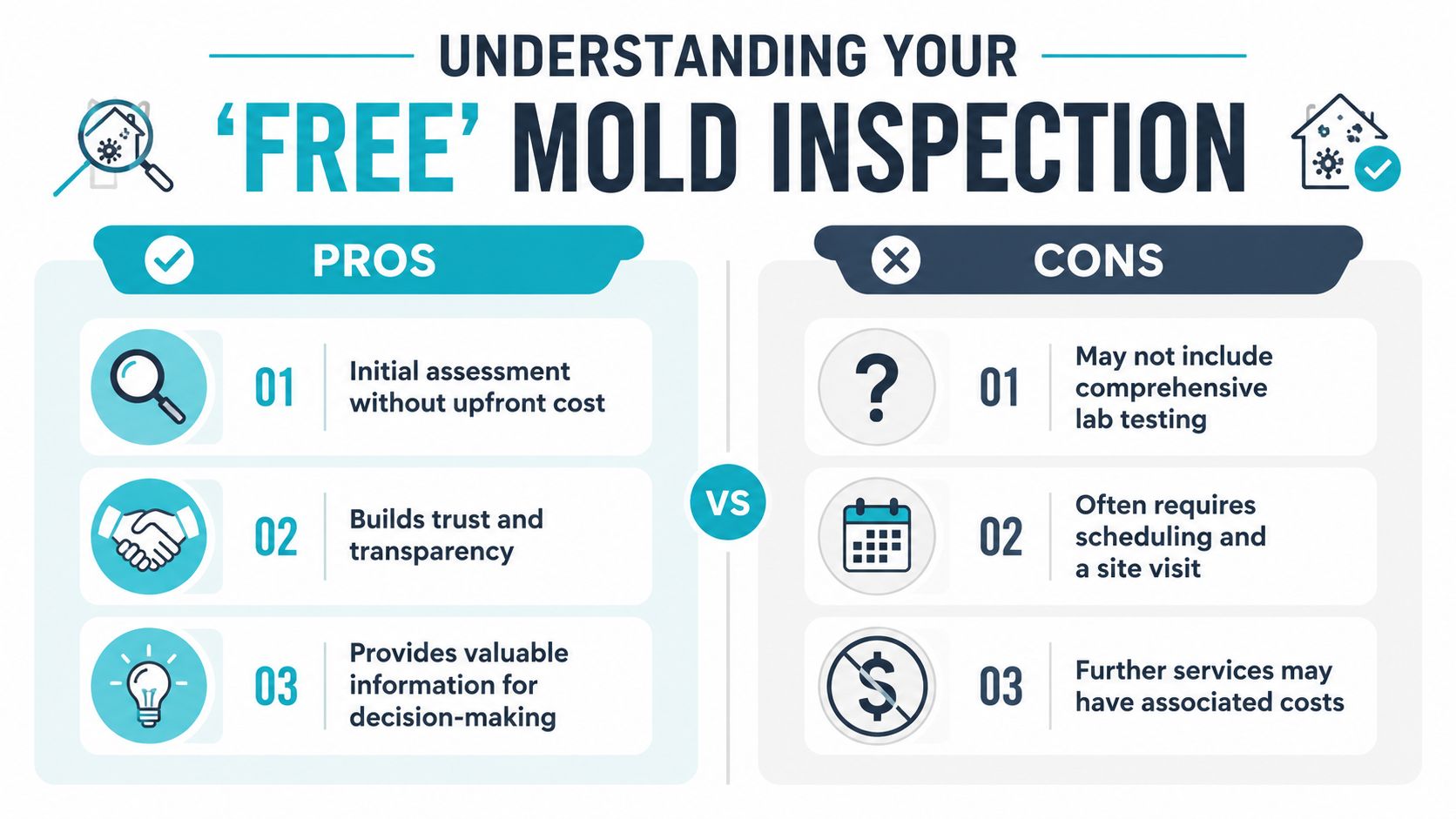
A lot of people hear “free” and assume there has to be a catch. In this industry, the situation is simpler than that. Free mold inspections are a legitimate and common industry practice in Florida, primarily functioning as lead-in offers where companies generate revenue through subsequent mold remediation work rather than the inspection itself. A typical mold inspection takes 1–2 hours and involves physical checking and testing by a specialist to evaluate the presence and extent of mold contamination, as explained in DoorLoop's overview of free mold inspections.
That doesn't make the inspection meaningless. It just means you need to understand what's included and what isn't.
What the free part usually covers
A legitimate free inspection usually means a trained technician visits the property, looks at visible conditions, checks likely moisture zones, and gives you an opinion on whether there's enough evidence to justify remediation, further testing, or both.
That visit is valuable because it helps separate three situations:
- No meaningful mold issue found
- Visible mold tied to an obvious moisture problem
- Suspicion of hidden contamination that may need additional diagnostics
Many Florida homeowners only need that first level of guidance to know whether they're dealing with condensation, a minor cleanup issue, or a larger restoration problem.
What it usually does not cover
A free visual inspection is not the same as a full scientific workup. It may not include lab-confirmed air sampling, species identification, thermal imaging, or a formal clearance protocol. Those are separate services in many cases.
If you want a deeper understanding of what a professional visit can include, compare your options against a provider offering professional mold inspection services. The key is to ask direct questions before the appointment.
A free inspection should reduce uncertainty. It shouldn't create more of it.
Ask whether the company is providing a visual assessment only, whether moisture mapping is included, and whether any recommended testing is optional or required. Clear answers at the start usually tell you a lot about how the rest of the project will go.
What to Expect During Your Inspection
When a technician arrives at a home in Sarasota or Saint Petersburg, the visit should feel methodical, not rushed. The point isn't to glance at a ceiling stain and make a guess. The point is to trace where moisture is coming from, how far it may have traveled, and whether visible growth is only the surface sign of a bigger issue.
A professional mold inspection typically requires 1–2 hours to complete, involving a thorough visual examination to document moisture sources and condensation patterns. Certified inspectors must follow EPA guidelines and IICRC S520 standards for remediation to ensure actionable reports, as summarized in TenantCloud's mold inspection guidance.

What the technician looks at first
The first part is usually conversation. Expect questions about recent storms, plumbing leaks, AC issues, roof repairs, flooding, musty smells, and rooms that feel damp or stale.
After that, the inspection often focuses on common Florida trouble spots such as:
- Air handler closets and supply vents
- Bathrooms with weak exhaust
- Under-sink cabinets and plumbing penetrations
- Window perimeters and exterior-facing walls
- Attics, garages, and laundry areas
A capable inspector is looking for patterns, not isolated stains. Water marks, peeling paint, soft drywall, swollen baseboards, and repeated odor complaints all help map the problem.
Tools and findings
Non-invasive tools matter because mold often follows hidden moisture. Moisture meters help confirm whether materials are wet now, not just whether they were wet at some point. Thermal imaging can help flag temperature differences that suggest concealed moisture. Visual documentation ties those findings together.
If you want a clearer picture of how hidden contamination is identified, this guide on whether a mold inspection can detect hidden mold behind walls is worth reviewing.
The best inspections connect the stain you can see to the moisture you can't.
By the end of the visit, you should know whether the issue appears minor, whether further testing makes sense, and whether remediation should start promptly. You should also understand what building materials are affected and what needs to happen to stop recurrence.
Why Fast Action Is Critical in Florida
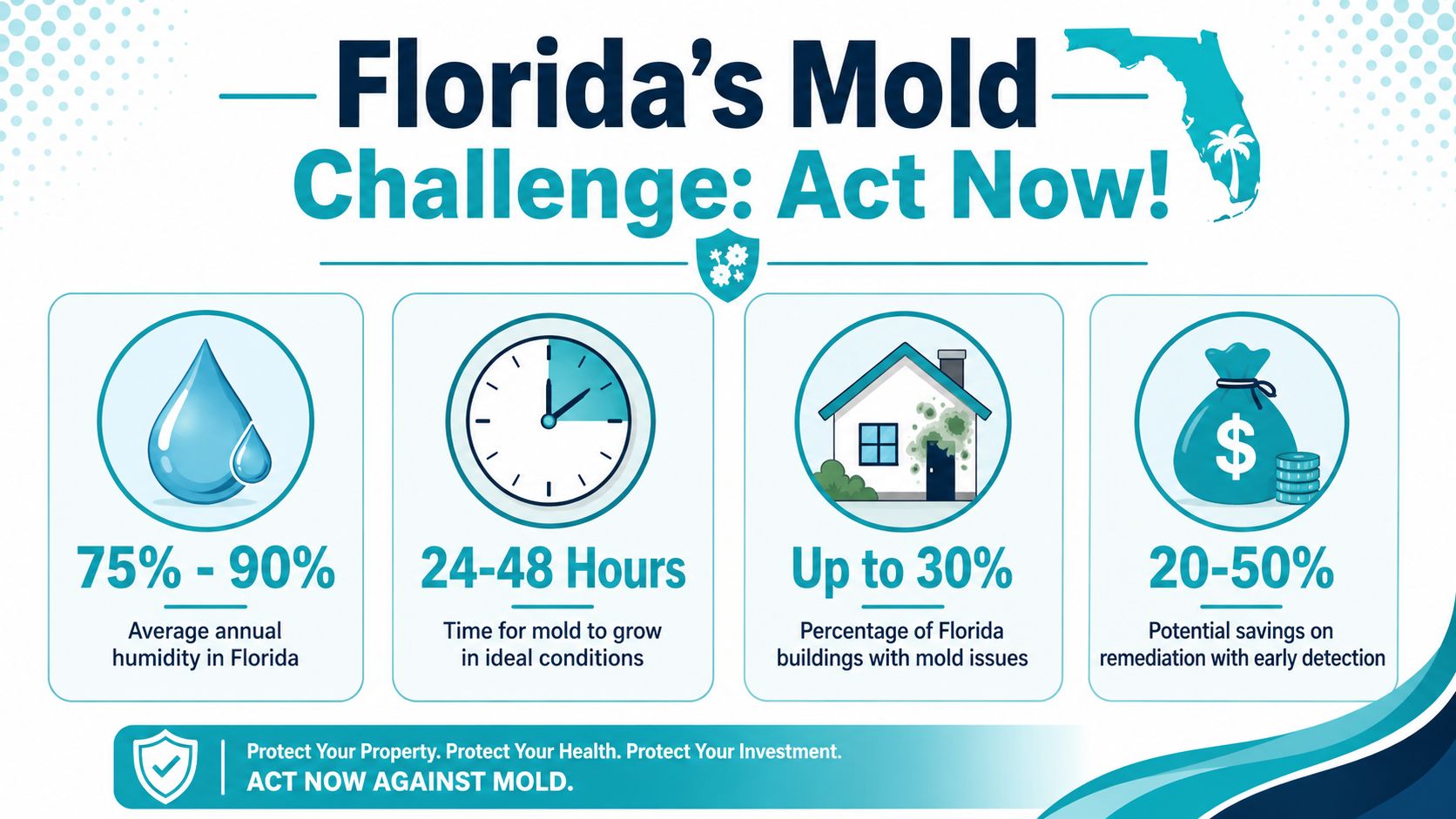
Florida doesn't give homeowners much margin for delay. Heat, trapped moisture, storm exposure, and high indoor humidity create the exact conditions mold uses to take hold and spread.
Mold growth can begin within 24 to 48 hours after water exposure, which is why the U.S. Environmental Protection Agency guidance cited in AMPM Restoration's emergency response article treats moisture control as urgent, not optional.
Why the Florida setting changes the timeline
A slow leak in another climate is bad enough. On the Gulf Coast, the same leak can combine with humid outdoor air, closed-up rooms, and AC system condensation to keep materials damp day after day.
That matters after:
- Summer storms
- Roof leaks
- Flooding or wind-driven rain
- Overflowing tubs, supply line failures, or appliance leaks
If your concern started after a water event, it also helps to understand how insurance and flood risk fit together. Homeowners sorting through that side of the problem often benefit from Select Insurance Group's flood insurance guide, especially when trying to separate flood exposure from other covered water losses.
Waiting usually makes the job larger
The cost issue isn't just about mold removal. Delay can turn a limited cleanup into a broader project involving drywall removal, insulation loss, flooring replacement, and reconstruction. Even when the visible growth still looks small, the wet materials behind it may tell a different story.
If you're unsure how quickly a moisture event can turn into contamination, review this timeline on mold growth after water damage. It helps explain why a free mold inspection near me search often needs to become a same-day phone call, not a task for next week.
From Inspection to a Fully Restored Home
An inspection answers the first question. The next one is what has to happen to make the house clean, dry, and safe again.
In Florida, that process needs to be organized from the start. High humidity, storm-related leaks, and moisture trapped inside wall cavities can turn a limited mold problem into a larger repair if the work stops at surface cleanup. Homeowners usually do better with one coordinated plan that identifies the affected materials, contains the area, removes contamination correctly, dries the structure, and rebuilds what cannot be saved.

The sequence that works
A sound restoration path usually follows these steps:
-
Inspection and scope
The inspection defines where the problem is, what materials are affected, what moisture source is feeding it, and whether outside testing makes sense for your situation. -
Containment and removal
If remediation is needed, the work area is isolated before any demolition or cleaning begins. That keeps spores and dust from spreading into bedrooms, closets, and HVAC-served areas. -
Drying and moisture correction
Mold removal alone does not solve a leak, drainage issue, or chronic indoor humidity problem. Wet framing, insulation, subflooring, or drywall has to be dried or removed, and the source of moisture has to be corrected. -
Repairs and reconstruction
After the area passes cleanup and drying goals, the house still has to be put back together. That may include drywall, baseboards, insulation, cabinets, paint, or flooring.
The distinction between inspection and cleanup matters here. Homeowners often assume they are the same service, but they serve different purposes. If you want a plain-English breakdown, this guide to mold assessment vs mold remediation explains where one ends and the other begins.
Insurance and claims support
Coverage questions come up often after a supply line break, roof leak, or storm-related water intrusion. Policy language can be narrow, and the cause of loss matters. For homeowners who want outside perspective before speaking with the carrier, this resource on public adjuster mold claim help is a useful starting point.
AMPM Restoration handles the inspection-to-rebuild process, including remediation, drying, reconstruction, and insurance claim assistance. That kind of continuity reduces confusion during a stressful job because the same team can track what was found, what was removed, what was dried, and what needs to be rebuilt.
A good inspection should lead to a clear work plan. You should know what is damaged, what can be saved, how the moisture source will be addressed, and what it takes to get the home back to normal.
Get Your Free Inspection and Peace of Mind Today
If you're dealing with odor, staining, recent water damage, or a room that suddenly feels damp, a free mold inspection near me search is the right instinct. In Florida, hesitation is what usually makes the problem harder to solve.
A prompt inspection gives you clarity. It tells you whether you're looking at surface-level spotting, active moisture behind materials, or a condition that needs containment and remediation. It also gives you a path forward before the damage spreads into adjacent rooms or repair costs start stacking up.
AMPM Restoration serves Bradenton, Sarasota, Tampa Bay, Saint Petersburg, Lakewood Ranch, and nearby Gulf Coast communities from 4301 32nd St W b18, Bradenton, FL 34205. The company provides 24/7 emergency response, free inspections and estimates, insurance claim assistance, financing options, and full restoration support for water, mold, fire, smoke, storm, and flood damage.
If you've been putting this off because you weren't sure whether the problem was serious enough, that's exactly why the inspection matters. It's the lowest-friction way to replace worry with facts.
Frequently Asked Questions About Mold Services
Does homeowners insurance cover mold removal
Sometimes it can, but coverage usually depends on what caused the mold. If it followed a covered water loss, the claim may be treated differently than a long-term maintenance issue. The best move is to document what happened, report the loss promptly, and get a professional inspection.
Is it safe to stay in the home during mold remediation
That depends on where the mold is, how contained the work area can be, and whether vulnerable occupants are involved. Small, isolated jobs may allow partial occupancy. Larger projects, especially those affecting HVAC-connected areas, may require a temporary plan.
What areas do you serve
AMPM Restoration serves Bradenton, Sarasota, Tampa Bay, Saint Petersburg, Lakewood Ranch, and surrounding Gulf Coast communities.
What's the difference between mold remediation and cleaning
Cleaning addresses what's on the surface. Remediation addresses the source, affected materials, containment, removal, and prevention of recurrence. If moisture remains, simple cleaning won't hold.
How does clearance testing work
Post-remediation verification, often called clearance testing, is a separate confirmation step after cleanup. In Florida, Mold Rid Of pricing information notes that professional mold inspections typically cost between $249.99 and $549, with a full diagnostic service including FLIR thermal imaging, two air samples, and AIHA-accredited lab analysis ranging from $349 to $549. The same pricing page states that post-remediation verification is standardized at $299 for standard residential containment and includes visual verification, moisture re-checks, post-cleanup air samples sent to an AIHA lab, and an official clearance certificate accepted by carriers and title companies.
What if a free inspection finds nothing serious
That's still a useful outcome. A good inspection can confirm that what you're seeing is limited, identify moisture conditions to monitor, and help you avoid paying for unnecessary work.
If you need answers now, call AMPM Restoration Services at 941-946-7807 for a free inspection and estimate. The team is available 24/7, assists with insurance claims, and offers financing options to help Florida homeowners move from uncertainty to a safe, restored property with less stress.