

How to Get Rid of Smoke Smells
A summer storm rolls through Bradenton, the power flickers, and the portable generator runs closer to the garage than it should. Or dinner gets away from you in Sarasota, and now the whole house smells like burnt oil and plastic. That sharp odor can seem minor at first, but smoke doesn’t stay politely in one room. It moves into fabrics, settles in ductwork, sticks to walls, and gets harder to remove in Florida’s heat and humidity.
Determining how to get rid of smoke smells depends on what burned, how long it smoked, and how far the residue traveled. A burnt pan calls for one approach. Cigarette residue in drywall, HVAC ducts, and trim calls for another. Along the Florida Suncoast, humidity adds one more complication because odor molecules and residue tend to linger longer in enclosed, damp spaces.
AMPM Restoration is a 24/7 emergency restoration company based at 4301 32nd St W b18, Bradenton, FL 34205, serving Bradenton, Sarasota, Tampa Bay, Saint Petersburg, Lakewood Ranch and surrounding Gulf Coast communities with professional water damage restoration, mold inspection and mold removal, fire and smoke damage restoration, storm and flood damage restoration, commercial restoration services, and full reconstruction solutions. For homes with smoke exposure and indoor air concerns happening at the same time, professional air quality testing for mold can also help clarify what’s circulating through the property.
Lingering Smoke Smells A Common Florida Problem
Smoke smell rarely comes from “air” alone. It comes from particles and oily residue that land on ceilings, cabinets, upholstery, carpet, blinds, and inside the HVAC system. In Bradenton, Sarasota, and across the Gulf Coast, that problem often shows up after kitchen flare-ups, lanai grill accidents, neighbor smoke drift, generator exhaust after storms, or a small electrical burn that seemed contained at the time.
Florida homes add two complications. First, many properties stay closed up for long stretches because of heat, rain, or seasonal occupancy. Second, humid conditions make it harder to clear stale indoor air quickly without a plan. Opening windows helps, but only if you’re also controlling airflow so the smoke moves out instead of spreading deeper into the house.
Why the smell keeps coming back
Smoke residue behaves differently depending on the source. Burnt food often stays near the kitchen unless the HVAC pulls it through the home. Cigarette smoke is much stickier. Structural fire residue is more aggressive still, especially when soot has reached porous materials.
That’s why air fresheners usually disappoint. They change the smell for a while, but they don’t remove what’s stuck to the structure.
Practical rule: If the odor fades for a day and then returns when the house is closed up, residue is still present somewhere in the home.
Homeowners usually want a straight answer: can this be cleaned, or is it now a restoration job? The practical answer is this. Minor smoke events respond to fast ventilation and targeted cleaning. Deep or recurring smoke odors require a more methodical approach. Knowing where your situation falls on that line saves time, money, and a lot of frustration.
First Response Steps to Minimize Smoke Odor Spread
The first hour matters. If you respond quickly, you can limit how far smoke odor travels into soft contents, painted surfaces, and ductwork. If you wait, the cleanup gets bigger.
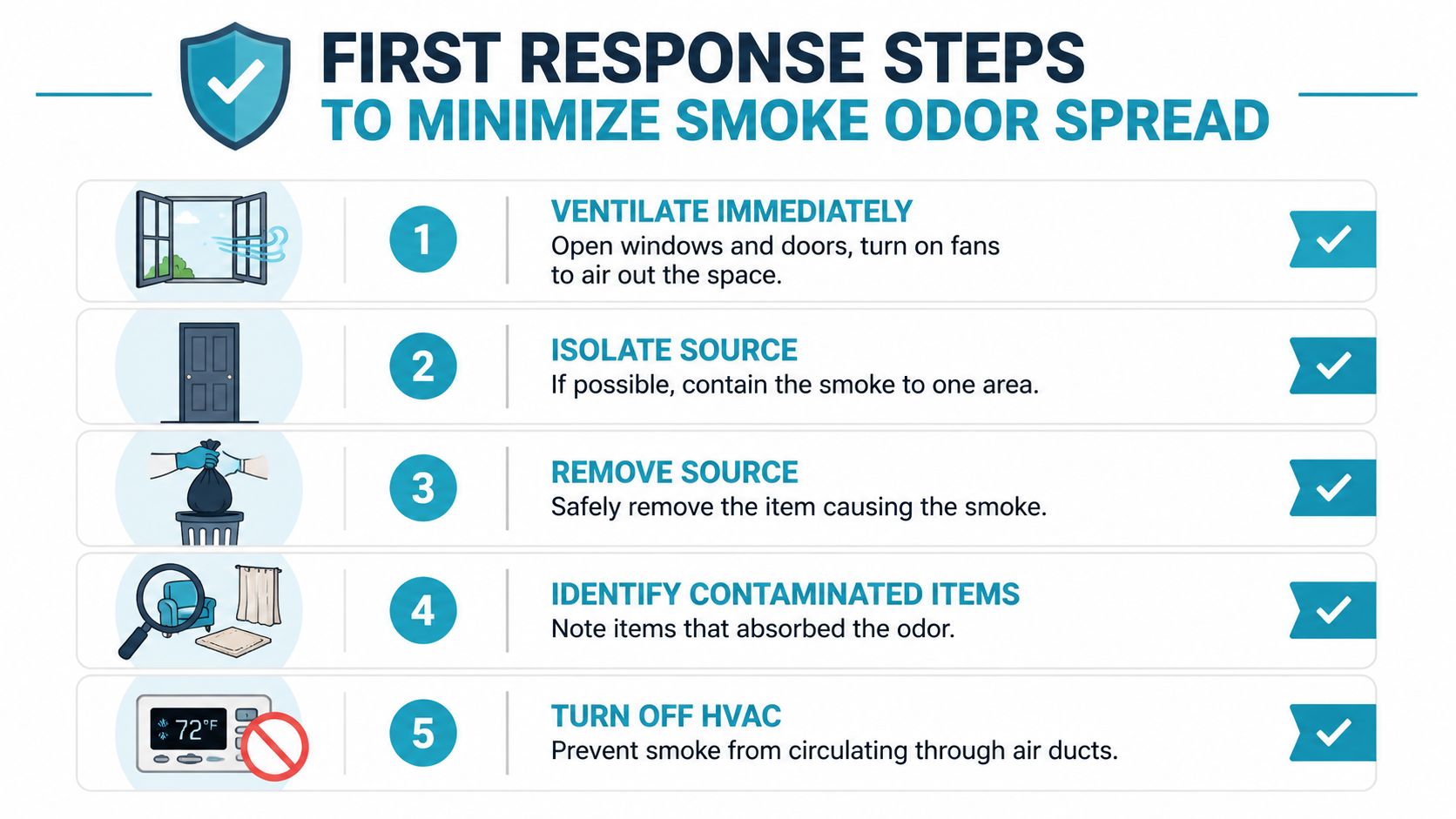
Stop the spread first
Start with containment, not scrubbing.
- Turn off the HVAC system: Don’t let the air handler carry soot and odor through ducts and into bedrooms, closets, and returns.
- Remove the source safely: Get the burnt food, scorched item, or smoke-producing material out of the house if it’s safe to do so.
- Isolate the area: Close interior doors if the smoke is concentrated in one section of the home.
- Create cross-ventilation: Open windows and doors on opposite sides of the house and use fans to push smoky air outward while pulling fresh air in.
- Identify what absorbed odor: Pay attention to fabric dining chairs, drapes, rugs, and return-air areas nearby.
For post-fire situations, these immediate actions line up with the practical steps in AMPM’s guide on what you should do after a fire.
Ventilation in Florida takes some judgment
Cross-ventilation works, but timing matters on the Suncoast. If the outdoor air is extremely humid and still, opening everything up without fan placement can leave you with damp air and only modest odor improvement. Position box fans so one or more fans push air out, not just around the room. The goal is directional movement.
A professional benchmark is useful here. In smoke damage restoration, air scrubbers are used to pump out fresh, clean air approximately every five hours to help remove smoke particles and support full odor elimination. Most homeowners don’t have commercial air scrubbers on hand, but the principle is the same. Keep air moving out in a controlled way.
What not to do in the first response window
A few common mistakes make later cleaning harder:
- Don’t run scented candles or plug-ins: They layer fragrance over contamination.
- Don’t dry-wipe soot or greasy residue: You can smear it deeper into paint and textured surfaces.
- Don’t leave smoke-damaged fabrics piled indoors: They continue off-gassing.
- Don’t restart the AC too early: Wait until the source is removed and the immediate air exchange is underway.
Shut off circulation before you start deodorizing. Otherwise you’re treating one room while contaminating three more.
When homeowners ask how to get rid of smoke smells fast, this is the part that gets skipped most often. People clean first. The better move is to control airflow, isolate the problem, and keep the smoke from gaining more square footage.
Tackling Everyday Smoke Smells From Cooking and More
Not every smoke odor needs a restoration crew. Burnt toast, a scorched pot, a microwave mishap, or a melted utensil on the stove can often be handled with focused cleaning if you start soon enough.
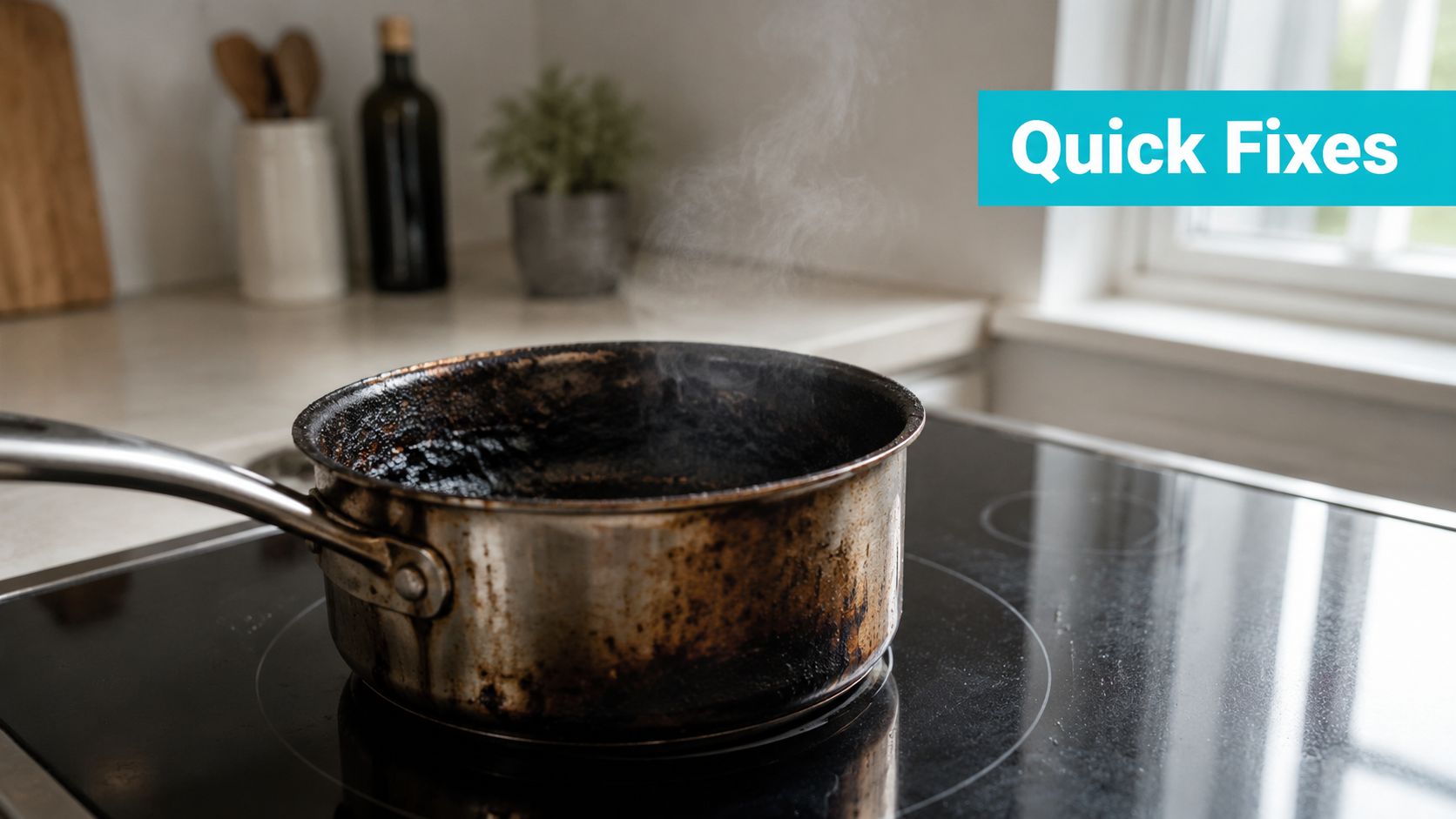
Burnt food and greasy kitchen smoke
Kitchen smoke usually leaves a film on nearby hard surfaces. That film carries the smell. A proven method for removing odor from hard surfaces is wiping them with a 50/50 vinegar-water solution or an ammonia-water mix to dissolve nicotine and tar-like resins, while fabrics can be washed in hot water with a cup of white vinegar or baking soda to help neutralize odor molecules.
Use that method on:
- Cabinet faces: Especially above and beside the stove
- Backsplash and counters: Residue settles there quickly
- Walls and trim near the cooking area: Light smoke coats paint
- Light fixtures and vent hoods: Often overlooked, often smelly
If the smell is concentrated in the kitchen, AMPM’s practical fire damage restoration tips are also useful for deciding whether you’re dealing with residue that needs deeper treatment.
Soft materials need a different approach
Absorbent materials hold odor longer than tile, stone, or sealed countertops.
Try this sequence:
- Wash fabrics first: Curtains, table linens, washable slipcovers, and clothing exposed to the smoke.
- Treat carpets and upholstery: Sprinkle baking soda generously, leave it overnight, then vacuum with a HEPA-equipped machine.
- Use passive absorbers in closed spaces: Activated charcoal or used coffee grounds can help in cabinets, pantries, and small rooms after the actual residue has been cleaned.
Melted plastic is a tougher odor
Burnt food smells bad. Melted plastic smells worse because it clings aggressively and can coat microwave interiors, vent filters, and nearby painted surfaces.
A practical order of attack is:
| Area | What to do |
|---|---|
| Microwave interior | Unplug, cool fully, remove the turntable, clean every hard surface thoroughly |
| Surrounding cabinets | Wipe with your cleaning solution more than once if needed |
| Range hood filter | Remove and clean or replace if odor remains |
| Trash and nearby contents | Bag and remove anything that absorbed the strongest smell |
If one cabinet or appliance still smells stronger than the room, that local hot spot is usually where residue is still sitting.
For minor incidents, this is often enough. If you’ve cleaned all nearby hard surfaces, washed fabrics, treated upholstery, and the odor still blooms again once the house is closed, the problem has likely moved beyond everyday cleanup.
Removing Persistent Cigarette and Structural Fire Odors
A Florida home can smell fine with the windows open, then turn stale and ashy by evening once the AC runs and the humidity settles in. That pattern usually points to smoke residue that has moved past a simple surface problem and into the building materials.
Cigarette smoke and structural fire odor behave differently from a one-time cooking mistake. Nicotine, tar, soot, and acidic combustion residues sink into drywall paper, unfinished wood, carpet pad, insulation, and return ducts. On the Suncoast, high humidity makes that contamination more noticeable because damp air can reactivate odor that seemed gone for a few days.
Why surface cleaning often falls short
Fresh paint, air fresheners, and a quick wipe-down rarely solve long-term cigarette odor or fire smoke. The smell returns because the residue is still sitting inside porous materials and hidden cavities, then slowly off-gassing back into the room. I see this often after tenant turnover and after small garage or kitchen fires where the visible soot looked limited.
For tougher cases, the work usually follows this order:
- Remove soft goods or building materials that cannot be restored.
- Wash hard surfaces with the right smoke-specific cleaner.
- Address contamination inside HVAC runs, registers, and enclosed voids where needed.
- Apply an odor-blocking sealer only after cleaning is complete, then repaint.
Skipping the cleaning step before sealing is where many DIY jobs fail. Odor-blocking primer can help, but it is not a substitute for residue removal. If smoke oils are still on the wall, trim, or subfloor, the smell often bleeds back through.
Cleaning chemistry matters
Smoke residue is chemically stubborn. Fire residue can be acidic. Nicotine residue is oily and sticky. Many off-the-shelf household sprays spread it around.
Removing burning smells, alkaline cleaners in the proper range are often needed for heavier smoke contamination, while vinegar and similar home remedies have limited reach on porous surfaces. That matches field experience. Vinegar can help on light deposits and washable items, but it is not strong enough for deep contamination in painted drywall, framing, or heavy-texture ceilings.
Clothing and fabrics are easy to mishandle
Soft contents need patience. One common mistake is rushing smoke-affected laundry into the dryer.
Machine-washable items should not go into the dryer until the odor is completely gone, because heat can set the smell into the fibers. For salvageable items, pre-soaking and repeated washing may help, but some fabrics, padding, and foam inserts never release heavy smoke contamination fully.
The same basic lesson shows up in other odor cleanup problems. Material type matters, and residue trapped below the surface keeps causing trouble. That is one reason practical guides like these step-by-step dog urine cleaning methods are useful for understanding why deodorizing the top layer is rarely enough.
HVAC can keep feeding the problem
If the odor gets stronger when the AC starts, smoke contamination may be sitting in the air system. That is especially common in Florida homes that stay closed up for long stretches. Residue collects on dust inside returns, flex duct interiors, coils, and blower compartments, then recirculates every time the system runs.
Homeowners dealing with vent-related contamination often also need to understand how debris lingers inside ductwork. AMPM’s guide on how to remove mold from air ducts is useful here because the same system features that trap moisture and particulates can also hold smoke residue.
Not every smoke smell requires demolition. Some do. The deciding factor is where the residue settled, how long it sat, and whether it penetrated materials that cannot be cleaned thoroughly enough to stop the odor from returning.
When DIY Is Not Enough Call a Smoke Remediation Expert
A common Florida call goes like this. The house had a small kitchen flare-up, or the generator ran too close to the garage after a storm, and the owner cleaned everything they could reach. A week later, the AC kicks on, the humidity climbs, and the smoke smell is back.
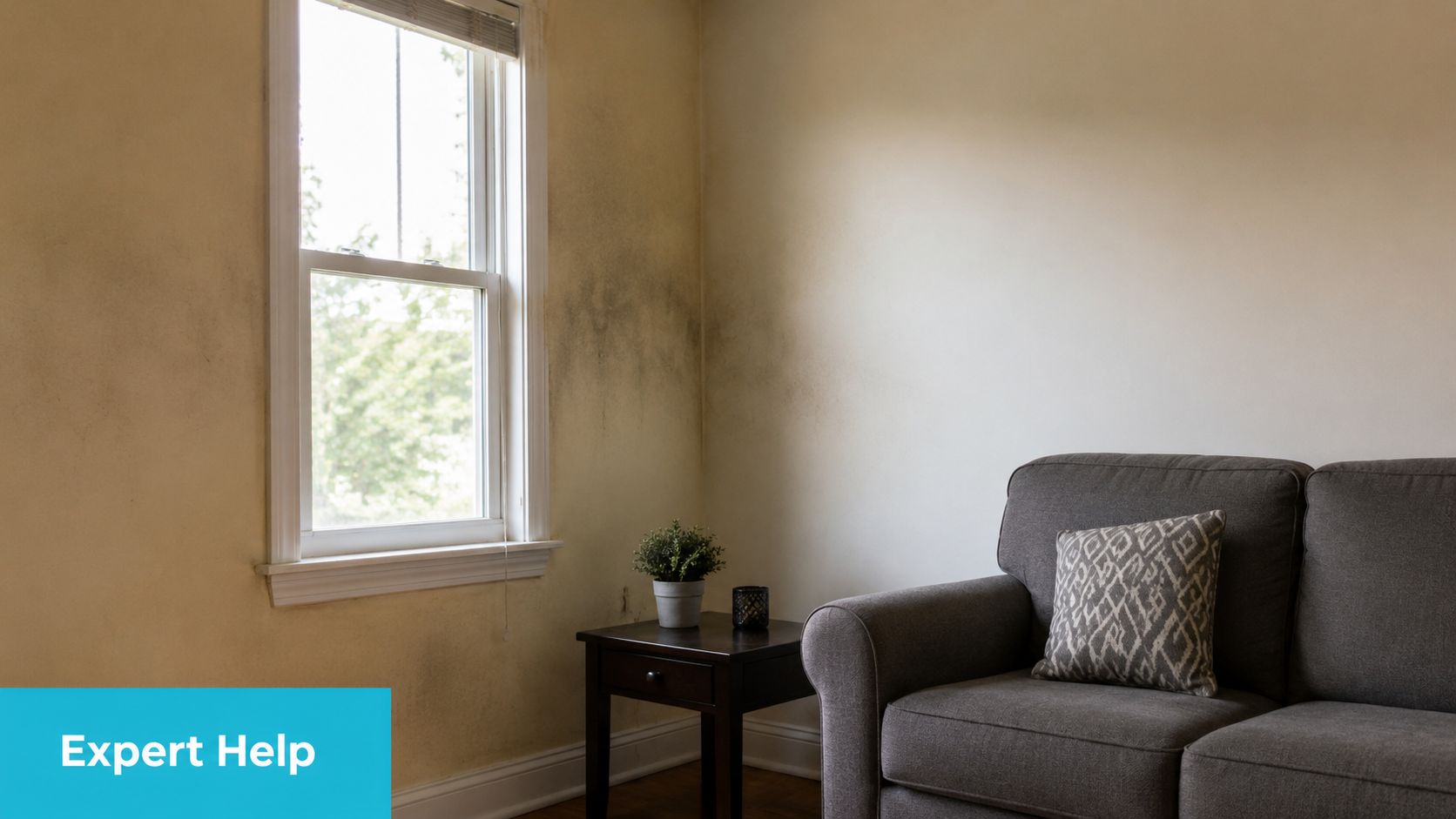
That is usually the point where home cleaning has done all it can do. Smoke odor keeps returning because the residue is still in the building, often inside porous materials, wall cavities, insulation, or the HVAC system. On the Suncoast, moisture in the air can make that residue easier to notice again, especially in homes that stay closed up for long periods.
Red flags that should stop DIY efforts
A professional inspection makes sense when the problem has moved past surface cleaning. Watch for these signs:
- The odor comes back after the room seemed clean: Residue is still present somewhere below the surface or inside the air system.
- You can see soot or staining: Once smoke leaves visible deposits, the contamination usually extends farther than the marked area.
- The smell reaches several rooms or both floors: At that point, the issue involves airflow, material type, and spread pattern, not just one dirty surface.
- You need the property ready for tenants, buyers, or seasonal reopening: A house can smell acceptable during showings, then fail once it is closed up and the AC runs steadily.
- Anyone in the home reacts to poor air quality: Smoke residue and fine particulates should be handled more carefully in homes with children, older adults, or respiratory concerns.
What professional remediation changes
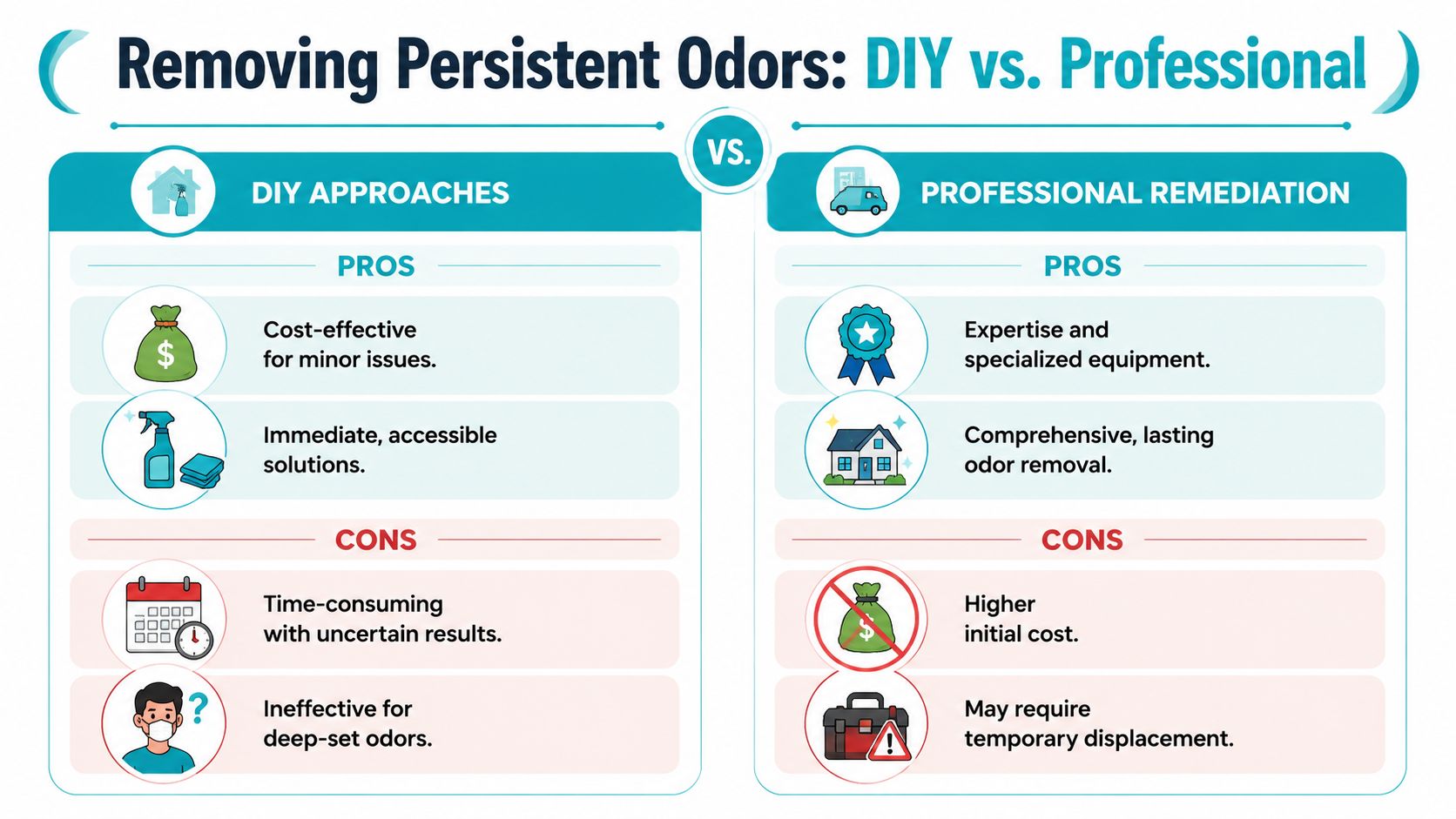
Professional smoke remediation starts with inspection and mapping, not guesswork. The job is to identify where smoke traveled, what materials absorbed it, what can be cleaned, and what needs removal. In my field, that decision matters more than the deodorizer used at the end.
The process often includes HEPA air filtration, detailed soot and residue cleaning, removal of unsalvageable materials, thermal fogging or hydroxyl treatment where appropriate, and sealing exposed structural surfaces after cleaning. Ozone may be used in some situations, but it is not a first step and it is not right for every occupied home. The right method depends on the smoke source, the materials affected, and whether the odor is active in the HVAC system.
Homeowners who want a clearer picture of what to expect from professional fire damage restoration services should look at the full sequence, from inspection and content handling to deodorization and rebuild decisions. AMPM Restoration Services handles fire and smoke damage restoration in Bradenton, Sarasota, Tampa Bay, Saint Petersburg, Lakewood Ranch, and nearby Gulf Coast communities.
The goal is to remove the residue that keeps releasing odor, not to cover the smell for a few days.
Choose qualified help carefully
Smoke work is a contamination job. It should be handled by a company that understands cleaning science, containment, and documentation, especially if insurance, tenant turnover, or post-fire repairs are involved. If you are comparing contractors, review the licensed, bonded, and insured basics before signing anything.
The trade-off is straightforward. DIY methods can handle light, recent, localized smoke odor. Once the structure itself has absorbed smoke, professional cleaning and deodorization usually cost less than repeated failed attempts, replacement of the wrong materials, or a sale delayed by an odor that never fully left.
Preventing Smoke Odors in Your Florida Suncoast Home
The easiest smoke odor to remove is the one that never gets into the house. Prevention matters more on the Florida Suncoast because many homes stay closed up for cooling, and humid conditions don’t give indoor air much help.
Habits that reduce odor risk
A few routines make a big difference:
- Use kitchen exhaust every time you cook: Especially when frying, broiling, or searing.
- Keep generators far from the home: After storms, exhaust can drift toward garages, lanais, and open windows.
- Change HVAC filters regularly: Smoke particles load filters fast.
- Clean exhaust fans and range hood filters: Grease and residue hold odor.
- Set clear smoking rules: For landlords and property managers, indoor smoking policies protect walls, ducts, and paint systems.
Watch the materials that trap smell
Soft goods collect odor first, but building materials hold it longest. If you manage a rental in Bradenton, Sarasota, or Lakewood Ranch, inspect between tenants before repainting. Smell closets, returns, blinds, and the area around air handlers. A quick cosmetic turnover can leave deep smoke contamination behind.
For exterior areas, keep in mind that odor problems don’t always start indoors. Smoke residue can collect around lanais, entries, and screened spaces after outdoor cooking or neighboring burn events.
Your Local Partner for Complete Smoke Odor Removal
Knowing how to get rid of smoke smells comes down to three decisions. Act fast. Use the right method for the source. Know when the problem has moved beyond ordinary cleaning.
A burnt pan or short-lived kitchen smoke event can often be solved with ventilation, fabric washing, surface cleaning, and a close look at nearby odor traps. Cigarette smoke, post-fire residue, and recurring odors are different. Those problems usually involve porous materials, HVAC pathways, and surface contamination that won’t disappear with air fresheners or a coat of paint.
For Florida Suncoast homeowners, the climate adds pressure. Closed houses, humidity, storm-related generator use, and seasonal occupancy all make smoke odor more stubborn than many people expect. That’s why the practical approach matters more than the hopeful one.
Frequently Asked Questions About Smoke Odor Removal
1. Can paint alone cover up a strong smoke smell?
No. Tar and nicotine can bleed through standard paint and allow the odor to return. Surfaces need proper cleaning first, then an odor-blocking primer before repainting.
2. How long does professional smoke odor removal take?
It depends on how severe the contamination is and how much of the structure is affected. Light odor issues may be resolved quickly. Heavier fire or cigarette contamination can take several days because cleaning, deodorization, and sealing all matter.
3. Are HEPA air purifiers enough to remove smoke smell?
They help with airborne particles, but they don’t remove the oily residue left on walls, ceilings, trim, contents, and flooring. They’re useful support, not a complete cure for embedded odor.
4. Is ozone treatment safe?
Ozone can be effective for stubborn odor neutralization, but it should only be used by trained professionals in controlled, unoccupied spaces with proper ventilation afterward.
5. Does homeowners insurance usually cover smoke damage restoration?
Coverage often depends on the cause of loss and the policy terms. When smoke damage comes from a covered event such as a fire, restoration is commonly part of the claim. It’s important to document the damage early.
6. What’s the difference between smoke odor and soot damage?
Soot is the visible residue left behind. Smoke odor comes from microscopic particles and residue that have spread through the property and attached to surfaces, contents, and air systems. Effective restoration addresses both.
If you need help with how to get rid of smoke smells in Bradenton, Sarasota, Tampa Bay, Saint Petersburg, Lakewood Ranch, or nearby Gulf Coast communities, call AMPM Restoration Services at 941-946-7807 for a free inspection and estimate. We provide 24/7 emergency response, help with insurance claims, and offer financing options so you can move forward without delay.