


Water Removal Services
Water on the floor changes the mood in a house instantly. One minute you’re making coffee in Bradenton or getting kids ready in Sarasota, and the next you’re staring at a soaked hallway, a leaking water heater, or storm water creeping under a door. In that moment, most homeowners want the same thing. Stop the damage, protect the family, and figure out what insurance is going to do.
That’s where water removal services matter most. In Florida, the first hours aren’t just inconvenient. They decide whether you’re dealing with a manageable dry-out or a much larger mold and reconstruction job. On the Suncoast, humidity works against you from the start, and hidden moisture behind baseboards, under flooring, and inside wall cavities can keep causing damage long after the visible water is gone.
AMPM Restoration is a 24/7 emergency restoration company based at 4301 32nd St W b18, Bradenton, FL 34205, serving Bradenton, Sarasota, Tampa Bay, Saint Petersburg, Lakewood Ranch and surrounding Gulf Coast communities with professional water damage restoration, mold inspection and mold removal, fire and smoke damage restoration, storm and flood damage restoration, commercial restoration services, and full reconstruction solutions. If you’re dealing with an active loss, the right move is fast containment, careful documentation, and a drying plan that insurance can follow.
Your Guide to Emergency Water Removal Services
A common Florida call starts like this. A homeowner comes back from work in Lakewood Ranch and hears the air handler running harder than usual. The hallway floor feels warm and damp. By the time they open the utility closet, water has already spread into the adjacent room, wicked into baseboards, and started soaking the laminate seams.
That’s the point where waiting gets expensive.
In Florida’s humid environment, toxic mold can begin growing in as little as 24 to 48 hours after a water event, which is why the 48-Hour Rule matters so much for protecting drywall, framing, flooring, and indoor air quality, as noted in this Florida water damage restoration guidance. Visible puddles are only part of the problem. Water travels sideways under flooring, drops into wall cavities, and gets trapped where homeowners can’t see it.
What emergency response really means
Good water removal services don’t start with a fan pointed at wet carpet. They start with control.
First, stop the source if you can do it safely. Then protect people, document what happened, and get extraction moving. The reason professionals respond urgently across Bradenton, Sarasota, St. Petersburg, and Tampa Bay isn’t just about convenience. It’s because moisture becomes harder to remove once materials absorb it.
Practical rule: If water touched drywall, cabinets, flooring, or insulation, assume there is more moisture than you can see.
That’s why homeowners often need more than towels, a wet vac, or open windows. Professional emergency water extraction involves finding trapped moisture, removing standing water quickly, and setting up a drying plan that prevents secondary damage. If you need that process explained in more detail, this guide to emergency water extraction is a useful starting point.
Taking control in the first hour
The first hour after a leak, overflow, or flood feels chaotic. It doesn’t have to stay that way.
Focus on three priorities:
- Safety first: Keep people away from electrical hazards and contaminated water.
- Evidence second: Photograph everything before cleanup changes the scene.
- Drying third: Start the right response fast so the loss doesn’t spread.
When those steps happen in order, homeowners usually make better insurance decisions and avoid the most common mistake after a water loss. Treating it like a surface cleanup instead of a structural drying problem.
First Steps Your Immediate Safety Checklist
Before you save furniture, rugs, or boxes in the garage, make the area safe.
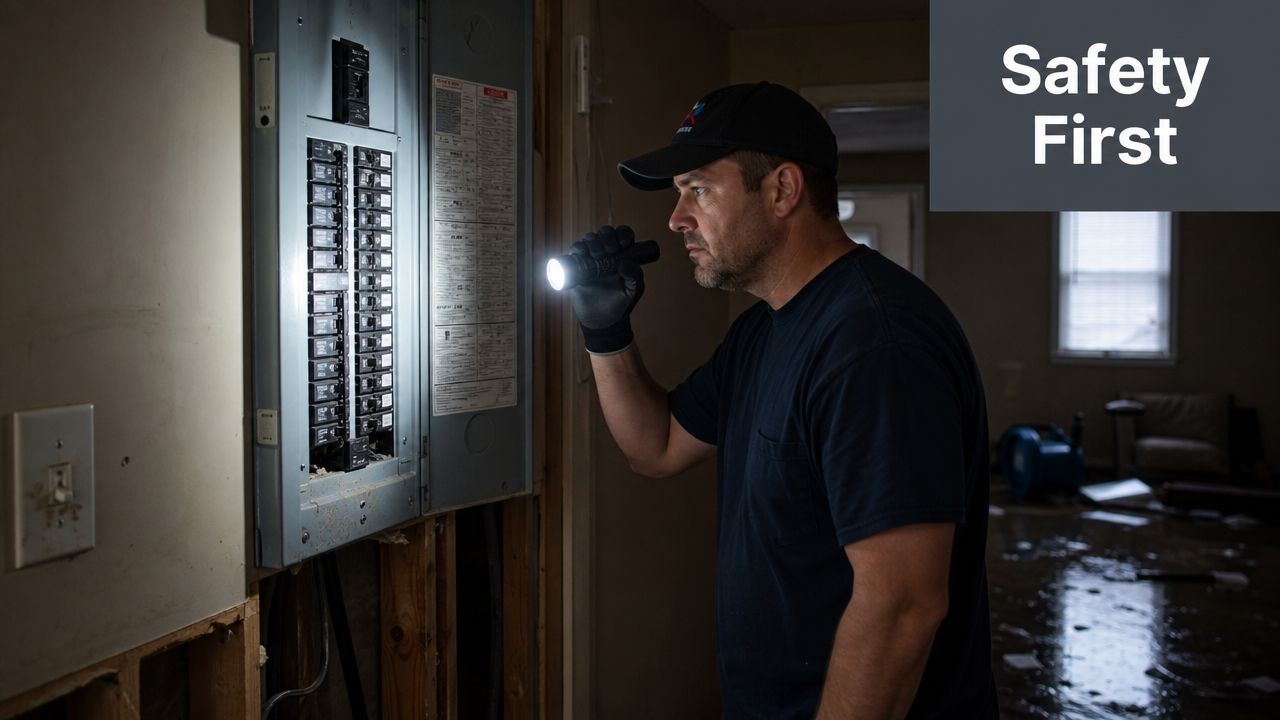
What to do right now
- Shut off power if it’s safe: If water is near outlets, appliances, or baseboard wiring, go to the main electrical panel only if you can reach it without stepping in water. If you can’t do that safely, stay out and wait for qualified help.
- Stop the water source: Turn off the home’s main supply if a plumbing line, appliance hose, or fixture is still feeding the loss. If the issue started at your tank, this article on troubleshooting a leaking water heater can help you identify what likely failed before the restoration crew arrives.
- Keep everyone out of affected rooms: Children, pets, and anyone barefoot should stay away from the area until you know whether the water is clean or contaminated.
- Watch ceilings and sagging materials: Bulging drywall, soft flooring, and swollen door casings can signal trapped water and weakened materials.
- Call for emergency response: If damage is active, don’t wait for regular business hours. A clear overview of what matters most appears in this guide to emergency water damage repair in the first 24 hours.
Treat unknown water as unsafe
Homeowners usually think in simple terms. Clear water must be safe, dirty water must be unsafe. Real losses aren’t always that clean.
Use this field approach:
| Water type | Typical example | What you should do |
|---|---|---|
| Clean water | Supply line leak, sink overflow from clean source | Avoid contact if electricity is a concern. Drying still needs to be thorough. |
| Gray water | Dishwasher discharge, washing machine overflow, some drain backups | Limit contact. Materials often need more careful cleaning or removal. |
| Black water | Sewage backup, storm surge, floodwater, toilet overflow with waste | Stay out. This needs professional containment, removal, and sanitizing. |
After Gulf Coast storms, don’t assume floodwater is just rain. It may carry debris, bacteria, chemicals, and sewage.
If you don’t know the category of water, act like it’s contaminated until proven otherwise.
What not to do
- Don’t use household vacuums: Standard vacuums and many consumer wet vacs aren’t built for large losses or contaminated water.
- Don’t lift heavy wet materials alone: Waterlogged carpet, pad, and furniture can injure your back fast.
- Don’t turn on HVAC equipment: Your system can spread moisture and contamination.
- Don’t start tearing out walls blindly: You can make the claim harder to document and miss hidden hazards.
The safest homeowner is the one who slows down just enough to avoid making a bad scene worse.
Documenting Damage for a Smooth Insurance Claim
Once the area is safe, your phone becomes one of the most important tools in the house.
Insurance carriers want a story they can verify. They need to see what was damaged, where the water came from, how far it traveled, and what actions were taken to prevent further loss. If you clean too much before documenting, you can remove the evidence that supports your claim.

What adjusters need to see
Start wide, then go close.
Take slow video from the doorway of each affected room. Then photograph damaged flooring, wet drywall, swollen cabinets, stained ceilings, baseboards, furniture, and personal items. If the source is visible, photograph that too. A broken supply line, failed shutoff valve, roof intrusion, appliance hose, or water heater leak gives context that matters later.
Build a simple record as you go:
- Room-by-room photos: Show the full space first, then the detail damage.
- Item inventory: List damaged contents and building materials in plain language.
- Receipts and temporary costs: Save every receipt for emergency purchases, hotel stays, or temporary repairs.
- Timeline notes: Write down when you discovered the loss, who you called, and what steps you took.
Why photos alone often aren’t enough
Many claims become weaker than necessary. Homeowners photograph wet materials, run a few fans, and assume “dry” means the issue is over.
It doesn’t.
A key problem in water removal services is the misconception that drying alone prevents mold. Mold growth begins within 24 to 48 hours if humidity isn’t actively controlled, and that daily moisture logging required by IICRC S500 standards is what proves materials are dry to insurance adjusters. That means visual dryness isn’t proof. Adjusters look for measurable documentation such as moisture meter readings, temperature and humidity logs, and evidence that the drying plan was monitored.
Photos show the scene. Moisture data shows whether the structure was actually dried.
That’s why homeowners often benefit from reviewing practical water damage insurance claim tips before any major disposal or demolition happens. The strongest claims usually combine your own early documentation with professional moisture mapping, thermal imaging, and drying records.
One mistake that creates claim friction
Throwing damaged items away too early causes problems. If an adjuster hasn’t reviewed the loss yet, keep representative materials and contents unless they create an immediate health hazard. The same goes for tearing out large sections of wall or flooring before the carrier understands the scope.
Take the time to document first. It gives the claim a cleaner path and gives your restoration contractor something solid to work from.
Mitigation and Calling for Professional Water Removal
There’s a difference between helpful homeowner action and incomplete cleanup.
Mitigation means reducing immediate damage while the main drying process gets organized. That can include moving dry furniture away from wet flooring, placing foil or blocks under furniture legs, removing lightweight rugs, and increasing airflow where it’s safe to do so. Those steps help. They just don’t finish the job.
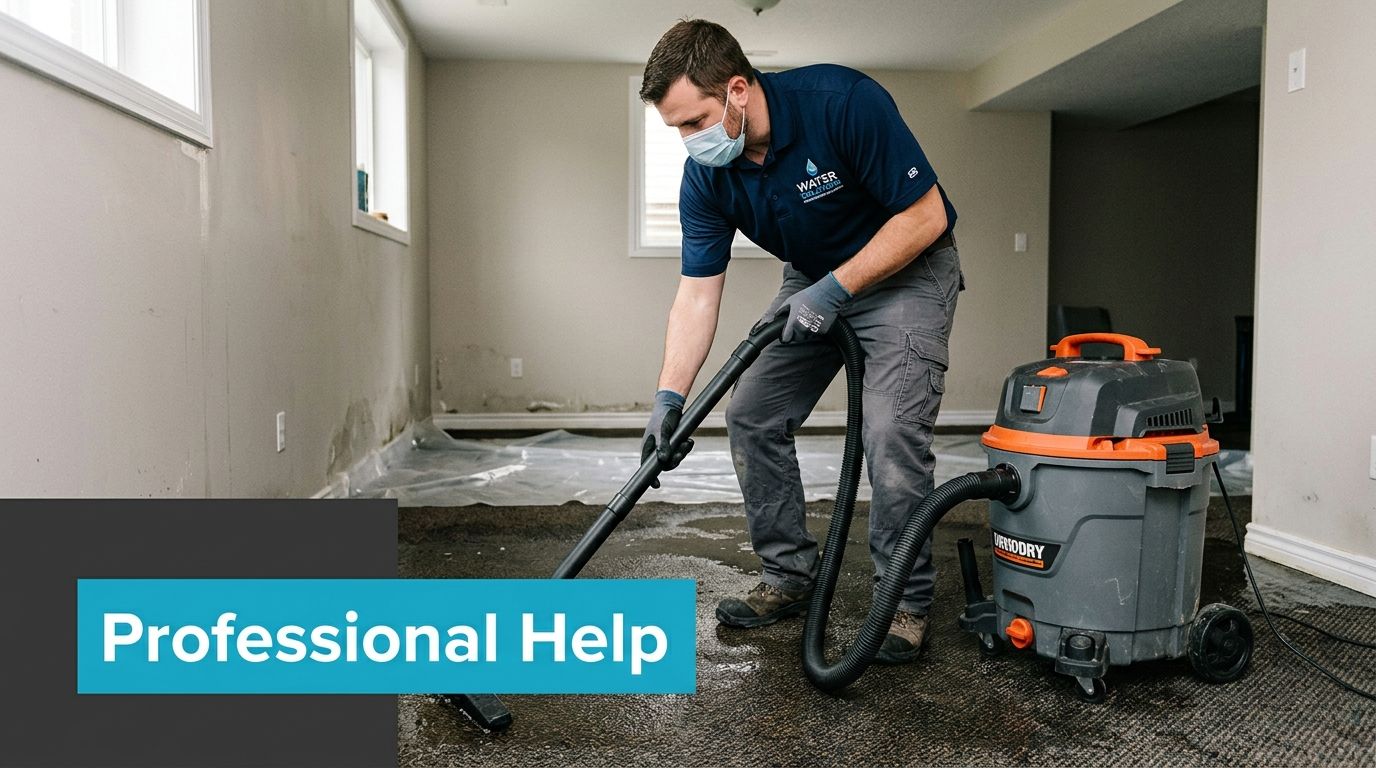
What you can do before help arrives
Use common sense and stay within safe limits.
- Move unaffected items first: Prioritize dry contents that could become wet if the spread continues.
- Lift, don’t drag: Dragging furniture across wet flooring can tear finishes and spread contamination.
- Remove loose textiles: Wet bath mats, throw rugs, and curtains can usually come out quickly if they aren’t contaminated.
- Promote air movement carefully: Ceiling fans or portable fans may help in clean-water losses, but they won’t replace extraction or dehumidification.
Where DIY stops working
The gap between consumer tools and professional extraction is huge. Professional water removal services use industrial-grade extraction equipment that removes up to 1,200 times more water than typical shop vacuums, and submersible pumps can remove several thousand gallons per hour, according to this breakdown of the water damage restoration process and extraction equipment. That’s the difference between skimming a surface and reducing the water load in the structure.
A homeowner can mop a tile floor. A restoration crew can extract from carpet, pad, subfloor, wall cavities, and trapped low points, then pair that extraction with air movers, commercial dehumidifiers, HEPA air scrubbers, infrared cameras, and moisture meters.
The right question isn’t “Can I remove some water?” It’s “Can I dry the assembly behind the surface?”
That distinction matters for insurance too. If you’re trying to understand how carriers view mitigation, this Florida home insurance claim guide is worth reviewing alongside your policy language.
For homeowners weighing whether to handle it themselves, why you shouldn’t DIY water damage restoration lays out the practical issues clearly. One available local option is AMPM Restoration Services, which handles emergency extraction, structural drying, and claim coordination for homes and commercial properties across the Suncoast.
The practical trade-off
DIY mitigation can lower immediate spread. It rarely delivers verified drying.
That’s why the smartest homeowners do both. They take safe first steps, preserve evidence, and get professional water removal moving before moisture settles into the structure long enough to create a second problem.
Navigating Claims Timelines and Next Steps
Once the emergency call is made, the process gets less dramatic but more administrative. At this stage, homeowners often feel frustrated. The water may be gone, but decisions about drying, demolition, adjuster visits, estimates, and repairs still need to happen in the right order.
What usually happens next
A normal sequence looks like this:
- Emergency mitigation begins and the source is addressed.
- Moisture mapping and equipment setup establish the drying plan.
- Insurance is notified and claim details start taking shape.
- Adjuster review or carrier coordination confirms what the policy will address.
- Repair scope develops once damaged materials, hidden moisture, and contamination levels are understood.
Homeowners should expect questions from both the restoration contractor and the insurer. Answer them consistently. If the reported cause changes from one call to the next, or if early documentation is thin, the claim can slow down.
Set expectations early
In Southwest Florida, our water damage restoration timeline overview states that minor losses involving a single room, clean water, and prompt response typically take 1 to 2 weeks, while major losses involving multiple rooms, Category 3 water, or mold remediation can take 4 to 5 weeks for full restoration. That range surprises people, but it’s realistic.
Drying may finish long before the final repair work. Flooring replacements, cabinet lead times, inspection requirements, and insurer approvals can all affect the schedule.
Don’t measure progress only by whether the floor looks dry. Measure it by whether each phase is documented, approved, and moving.
Practical decisions that reduce stress
During this period, homeowners usually need to think about day-to-day living, not just the building.
- Temporary housing: If bathrooms, kitchens, or contaminated areas are unusable, ask early whether your policy addresses temporary living arrangements.
- Payment timing: Even with coverage, there can be gaps between emergency work and insurance disbursement.
- Financing options: Some homeowners choose financing so mitigation and rebuild work can continue without waiting on every insurance step.
- Communication records: Keep a single folder for emails, claim numbers, estimate versions, and receipts.
The smoother claims tend to be the ones where documentation starts on day one and continues through drying, material removal, and repair approvals.
The AMPM Restoration Process from Extraction to Reconstruction
Many homeowners think water removal services end when the standing water is gone. That’s only the first mechanical step. A real restoration job is a controlled sequence that moves from emergency response to a dry, clean, repairable structure.
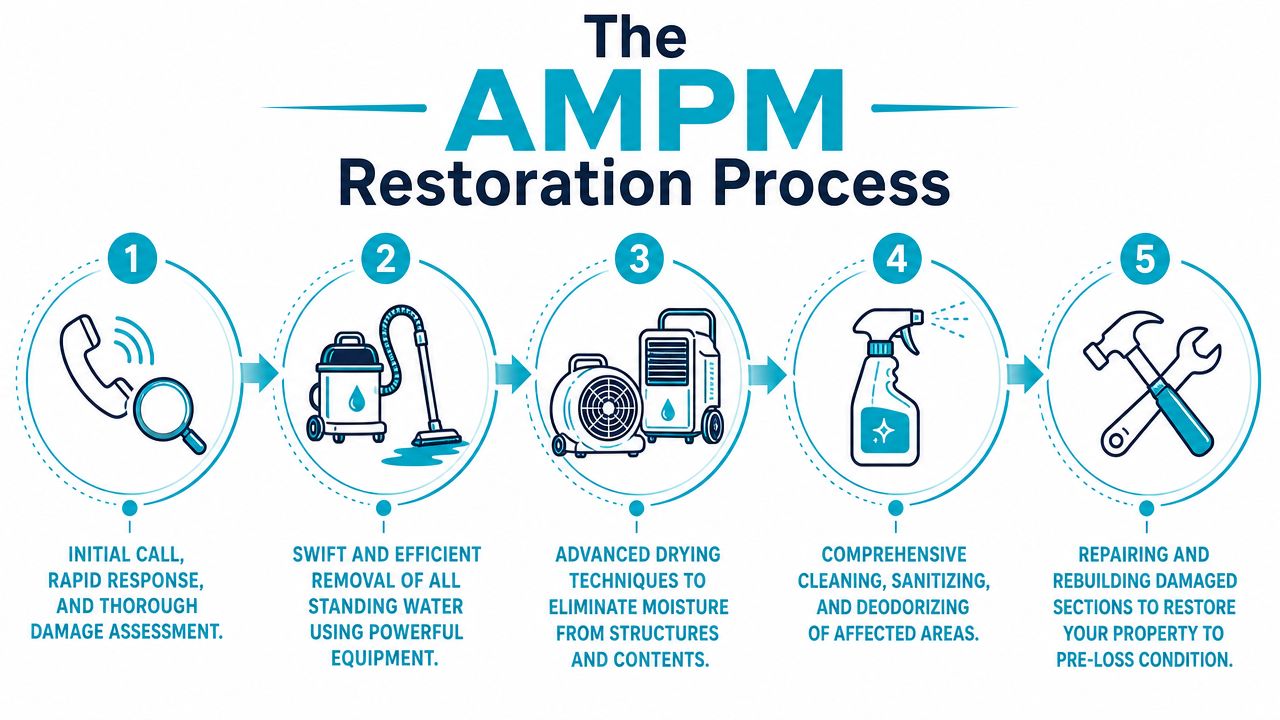
What happens after extraction
In Florida conditions, our step-by-step water damage guide notes that active mold growth is likely after 48 to 72 hours and that immediate professional extraction and structural drying should begin within the first hour after stopping the water source. That urgency is exactly why extraction by itself isn’t enough. Wet framing, insulation, drywall, and subfloors keep releasing moisture long after puddles disappear.
A complete process usually includes:
- Inspection and scope building: Technicians identify the source, affected materials, and likely hidden migration paths.
- Water extraction: Pumps, weighted extractors, and commercial vacuums remove liquid water fast.
- Selective demolition: Unsalvageable drywall, insulation, pad, or swollen materials come out in a controlled way.
- Structural drying: Air movers and dehumidifiers are positioned to hit drying goals, not just make the room feel less damp.
- Cleaning and sanitizing: Antimicrobials, HEPA filtration, and odor control address contamination and residual risk.
- Reconstruction: Once the structure is dry and documented, repairs can return the property to pre-loss condition.
Why this process is more technical than it looks
Drying a house isn’t about blasting air everywhere. It’s about balancing airflow, temperature, and humidity so moisture leaves materials and gets removed from the air. That’s why professional teams use thermal imaging, moisture meters, and daily readings instead of relying on touch or appearance.
If you want a fuller overview of that complete service cycle, water damage restoration service explains how extraction, drying, cleanup, and repair fit together.
The right process protects more than drywall and flooring. It protects the claim file, the rebuild schedule, and the health of the people going back into the home.
Florida Water Removal Services FAQs
Here are six questions homeowners across Bradenton, Sarasota, Lakewood Ranch, St. Petersburg, and Tampa Bay ask most often after a leak, overflow, or flood.
| Question | Answer |
|---|---|
| How fast should I call for water removal services after I find water? | Immediately. In Florida, moisture problems escalate quickly, and the earlier extraction and drying begin, the better your chances of limiting material damage and mold risk. |
| Can I stay in my house during water damage restoration? | Sometimes. If the affected area is limited and utilities remain safe, you may be able to stay. If contamination, demolition, loss of air conditioning, or major drying equipment affects daily living, temporary relocation may make more sense. |
| Will my insurance cover water removal services? | Coverage depends on the cause of loss and your policy language. Sudden and accidental events are often handled differently than long-term leaks, maintenance issues, or some flood-related events. Documentation from the first day helps. |
| What’s the difference between removing water and drying the structure? | Removal takes out standing water. Drying targets moisture trapped in materials and air. A floor can look dry while the subfloor, wall cavity, or insulation behind it is still wet. |
| Should I throw away damaged items right away? | Usually no. Photograph and inventory items first, then keep them until your adjuster or restoration team advises what should be retained, cleaned, or discarded. |
| Do fans and open windows solve the problem? | Not by themselves. They may help with light surface moisture in some clean-water situations, but they don’t verify hidden moisture or control humidity the way professional drying equipment and monitoring do. |
For a free, on-site inspection and estimate customized for your property, call 941-946-7807 any time. Help with insurance paperwork and financing options is available so you can make decisions quickly without guessing.
If you need water removal services on Florida's Suncoast, contact AMPM Restoration Services for 24/7 help. Call 941-946-7807 for a free inspection and estimate, plus insurance claim assistance and financing options. Whether you're dealing with a burst pipe in Bradenton, storm damage in Sarasota, or hidden moisture after a leak in St. Petersburg or Lakewood Ranch, AMPM can coordinate the restoration process from emergency response through reconstruction.