

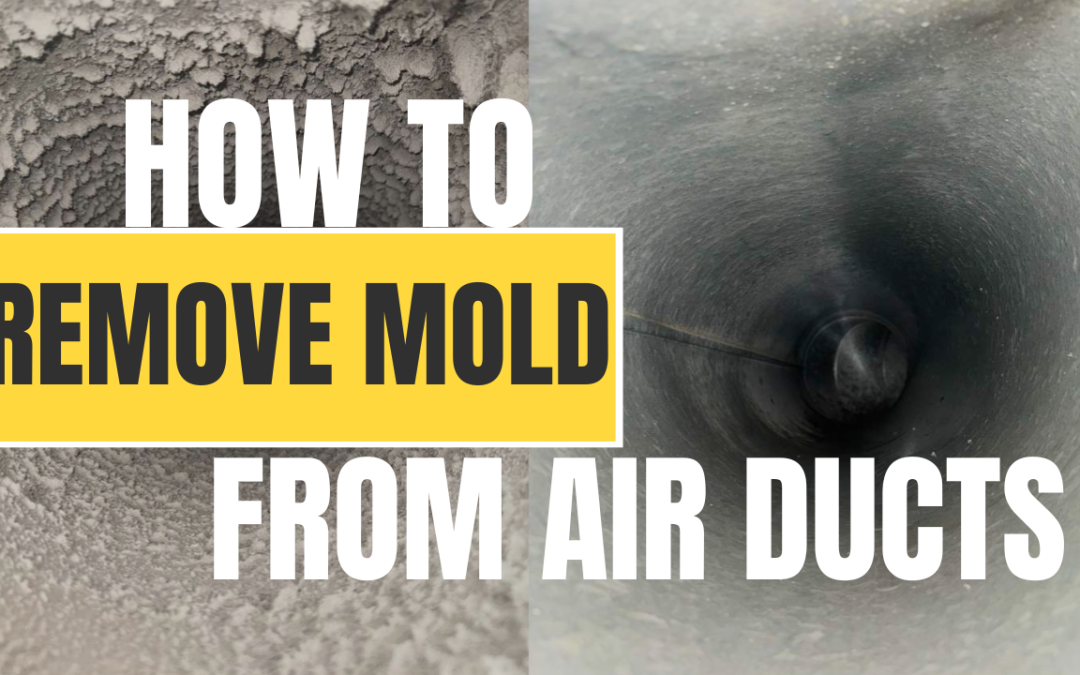
Getting rid of mold in your air ducts is a lot more involved than a quick spray-and-wipe. For a tiny, visible spot on a metal vent, you might be able to handle it yourself. But if the problem is widespread, you absolutely need a professional. Trying to tackle a large-scale mold issue on your own can do more harm than good, spreading spores throughout your entire home. For Florida homeowners, learning how to remove mold from air ducts is essential for maintaining a safe indoor environment.
Widespread contamination always requires professional intervention.
The Reality of Mold in Your Florida HVAC System
Here in Florida, that constant, sticky humidity is more than just uncomfortable—it’s the number one reason mold takes over. For homeowners in Bradenton, Sarasota, and the Tampa Bay area, your HVAC system can quickly go from a cooling comfort to a delivery service for mold spores. Knowing how to remove mold from air ducts is a crucial part of keeping your home healthy on the Gulf Coast.
The problem almost always starts out of sight. As your AC runs, condensation naturally forms inside the cool ductwork. In our humid climate, that moisture sticks around, turning all the dust, pollen, and skin cells inside your ducts into a perfect meal for mold. Before you know it, your air conditioner is blowing microscopic spores into every room of your house.
Understanding the Risks and Realities
Ignoring mold in your ductwork is a big mistake. It’s not just about a musty smell. For many people, it’s the source of nagging allergies, constant sinus problems, and persistent headaches. For the very young, the elderly, or anyone with a compromised immune system, it can trigger serious respiratory conditions.
That’s why spotting the signs early and taking action is so important.
The Environmental Protection Agency (EPA) drives this point home, estimating that we spend about 90% of our time indoors, where pollutants can be far more concentrated. Clean indoor air isn’t a luxury; it’s a necessity. The EPA also recommends calling in the pros for any mold problem larger than 10 square feet—a size easily reached inside a home’s duct system.
Why Your HVAC System Is So Vulnerable
Your air ducts create the perfect environment for mold growth. They check all the boxes: darkness, a food source (dust and debris), and the most critical ingredient, moisture. In Florida, it’s a constant battle.
Here’s what makes your HVAC system a prime target:
- Constant Condensation: Every time your AC runs, the difference between the cool air inside the ducts and the hot, humid air in your attic or crawlspace creates moisture.
- Hidden Leaks: Even a tiny, unnoticed tear or gap in your ductwork can suck in humid air, fueling mold colonies.
- Poor Maintenance: When drain pans get clogged or filters are left dirty, airflow is restricted and water can pool. This standing water is a welcome mat for mold. You can learn more about why most Florida homes have mold in our detailed guide.
At the end of a long, humid day in Florida, dealing with HVAC mold isn’t just about cleaning what you see. It’s about finding and fixing the moisture source to make sure it doesn’t come right back.
How to Spot Mold Growth in Your Air Ducts
Before you can even think about how to remove mold from air ducts, you have to be certain that’s what you’re up against. For so many homeowners we help across the Gulf Coast, from Lakewood Ranch to St. Pete, it all starts with one thing: a strange, musty smell coming from the AC vents. Your own senses are your most powerful tools for early detection.
The real challenge is that mold, mildew, and even heavy dust can look almost identical if you don’t know what you’re looking for. The goal here isn’t to be a hero—it’s to do a safe, preliminary check to see if you’ve got a small issue or a serious problem that needs a professional mold inspection right away.
Your Senses Are the First Line of Defense
Trust your nose. If you’re catching a persistent, earthy, or musty odor that gets stronger every time the HVAC system kicks on, that’s a huge red flag. That smell is caused by Microbial Volatile Organic Compounds (MVOCs), which are gases released by active mold colonies. Because your ductwork is the respiratory system of your house, you might notice that smell in several rooms at once.
Also, pay close attention to how you feel inside your home. Are you suddenly dealing with unexplained allergy symptoms like a runny nose, itchy eyes, or nagging headaches that seem to flare up indoors? If you feel better when you go outside, your indoor air quality is the likely culprit, and HVAC mold is a prime suspect.
Key Insight: A musty smell that comes and goes with your AC is one of the most reliable signs you have mold in the system. It means an active colony is growing somewhere inside, and its byproducts are getting circulated everywhere.
Performing a Safe Visual Inspection
You can do a quick visual check with just a few basic tools. The key is to look at the accessible parts of your HVAC system without kicking up or disturbing any potential contamination.
What You’ll Need:
- A high-powered flashlight to see into those dark duct openings.
- A screwdriver to remove the covers from your air vents (also called registers).
- A camera or smartphone to snap clear photos of anything that looks suspicious.
- Basic PPE, like an N95 mask and gloves, just as a precaution.
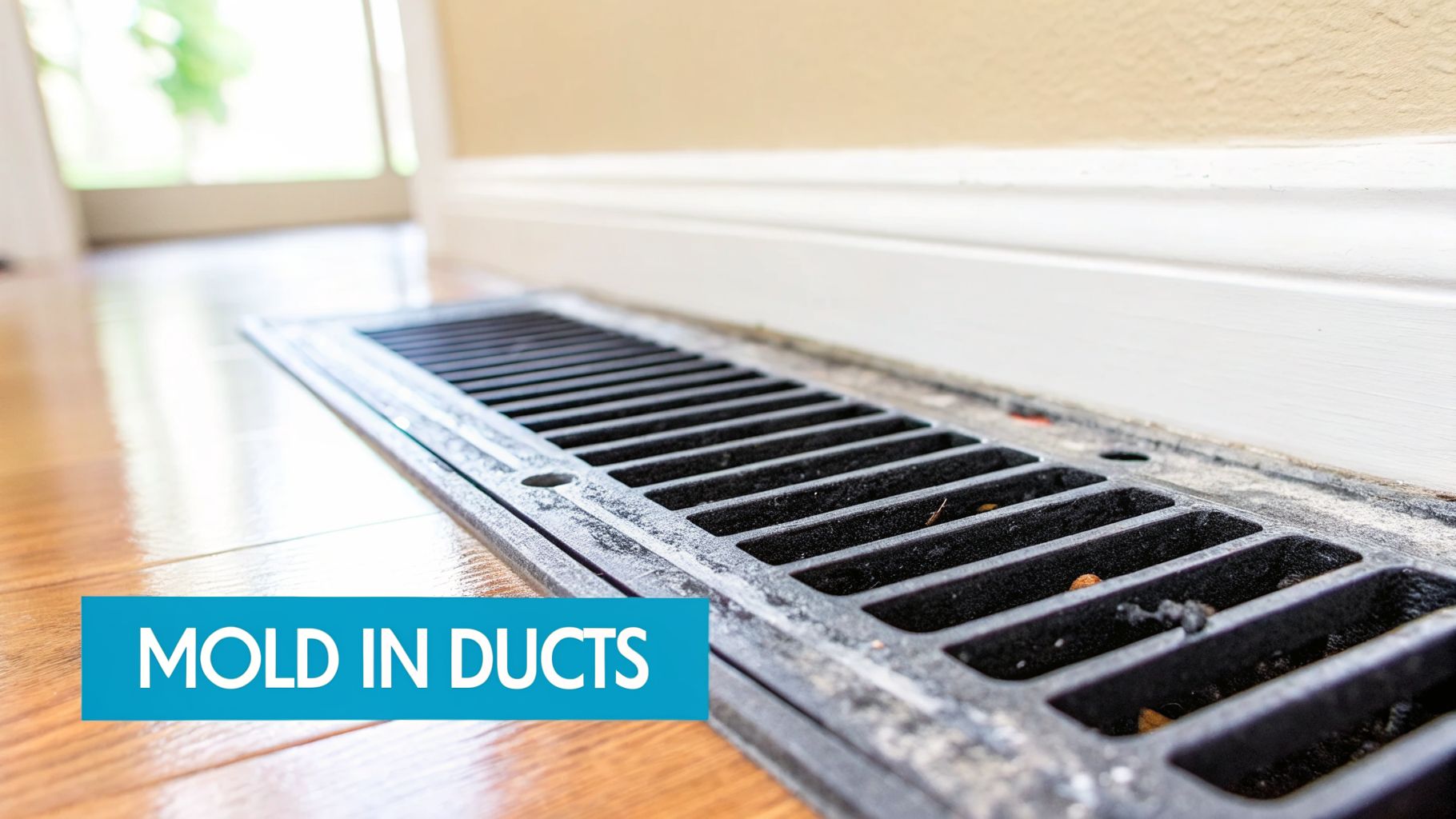
First, turn your entire HVAC system off at the thermostat. Then, carefully take off the vent covers for both the supply and return registers in a few different rooms. Shine your flashlight inside and look for any dark, speckled, or fuzzy-looking spots. Pay special attention to the areas right inside the duct opening and on the back of the vent cover itself.
Distinguishing Mold from Dust and Mildew
It’s incredibly easy to mistake a clump of dust for a patch of mold. Here’s a quick guide to help you tell them apart:
- Dust: This is usually gray and looks clumpy. It sits loosely on the surface and will wipe away easily, leaving a clean surface behind.
- Mildew: This is a specific type of surface mold. It often looks powdery or downy and can be white, gray, or even yellowish. It doesn’t typically embed itself deep into materials.
- Mold: This is the one to worry about. It often shows up as black, green, or dark brown spots or clusters. The texture can be fuzzy or even slimy, and it may look like it’s stained or embedded into the duct material, which points to a much deeper issue.
If you spot something that looks like mold, stop right there. Don’t try to clean or disturb it. You can learn more about the common signs of mold damage in homes to get a better idea of what you might be seeing. If what you found matches the description of mold—especially if it covers more than a tiny spot—your very next step should be to call a professional.
DIY Cleaning vs Professional Mold Remediation
When you find what looks like mold in your HVAC system, it’s tempting to grab some cleaner and handle it yourself. But this is a critical moment where the wrong choice can put your home and your health at risk. The honest truth, from years of experience helping homeowners in Bradenton and Sarasota, is that most mold found in air ducts requires professional expertise.
The only time a DIY approach is even a remote possibility is for a tiny, isolated spot of mold on a hard, non-porous surface, like the metal grille of a vent register. If you see a few specks on the cover itself and the area behind it is completely clean, a very limited cleanup might be okay. Anything more than that—especially any sign of growth inside the ductwork—is a job for the pros.
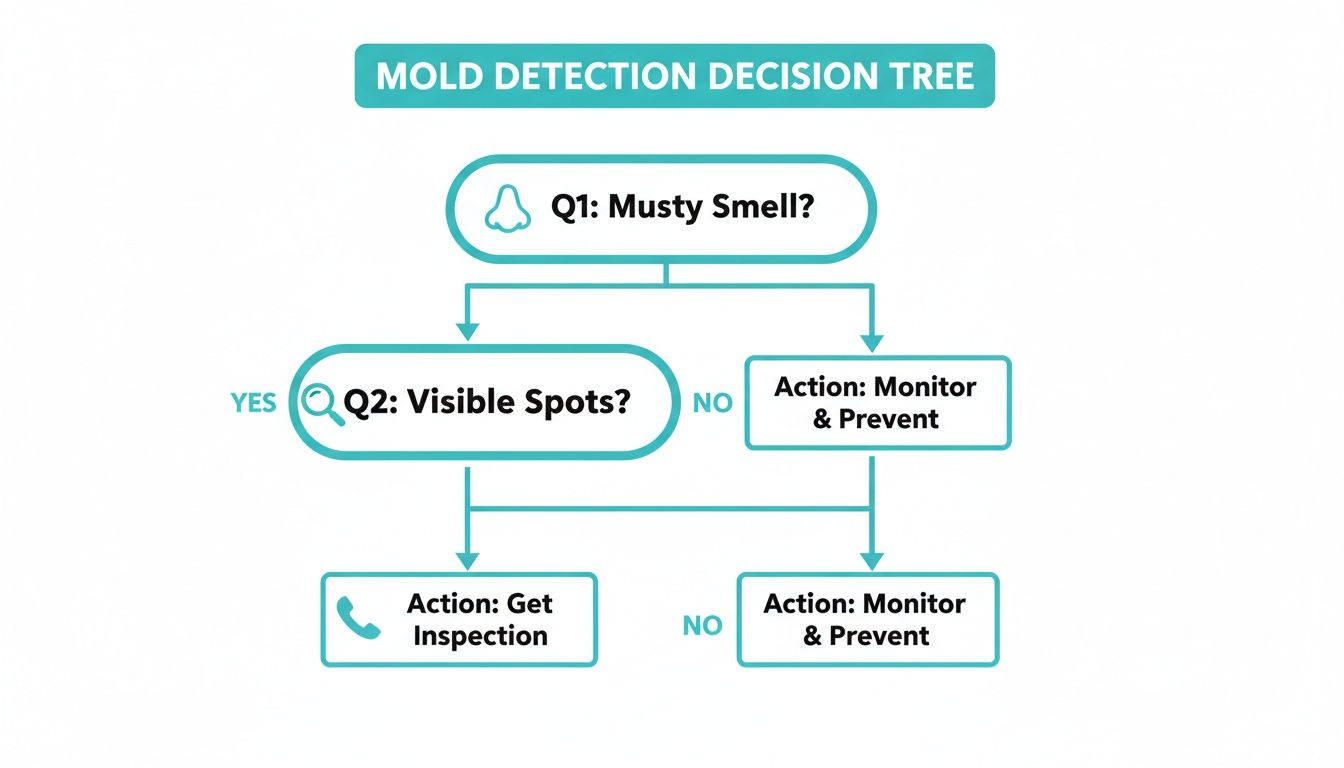
This flowchart breaks down the decision. If you have a musty smell or see visible spots, the safest path forward is a professional inspection.
The Limits and Dangers of DIY Mold Cleaning
Trying to learn how to remove mold from air ducts on your own is a recipe for disaster. The biggest danger is making the problem exponentially worse. Without professional containment, scrubbing or spraying the mold sends millions of microscopic spores airborne. Your HVAC system then becomes the perfect distribution network, spreading them to every room in your house.
It’s like trying to clean up a pile of sawdust with a leaf blower. You’ll just turn a small, contained mess into a massive, house-wide contamination problem.
Professional Takeaway: The EPA advises hiring certified professionals for any mold problem larger than 10 square feet. Since you can’t see the full extent of growth inside a dark, winding duct system, a professional assessment is the only way to know what you’re truly up against.
And forget about using bleach. It’s a common myth that bleach kills mold, but it only removes the surface color. It doesn’t penetrate to kill the roots, and the water in it can actually feed the remaining mold. Plus, the harsh fumes are hazardous to breathe in a confined space.
Comparing DIY vs. Professional Remediation
The difference between a DIY attempt and a professional service is huge. A certified team like AMPM Restoration doesn’t just “clean” mold; we perform remediation. This is a comprehensive, scientific process designed to safely contain and eliminate the contamination and, most importantly, prevent it from coming back.
If you’re on the fence, our guide on when you need professional mold removal offers more detailed scenarios. Understanding what separates these two approaches is key to making the right choice for your home.
Here’s a side-by-side look at what to expect from each path.
DIY vs Professional Air Duct Mold Removal
This table clearly illustrates the gap between a quick-fix attempt and a comprehensive, professional solution for removing mold from air ducts.
| Factor | DIY Approach | Professional Remediation (AMPM Restoration) |
|---|---|---|
| Effectiveness | Surface-level cleaning at best. Cannot reach deep into the ductwork or fix the underlying moisture problem. | Complete removal of mold from the entire HVAC system using specialized agitation tools and high-powered vacuums. |
| Safety | High risk of spreading spores throughout your home. High potential for exposure to mold and harsh chemicals without proper gear. | Full containment zones are built to stop cross-contamination. Our technicians use HEPA air scrubbers and full personal protective equipment (PPE). |
| Equipment | Basic household supplies like rags, brushes, and store-bought cleaners. | Industrial-grade HEPA vacuums, negative air machines, boroscopes for inspection, and EPA-registered antimicrobial treatments. |
| Outcome | A temporary fix. The mold almost always returns because the hidden colonies and moisture source were never addressed. | A long-term solution. We identify and advise on fixing the moisture issue to guarantee the mold does not come back. |
| Verification | Absolutely no way to know if all the mold is gone from the hidden parts of the system. | Post-remediation verification testing can be performed to confirm the ducts are clean and your home’s air quality is safe. |
While tackling a small spot on a vent cover feels productive, the complex, hidden network of your HVAC system demands a professional. For homeowners in Bradenton, Sarasota, and across the Gulf Coast, choosing a certified company like AMPM Restoration means choosing safety, certainty, and a solution that lasts.
What to Expect from a Professional Mold Remediation
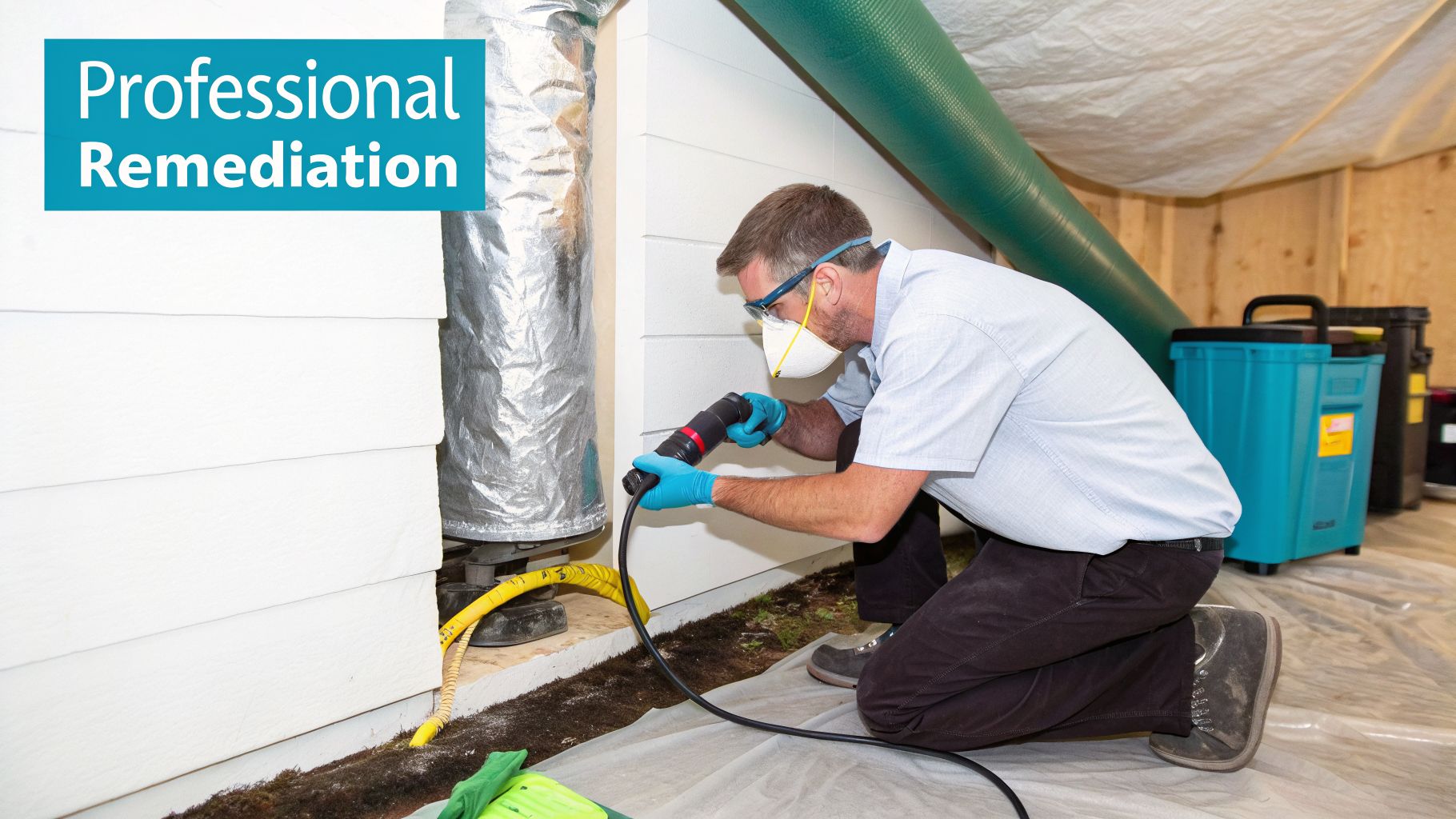
When you decide to hire a certified company for a mold problem, you aren't just paying for a cleaning service. You're investing in a systematic, scientific process designed to protect your property and your health.
Knowing how to remove mold from air ducts the right way means following a strict, multi-stage operation. A true professional remediation, like the service provided by AMPM Restoration, addresses the contamination at its source and ensures it doesn’t come back.
This process is far more involved than just vacuuming out your vents. For homeowners in Sarasota and St. Petersburg, understanding these steps helps you spot quality work and ensure you’re getting a real, lasting solution.
The Initial Inspection and Containment
The first step is always a thorough inspection. A certified technician does more than just glance at your vents; they work to identify the full scope of the mold growth and, just as importantly, pinpoint the moisture source that’s feeding it.
Without fixing that underlying leak or humidity issue, any cleanup effort is guaranteed to fail.
Once the assessment is done, the team will establish critical containment zones. This is completely non-negotiable for any professional job. Using heavy-duty plastic sheeting and negative air pressure machines, they create a sealed work area around the affected parts of your HVAC system. This setup ensures that all dislodged mold spores are captured and vented outside, preventing cross-contamination.
Expert Insight: Proper containment is the dividing line between a professional job and a risky one. Without it, the very act of cleaning can release a massive plume of spores, turning a localized duct problem into a whole-house contamination event.
The Remediation and Cleaning Process
With containment secure, the physical removal begins. This is definitely not a job for a shop vac. Technicians use powerful, truck-mounted or portable HEPA (High-Efficiency Particulate Air) vacuums that create intense negative pressure throughout the entire duct system. This powerful suction pulls contaminants out of the ductwork and safely captures them in sealed filters.
To dislodge stubborn mold colonies, they use a combination of specialized tools:
- Agitation Tools: Devices like rotary brushes, air whips, and compressed air nozzles are sent deep into the ducts to scrub the interior surfaces and break mold free.
- Visual Inspection: In complex systems, technicians may use snake-like cameras to see inside the ducts and confirm that all growth has been physically removed.
After the physical cleaning, the entire system is treated with an EPA-registered antimicrobial sanitizer. This kills any remaining microscopic spores and helps inhibit future growth, leaving your ductwork sanitized and safe. It's important to understand the difference between the initial assessment and the final remediation; you can check out our guide on mold assessment vs. mold remediation for a deeper dive.
Addressing Porous and Insulated Ductwork
A crucial part of professional remediation is knowing how to handle different duct materials. Hard, non-porous surfaces like sheet metal ducts can typically be cleaned and sanitized effectively.
However, the situation changes completely with porous materials like fiberglass duct liner or flexible insulated ducts.
Professional mold remediation standards, established by organizations like the National Air Duct Cleaning Association (NADCA), are very clear on this. If insulated air ducts are contaminated with mold, they cannot be reliably cleaned. The EPA, NADCA, and the North American Insulation Manufacturers Association (NAIMA) all recommend the complete replacement of wet or moldy fiberglass duct material.
A reputable company will never just clean contaminated insulation; they will remove and replace it to eliminate the problem for good. In fact, the EPA suggests getting at least three estimates and verifying that the company holds the necessary state licenses, as is required in Florida.
This is where true expertise shines. A professional team knows when cleaning is enough and when replacement is the only safe option, protecting both your investment and your family's health.
How to Prevent Mold from Returning to Your HVAC System
Getting mold professionally removed from your air ducts is a huge win for your home's health, but the fight isn't over. The real work, especially here in humid Florida, is making sure that mold never gets a chance to come back. Simply cleaning the ducts without fixing the source of the problem is like bailing water out of a boat that still has a hole in it—you're just buying time.
The most important rule in mold prevention is moisture control. Without water, mold can't grow. It's that simple. Once your HVAC system has been properly cleaned and sanitized by a team like AMPM Restoration, your entire focus needs to shift to keeping that system dry for good.
Master Your Indoor Humidity
Living anywhere from Bradenton to St. Petersburg means constantly battling outdoor humidity. When that heavy, wet air gets inside, it can overwhelm your AC and cause condensation to form inside your ductwork. The goal is to keep your indoor humidity levels between 30% and 50%.
For most Florida homes, a whole-home or even a quality standalone dehumidifier is a fantastic investment. It actively pulls moisture out of the air, robbing mold of the water it needs to survive. This doesn't just protect your ducts; it makes your home feel more comfortable and takes a lot of strain off your air conditioner.
Maintain Your HVAC System Diligently
Your HVAC system isn't a "set it and forget it" appliance. It needs regular check-ups to run correctly and prevent moisture issues. A small, overlooked problem can quickly turn your ductwork into a hidden mold factory.
Here’s what every homeowner needs to stay on top of:
- Check Your Condensate Line: Your AC creates condensation, which collects in a drip pan and flows out through a drain line. If this line gets clogged with algae and gunk, the pan will overflow. That standing water is a perfect breeding ground for mold, which can then get sucked right into your system's airflow. Make sure the pan and drain line are clear.
- Schedule Professional Tune-Ups: At least once a year, have a certified HVAC technician give your system a full inspection. They can spot things you can't, like refrigerant leaks or airflow blockages that lead to moisture buildup. Regular tune-ups keep your system running efficiently and safely.
- Act Fast on Any Water Damage: A roof leak, burst pipe, or even a minor flood can be disastrous for your ductwork. Water can seep into ducts hidden in ceilings and walls, creating a serious mold problem you can't even see. Companies like AMPM Restoration are experts in both water damage and mold, so they can fix the leak and eliminate any resulting mold in one go.
It's critical to understand that just cleaning your ducts is a temporary fix if you don't solve the underlying moisture problem. Research shared by the National Institutes of Health has shown that without fixing the source, mold and contaminant levels can return to—or even exceed—what they were before the cleaning. You can see the data for yourself in the fact sheet on HVAC duct cleaning from federal health experts.
Upgrade and Replace Your Air Filters
Think of your air filter as the first line of defense. It’s designed to trap dust, dander, and other debris that mold loves to feed on. Using cheap, flimsy filters is a huge mistake.
You need to upgrade to a high-quality, pleated filter with a MERV (Minimum Efficiency Reporting Value) rating between 8 and 13. These are far better at capturing microscopic particles, including mold spores. Just as important, you have to replace your filters every 1-3 months. A dirty, clogged filter chokes your system's airflow, which can cause the evaporator coils to freeze and create a ton of moisture when they thaw.
By combining serious moisture control, consistent maintenance, and better filtration, you can create an environment where mold simply can't take hold. For a more complete look at protecting your entire home, check out our guide on how to prevent mold in your home.
Call a Professional for Air Duct Mold Removal
When it comes to learning how to remove mold from air ducts, the single most important lesson is knowing when to stop and call for backup. A little DIY cleanup on an accessible vent cover is one thing, but tackling the complex, hidden network of your HVAC system is a whole different ballgame.
It's just not a place for guesswork. The health risks from fumbling a cleanup and accidentally spreading spores throughout your home are far too serious. The safest and most effective way to protect your property and your family’s health is to bring in certified IICRC professionals. It’s helpful to understand what influences a homeowner’s hiring decision when you're choosing a specialist, because it almost always comes down to trust, responsiveness, and proven expertise.
At AMPM Restoration, we’re the local experts you can count on to restore both your property and your peace of mind. Our team knows the unique challenges that come with Florida’s climate and we’re ready to respond 24/7 from our headquarters at 4301 32nd St W b18, Bradenton, FL 34205.
Don't let mold compromise the air your family breathes. If you suspect there’s an issue in your Bradenton, Sarasota, St. Petersburg, or Tampa Bay area home, you need to act fast.
Call AMPM Restoration today at 941-946-7807 for a free, no-obligation inspection and estimate. We also offer expert insurance claim assistance and flexible financing options to make getting professional help as straightforward and stress-free as possible.
Frequently Asked Questions About Air Duct Mold Removal
When homeowners across the Gulf Coast suspect a mold problem in their HVAC system, a lot of the same questions pop up. We get these calls every day at AMPM Restoration.
To give you some clarity, we’ve put together straight answers to the most common questions we hear. This should help clear up any confusion about how to remove mold from air ducts and reinforce the critical safety advice from this guide.
How Much Does It Cost to Remove Mold from Air Ducts?
The cost for professional mold removal from air ducts varies depending on the extent of contamination, the size and type of your ductwork (e.g., metal vs. insulated flex duct), and the accessibility of the system. A minor issue in a small, accessible area could cost a few hundred dollars, while widespread contamination requiring the replacement of porous duct materials could cost several thousand. AMPM Restoration provides a free, on-site inspection to give you an accurate, detailed estimate. We also offer financing options and assist with insurance claims to make the process affordable.
Can I Just Spray Bleach in My Air Vents to Kill Mold?
No, you should never spray bleach or any other household chemical into your air vents. This is a dangerous and ineffective myth. Bleach only removes the surface color of mold on non-porous materials and doesn't kill the roots. The spray can dislodge spores, spreading them throughout your home, and the chemical fumes will circulate, creating a hazardous environment for your family. Professional remediation uses physical removal and EPA-registered antimicrobial agents, which is the only safe and effective method for how to remove mold from air ducts.
Will My Homeowners Insurance Cover Mold Removal in Ducts?
Insurance coverage for mold removal in air ducts depends on your policy and the cause of the mold. If the mold resulted from a "covered peril," like a sudden pipe burst that also damaged the ducts, it's often covered. However, mold that grows due to high humidity, deferred maintenance, or slow leaks is typically excluded. The team at AMPM Restoration is experienced in working with all major insurance carriers and can help document your claim and communicate with your adjuster to maximize your chances of coverage.
How Long Does the Professional Mold Removal Process Take?
For a typical single-family home in the Bradenton or Sarasota area, professional mold removal from the HVAC system usually takes between 4 to 8 hours. This timeline can extend if the contamination is severe, if the ducts are difficult to access, or if portions of the ductwork or insulation need to be removed and replaced. After our initial free inspection, we provide a clear and realistic timeline for your specific project.
What Does a Musty Mold Smell Indicate?
A musty or earthy odor is a classic sign of active mold growth. This smell is produced by Microbial Volatile Organic Compounds (MVOCs), which are gases released by mold colonies. If you notice this smell gets stronger when your HVAC system turns on, it's a very strong indicator that mold is present somewhere within the ductwork, even if you can't see it. This smell should prompt an immediate call for a professional mold inspection.
Is Duct Cleaning the Same as Mold Remediation?
No, these are entirely different services. Standard air duct cleaning is a maintenance service designed to remove dust, pollen, and other loose debris to improve general air quality. Mold remediation is a specialized, scientific process that involves full containment to prevent cross-contamination, physical removal of mold using specialized equipment, sanitization with EPA-registered antimicrobials, and addressing the root moisture source. A simple duct cleaning will not solve a mold problem and can actually spread spores, making the issue much worse.
Call AMPM Restoration now at 941-946-7807 to schedule your free, no-obligation inspection and estimate. We provide expert insurance claim assistance and financing options to restore your property and peace of mind.