

Water Damage Repair Cost: What Homeowners Pay
Most Florida water damage repair jobs land between $1,400 and $6,400 in 2026, while severe or contaminated losses can reach $15,000 to $100,000 or more. The final water damage repair cost depends less on the first puddle you see than on contamination, hidden moisture, demolition, drying, and the reconstruction that follows.
A Suncoast homeowner usually discovers the problem at the worst possible time. A supply line lets go overnight, the living room rug is soaked, water has reached the baseboards, and the first question is immediate: How much is this going to cost? The answer isn’t found in a single national average. It comes from understanding which line items apply to your property and whether the loss stops at mitigation or becomes a rebuild.
The Real Cost of Water Damage Repair in Florida
At 6 a.m. in Bradenton, a homeowner may see standing water across part of a living room and assume the job is limited to extraction. The crew may find something different after moisture mapping: wet drywall, swollen trim, damp flooring under the visible edge, and water that has traveled into a wall cavity. That difference is where a manageable emergency becomes a major project.
National restoration summaries place the average water damage repair or restoration job near $3,865 to $3,867, with many typical jobs ranging from about $1,200 to $6,384 (industry restoration cost summaries). A separate 2026 estimate places the average near $3,869, with a common range of $1,384 to $6,387 and severe jobs reaching $16,000 (Angi’s water damage repair guide).
Florida losses can move beyond those averages quickly. Slab-on-grade construction can allow water to migrate beneath flooring, high humidity can slow evaporation, and storm surge or floodwater can introduce contamination that changes the required safety procedures. At the insurance-claim level, the average water damage and freezing claim was $13,954 for 2018–2022, while later reporting for 2019–2023 placed it around $15,400, an increase of roughly $1,446 (Insurance Information Institute benchmark summary).
| Job Scope | Typical Cost Range | Example Scenario |
|---|---|---|
| Small leak | Under $1,500 | Limited clean water from a supply connection |
| Single-room flooding | $3,000 to $8,000 | Flooring, drywall, trim, and structural drying |
| Whole-home Category 3 loss | $15,000 to $40,000 | Sewage backup or storm-related contamination |
| Major structural rebuild | Past $100,000 | Extensive saturation, contents handling, and reconstruction |
Practical rule: The first estimate should separate emergency mitigation from reconstruction. Combining both into one vague number makes it difficult to see what you're paying for.
Protective measures matter during the work. Temporary floor protection, such as the resources available through temporary floor protection from Storage Removal Boxes, can help reduce secondary damage while equipment, contents, and demolition debris move through unaffected areas. For a professional assessment of the affected structure, review water damage restoration services in Florida.
Water Categories and Damage Classes Explained
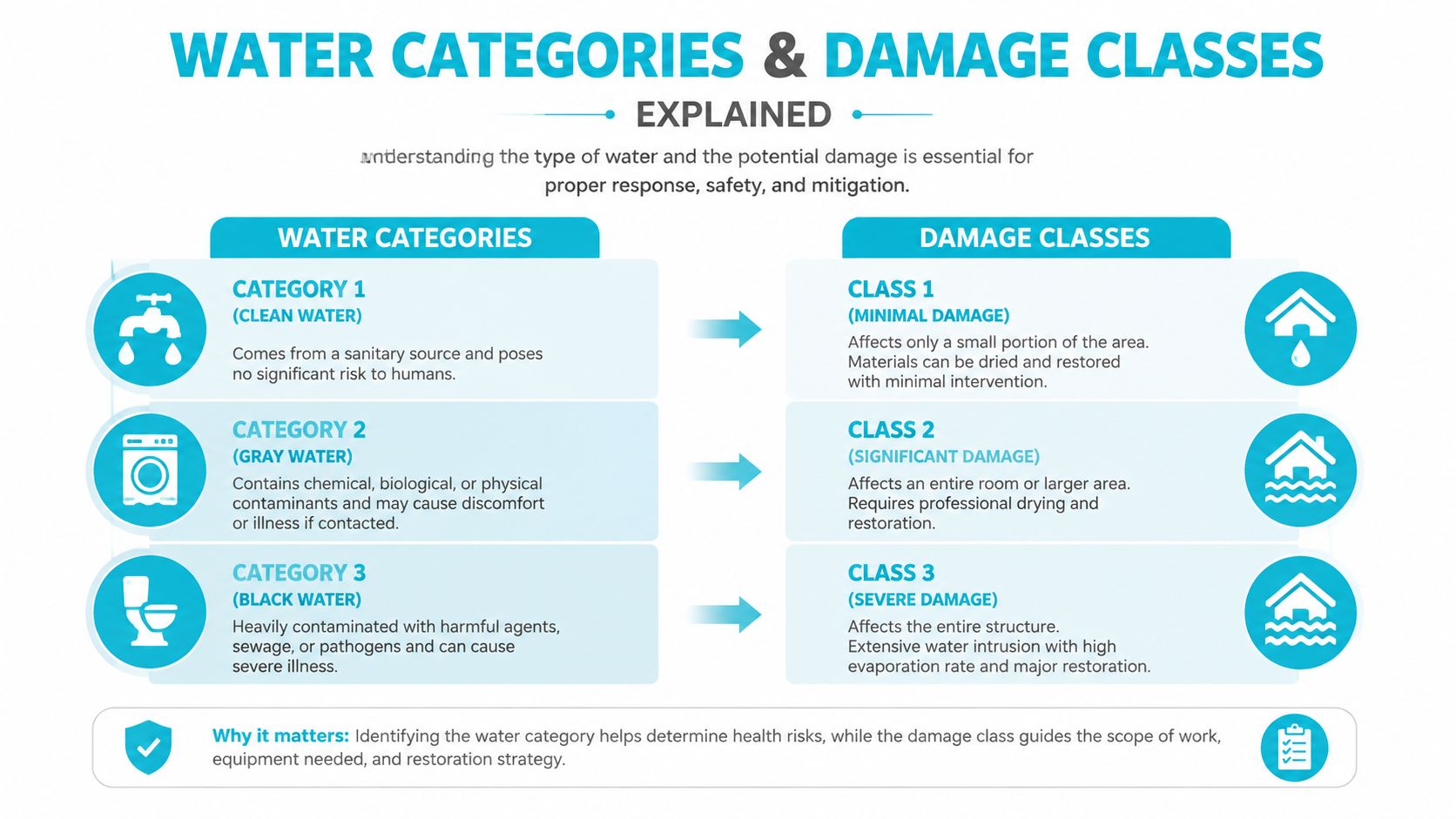
Water category tells you what the water contains. Damage class tells you how the water has affected building materials. A kitchen overflow and a sewage backup may cover similar floor space, but they don't require the same protective equipment, disposal procedures, or reconstruction scope.
Start with the water category
Category 1 is clean water from a sanitary supply source, such as a failed supply line. If the leak is found quickly, some materials may be dried in place.
Category 2 contains significant contamination. A dishwasher overflow or washing machine discharge can introduce detergents, food residue, and other contaminants. Porous materials may need more aggressive cleaning or removal.
Category 3 includes sewage and storm surge. Crews generally treat exposed porous materials as contaminated, use protective equipment, and remove materials that can't be safely restored.
Some restoration references also describe Category 4 as long-standing water with extensive microbial growth. In practice, this designation signals that time, saturation, and biological contamination have changed the work from simple extraction to controlled remediation.
Then determine the damage class
Class 1 affects a limited portion of a room and involves minimal absorption. Earlier cost breakdowns place Class 1 losses around $150 to $400 (class and restoration cost data).
Class 2 involves greater water absorption, often across a room with moisture wicking into walls. Class 3 reaches ceilings, insulation, and other areas where water has traveled downward or from above. Class 4 involves tightly bound materials, such as hardwood, plaster, masonry, or dense assemblies that need specialty drying.
Per-square-foot pricing reflects the combination. Clean water is commonly about $3 to $4, gray water about $4 to $6.50, and black water about $7 to $15 or more per square foot because of PPE, antimicrobial treatment, disposal, and material removal (contamination-based restoration pricing).
A clean-water kitchen flood caught early may need extraction, controlled drying, and selective removal. A Category 3 sewage backup can require containment, demolition, sanitization, disposal, and replacement. The room size matters, but contamination usually changes the protocol first.
What Drives the Line Items on Your Bill
A restoration invoice isn't one service. It's a collection of technical tasks, each responding to a different risk. The contractor may bill for emergency extraction, drying, demolition, cleaning, contents handling, mold work, and reconstruction as separate phases.
Published restoration benchmarks place mitigation-only work around $3 to $7.50 per square foot, while full restoration with repairs and rebuilding can rise to roughly $20 to $37 per square foot (mitigation and reconstruction cost benchmarks). That distinction explains why a property owner may approve a drying estimate and later receive a separate reconstruction scope.
| Line Item | Typical Range | Cost Driver |
|---|---|---|
| Emergency extraction | $500 to $4,000 | Water volume, access, contamination, after-hours response |
| Structural drying equipment | $200 to $1,200 daily | Number of air movers, dehumidifiers, and affected rooms |
| Demolition and removal | $1,000 to $5,000 | Drywall, flooring, insulation, trim, and disposal |
| Antimicrobial treatment | $0.15 to $0.75 per square foot | Category, material type, and treatment area |
| Contents pack-out and storage | $300 to $1,500 | Quantity, packing labor, transport, and storage duration |
| Mold remediation | $2,000 to $20,000 | Growth location, containment, demolition, and cleaning |
| Reconstruction | $5,000 to $50,000 or more | Flooring, drywall, cabinets, paint, permits, and finish matching |
Extraction is only the visible beginning. Structural drying requires equipment placement, air circulation, humidity control, and repeated moisture checks. Hardwood restoration can run about $8 to $28 per square foot, and delayed drying may add mold remediation costs of $500 to $6,000 (service-specific restoration costs).
A dry surface doesn't prove that the subfloor, wall cavity, or cabinet base is dry.
Accessibility also affects labor. A ground-floor room with open flooring is easier to service than a tight crawlspace, built-in cabinet run, or occupied commercial suite. Discontinued tile, custom millwork, premium flooring, and after-hours coordination can increase the final scope even when the original leak was small. Ceiling-specific conditions can create their own demolition and repair requirements, as outlined in this guide to the cost to repair a water-damaged ceiling in Florida.
From Emergency Call to Final Walk-Through
The first call starts a process, not a one-time visit. On the Suncoast, an emergency crew may arrive within 30 to 90 minutes, depending on location, access, traffic, and demand. The first objective is to stop the source and prevent additional water from reaching unaffected rooms.
The mitigation phase
Technicians identify the source, check safety hazards, extract standing water, and protect contents. If cabinets, furniture, or electronics are at risk, the team may move, photograph, pack, and store them. A useful overview of emergency restoration considerations is available in Good Boy Plumbing's 2026 guide.
Structural drying commonly runs for three to five days, with daily moisture readings used to determine whether equipment can be removed. Air movers and dehumidifiers may need to remain in place longer when water has entered dense flooring, insulation, cabinetry, or wall assemblies.
The reconstruction handoff
Once the structure reaches acceptable drying conditions, the project shifts from mitigation to repairs. That can mean replacing drywall and trim, restoring flooring, rebuilding cabinets, repainting, and coordinating specialty trades. The reconstruction period may last about one week for a simple, well-documented repair or extend to six weeks when custom cabinetry, discontinued tile, plaster, permitting, or broad finish matching is involved.
Sarasota, Manatee, and Charlotte county projects can also depend on permit schedules and inspection requirements. Adjuster availability may delay authorization, while hidden conditions discovered during demolition can create change orders. Homeowners should expect written documentation, moisture logs, photographs, material selections, and a final walk-through before the file closes. The first-day response steps are summarized in what to do during the first 24 hours after water damage.
When DIY Makes Sense and When It Backfires
DIY has a place when the water is clean, the area is small, and the homeowner can act safely. Shut off the supply line, remove wet rugs and loose belongings, and use household fans on a Category 1 leak caught within 24 hours. Don't enter standing water where electrical equipment, outlets, or appliances may be involved.
Professional intervention is the safer financial choice for sewage, storm surge, soaked insulation, warped subflooring, HVAC plenums, or larger affected areas. Restoration references identify 24 to 48 hours as a critical period because wet materials that remain damp can become vulnerable to mold (mold risk after water intrusion).
| Task | DIY Safe? | Risk If Done Wrong | Typical Cost Impact |
|---|---|---|---|
| Shut off a visible supply line | Usually | Continued water release | Extends extraction and demolition |
| Remove rugs and small items | Usually | Personal injury or contents damage | Adds replacement and pack-out work |
| Run fans on a small clean-water spill | Sometimes | Moisture pushed into walls | Can create hidden drying problems |
| Sewage or storm-surge cleanup | No | Exposure and cross-contamination | Requires containment, disposal, and sanitization |
| Wet insulation or warped subfloor | No | Trapped moisture and structural damage | May expand demolition and rebuild scope |
| HVAC plenum contamination | No | Circulates contaminated material | Can require specialized cleaning or replacement |
| Larger-scale drying | No | Incomplete moisture removal | Increases mold and reconstruction risk |
Florida humidity makes improvised drying less reliable, especially when the indoor air remains damp. Hidden moisture under vinyl plank, inside MDF trim, or beneath cabinets may not show on the surface. Improper demolition can also complicate an insurance file because the original condition, materials, and scope may no longer be documented. The practical boundary is simple: why homeowners shouldn't DIY water damage restoration explains why a failed cleanup can cost more than professional mitigation from the start.
Insurance Claims and the Florida Fine Print
Treat the insurance file as part of the restoration project. A standard homeowners policy may cover sudden and accidental water damage, such as a burst interior pipe, while ground seepage and floodwater generally require separate NFIP or private flood coverage. Coverage depends on the policy language, exclusions, cause of loss, maintenance history, and endorsements.
Suncoast properties exposed to flood risk may need a flood policy even when a standard homeowners policy applies to other water events. For an NFIP flood claim, the policyholder must submit a completed Proof of Loss within 60 days after the date of loss unless FEMA grants an extension (FEMA NFIP claims manual). Missing that procedural deadline can create a serious claims problem.
Calculate the real out-of-pocket amount
Start with the covered scope, then subtract the deductible and account for reimbursement rules. Actual cash value coverage may account for depreciation, while replacement cost coverage generally addresses the cost to replace covered property under the policy's conditions. Older roofs and flooring can involve depreciation, and the exact treatment varies by policy and item.
A homeowner should compare the likely covered amount with the deductible, excluded work, and any premium considerations before deciding whether to file. That decision is especially important when the expected repair sits near the deductible. Don't delay emergency mitigation while debating the claim. Preventing additional damage is separate from deciding how the final loss will be paid.
Photograph the source, affected rooms, contents, serial numbers, damaged materials, and every stage of demolition. Keep moisture readings, equipment logs, invoices, receipts, and communication with the carrier. AMPM Restoration Services can document conditions, take meter readings, prepare a clear scope, and coordinate insurance billing. Its water damage insurance coverage guidance provides another starting point for organizing the claim.
Hidden Costs Most Homeowners Miss
A dry-looking floor doesn't mean the restoration is complete. In a Sarasota living room, the surface may look clean on day five while MDF baseboards remain swollen, cabinet toekicks hold moisture, and the subfloor continues wicking water below the visible repair area.
Those materials create different decisions. Drywall may need replacement above the flood cut, baseboard and shoe molding may need to be reset, and swollen cabinet boxes may require refacing or full replacement. Hardwood can cup and later require sanding and refinishing. Tile may appear intact until saturated thinset loses its bond and sections begin to loosen.
Look beyond the finished surface
The HVAC system deserves special attention when contaminated water reaches a return, plenum, or nearby ductwork. Depending on the location and material, ductwork may need cleaning or replacement. Musty odors can also remain after meters show acceptable readings, leading to deodorization work and further investigation.
The cost problem usually starts when a homeowner delays removal of materials that cannot be saved. Waiting can allow moisture to spread into adjoining assemblies and can turn a focused demolition into broader remediation. It can also create a second visit, additional contents handling, and a reopened insurance conversation.
A dry meter reading answers one question. It doesn't automatically answer whether every damaged finish is restorable.
A careful scope distinguishes materials that can dry in place from materials that have swollen, delaminated, absorbed contamination, or lost structural or finish integrity. That distinction protects the budget. Removing unsalvageable material early may feel expensive, but leaving it in place can add mold work, callbacks, replacement labor, and finish damage later.
Your Florida Cost Checklist and Next Steps
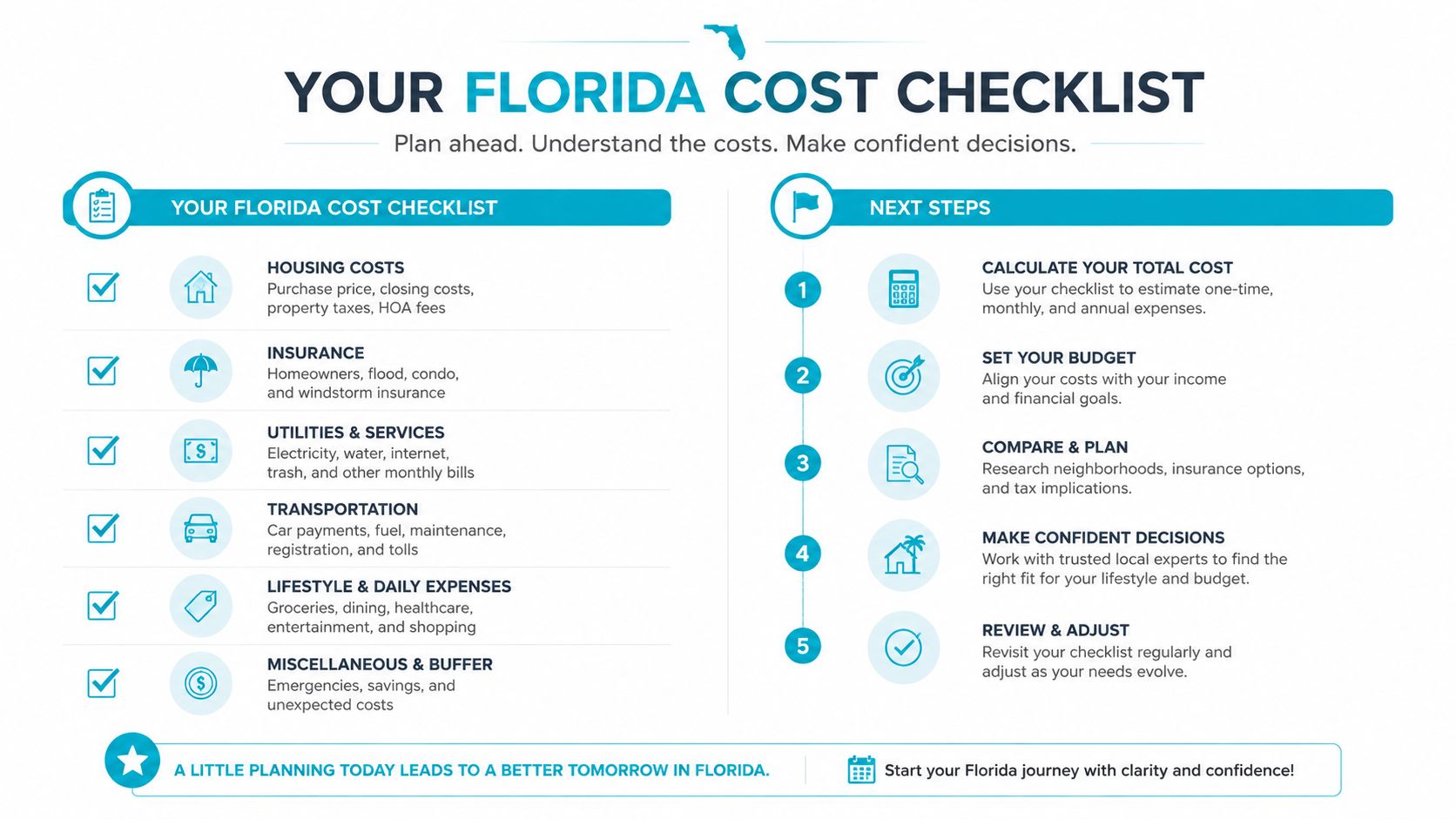
Use this checklist after a water event, whether you're managing a home, rental property, office, or commercial space. It keeps the practical decisions in the right order and helps prevent the first estimate from becoming the only document in the file.
1. Stop the source and document the first day
Shut off the water if it's safe, contact the plumber when needed, and photograph the source before removal. Save failed plumbing components when practical, and record the date, location, visible spread, and affected contents.
2. Confirm category and class
Ask whether the water is Category 1, 2, 3, or a long-standing contaminated condition. Ask which damage class applies and request an explanation of why the crew plans to dry, remove, clean, or replace each material.
3. Request measurable records
A useful file includes initial photographs, room measurements, equipment placement, daily moisture readings, drying progress, demolition photographs, invoices, and receipts. These records help the adjuster evaluate the scope rather than relying only on the final appearance.
4. Set the DIY boundary
Handle loose rugs and small belongings only when conditions are safe and the water is clean. Leave sewage, storm surge, insulation, subflooring, HVAC contamination, and extensive drying to qualified professionals.
5. Decide whether to file thoughtfully
Compare the likely covered scope with your deductible, exclusions, depreciation treatment, and policy conditions. For flood claims under the NFIP, calendar the 60-day Proof of Loss deadline immediately (FEMA flood claim requirements). Don't confuse an emergency mitigation decision with the later coverage decision.
6. Inspect mold and HVAC before rebuilding
Before closing walls or installing new flooring, confirm that affected cavities, cabinets, subfloors, and air-handling components have been evaluated. If materials remained damp, arrange appropriate mold inspection or remediation planning.
7. Close the file with proof
Verify final moisture readings, review change orders, match invoices to completed work, photograph restored rooms, and complete a documented final walk-through. Keep the records with your home or property insurance documents.
Florida preparation also matters before the next storm. Review backflow protection, understand how elevation certificates may affect NFIP premiums, and confirm which policy covers storm surge versus interior plumbing failures. For property managers, add shutoff locations, vendor contacts, and emergency access instructions to the building plan.
For a free inspection and written estimate, call AMPM Restoration Services at 941-946-7807 for insurance claim assistance and financing options. The team serves Bradenton, Sarasota, Tampa Bay, Saint Petersburg, Lakewood Ranch, and surrounding Gulf Coast communities with water damage restoration, mold inspection and removal, storm and flood cleanup, fire and smoke restoration, commercial restoration, and reconstruction.
Call AMPM Restoration Services at 941-946-7807 for a free on-site assessment, written scope, and direct insurance billing when water damage threatens your Florida property. Visit AMPM Restoration Services to request help with emergency extraction, drying, mold concerns, repairs, and the full restoration process.